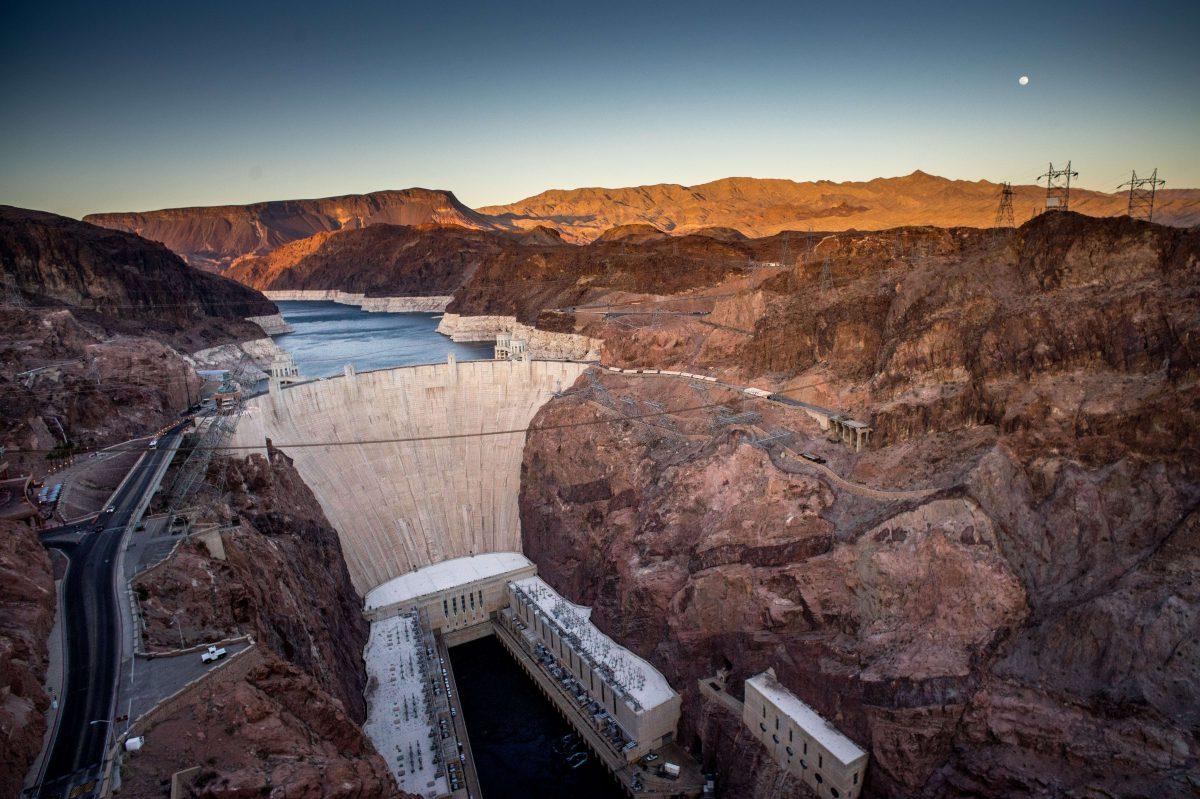
The heartbeat of the American southwest—the Colorado River—stretches 1,450 miles from Colorado’s Continental Divide to the Gulf of California in Mexico. It is the fifth longest river in America, and, while Americans were working to tame the West during the last half of the 19th century, it was clear the Colorado River could not be tamed. When the River flooded in 1905, resulting in a path of destruction and the creation of California’s Salton Sea, it became clear that the power of the Colorado River needed to be harnessed and controlled.
A Bill and Compact
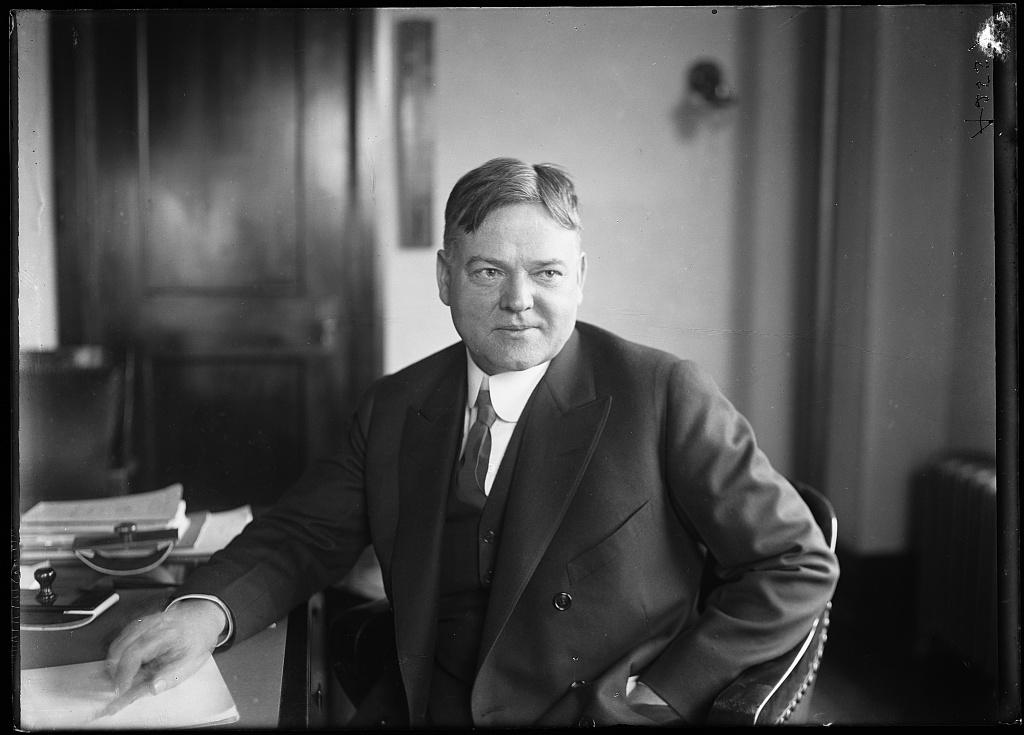
Herbert Hoover had become familiar with the water issue in the Colorado River Basin, having visited the area numerous times before World War I. At the start of President Warren G. Harding’s administration in 1921, he was appointed Secretary of Commerce. That same year, seven state legislatures appointed commissioners to formulate and establish a multi-state agreement called the Colorado River Compact. Hoover was appointed as the commission’s federal representative and its chairman. On Nov. 24, 1922, all eight representatives, including Hoover, signed the compact.
Concerned over the age-old legal theory of “first in time, first in right,” an agreement over water distribution could not be reached. This legal doctrine suggested that property rights belonged to whoever, or whichever entity, possessed the property first. Over the next six years, from 1922 to 1928, Rep. Phil D. Swing and Sen. Hiram W. Johnson wrote several bills on the subject, but none passed. Finally, with substantial input from Hoover and Secretary of the Interior Hubert Work, Congress approved a Swing-Johnson bill on Dec. 21, 1928. The state legislatures approved of the bill, enabling the Colorado River Compact to take effect (Arizona did not ratify the compact until 1944).
Six Companies
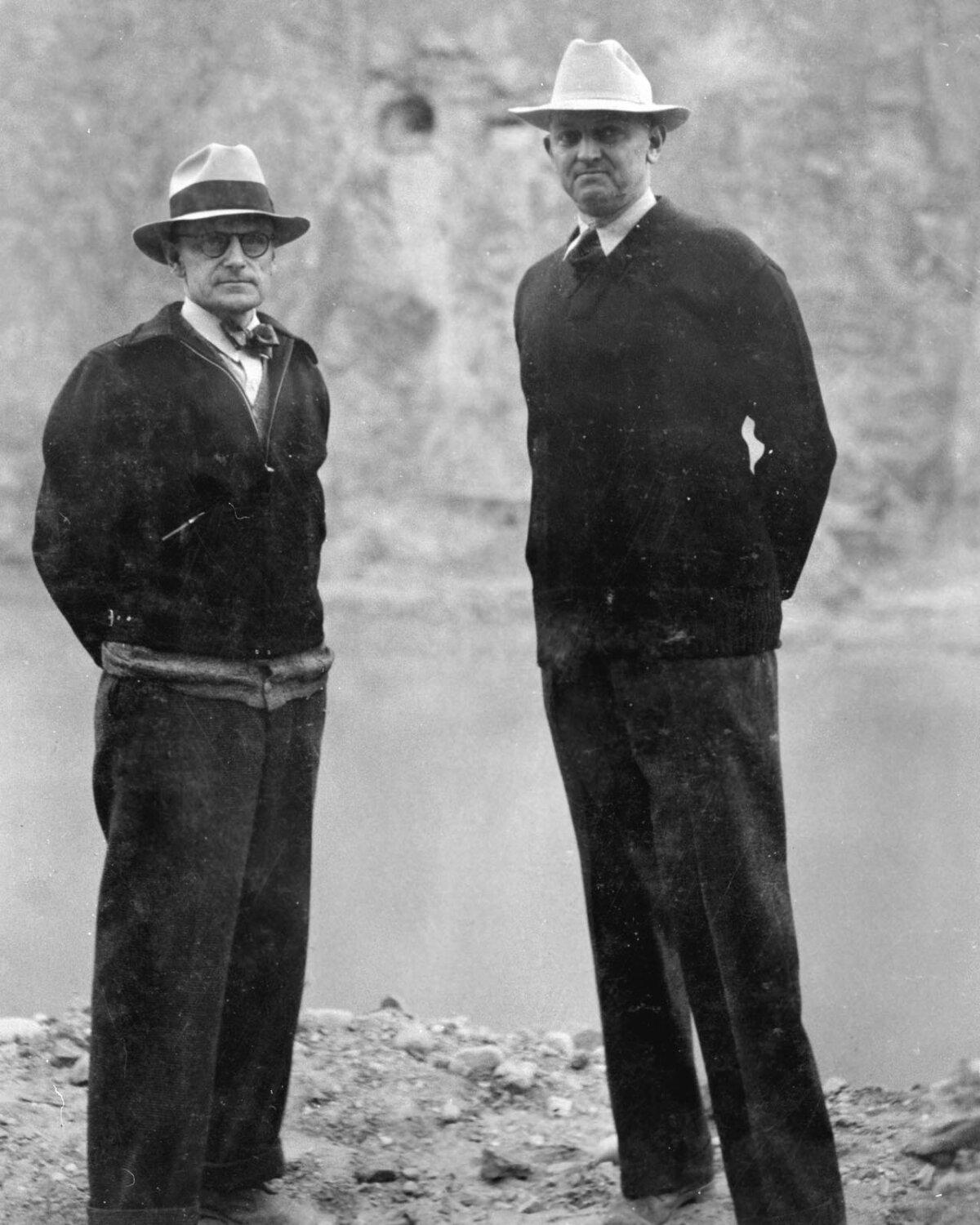
The United States Bureau of Reclamation (USBR) released information about the upcoming project to construction companies and requested bids. The federal government required a $5 million performance bond from whichever company was selected. This surety undoubtedly whittled down the number of companies planning to bid. In fact, in response to the required bond, the heads of six different construction companies decided to collaborate and form a joint company called Six Companies Incorporated.
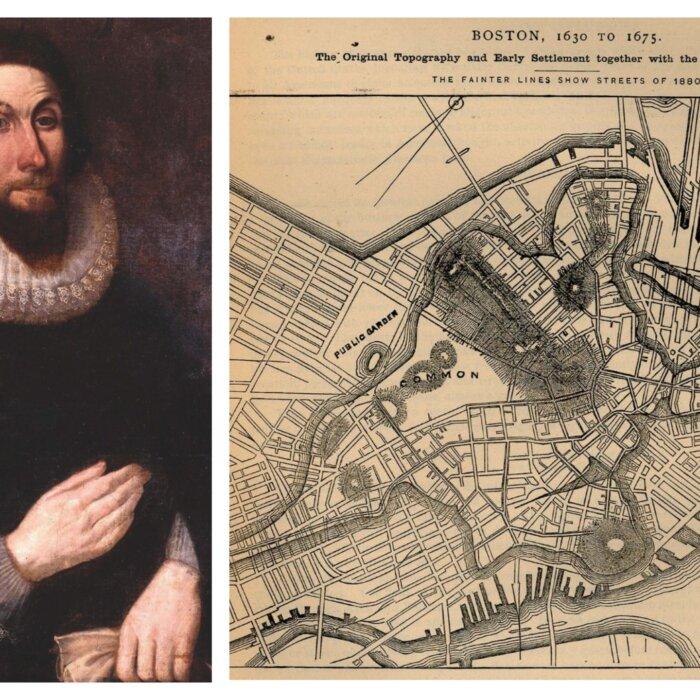
The members of this new company were aware that the federal government had already estimated how much the project would cost (though the total was not made public). The company hired one of the country’s best engineers, Frank Crowe, to view the construction plans and estimate the cost. He estimated it would cost $48,890,995. Six Companies, Inc. submitted the number to the federal government, who accepted the bid and awarded the company the contract on March 11, 1931 (Crowe’s estimate was approximately $24,000 off of the federal government’s estimate).
A Flood of Workers
The Boulder Canyon Project Act had been approved about 10 months before the Stock Market Crash of 1929. By the time Six Companies, Inc. was awarded the contract, the Great Depression was nearly 18 months in. Word quickly spread that the Boulder Canyon Project would provide thousands of jobs. A large migration of unemployed men rushed to Nevada, many residing in Las Vegas. Along with many of those men, however, came their families.Building Boulder City
According to historian Dennis McBride, Six Companies “did not want their workers getting drunk in Las Vegas where liquor was flowing freely during prohibition, getting involved on Block 16 where the prostitutes lived and worked and they figured that if they had a separate town built by the government on land that was owned by the federal government then Nevada state law wouldn’t apply [t]here.”Thus began the construction of the federal reservation, Boulder City. Soon, thousands of workers and their families moved in. There were strict rules that applied not only to the workers, but their families as well. An unruly child could lead to the father losing his job, and with so many men needing work, it would not be difficult to replace him.
Building the Dam
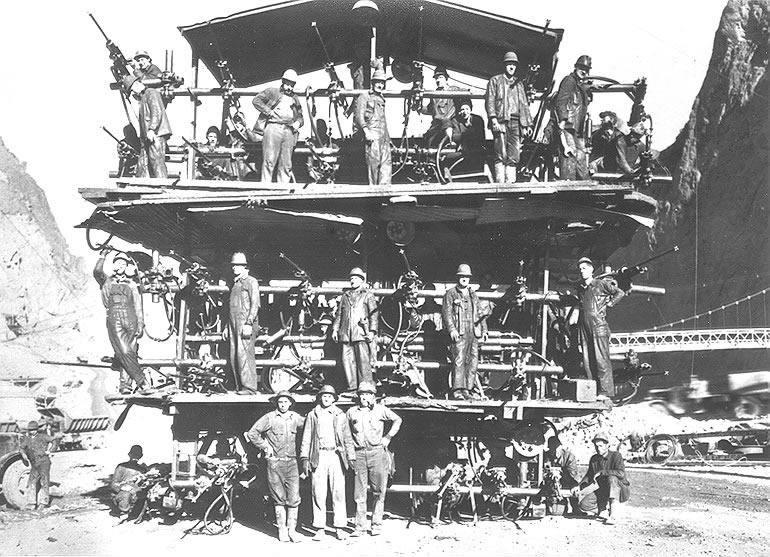
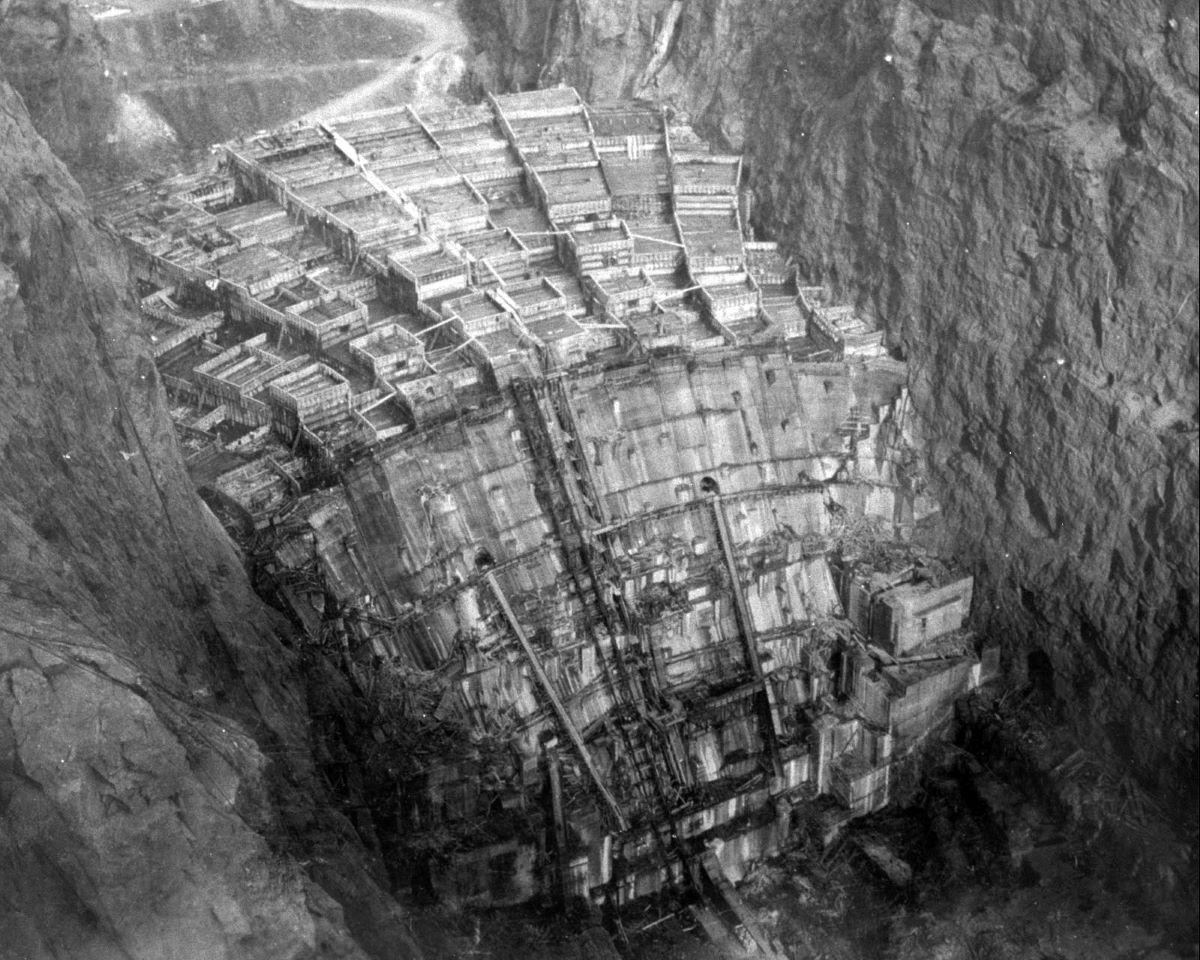
While Boulder City was being constructed, construction of the Boulder Canyon Project was already months in progress. The first step for the project was to construct four 56-foot in diameter tunnels that would divert the Colorado River around the dam site. The construction of these tunnels, which required the removal of more than 1.5 million cubic yards of rock and dirt, was not completed until November 1932—the same month Hoover lost his reelection bid to Franklin D. Roosevelt.
This accounted for what was at the time the largest dam in America and the tallest dam in the world. The Boulder Dam reached as high as a 60-story building with a base 660-feet thick, roughly the size of two football fields. The dam’s crest from canyon wall to canyon wall stretched 1,244 feet.
By the time the massive dam was completed, approximately 21,000 Americans had been employed for the project. As a tragic testament to how dangerous the work was, among the many who were injured on the job, 96 were killed. This is the “official” number, though when taking into account illnesses, including those related to the desert’s harsh conditions, this number increases well past 100.
Picking the Name
President Roosevelt, now president, presided over the ceremony to dedicate the Boulder Dam, which took place during this week in history, on Sept. 30, 1935. Before Roosevelt took office, the project had been called unofficially Hoover Dam. When Harold Ickes became secretary of the interior in 1933, he sent a memorandum to the USBR stating, “I would be glad if you will refer to the dam as ‘Boulder Dam’ in this pamphlet as well as in correspondence and other references to the dam as you may have occasion to make in the future.”“Herbert Hoover, while Secretary of Commerce in 1922, presided as the representative of the Federal Government over two score meetings of the representatives of Arizona, California, Colorado, Nevada, New Mexico, Utah, and Wyoming for the formulation of the Colorado River Compact. He had a major part in bringing the States into agreement. This compact, signed November 24, 1922, made construction of the dam possible. … It is particularly timely that this measure honoring Mr. Hoover should come to the floor of the House at a time when he is completing the second of his great humanitarian missions for President Truman in the relief of world-wide suffering.”
The Hoover Dam, arguably America’s most famous, finally tamed the mighty Colorado River. According to Census.gov, through this system more than 16 million people receive water, more than 1.5 million acres of land are irrigated, and more than 500,000 homes receive electrical power.