This copy is for your personal, non-commercial use only. Distribution and use of this material are governed by our Subscriber Agreement and by copyright law. For non-personal use or to order multiple copies, please contact The Epoch Times Reprints.
What does music awaken within us? It’s hard to say. We’ve all experienced a moment when a melody halts us in our steps. We let it sink over us, savoring every note. Something has flickered inside: a memory, a state of mind, an emotion that has no words. When the music passes, we stir and stretch like people waking from a dream. That’s the mysterious and bewitching power of music.
“Nothing activates the brain so extensively as music,” said Oliver Sacks, famed neurologist and author of the book “Musicophilia,” which explores the profound and poignant ways music affects people on a neurological level. Sacks has researched the intersection of psychology, neuroscience, music, and medicine—a field that’s bearing fruit in clinical settings where music is harnessed for the purposes of healing. Researchers and medical practitioners such as Dr. Sacks have discovered how music reaches deep into the pathways of the mind and how it can be used to transform and heal people.
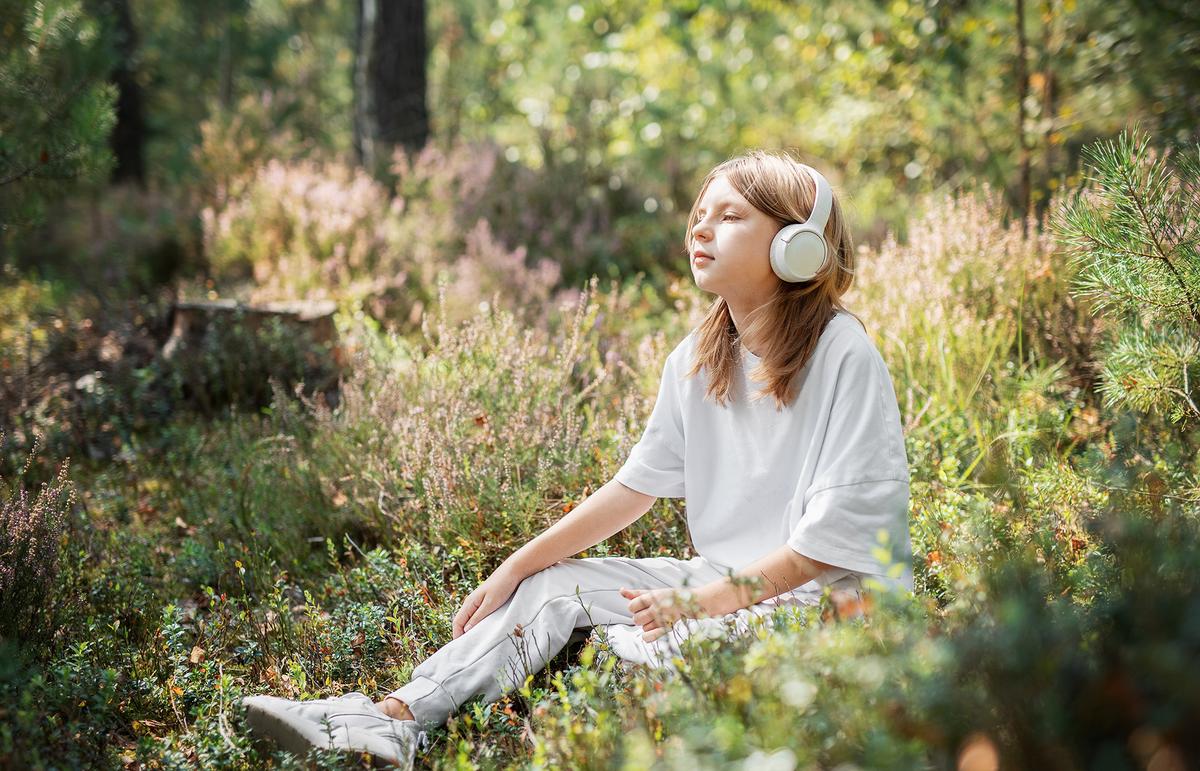
Research shows that listening to music can reduce pain perception and lower the need for medication. Matthias Groeneveld/Pexels
Music’s healing powers are extensive, as research repeatedly shows. In the first place, studies have shown that music can reduce pain, a phenomenon termed “music-induced analgesia.” A range of conditions involving both acute and chronic pain can be mitigated by music therapy. It reduces the patient’s perception of pain, reduces required pain medication, and decreases depression. According to researchers from the University of Utah Pain Research Center, music helps relieve pain by activating emotional responses, cognitive attention, and sensory pathways that compete with the pain pathways.
The pain-relieving effects of music appear to even transcend the boundaries between species: In one study, researchers found that playing classical music for dogs undergoing skin surgery decreased the level of anaesthetic needed for the procedure.
But an alternative or supplement to pain medication isn’t all music offers. It also helps mitigate pre-operation anxiety and the need for sedatives. It can curb nausea and vomiting in chemotherapy patients. And, it can improve mobility in injured persons or those suffering from a disease that affects motor control, such as Parkinson’s. In a 2008 interview with Neurology Now, Dr. Sacks explained,
“After an injury, you lose the motor patterns and can forget how to move properly. Music, especially the rhythm of music, can bring you back. … In general, when one has a disease of the basal ganglia—such as Parkinson’s—and low levels of the neurotransmitter dopamine, the flow of movement, speech, thought, and feeling has either stopped or takes on a stuttering, sputtering quality. Music can reorganize this and give the people a pattern and timing and rhythm. So in this way I do think of music as a sort of prosthesis for the injured part of the brain.”
For patients with motor challenges, music can act as a neurological prosthesis that helps to reorganize impaired pathways. ProfessionalStudioImages/Getty Images
One of the most striking examples of music’s power to heal is its role in restoring the speech of patients who have lost the ability to talk through injury or illness. Normally, formulating speech is handled by the left side of the brain. But when those areas responsible for speech get damaged in some way, the brain loses its “pathway” to speech. However, because of neuroplasticity (the brain’s ability to adapt and change), it’s possible to develop alternative pathways to recover speech. One of them is music, which utilizes many parts of the brain, including the right hemisphere.
That’s exactly what happened in the case of Congresswoman Gabby Giffords, who suffered from aphasia (inability to speak) after she was shot in the head by an assassin in 2011. With the help of Meaghan Morrow, a music therapist, Giffords was able to train her brain to use a less-common pathway to language when she combined words with melody and rhythm.
Because music activates many areas of the brain, including emotion and memory, Giffords used the undamaged musical parts of her brain to reconnect with the part of the brain involved in speech. Morrow told ABC News that this type of musical therapy is like a freeway detour. “You aren’t able to go forward on that [language] pathway anymore, [but] you can exit and go around, and get to where you need to go,” she said.
Because musical experience is so deeply rooted in the human mind, it can resurrect a person’s memory and mental powers that seemed to be irretrievably lost. Dementia patients have been known to break out of catatonic-like states when their favorite songs are played. Some even engage in conversation about the music afterwards. Music has the power to reach deep into someone and turn a fading spark into a burning flame. It can resurrect speech. It can resurrect memories. It can bring back joy.
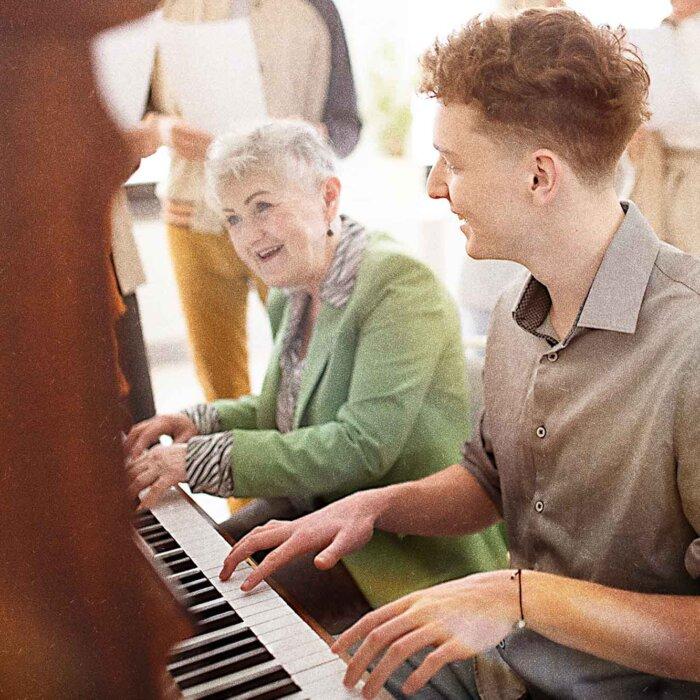
Music reaches places in the mind that language can't, offering a bridge back to the self. Olena Rudo/Shutterstock
In Shakespeare’s “The Merchant of Venice,” Lorenzo says, “With sweetest touches pierce your mistress’ ear/ And draw her home with music.” That’s what musical therapy can do: bring people home to themselves.
When asked why music so deeply affects people with dementia or other brain disorders, Dr. Sacks offered a perfect summary of the enigma of music and its relation to medicine:
“That’s a great mystery. Music doesn’t convey information in the usual sense; it doesn’t represent anything in the external world, but it can move one to the depths. Music has a power to elicit every emotion, and every mood, and every state of mind there is. I think this is why it exists in every culture. It may speak to people with dementia in a way that is deeper than language, and this can be especially important if language is no longer available.”
Before becoming a freelance journalist and culture writer, Walker Larson taught literature and history at a private academy in Wisconsin, where he resides with his wife and daughter. He holds a master’s in English literature and language, and his writing has appeared in The Hemingway Review, Intellectual Takeout, and his Substack, The Hazelnut. He is also the author of two novels, “Hologram” and “Song of Spheres.”