Julius Caesar. It is a name that seems to have commanded as much attention over the 2,000 years since his death as it did during the 55 years he lived. His conquests both militarily and politically are of such magnitude that he is perhaps unequaled in the annals of history. There is little question as to why scholars continue to study him. The life of Caesar is a study of human ambition, the pursuit of glory, and the tangled web of political intrigue. In many ways, the study of Caesar is a study in human nature.
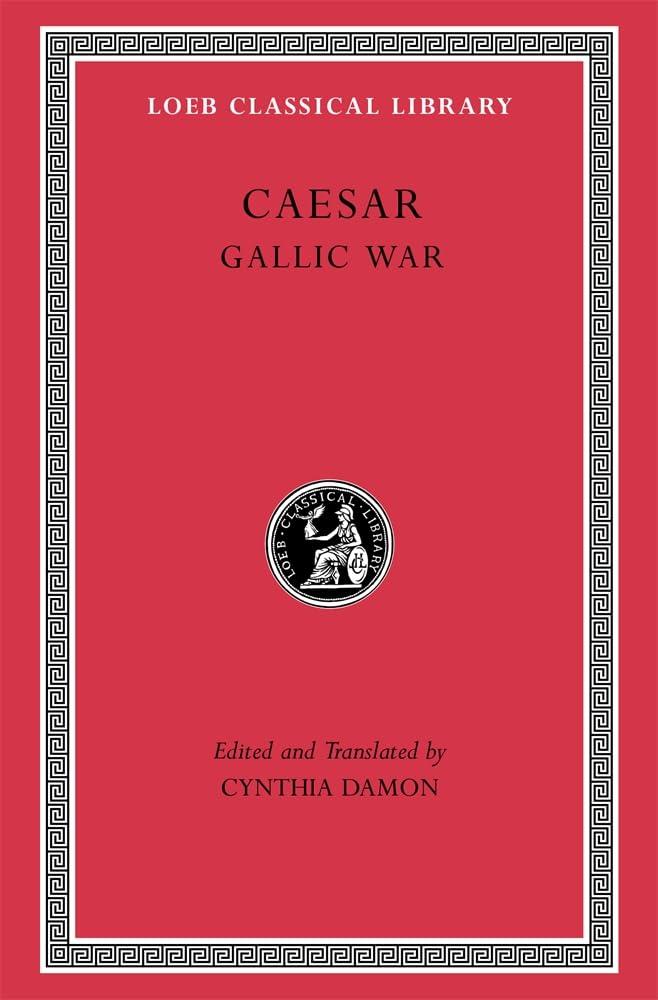
For these reasons, it is not only prudent, but necessary for each generation to study the great Roman. Cynthia Damon, professor of classical studies, emerita, at the University of Pennsylvania, and one of today’s leading scholars on Caesar and ancient Rome, has dedicated much of her career to presenting Julius Caesar to a modern audience. Her latest effort is the new translation of “Caesar Gallic War” for Harvard University Press’s Loeb Classical Library series.

Rise to ‘Greatness’
In 2016, her translation of Caesar’s work “Caesar Civil War” for Loeb was published. The Roman Civil War that pitted Caesar against Pompey brought the faltering Roman Republic to an end, thrusting it into the age of emperors, who were soon to be known as Caesars. Although this translation was published nearly a decade ago, Damon stated in an interview with the Epoch Times that to best understand the man himself, one should begin with Caesar’s war against the Gauls. This belief is iterated by her quote of Plutarch in her book’s introduction which states “his Gallic wars raised Caesar to greatness.”Damon noted that until the beginning of his generalship in Gaul, Caesar had experienced a rather common, though successful, political and military career. By 58 B.C., when Caesar’s Gallic campaigns began, he was, in a sense, in the shadow of his political ally and eventual enemy Pompey. Damon said that the war “gave him an opportunity to achieve ‘greatness’ in Roman terms.”
Seeing Through ‘Caesarian Eyes’
Despite the cold rationale and self-sufficiency evidenced in Caesar’s works, Damon contended that “Caesar normalized and sanitized Roman imperialism” through his writings. She stressed that point in the introduction of her book, stating, “When warfare is presented as a balance sheet of power, the reader is insulated from its violence. This Caesarian mode has had admirers and emulators for 2,000 years; the literature of war writing is filled with would-be Caesars. It is all too easy to read imperialism, especially Roman imperialism, through Caesarian eyes.”The sanitization of war and conquest seems to have played a significant role in the way future generations have viewed Caesar. This view has enabled people over the millennia to both love and hate Caesar, or perhaps more accurately to both admire and condemn him. He appears a confluence of both hero and villain. A seemingly antihero who wished to save Rome from herself, while ultimately leading to the republic’s demise. Damon said that Caesar’s mixed reputation reflects his legacy—a legacy of grand successes that led to grand failures.

She reflected on what she had written in the introduction of her 2016 “Caesar Civil War,” noting,
Political Necessity
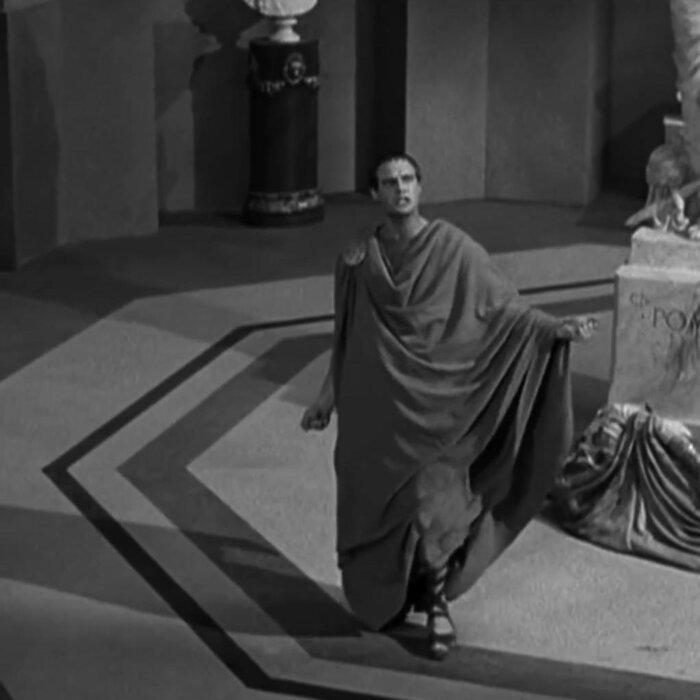
When reading over Caesar’s life, one witnesses moments of mercy or ruthlessness in dealing with military and political opponents alike. In Caesar’s chronicling of the Civil War and the Gallic War, he highlights times in which he was lenient to his enemies through diplomatic negotiation and other times in which he proved merciless, crushing those who opposed him. Even when the severed head of his nemesis, Pompey, whom he had fought and pursued during the Civil War, was presented to him by members of King Ptolemy of Egypt’s court, contemporary Caesarian historians recorded that Caesar grieved Pompey’s death.One of Caesar’s most famous quotes—”E tu, Brute?”—which, of course, he never uttered (it came from William Shakespeare’s play “Julius Caesar”), has only further ingrained the general public’s admiration for him. But propaganda, either by Caesar, his comrades-in-arms, or Shakespeare, can only gloss over so much of reality.
“In my view neither mercy nor ruthlessness is part of Caesar’s character: Each is a policy that he will adopt to address a challenge that confronts him,” Damon said. “In the civil war he shows more clemency than ruthlessness, but this may reflect selective reporting in the Civil War. … I’ve recently published a paper called ‘Caesar’s Shrinking Lexicon’ that shows that the authors of works in the Caesarian corpus that are not by Caesar—[works on the] Alexandrian War, African War, Spanish War—are willing to show a ruthless Caesar in a civil war context, too.”
Certainly, political necessity dictated Caesar’s short- and long-term objectives. If the Gallic wars were indeed viewed by Caesar as stepping stones leading to his eventual march on Rome in the winter of 49 B.C., which resulted in the civil war that ended in the spring of 45, then, as Damon noted, studying this period of his life is of absolute necessity to understand him. And more than the period itself, one must study Caesar’s recollection of the nine-year period in order to understand how he viewed the conflict, how he viewed himself, and how he wished future generations to perceive both.
“Caesar valued the written word as a medium of communication,” Damon said. “It wasn’t enough to win the war in Gaul; he completed the achievement by writing the ‘Gallic War.’”
If history is indeed written by the victors, possibly no one best understood the power behind that than Julius Caesar.