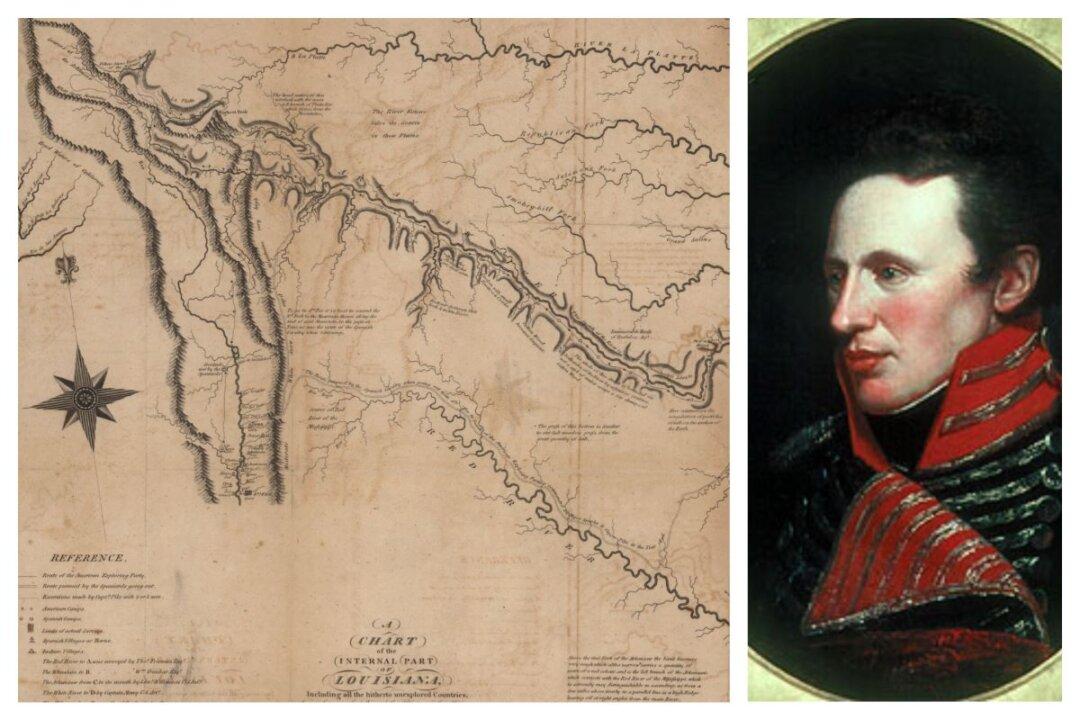
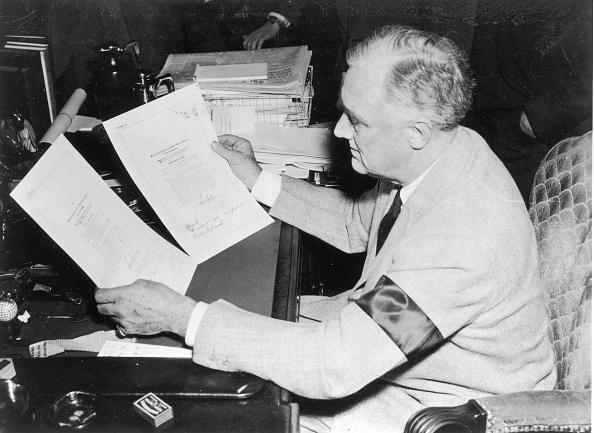
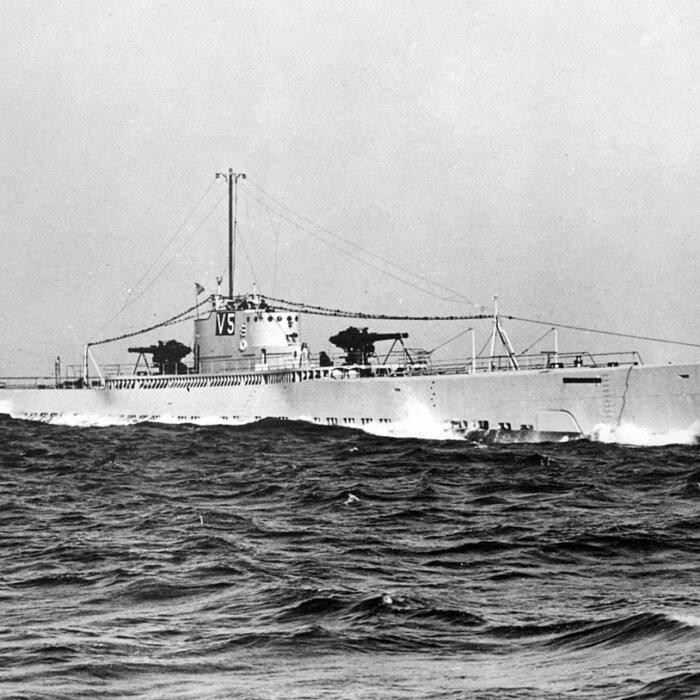
Roosevelt made this comment during his Navy Day Address. America had yet to formally enter World War II, but the unrestricted submarine warfare of the Nazis was inching American sentiment toward entering. The address was broadcast to the public via radio on Oct. 27, 1941, regarding the Oct. 17 attack on the USS Kearny, which resulted in 33 American casualties, including 11 deaths. The attack was carried out by German U-boat U-568 off the coast of Iceland.
Neutral Deals
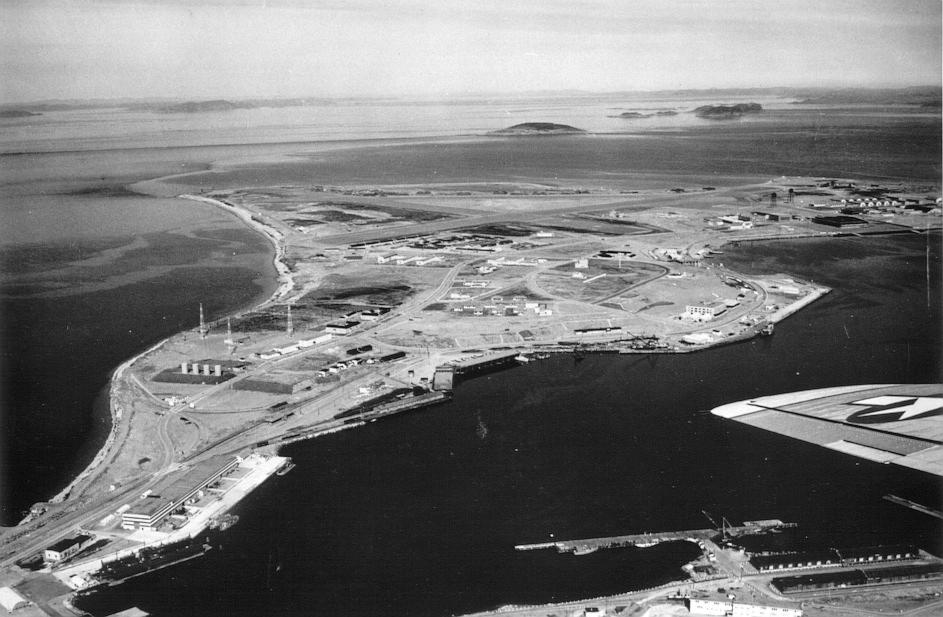
During the late 1930s, America had practiced a policy of neutrality, avoiding any form of confrontation with the Third Reich or the Axis Powers. Congress refused to pass legislation that would break that policy. That obstinance began to waver in 1940. The Nazi threat continued to expand with the capture of France in June, followed by the start of the Battle of Britain in July. Two months into that battle, the American government made a formal agreement with the British government known as the Destroyers-for-Bases deal.On Sept. 2, the British agreed to allow the Americans to establish air and naval bases in Newfoundland, Bermuda, The Bahamas, Jamaica, Saint Lucia, Trinidad, Antigua, and British Guiana in exchange for war materiel, primarily destroyers.
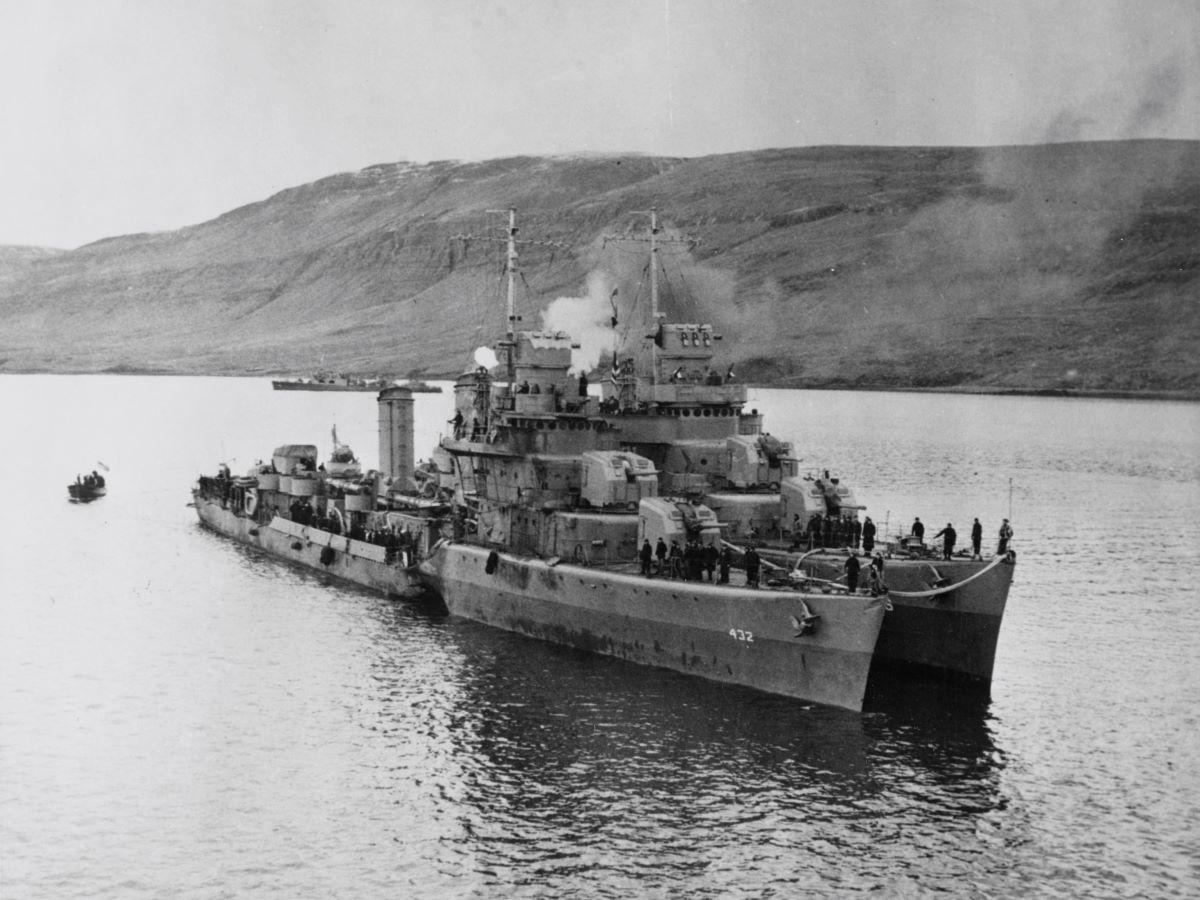
Four days later, the first eight of the 50 World War I-era destroyers reached British hands in Canada. These destroyers were grossly outdated and outmoded, but as Adm. George Creasy, British director of anti-submarine warfare, recalled, during that period of the war, “Any destroyer that could steam, shoot, and drop depth charges was worth its weight in gold.”
Roosevelt and his cabinet members advocated for America becoming “the arsenal of democracy” by providing much needed war materiel to those fighting the Axis Powers. Decrying Congress’s hesitation in providing assistance against the fascist powers, Secretary of the Interior Harold Ickes stated,
“We Americans are like the householder who refuses to lend or sell his fire extinguishers to help put out the fire in the house that is right next door even though that house is all ablaze and the wind is blowing from that direction.”
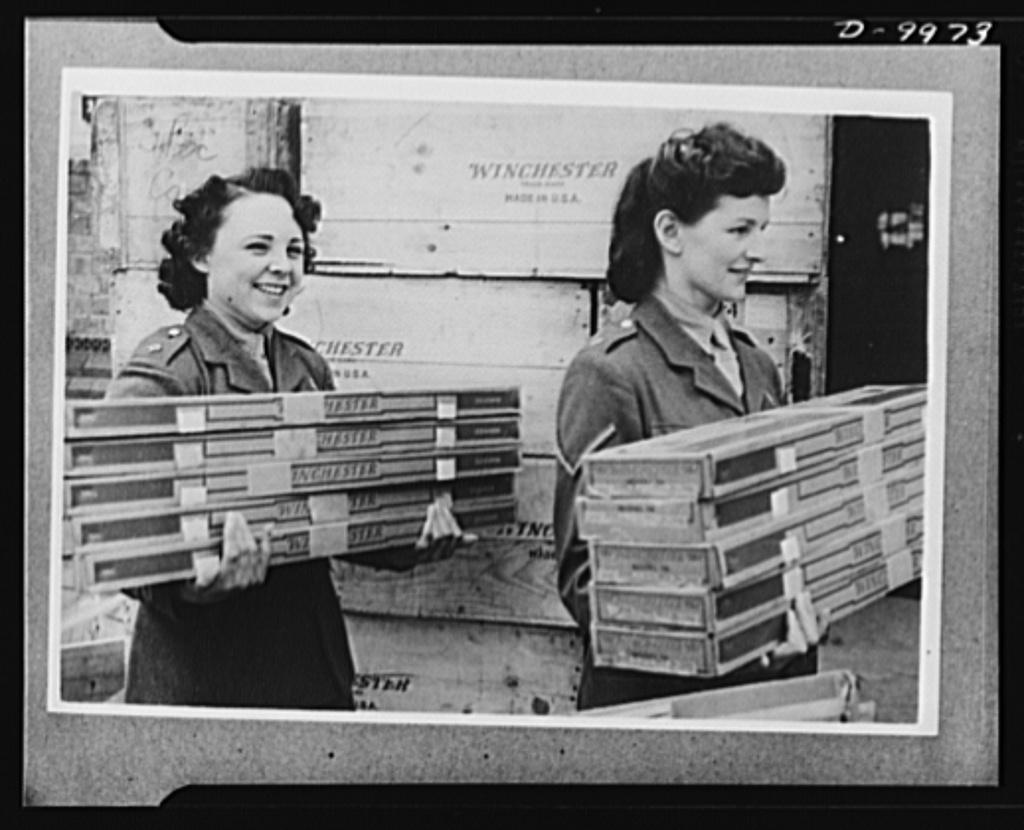
Congress passed the first Lend-Lease Act on March 11, 1941, which permitted America to sell supplies to any country deemed “vital to the defense of the United States.” The agreement with Great Britain on Feb. 1942 was called the Master Lend-Lease Agreement.
Over the course of the war, America made similar agreements with more than 30 countries, providing approximately $50 billion in supplies. Ensuring the materiel could be produced and that it could be shipped, America needed oil. With U-boats scouring the Atlantic, shipping oil, even along the East Coast was be too risky, especially if and when the Americans entered the war.
The Pipeline Necessity
“Our American merchant ships must be armed to defend themselves against the rattlesnakes of the sea,” Roosevelt stated on Oct. 27. “Our American merchant ships must be free to carry our American goods into the harbors of our friends.”Ickes had been secretary of the interior since the start of Roosevelt’s presidency in 1933. Oil was the lifeblood of a strong economy, and even more so during a war effort. As head of the Public Works Administration, which had become a staple during the Great Depression, he had overseen numerous major public projects, including the construction of the Boulder Dam, the Lincoln Tunnel, and the Key West Highway. Those projects were coordinated to help offset the low unemployment. Ickes’s new project would be to help ensure the survival of the nation and the Allies.
“Beginning in the 1920s, practically all the petroleum consumed on the East Coast was transported by tanker and nearly all of it came from Texas. On the eve of World War II the 17 eastern states consumed 1.4 million barrels of oil daily.”
The sea lanes along the Gulf Coast, the Caribbean, and the East Coast, however, had become precarious at best and deadly at worst. Instead of transporting oil by sea, Ickes recommended transportation by land. The problem was logistics. Ickes had written to Roosevelt that although a pipeline “might not be economically sound,” with the war, “it might be absolutely necessary.”
On May 28, 1941, Roosevelt appointed Ickes as petroleum coordinator for national defense (this was 24 hours after Roosevelt declared an unlimited national emergency). Ickes had been advocating for the construction of a massive pipeline since 1940, but even with his new position along with being interior secretary, he could not make headway.
His idea was continually rejected by federal agencies, like the Supply Priorities and Allocations Board, which was established by executive order on Aug. 28, 1941, and replaced by the War Production Board (WPB) on Jan. 16, 1942.
The Inch Pipelines
Pipeline industry leaders met in Tulsa during March 1942 to discuss the construction of a new “War Emergency Pipeline.” The leaders formulated what they termed “The Tulsa Plan,” which recommended the construction of a 24-inch-diameter pipeline capable of transporting 300,000 barrels of oil per day from East Texas to Illinois, Pennsylvania, and New York.The WPB approved the pipeline construction on June 10, 1942. Fifteen days later, 11 oil companies—Standard Oil Company of New Jersey, the Texas Pipe Line Company, Cities Service Oil Company, the Socony-Vacuum Oil Company, the Gulf Oil Corporation, the Consolidated Oil Corporation, the Shell Oil Company, the Atlantic Refining Company, the Tidewater Associated Oil Company, the Sun Oil Company, and the Pan American Petroleum and Transportation Company—formed War Emergency Pipelines, Inc., and together, with the use of their employees, they built and maintained the pipelines. Part of the private industry-government agreement was that none of the stockholders could earn a profit from the project.
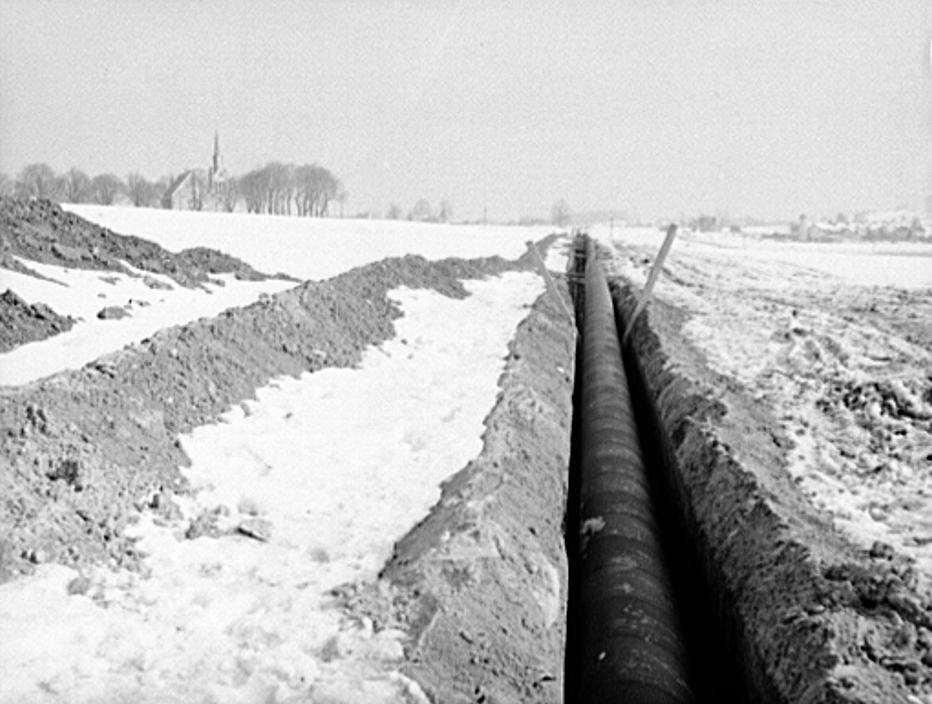
Over the course of a year at a cost of $95 million, diggers, welders, and engineers constructed the 24-inch pipeline (requiring 725,000 tons of material) to transport crude oil and 20-inch pipelines to transport gasoline, heating oil, diesel oil, and kerosene. These pipes were called “The Big Inch” and “The Little Inch,” respectively (pipes that exceeded a foot in diameter were called “big inch”).
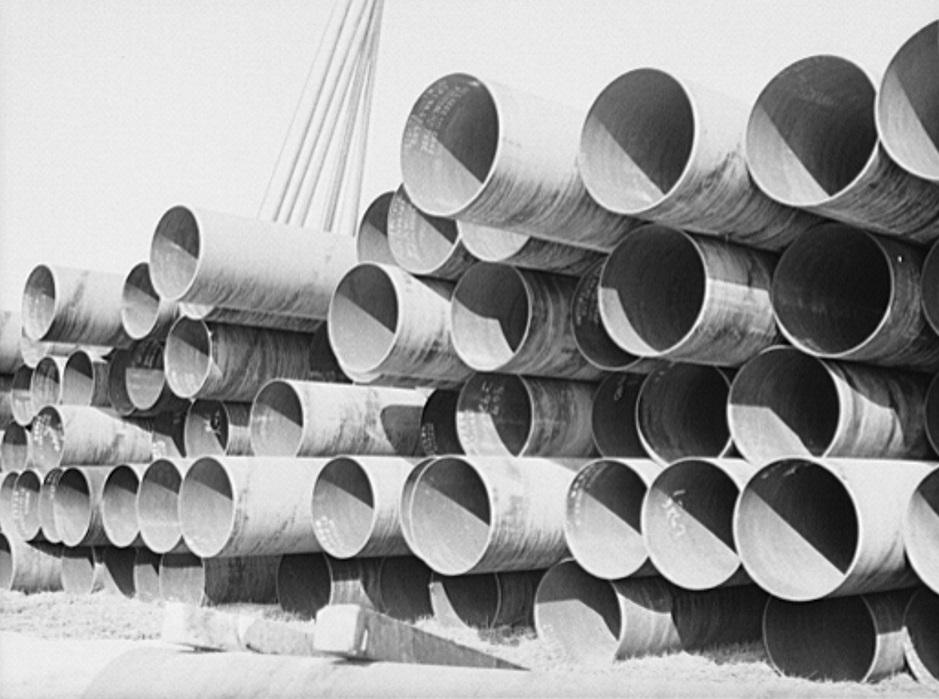
More than 1,250 miles of 24-inch-diameter pipe was laid in a four-foot-deep and three-foot-wide ditch, reaching from Longview, Texas, to Phoenixville, Pennsylvania, with the two additional 20-inch lines reaching from Phoenixville into Philadelphia and through New York City into Linden, New Jersey.
According to the TETC study, the Inch Pipelines required approximately 35,000 purchase orders, 200 contract negotiations between 82 construction contractors, and the employment of more than 16,000 workers.
Maj. Jubal Parten, a prominent Texas oilman and one who had successfully fought against Roosevelt’s efforts to regulate the Texas oil industry, was selected by Ickes to manage the construction of the pipelines as the director of the Transportation Division of the Petroleum Administration for War. At the end of 1942, Parten proclaimed the Inch Pipelines to be “the most amazing Government-industry cooperation ever achieved.”
It was during this week in history at 2:22 p.m. EST on July 19, 1943, that the final weld for the world’s longest pipeline at the time—The Big Inch—was completed at Phoenixville. Secretary Ickes was present to dedicate the achievement, calling it “the task of victory for the freedom of all men.”
Shortly after completion, the pipes were transporting 500,000 barrels of oil per day—nearly double the pre-war total—fueling the provision of war materiel for the Allies, the Americans, and ultimately powering the overall “victory for the freedom of all men.”