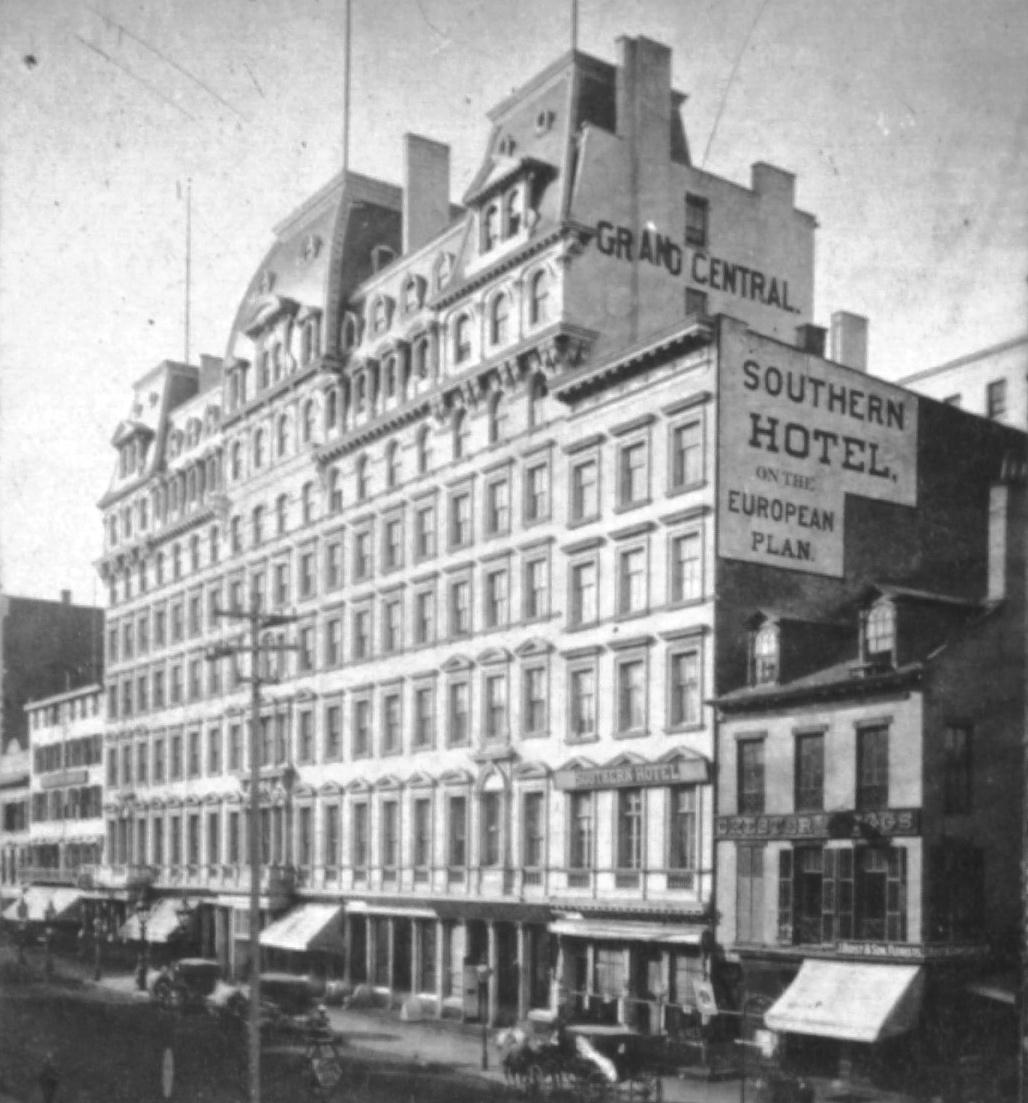
On the morning of March 23, 1867, an alarm went out on Bleeker Street and Broadway. The Winter Garden Theatre was on fire. The New York City firemen were quickly on the scene, but hardly quick enough to save the theater. They were able to salvage the building that housed the theater. The Southern Hotel, formerly known as the LaFarge House, survived the fire, but barely. The damage assessment was approximately $250,000 (nearly $5.5 million today).
In March of the following year, the LaFarge estate sold the site of the Southern Hotel at public auction. One of the city’s wealthiest individuals at the time, Elias S. Higgins, purchased it for $1 million. His plan was to build a new hotel. Subsequently, he hired architect Henry Engelbert, known for his French Second Empire style. It would be the second hotel Engelbert had designed for Higgins. The first was the still-standing Grand Hotel, built in 1868.
Chicago’s New Baseball Team
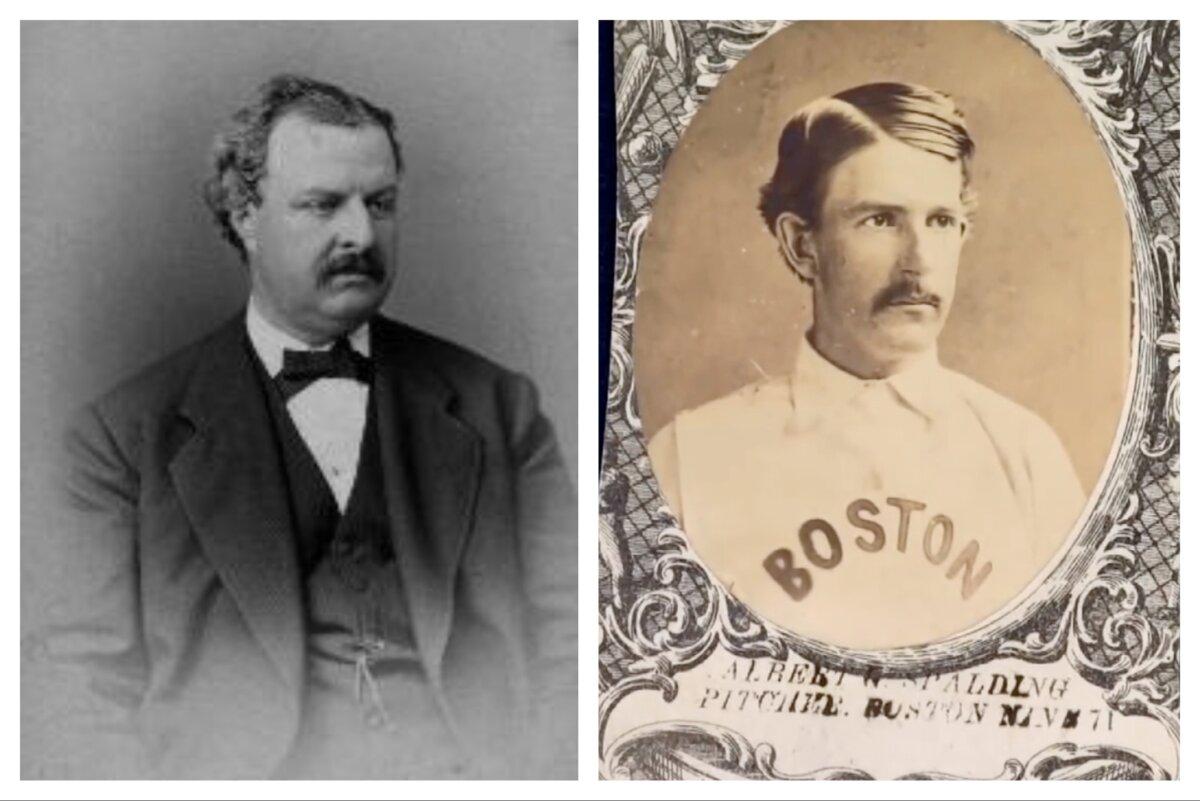
In Chicago, William Hulbert had finally kicked alcoholism, saved his marriage, and began staking his claim as one of the city’s most promising and upstanding businessmen. He had made a successful go in the grocery store business, which had been started by his father. He then invested in coal and real estate. Another financial opportunity arose for Hulbert: baseball.The National Association of Base Ball Players had recently held its last annual meeting on Nov. 30, 1870. The organization’s expiration was unexpected, as was what transpired afterward. Out of this association grew two separate organizations: the National Association of Professional Base Ball Players (NAPBBP) and the National Association of Amateur Base Ball Players (NAABBP). With the NAPBBP, no longer would there be argument or reservation about paying players. Without a hiccup, the new association scheduled its first season for 1871.
Rebuilding Chicago and the Team
Included in the path of the Great Chicago Fire’s destruction was Lake Front Park, where the White Stockings played. The club would not field another team until 1874. The Great Chicago Fire, however, was followed by the Great Rebuilding, and part of that rebuilding was a new baseball park on 23rd Street.

The years of 1874 and 1875 were not nearly as successful as the team’s opening season. Hulbert knew who could turn the club around: Albert Spalding. Spalding was one of the NAPBBP’s best players. A dominant pitcher and a good batter for the Boston Red Stockings, he also knew what it took to manage a team. Hulbert had recently been offered the presidency of the White Stockings, leading him to consult with Spalding. Hulbert told him that he would only accept the presidency if Spalding would manage the team as well as play. Spalding accepted.
Along with Spalding, Hulbert signed some of the National Association’s leading performers, including Adrian Anson, Cal McVey, James “Deacon” White, John Peters, and Ross Barnes. In a sense, in signing up these players—mostly from Boston, one from Philadelphia and another from Milwaukee—Hulbert took revenge on some of the eastern teams, like Boston’s and Philadelphia’s.
Time for a New League
In its five seasons of existence, the NAPBBP proved to be a weak governing body. Some teams refused to abide by the schedule; players often broke their contracts and signed with another team during a season; all too often players appeared drunk on the field; and lastly, gambling was rampant, at times players threw their games. The league was in ruins, and the game itself was at risk. After thorough talks with Spalding, Hulbert attempted a major overhaul.The Perfect Setting
“It is the earnest recommendation of our constituents that all past troubles and differences be ignored and forgotten, and that the conference we propose shall be a calm, friendly and deliberate discussion, looking solely to the general good of the clubs who are calculated to give character and permanency to the game.”
For such a meeting, only one place would suffice: “We therefore invite your club to send a representative … to meet us at the Grand Central Hotel, in the city of New York.”
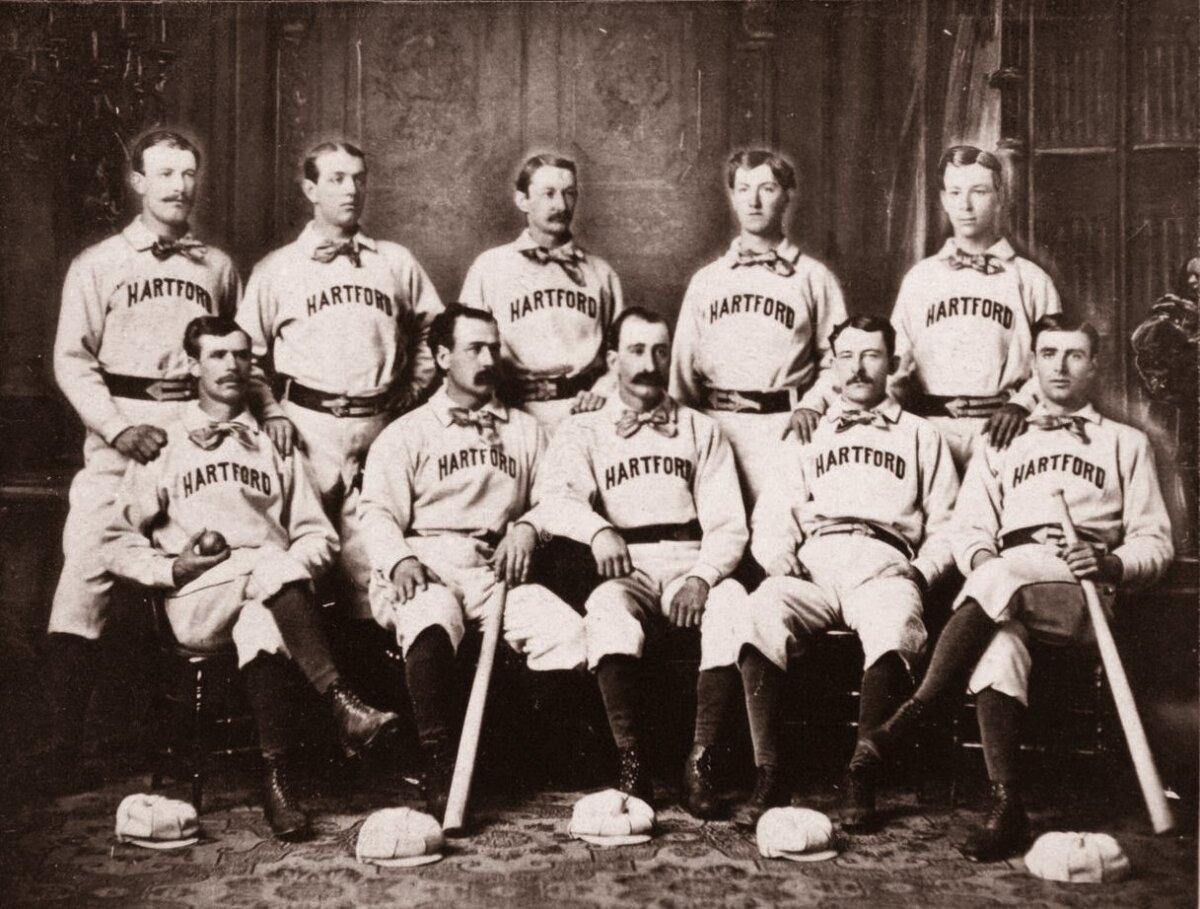
It was during this week in history, on the afternoon of Feb. 2, 1876, that at least nine men met at the Grand Central Hotel. Among them were Hulbert; Fowle; George Thompson, of Philadelphia; Nicholas Apollonio, of Boston; Morgan Bulkeley, of Hartford, Connecticut; William Cammeyer, of Brooklyn, New York; Harry Wright, as secretary pro tempore; NAPBBP secretary, Nicholas Young; and the Chicago Tribune’s Lewis Meacham.
Just as the meeting was about to start in the hotel room, Hulbert walked to the door and locked it.
Forming the National League
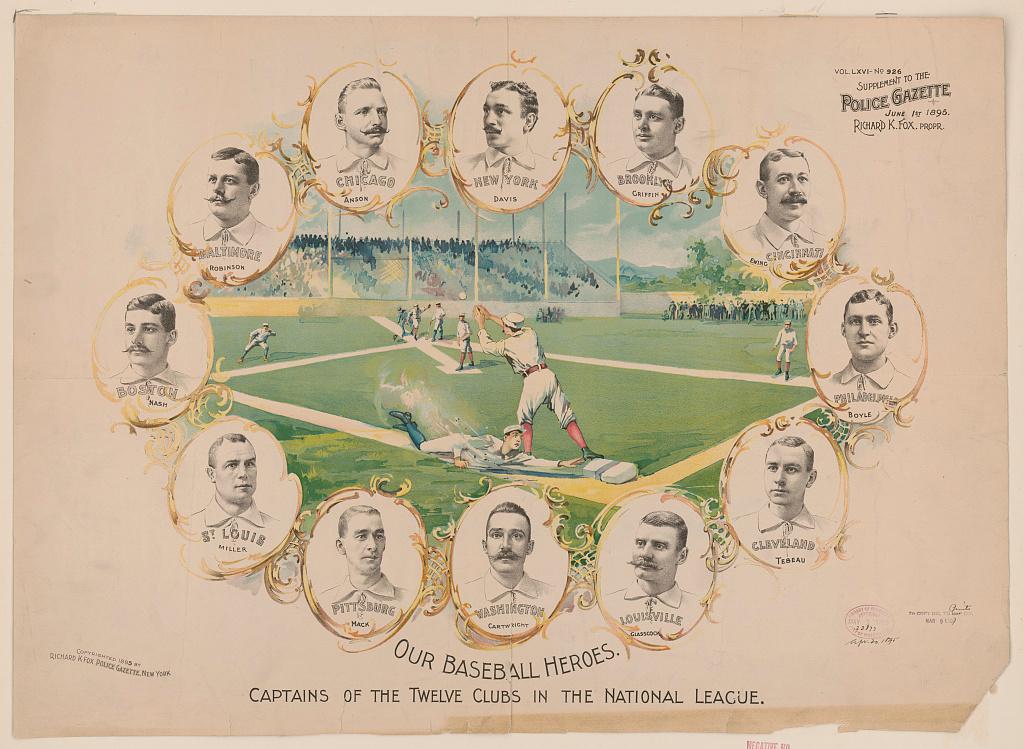
For about that hour, Hulbert denounced the evils of “base ball” in its current form: the drunken and obscene behaviors; the broken contracts, the distrust between the clubs; and, most prominently, the distrust fans had with the game and its players due to gambling. He then presented a thoughtfully prepared “constitution” for a new organization he called “The National League of Professional Base Ball Clubs.”
Among the numerous rules, this constitution mandated only one team per city (or at least no less than five miles apart); no city with a population less than 75,000 could form a club; if a player signed a new contract, he could only play for the new team once his initial contract had expired; a player expelled from a team, could not play for another team, except upon successful appeal to the league; annual club dues were required; violation of league rules could result in termination of a club’s membership; no official games on Sunday; uniformed players could not sit in the stands; and gambling was strictly prohibited among players and the fans.
Lastly, Hulbert presented the final resolution, which required a signature from each representative. It read:
“We, the undersigned, Professional Base Ball Clubs of the United States, by our representatives in convention assembled, in the city of New York, this second day of February, A. D. 1876, lamenting the abuses which have insidiously crept into the exposition of our National Game, and regretting the unpleasant differences which have arisen among ourselves growing out of an imperfect and unsystematized Code, with a view of relieving ourselves from the incubus of such abuses, of promoting harmony and good-fellowship among ourselves, of elevating and fostering our national sport, and of protecting the interests of our players, hereby pledge each other that we will withdraw at once from the ‘National Association of Professional Base Ball Players,’ and we hereby announce that we have this day organized ourselves into a ‘National League of Professional Base Ball Clubs.’”
Each man walked out of the Grand Central Hotel attached to a new league. Although the hotel itself only lasted until 1973 (just long enough to host the league’s 50th and 75th anniversary celebrations), the National League celebrates its 150th anniversary this year.
In 1901, 25 years after the historic meeting, the American League formed as a competitor to the National League. The two leagues agreed to merge in 1903, forming Major League Baseball.