After he made the first-ever solo, nonstop flight across the Atlantic Ocean in 1927, aviator Charles Lindbergh instantly became one of the year’s most recognizable and celebrated people. He was TIME magazine’s first “Man of the Year.” Smithsonian listed him first in their “1927: A Year in the Collections.”
Everywhere he went after completing that ground-breaking 33.5-hour flight, he was met by crowds in the thousands and honored with parades, medals, awards, and more.
Five years later, Lindbergh, despite securing privacy on a large, rural New Jersey estate, was once again in the spotlight, but for a horrendous reason. He and his wife Anne’s firstborn son was kidnapped and then found dead.
Despite—or most likely due to—the accolades and attention by the media and general public, Lindberg in his later years eventually sought the remoteness of Maui, one of Hawaii’s eight major volcanic islands. There, near the entrance to the Kīpahulu District of Haleakalā National Park, Lindberg settled into a home and found a church.
When he was diagnosed with cancer in 1974, he asked to be buried in the small, tropical graveyard of the circa-1857 Palapala Ho'omau Church, which he attended. His request was granted when he died, at age 72, in August of that year.
In keeping with his desire for an unassuming gravesite, he sketched a minimal design before he passed. Lindbergh’s resting place is indeed difficult to find amid the overgrown and informal graveyard.

Ensconced in the Hawaiian Wild
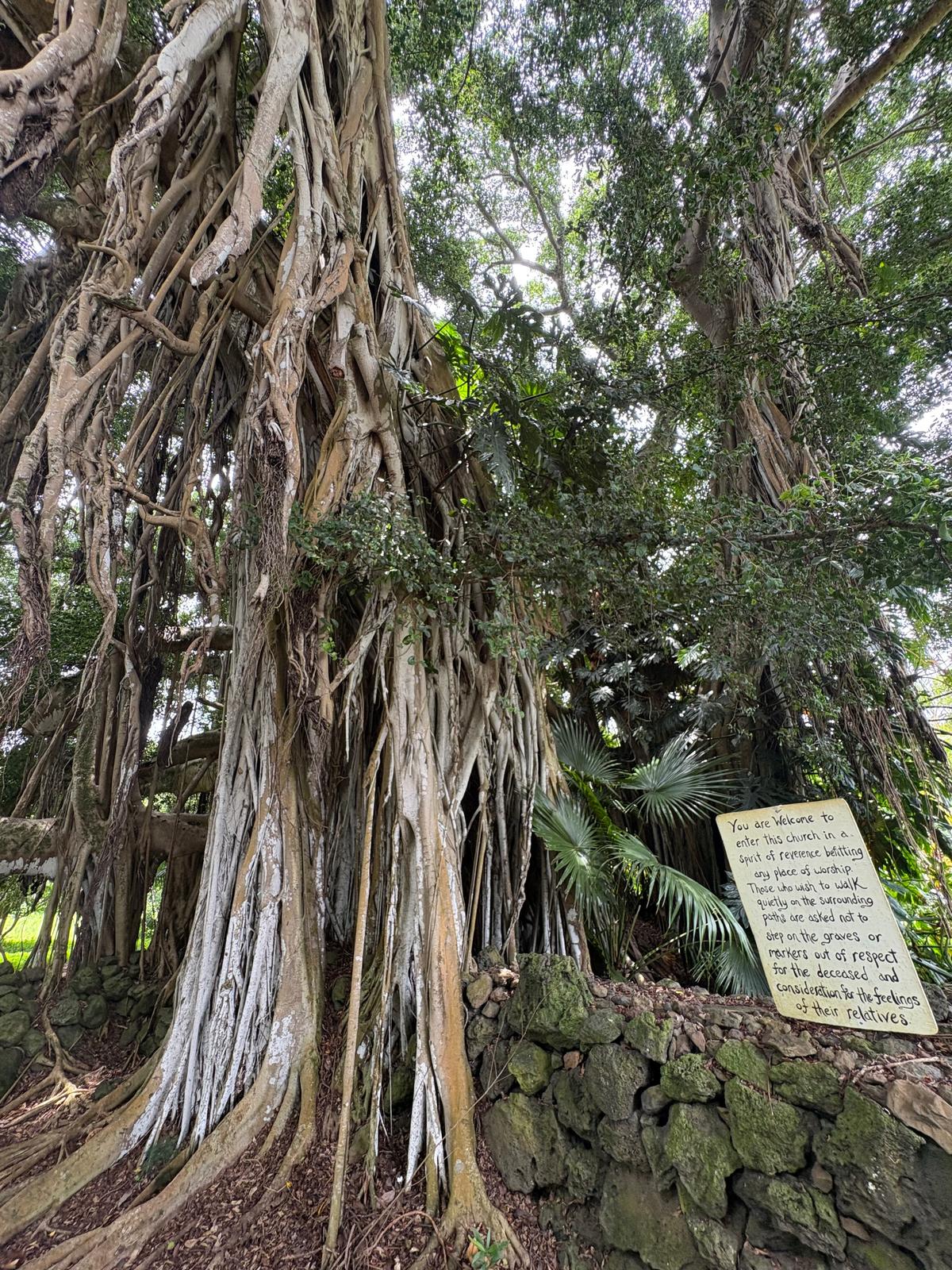
The church might be undiscoverable to travelers if not for the directions of National Park rangers at the Kīpahulu District entrance gate. Whether you enter the area from the middle-island Route 37 or the narrow and winding Hana Highway along the coast, no visible signs or landmarks distinguish Palapala Ho'omau Church. Dense tropical foliage obscures driveways and the area’s few dwellings. It’s simply one of those locales that requires specific instructions for visitors to find.Even after determining that an honor-system fruit stand, lava-rock wall, and massive banyan tree are markers to finding the church’s gravel driveway, a canopy of trees overhanging the road partially conceals the structure. But a short trek off the main road eventually leads to parking spots in front of the small, limestone-and-lava-rock, teal clapboard Palapala Ho'omau Church.
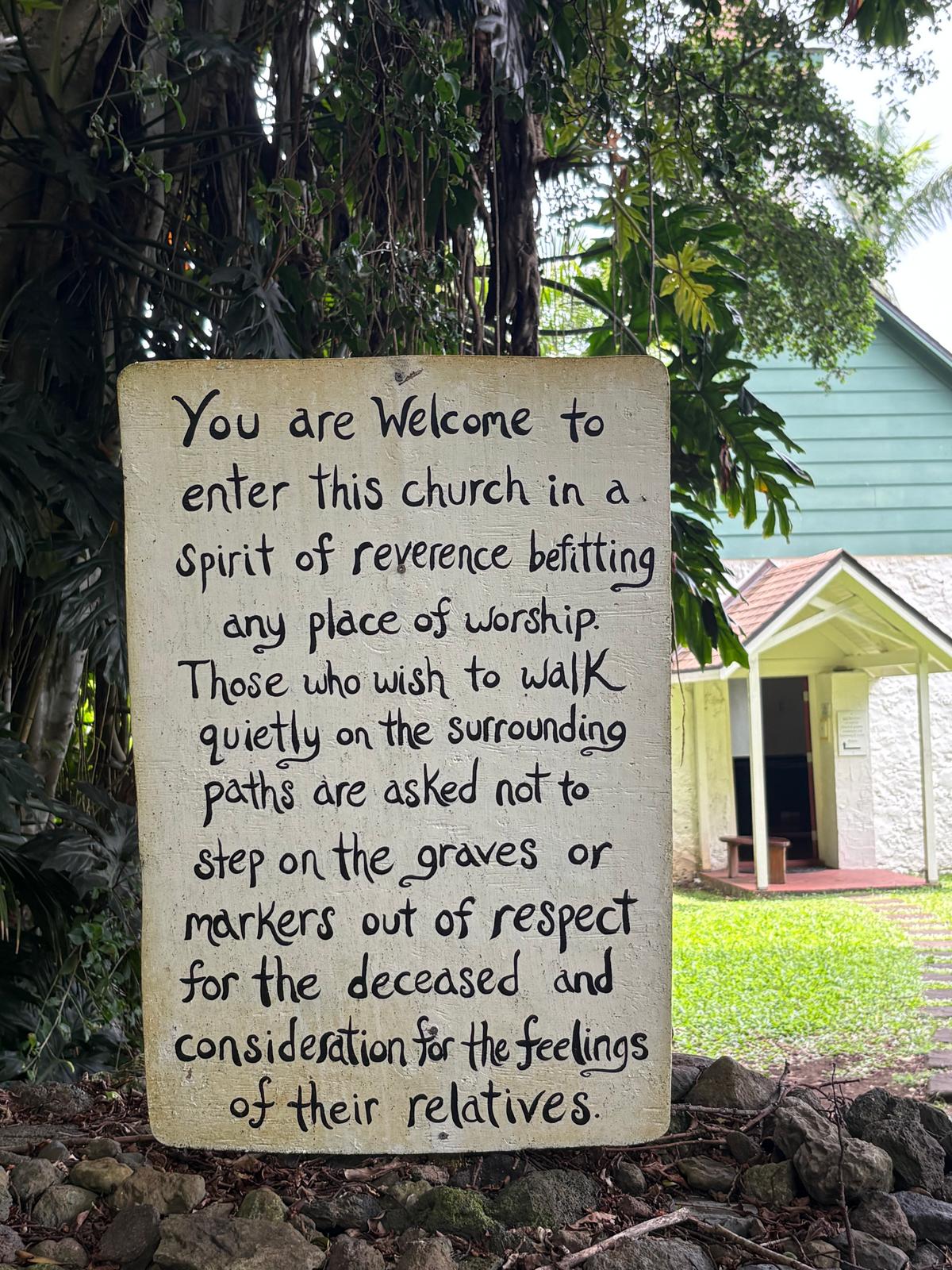
No sign indicates that the famed aviator rests among the gravesites. These are haphazardly situated among breadfruit, coconut palm, and banana trees. Greeting visitors, instead, is a handwritten sign that reads: “You are welcome to enter this church in a spirit of reverence befitting any place of worship. Those who wish to walk quietly on the surrounding paths are asked not to step on graves or markers out of respect for the deceased and consideration for the feelings of their relatives.”
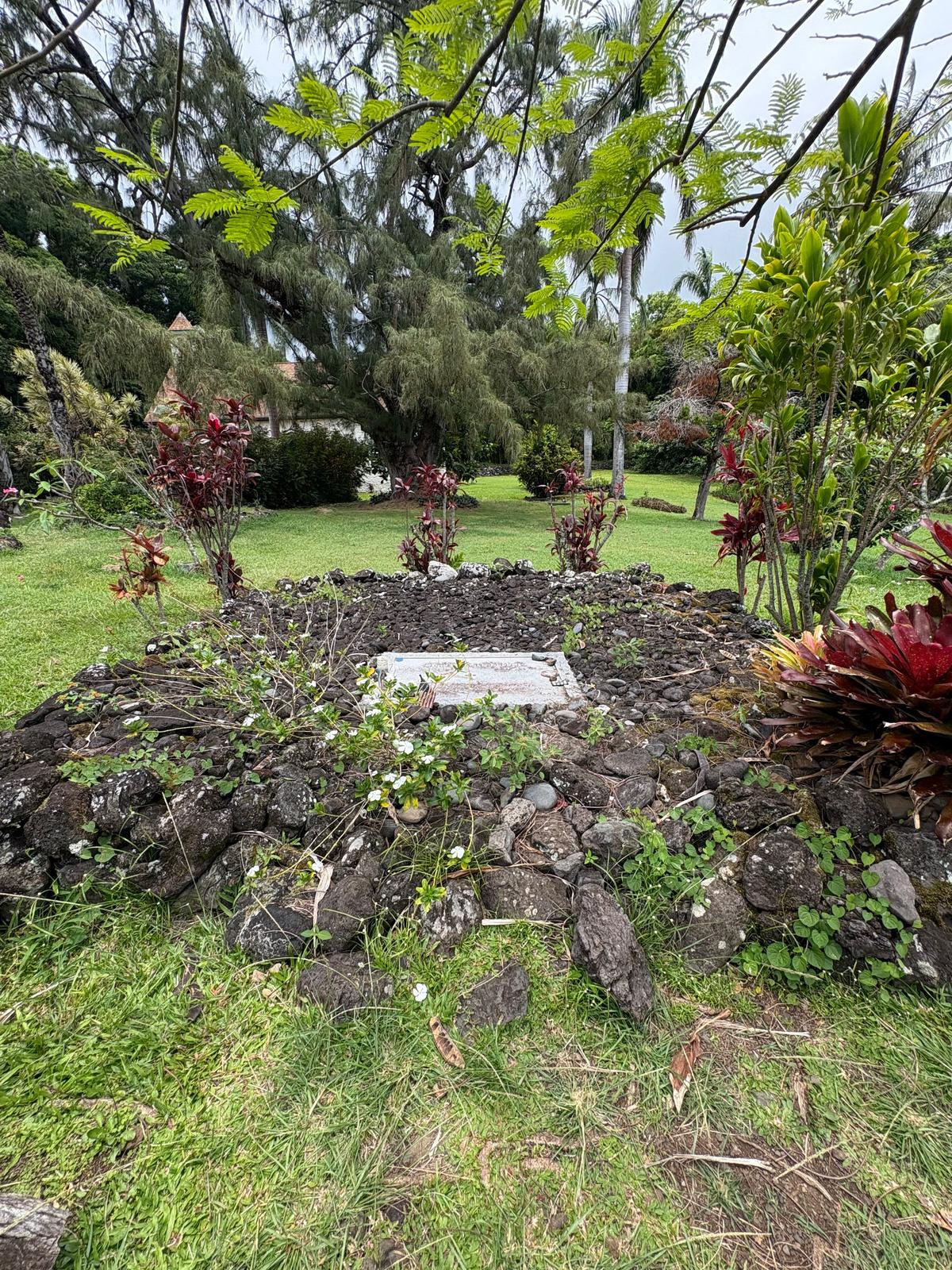
In an open spot surrounded by a native bromeliad (bright tropical plant) named “Neoregelia Royal Burgundy” is a pile of lava rocks about a foot deep. In the middle is a granite gravestone. Mildew has taken over most of the stone and the words are difficult to read.
Besides his birthplace and year, as well as place of his death and year, Lindbergh chose the biblical scripture from Psalms 139:9 to grace his gravestone: “If I take the wings of the morning, and dwell in the uttermost parts of the sea.” Placed around the gravestone by visitors are such tokens as a fresh, bright pink plumeria bloom, a macadamia nut bracelet, a pilot’s wing pin, and a small metal plane.
While no gravesites in the modest churchyard are showy, a few stand out more than Charles Lindbergh’s. One well-maintained gravesite surrounded by a hand-stacked, stone wall and adorned with planted flowers, memorializes five sailors who were “lost at sea off Hana, Maui” on Feb. 11, 1979, when their 17-foot Boston Whaler fishing boat, the Sarah Joe, disappeared.
While it lacks ostentation and spectacle, Charles Lindbergh’s gravesite is worth the quick detour off a beaten path if you’re traveling to Maui. It not only inspires study into Lindbergh’s remarkable accomplishment, but also affords travelers a glimpse at the 19th-century island church, situated in a quiet but exotic setting, that the famous American chose as his burial site.