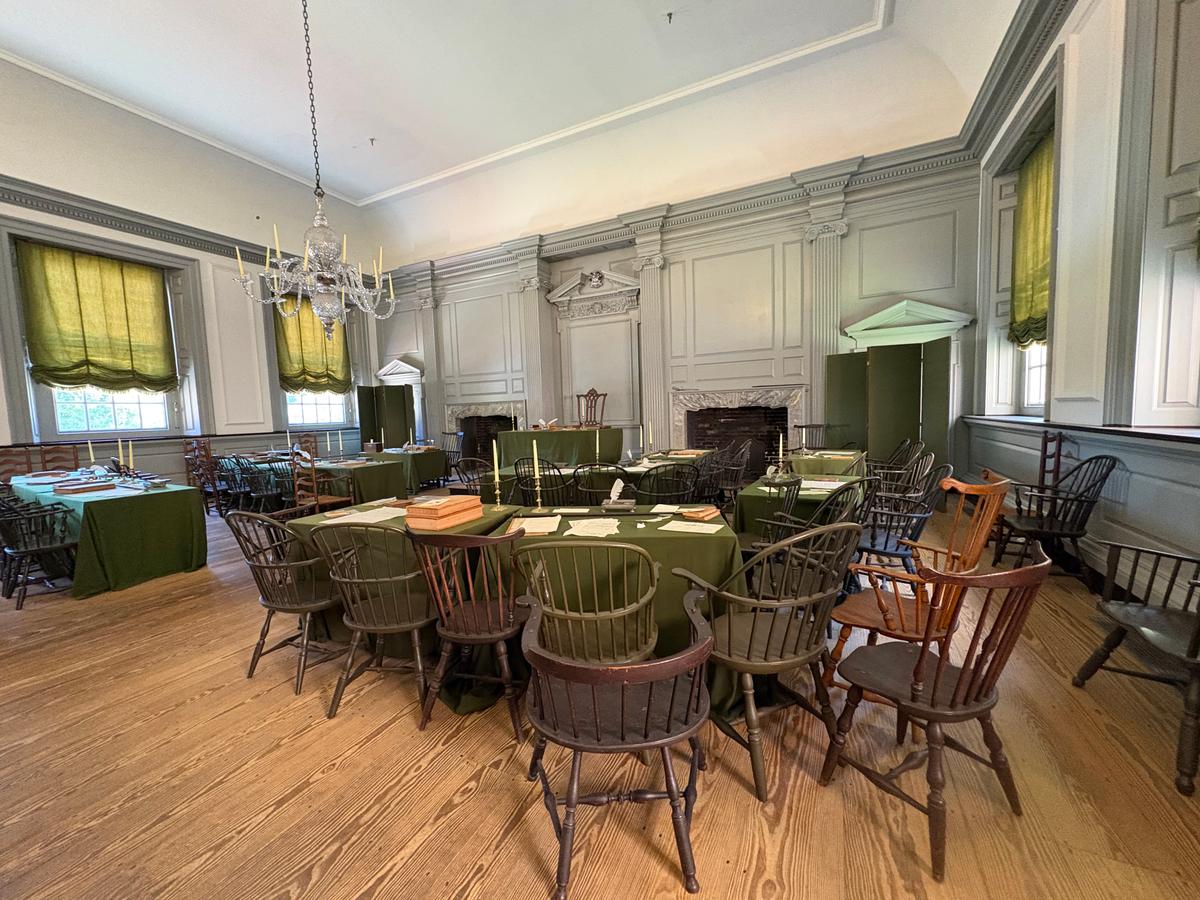
Countless visitors have walked into the Pennsylvania State House in Philadelphia. There, it’s easy to imagine the founding fathers sitting in the Windsor chairs or standing around tables equipped with silver inkstands and quills. In this surprisingly small room, they hashed out the wording of the Declaration of Independence and the Constitution. Greats such as Thomas Jefferson, George Washington, John Adams, and John Hancock were among many who met and debated in what’s now referred to as Independence Hall.
Another notable figure who actually lived and worked a few blocks from the important American structure was Benjamin Franklin.
Tourists and Philadelphia natives alike flock downtown to the National Park Service’s 51-acre Independence National Historical Park primarily to view the centerpieces: the State House and Liberty Bell. They may not realize that Franklin Court is also part of the park and a short walk from those main attractions. This area, which features a museum, informative signs, and a conspicuous row of brick, colonial-style attached buildings, is what Franklin called his “neighborhood.”
Post Office With a Historic Purpose
Situated in the long colonial-style building is a three-story rowhouse post office. It serves to help recognize Franklin’s service to the postal system, which he helped establish. Open to the public, it’s called the B. Free Franklin Post Office. “B. Free” was the the tongue-in-cheek signature Franklin adopted after he became postmaster for the city of Philadelphia in 1737. It was his way of communicating the call for America’s freedom from British rule.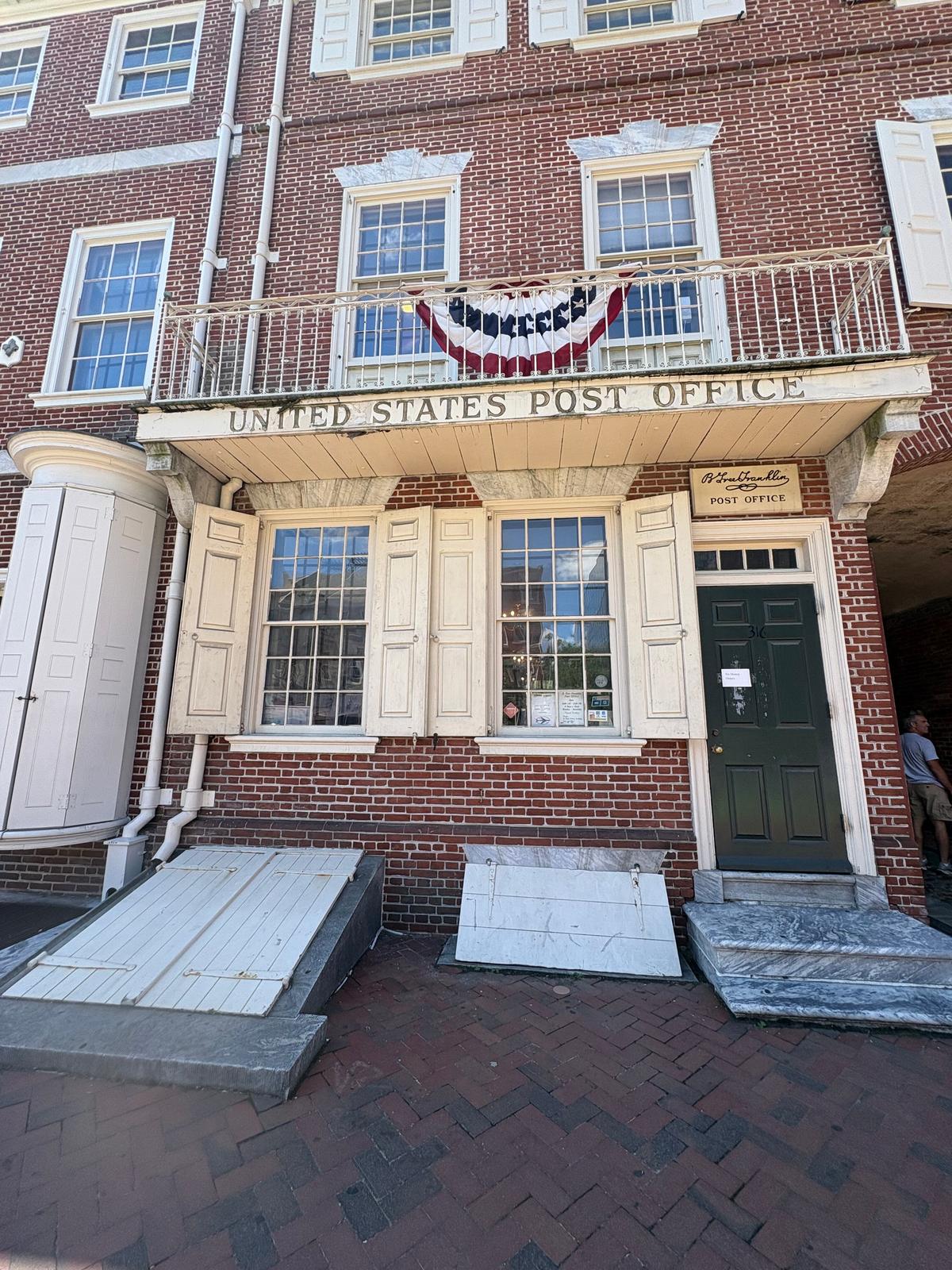
On July 26, 1775, when the Second Continental Congress established the official U.S. Postal System, Franklin was named the first American postmaster.
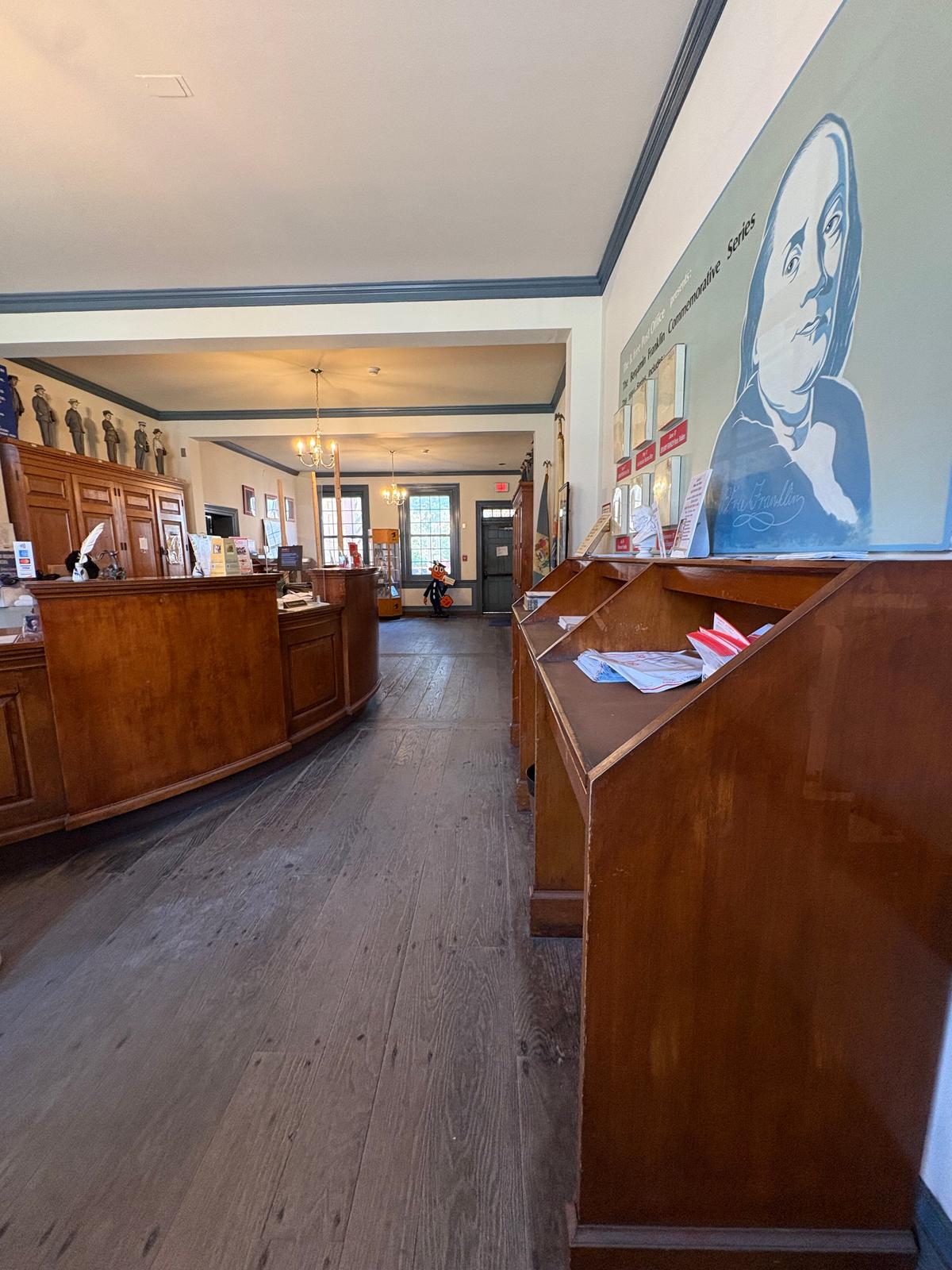
Visitors can step onto a small marble landing and walk into the small post office. Over the gray door is Benjamin Franklin’s “B. Free Franklin” signature. Beside the door are two multi-paned windows with cream-colored shutters. Inside, the space has a simple trey-ceiling, outlined in colonial-blue trim molding. The rounded, polished, and paneled postal counter hosts plenty of informational signs that highlight Franklin’s life. A bronze bust of the renaissance man, who achieved success as a writer, scientist, inventor, statesman, diplomat, printer, publisher, and postmaster, is on one of the wooden counters that patrons use.
The limited-service B. Free Franklin Post Office mostly sells stamps. It’s also a museum of sorts. Displayed is a framed image of the first two stamps sold in the United States: one for 10 cents featuring the likeness of George Washington, and the other 5 cent stamp with a drawing of Franklin.
B. Free Franklin Post Office employees often don period costumes and write with quill and ink to provide an aura of 18th-century authenticity. Visitors can mail a postcard from this post office and USPS workers will hand-cancel the stamp.
Franklin’s Improvements
Signs inside the post office informs visitors how Franklin continuously sought to improve the colonial mail system by establishing more efficient mail carrier routes. He also standardized delivery costs by basing them on both distance and weight.The British fired Franklin from his postmaster duties in 1774 when they learned he was a patriot, but he was a natural choice to lead the new country’s postal system when it was established the following year. In just one year, Franklin was able to extend mail delivery from Maine to Florida.
One B. Free Franklin Post Office sign reads: “Our present Post Office descends in an unbroken line from the system Benjamin Franklin planned in 1775.”
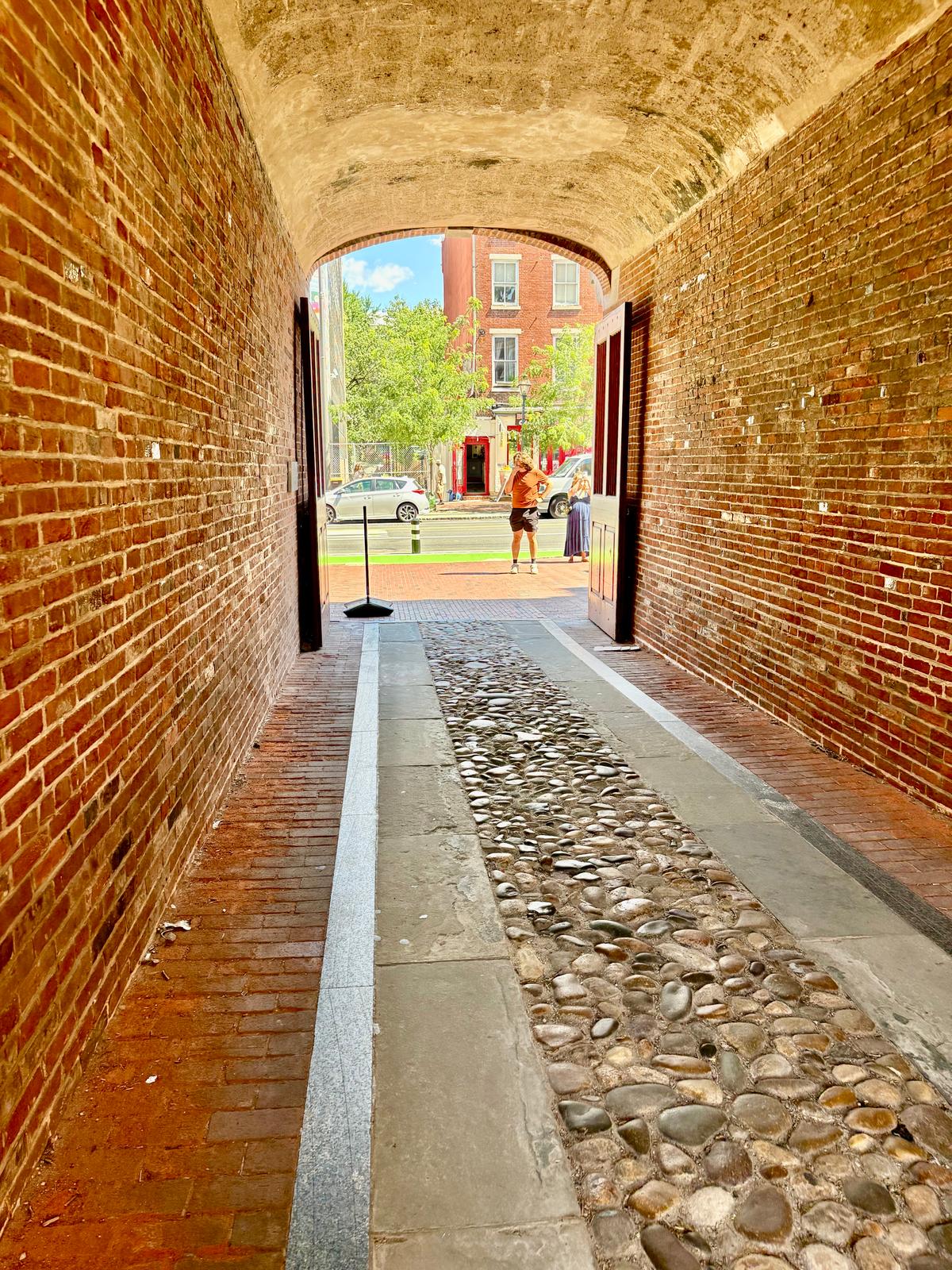
An arched corridor with brick walls and cobblestone pavers connects Franklin’s house and gardens with the back of the buildings. Through this corridor, Franklin walked daily from his home to the street’s sidewalk. When duty called, he would continue the few blocks to Philadelphia’s Chestnut Street to fulfill his obligations as a member of the Continental Congress and the Constitutional Convention.
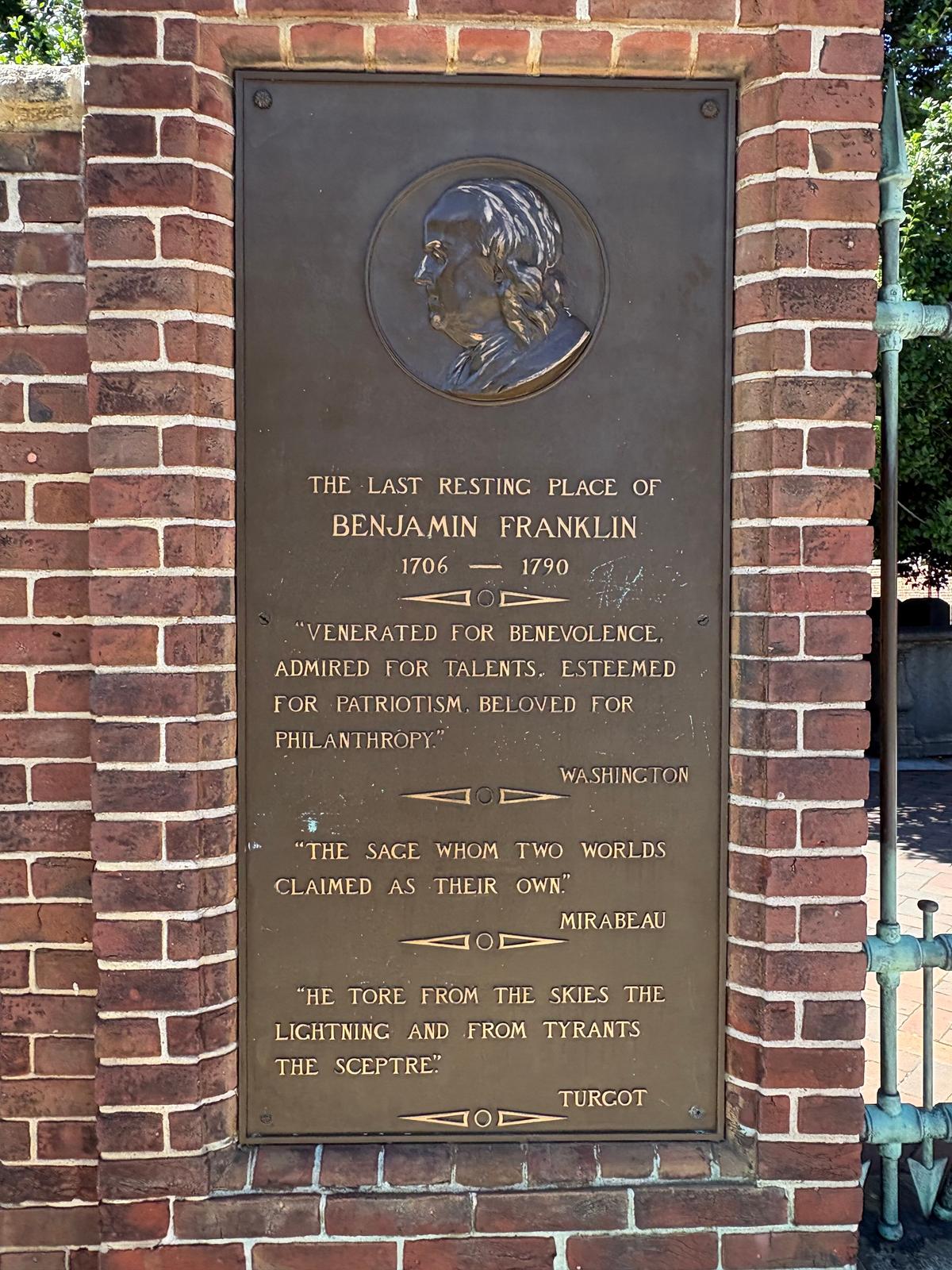
When he died in 1790, Franklin was buried in the Christ Church Burial Ground, just around the corner from the B. Free Franklin Post Office. In essence, Benjamin Franklin stayed in his beloved neighborhood, where he lived and worked—as well as contributed extensively to our country’s foundation.