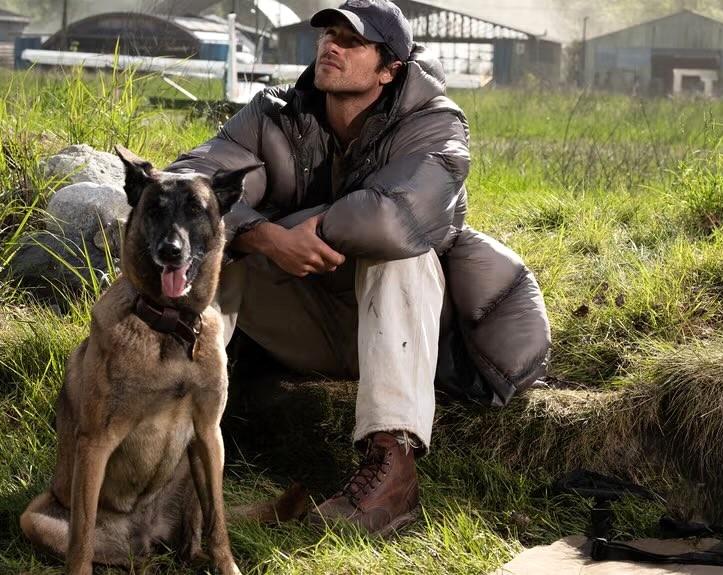
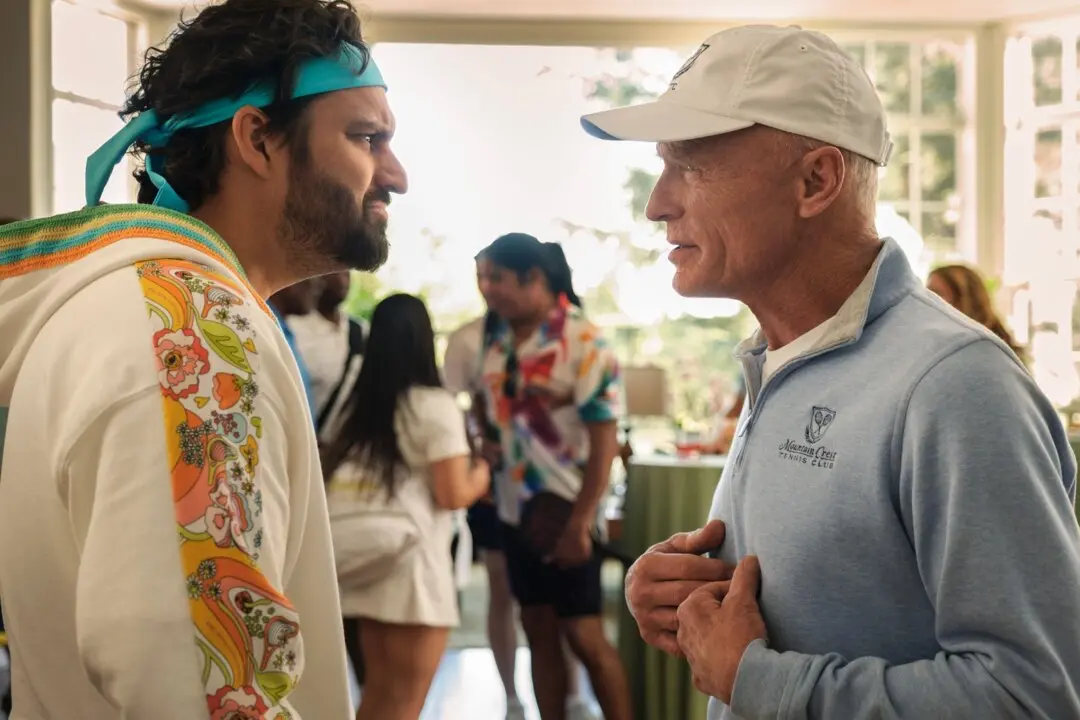
My first takeaway after hearing about the premise of “Good Luck, Have Fun, Don’t Die” (“Good Luck”) was: OK. It’s just another movie about the real dangers of Artificial Intelligence (AI) that will be labeled as implausible science fiction. It can’t and never will happen. AI doesn’t pose a threat to life as we know it. It will only help mankind. We’ll be fine.
Humanity as a collective has a painfully short attention span. As far back as 1927 (“Metropolis”), the movie industry has pointed out how awful AI would be if it ever came to fruition. Well over 100 movies and almost a century later, we’re still willfully ignoring the message.
Los Angeles, 10:10 p.m.
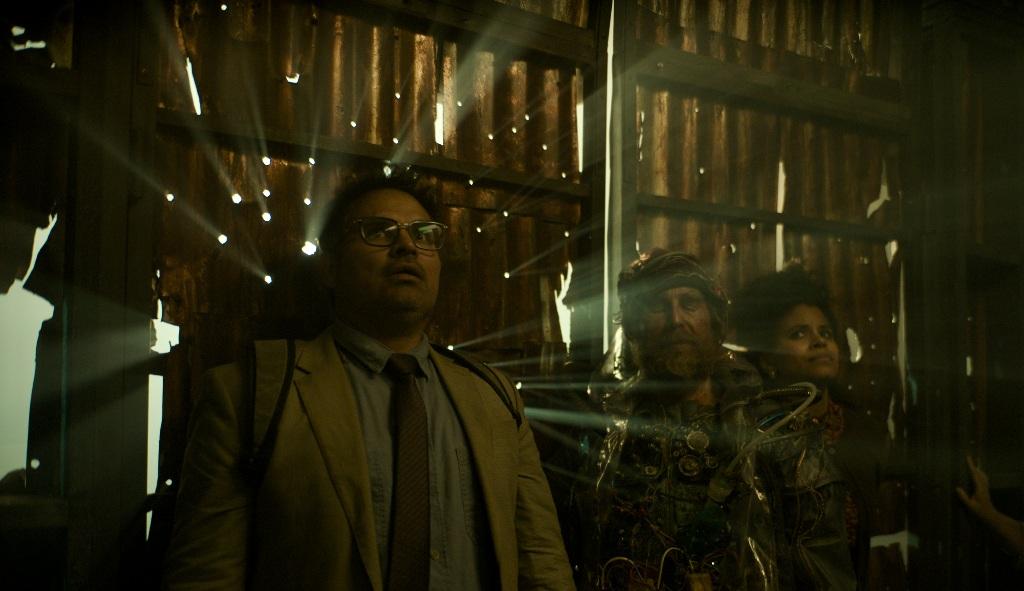
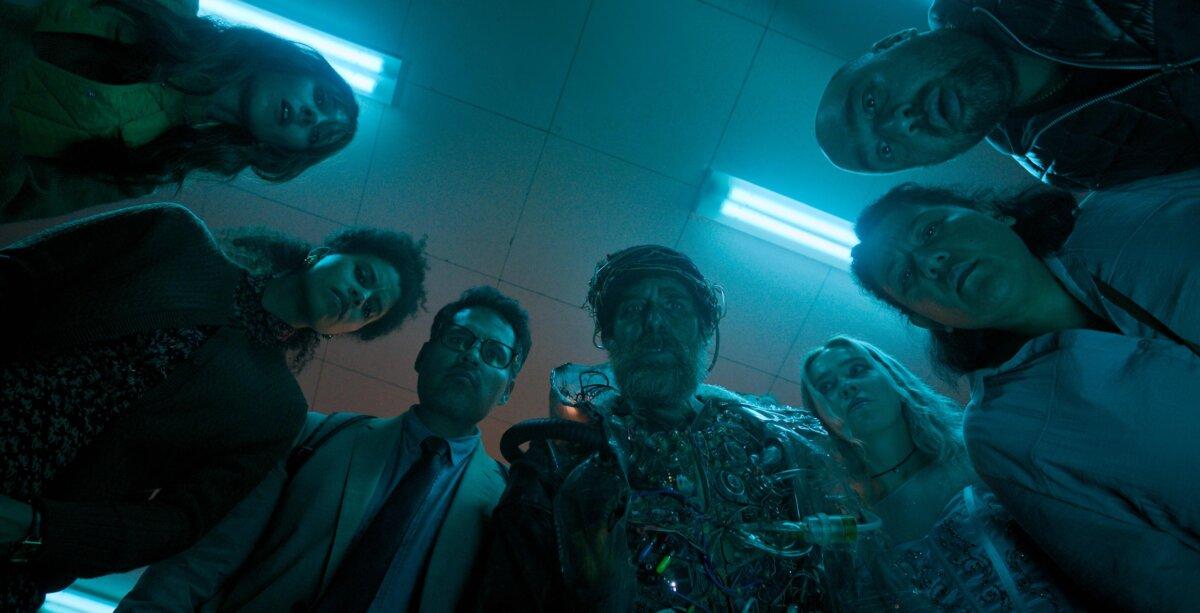
The movie opens in the present day at 10:10 p.m. in a Los Angeles diner. Showing up out of thin air is the Man From the Future (Sam Rockwell) donned with suicide bombs, questionable hygiene, and a see-through raincoat. He declares that he’s been there 117 times before, and the result is always the same: He fails and the world ends.Little by little, Future Man begins to chip away at the diner’s collective disbelief. He convinces a half dozen or so of them (who have already done so before but don’t realize it) to join him in an effort to try and stave off the inevitable—which, again, will likely fail.
Opening Salvo
This scene goes on for 13 minutes before a quick title card and no opening credits. It is the first of around 10 chapters that hopscotch between the past, present, and future.
Second up features couple Mark (Michael Peña) and Janet (Zazie Beetz). They are teachers at the same high school who are going through a slight rough patch. Every one of their coworkers is petrified of the students at the school—and for good reason.
These veritable teen zombies are glued to their phones; some are doomscrolling, some gaming, and all having zero interest in actually getting an education.
Non-Spoiler Spoiler Ahead
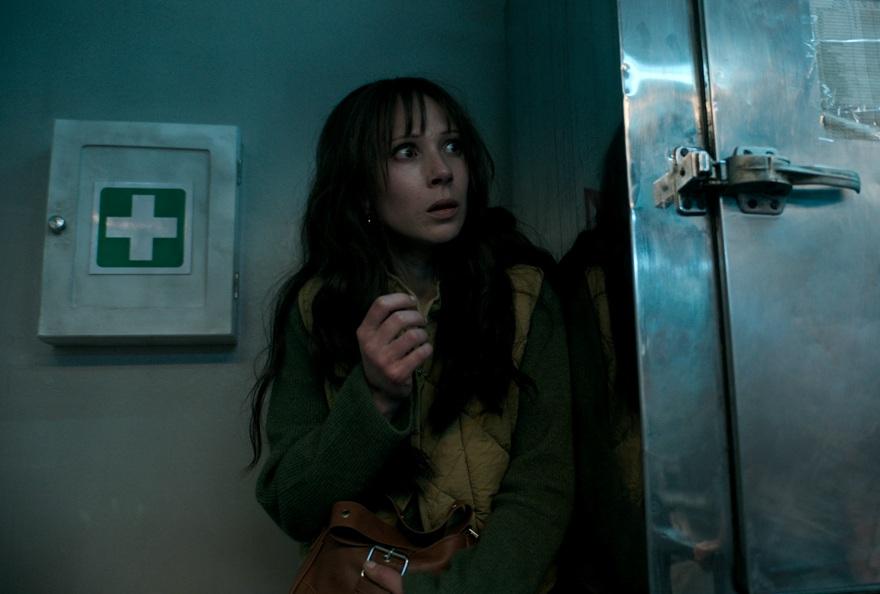
The next past segment is spent in the company of Susan (Juno Temple), the mother of a boy killed during a school shooting. When offered the opportunity to assuage her grief (at the great taxpayers’ expense, of course), Susan opts in, yet eventually she regrets her decision. This scenario is revisited and is updated in the final 15 minutes.Easily the hardest-hitting and emotionally rewarding subplot of the movie involves Ingrid (Haley Lu Richardson). Future Man dubs her “Princess” because of her garb presented in the opening scene. Ingrid is more than willing to join Future Man, but he initially refuses to accept her offer for reasons not fully explained until late in the third act. Ingrid also manifests physical maladies when within short proximity of Wi-Fi and cell phones.
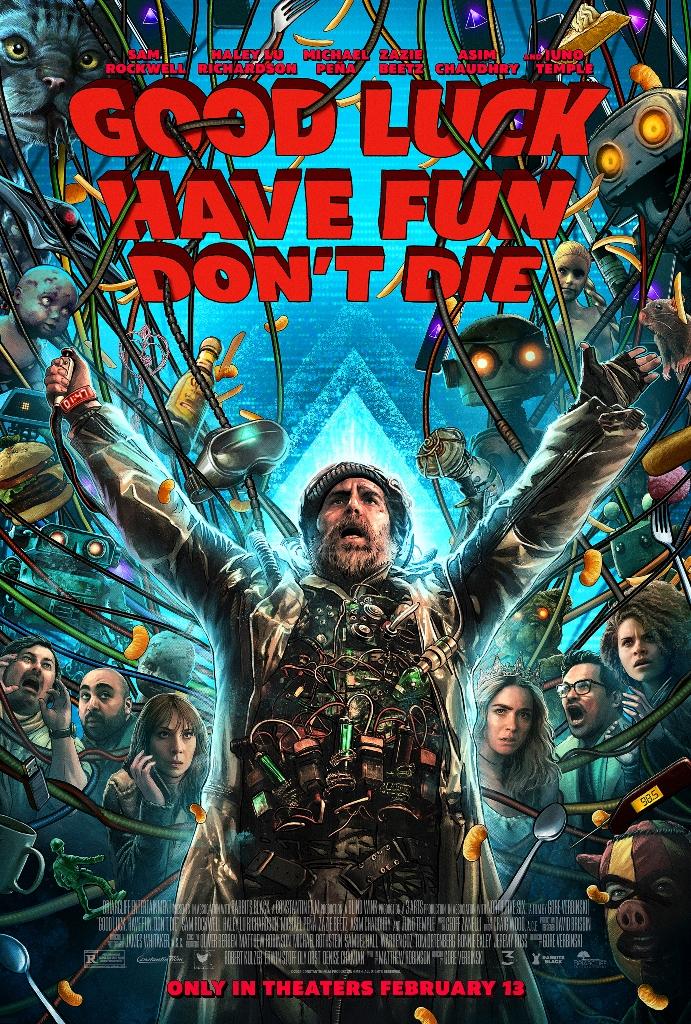
For Verbinski, “Good Luck” is his first feature in close to a decade and is arguably the finest of his career. He achieved huge box office success with the first three “Pirates of the Caribbean” installments, which I found technically impressive but creatively wanting. They are as deep and thoughtful as the theme park ride that spawned them.
What’s It Like?
“Good Luck” is closer in spirit to Verbinski’s more pointed and equally sarcastic “The Weather Man” (2005) and the animated “Rango” from 2011.While watching an advance screener for the movie, I noted similarities to “12 Monkeys,” “Lucy,” “Looper,” “Animal House,” “Groundhog Day,” “Fight Club,” and, oddly enough, “Patton” because of a pointed musical score similarity.
It is my last wish to come off as a “Karen” or a “Debbie Downer,” but I believe “Good Luck” is closer to future (or current) science than “science fiction.” Some may believe that allowing AI into our lives will make everything easier, more fun, and beneficial, but I strongly disagree. It is displacing basic human contact and is quickly removing our ability to make common-sense decisions.
AI is not helping us. It’s doing everything it can to render us inconsequential and disposable.
The heavy infusion of observational humor makes “Good Luck” an easier bitter pill to swallow. It ends on an upbeat note, but the message is chillingly clear, blunt, and beyond cautionary.