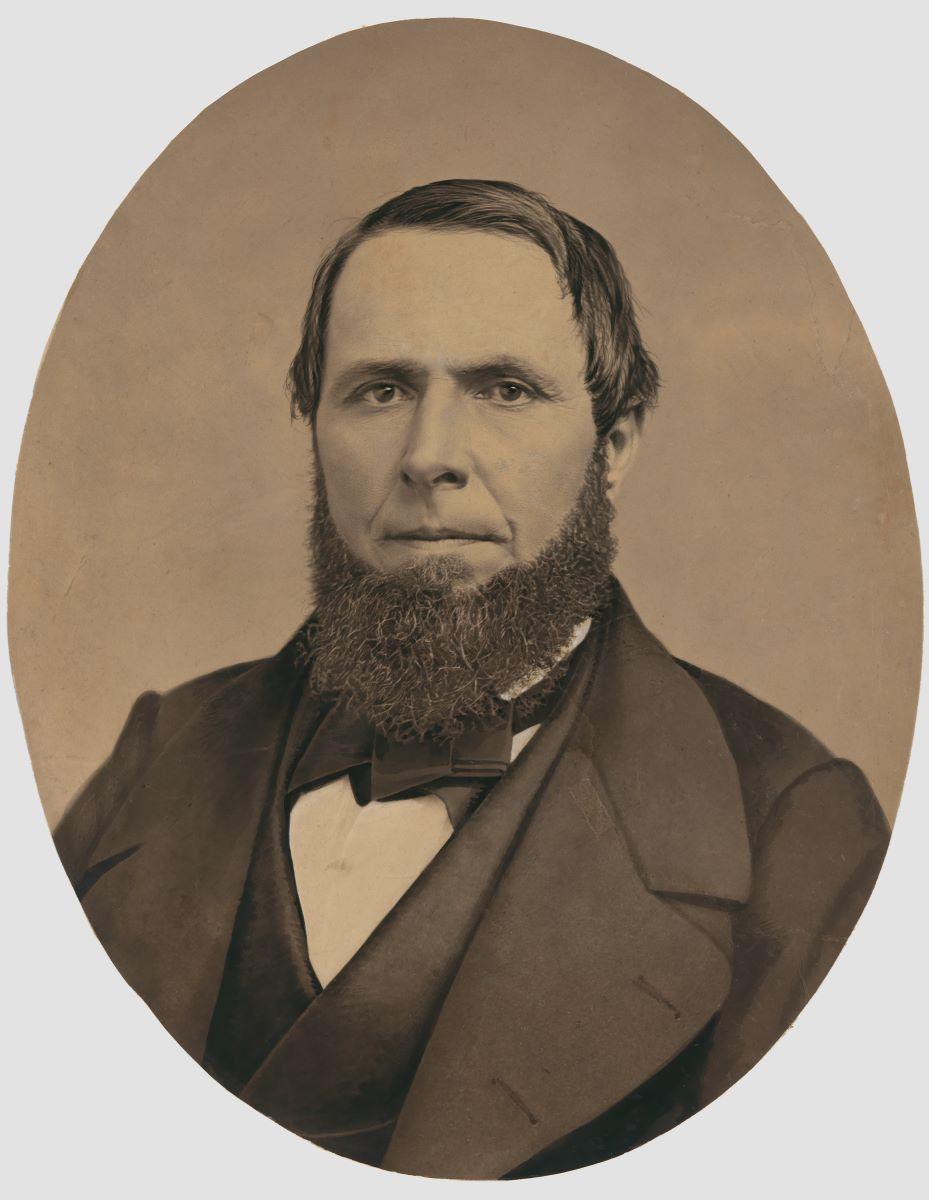
In 1849, Domingo Ghirardelli arrived in California intending to earn his fortune as a gold prospector. It was an unusual enterprise for the Italian-born merchant, who had, up until that point, been mentored and skilled primarily in the confectionary and candy industries.
Life of an Adventuresome Chocolatier
Son of a Genoese importer of spices and exotic foods, Domenico Ghirardelli (pronounced Gear-are-delly) was born in Rapallo, Italy, on Feb. 21, 1817. Giuseppe Ghirardelli exposed his son to a wide assortment of lively tastes, flavors, scents, and colors. Perhaps this early experience motivated him to learn the confectionary trade at a young age, apprenticing under a Genoese candymaker and chocolatier named Antonio Maria Romanengo.Romanengo’s confectionary shop had an incomparably first-class reputation, and Ghirardelli’s apprenticeship taught him the principles and processes of the confectionary industry. He learned the elementals of ordinary candy-making and the preparation of things such as sweetened chocolate paste, as well as the basics of elevated chocolate-making. He learned not only how to create items, but how to effectively market and sell them.
After spending his teenage years apprenticing under Romanengo, Ghirardelli reached a point where he felt confident enough to become his own man and own merchant. Around the age of 20, he traveled to Uruguay and found work in a chocolate and coffee business.
While living in South America, he assumed the Spanish variety of his name, “Domingo,” and in 1838, he moved to Peru and started a confectionary business in Lima where he met an ambitious investor and carpenter named James Lick (1796–1876). Ghirardelli’s store was located adjacent to a cabinet shop owned by Lick. The serendipitous encounter would play a profoundly important role in Ghirardelli’s life.
The peripatetic Lick eventually left South America for San Francisco, bringing with him hundreds of pounds of chocolate that he purchased from Ghirardelli. Lick arrived in California around the time of the discovery of gold at Sutter’s Mill in 1848, and he and Ghirardelli maintained a steady correspondence. Lick shared tales of great fortunes and lucrative opportunities in this sunny, exciting land, no doubt describing the promising fields of prospecting, speculating, and mining. And on top of this, Lick, who died the wealthiest man in California, notified Ghirardelli that he had effectively retailed his chocolate to miners.
Spanning about seven years, the Gold Rush ignited one of the largest migrations in U.S. history, attracting hundreds of thousands to California from across the country and the world, including Ghirardelli. He sailed from Peru to take his chances in a strange, thrilling territory. Initially, Ghirardelli prospected in gold fields in Jamestown and Sonora with little success. But leaning into his mercantile knowledge, he founded a trading store in Stockton where he sold confectionary and mining supplies.
Soon, he opened a general store in San Francisco, on the corner of Broadway and Battery. However, a furious fire on May 3, 1851 destroyed the store that he had worked so hard to establish. Days later, his trading store in Stockton was also consumed by flames.
But the fires didn’t dampen his determination or resilience. Salvaging as much stock and materials as possible, he opened the Cairo Coffee House in San Francisco in September 1851. The Cairo Coffee House wasn’t a successful venture, but its hasty failure provided Ghirardelli a moment of great clarity, forcing the adaptive, resourceful Italian to recalibrate his priorities and redouble his goals.
In 1852, he chose to start another business in San Francisco, opening Ghirardelli & Girard. The shop, which specialized in confectionaries, enlarged into the Ghirardelli Chocolate Company. In September 1853, Ghirardelli relocated his shop and opened a bigger manufacturing facility in 1855.
Despite steady growth, Ghirardelli’s risks were enormous and his potential for failure was equally grand. Manufacturing of chocolate bars in the United States was only in its infancy, but the technology was advancing to make chocolate more affordable and easier to manufacture.
Discovers and Popularizes a New Process
In 1865, one of Ghirardelli’s workers discovered what became known as the Broma process. It is a method to remove cocoa butter from cocoa solids discovered as a result of high temperature and arbitrary luck, as described by the Berkeley Daily Gazette.“In Ghirardelli’s San Francisco plant hung a huge bag of chocolate. The extreme heat caused the cocoa butter to drip out and what was left in the bag was found to be powdered chocolate.”
Deeply intuitive, Ghirardelli sensed that he was on to something innovative and that the chocolate he had been working on for all of these years could now be made tastier, richer, and even more flavorful than he had previously imagined. The Broma process allowed for the creation of cocoa powder. The company’s adoption and popularization of the practice was his widest-reaching contribution to the chocolate manufacturing world.
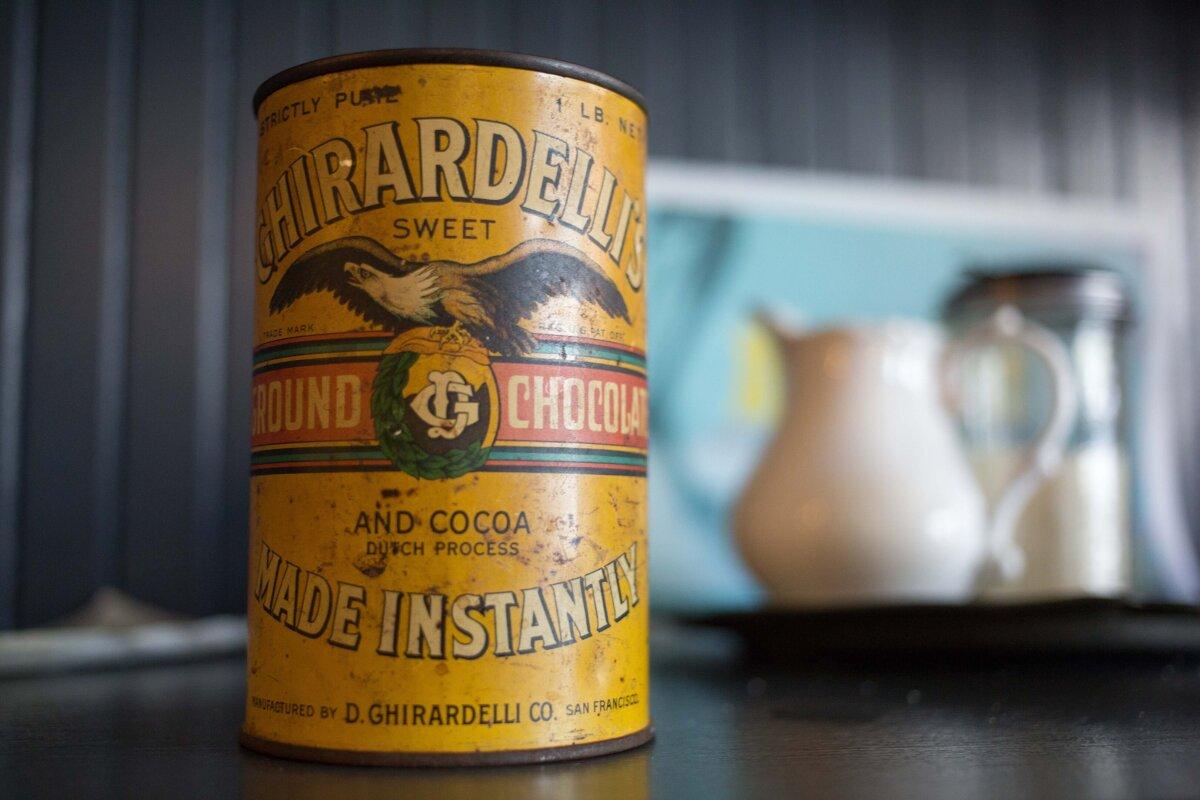
Following the discovery of this new method, the company’s sales of ground chocolate accelerated, and, by 1866, the Ghirardelli Chocolate Company was importing 1,000 pounds of cocoa seeds yearly.
By 1884, three of Ghirardelli’s sons were partners with him in the business, and the company was shipping its products across the country and even exporting them overseas, including to various destinations in the Far East. That year, sales of “Ghirardelli Ground Chocolate” rose to 50,000 pounds.
In 1885, Ghirardelli’s annual importation of cocoa beans expanded to 450,000 pounds. Leaving his sons to take over management, Ghirardelli retired as head of the company in 1892.
In 1893, the Ghirardelli family bought the Pioneer Woolen Mill Building and moved the company’s manufacturing operation there. Situated on San Francisco’s north waterfront, it is now the location of Ghirardelli Square.
While on a trip to Rapallo, Domingo Ghirardelli died of influenza on Jan. 17, 1894. Numerous tributes and kindly words were devoted to the man who had done so much to develop and improve “the only chocolate factory in California.”
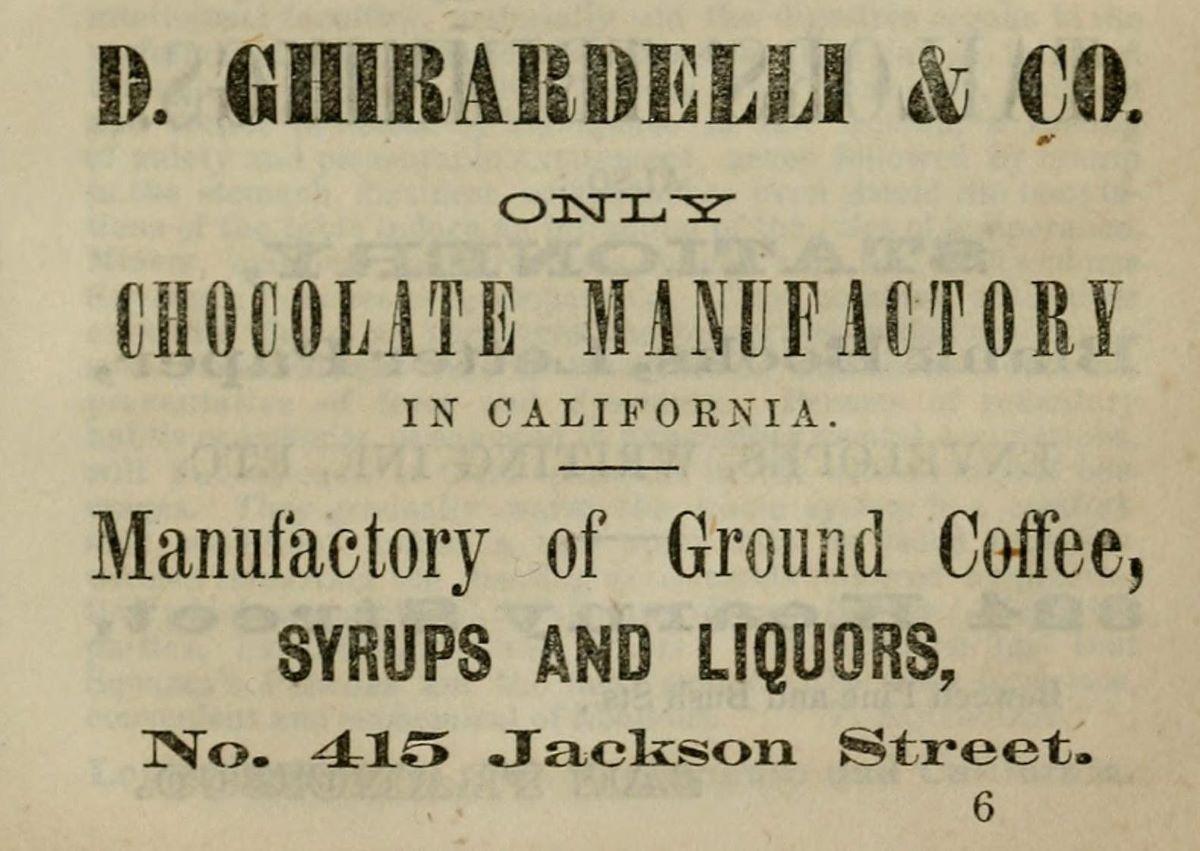
“Oakland has lost one of her pioneers in the death of Domingo Ghirardelli, so well known in connection with the manufacture of chocolates,” the Oakland Times obituary read.
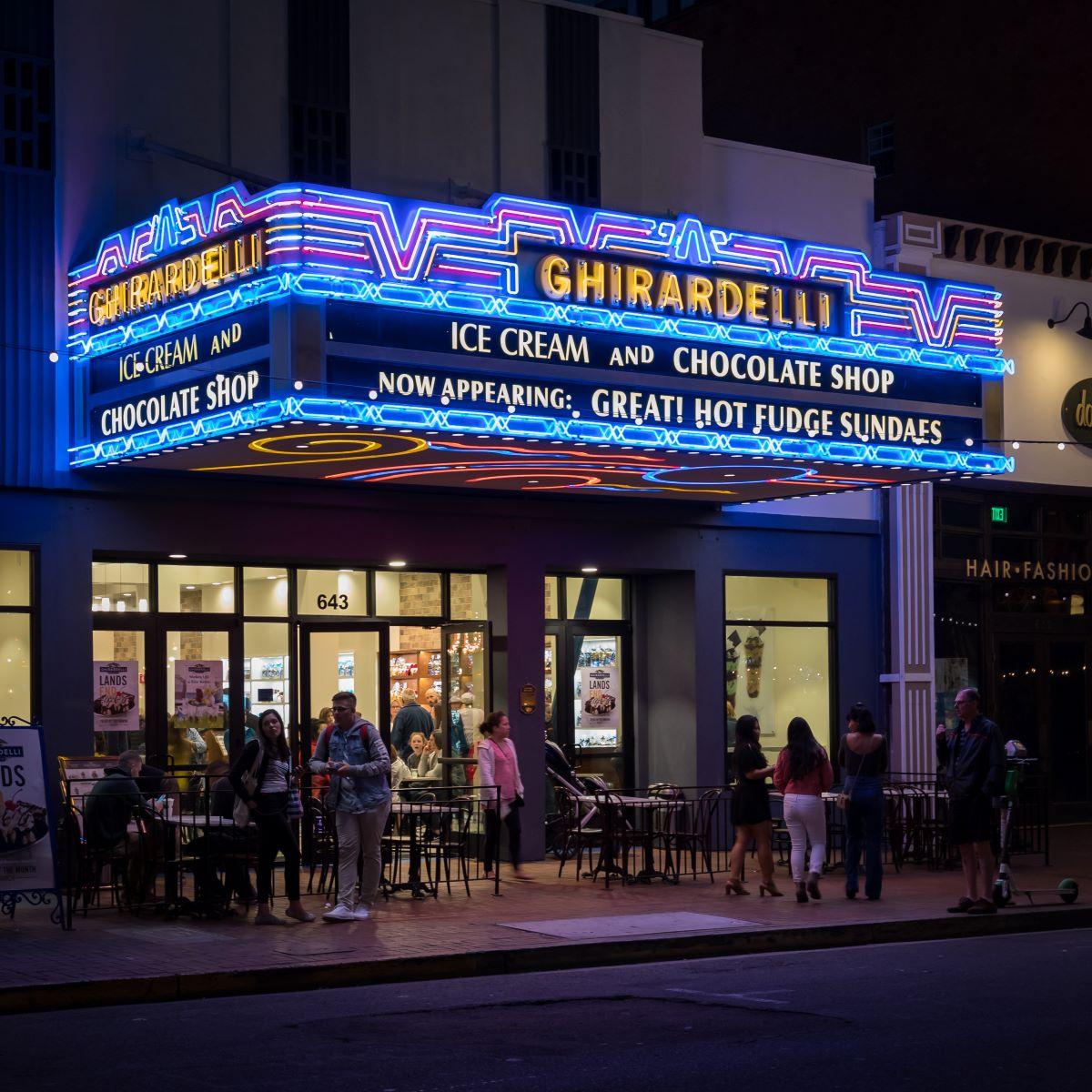
During the 1906 San Francisco earthquake and fire, the Ghirardelli factory miraculously survived undamaged, and the plant was running again within days of the critical disasters. Now a time-honored landmark, the illuminated Ghirardelli sign at Ghirardelli Square was built in 1915 atop the company’s cocoa building. In 1963, the Golden Grain Macaroni Company bought the Ghirardelli Chocolate Company, and, despite the fact that the company has since changed ownership, it has remained an innovator and a reliable fixture in the chocolate world.
Indeed, the Ghirardelli name lives on in every bite of its signature squares and chocolate bars—a sweet, scrumptious tribute to the risk-taking saga of a man whose entrepreneurial mettle wielded a long-lasting influence on confectionary production.