Bass was born in Columbia, South Carolina, to literature-loving parents. His father, Robert, was a professor of English literature at the University of South Carolina, and would later become a professor of the same at the United States Naval Academy, Furman University, Limestone College, and Erskine College, and a renowned scholar of the American Revolution. His mother, Virginia, was a published author of poetry and fiction. Indeed, George Bass’s career in literature seemed inevitable. But several other familial influences may have left a lasting impression on him that resulted in his pursuit of underwater archaeology.
His father served in the Navy Reserve from 1934 to 1940, earning the rank of commander. When World War II broke out, instead of going out to sea, he became a professor at the U.S. Naval Academy.” His uncle, Robert Wauchope (1909–1979), was a successful archaeologist with a focus on Latin America.
Though Bass’s first interest was astronomy, he soon chose to follow in the academic footsteps of his parents, and entered the English department at Johns Hopkins University. It was during his sophomore year of college that he found himself in Sicily for spring break. Bass was studying abroad at the University of Exeter to further his English studies, but he had recently been suspended from the school after he and about 40 classmates pulled a rather elaborate prank of raiding an agricultural college.
When he returned home, his sights were set on archaeology. The only problem was that Johns Hopkins didn’t have an archaeology department. That apparently was neither a problem for Bass nor the school. In a Discover Magazine interview, he said, “They made up a major for me with courses in the Near Eastern section and the classics section.”
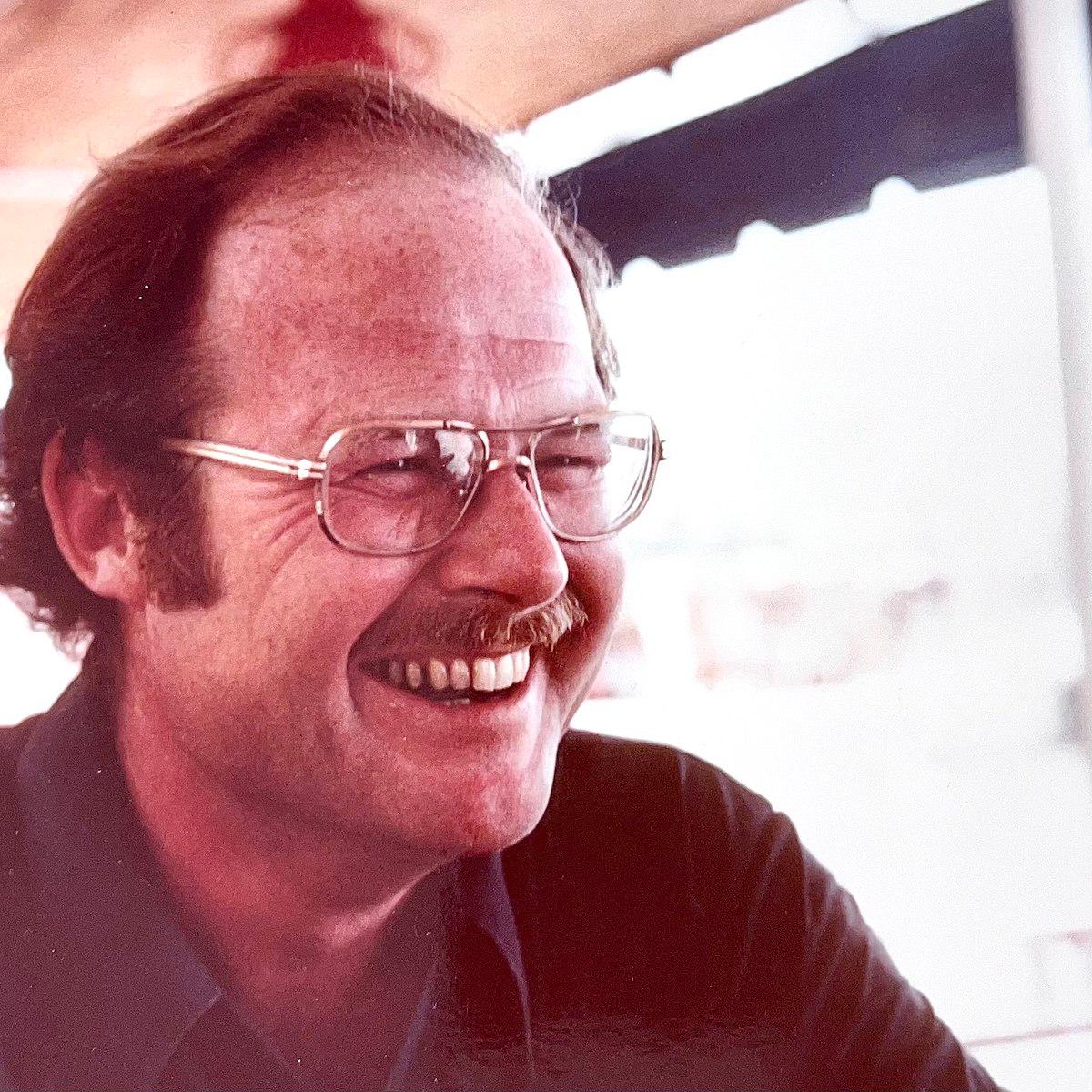
Nautical archaeologist George Bass. RealityEstate/CC BY-SA 4.0
Studying Archaeology
He continued his studies at Johns Hopkins to pursue his masters degree. In 1955, he earned his masters in Near Eastern Archaeology, studying under William Albright, the head of the school’s Near Eastern Studies and, according to the university, “the first major scholar to authenticate the Dead Sea Scrolls.”
After graduation, he studied in Greece at the American School of Classical Studies at Athens, helping excavate the House of the Tiles in Lerna, commonly referred to as Greece’s Oldest House. In classical times, it was known as the location where Hercules killed the Hydra. He also worked with prominent archaeologist, Rodney Young, in Gordion, the capital city of ancient Phrygia (modern day Turkey), the home of King Midas. It was a working relationship that would pay grand dividends. Bass remained in the Near East from 1955 to 1957.
He then took an interesting detour from his archaeological studies to serve in the U.S. Army as a lieutenant in South Korea. His two-year tour of duty, however, would assist him significantly in his ability to lead large teams.
After his time in the Army ended, he returned to school in 1959, attending the University of Pennsylvania in pursuit of his doctorate in classical archaeology. Fortuitously, Young had become the curator of the Mediterranean Section of the school’s Museum of Archaeology and Anthropology. The same year Bass entered the doctorate program, photojournalist Peter Throckmorton saw the sunken remains of an ancient ship while diving off the Turkish coast in Cape Gelidonya. Word of the shipwreck was sent back to Young, who approached Bass about leading the excavation process.
A Historic Opportunity
Bass didn’t know how to dive, but he was more than willing to learn. He took a 10-week diving course at a YMCA, and the night before he left for Turkey he used an oxygen tank for the first time. The wreck he was planning to excavate was 100 feet deep, and becoming familiar with diving was a necessity. That night he passed all the diving tests, and left for Turkey the following day.The ship he encountered was from the Bronze Age, dating back to 1200 B.C., and was the oldest shipwreck discovery at the time. He assembled a team that included Fréderic Dumas, Jacques Cousteau’s chief diver; Honor Frost; Joan du Plat Taylor, who would later become the first editor of the International Journal of Nautical Archaeology; and Ann Singletary, a pianist whom he had just married.
Bass’s excavation took an unorthodox approach. Instead of remaining aboard and directing divers to excavate the area, the archaeologists dove to the shipwreck to excavate it themselves. It may seem commonplace today, but in 1960, it was anything but. The excavation of the 3,000-year-old ship proved that the same archaeological principles used on land could be utilized underwater.
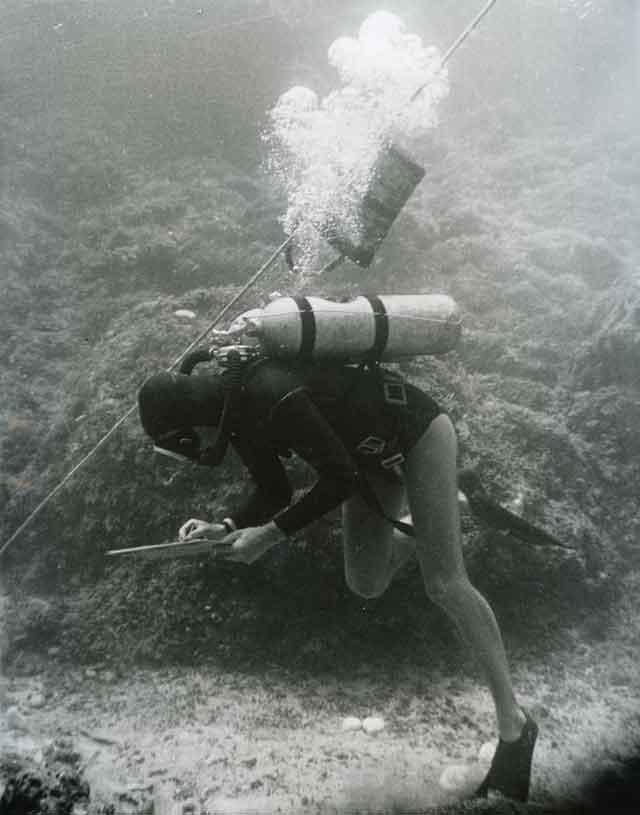
In 1959, Joan Du Plat Taylor excavates a shipwreck at Cape Gelidonya. Joe Roe/CC BY-SA 4.0
Bass had believed that ancient maritime trade didn’t lay exclusively with the Mycenean Greeks, but that such trade expanded much further to the Levant. When he compared the discovered copper ingots to those found in Egyptian tombs, his theory was substantiated.
New Sites, New Technology
After the excavation, Bass moved to another shipwreck located off of Yassiada, Turkey, now known as Democracy and Freedom Island. The ship dated to the 7th century A.D. when Yassiada was known as Plati and was part of the Byzantine Empire. During this excavation and later excavations in the area during the 1960s, Bass began using new underwater archaeological technologies.Among these new technologies were the telephone booth, which allowed divers to view the area to be excavated from the ocean floor, but within a small, oxygen-filled contraption about the size of a phone booth. Another was the amphora carrier, which was a basket to place artifacts with a balloon at the top, which when filled with air, would rise to the surface, capable of carrying a half-ton of material.
The crown jewel, though, was Bass’s Asherah, a two-man submersible. This submersible allowed underwater archaeologists to remain underwater longer, giving the ability to map the area more thoroughly, and remove artifacts more easily. The Asherah made its first launch in 1964, the same year Bass received his doctorate in classical archaeology.
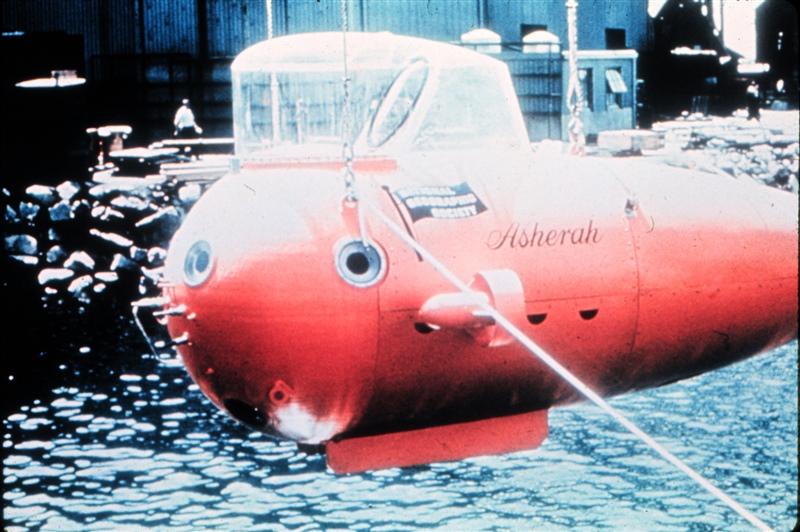
Nautical archaeologist George Bass's beloved submersible Asherah proved invaluable in discovering ancient shipwrecks. Public Domain
Creating the INA
He then joined Penn’s classical archaeology faculty, and by 1968, he was promoted to associate professor. His time working in the Mediterranean, however, birthed an idea for an institute in the maritime, artifact-rich area.In 1973, he resigned from his tenured position to move his family to Cyprus and launch the Institute for Nautical Archaeology (INA). Unfortunately, he and his family, along with his new staff, had to leave Cyprus almost immediately due to the Cyprus War in 1974. For the next two years, Bass surveyed the university landscape in hopes of finding a new home for the INA. He found one at Texas A&M University. The university remains home to the INA to this day. It was here that the Nautical Archaeology Program began, making it “the oldest academic degree-granting graduate program in the U.S. devoted to the study of boats and ships and the cultures that created and used them.”
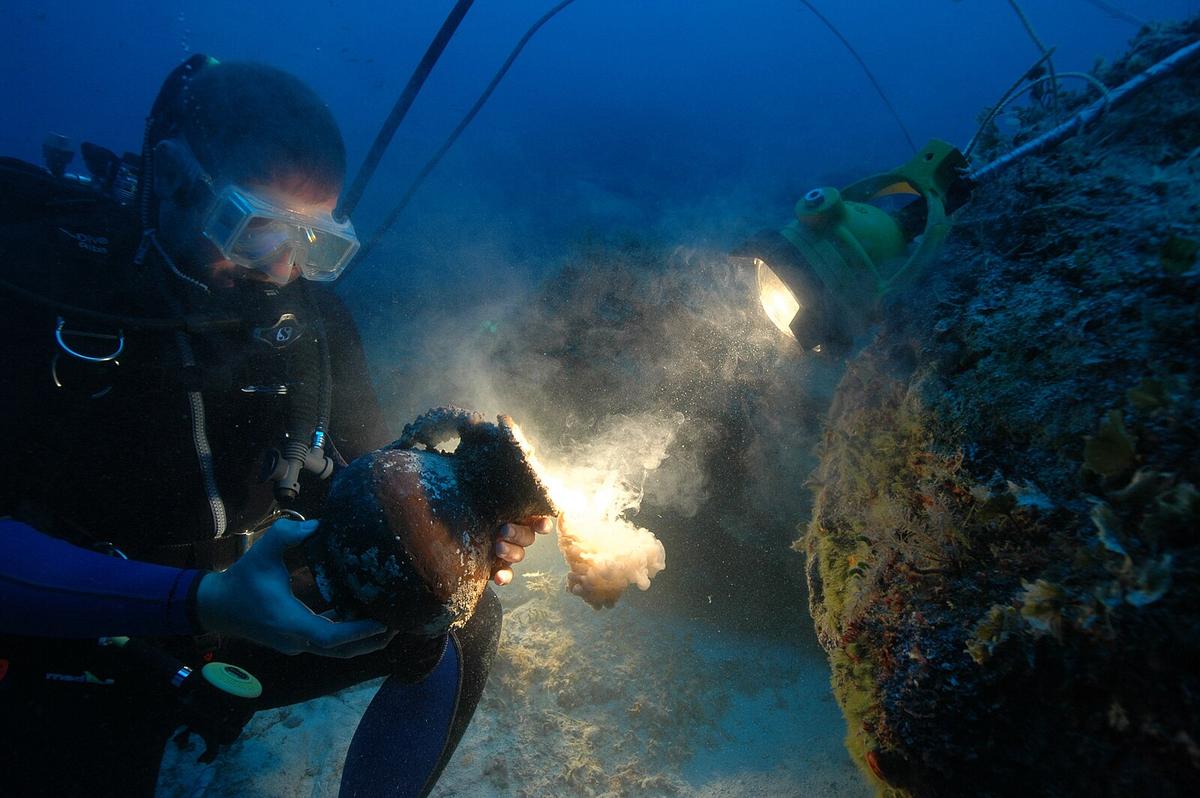
A Texas A&M student investigates an artifact on an underwater mission. Kailynn.Nelson/CC BY-SA 4.0
Great Excavations
The program officially began in 1976, and the following year, Bass was back in Turkey to begin the excavation of a new project. It was a ship nearly a millennium old near Serce Limani. The excavation lasted until 1979 and, according to the American Journal of Archaeology, “produced the largest known assemblage of medieval Islamic glass and revealed important evidence for the transition from shell-based to modern frame-based ship construction.”Bass’s greatest excavation and contribution to the field of archaeology came in the 1980s with the discovery of a shipwreck from the Late Bronze Age (1300 B.C.), located at Uluburun, Turkey. It contained a shipment of material that could only be described as royal. From 1984 to 1994, after more than 22,000 dives, the archaeologists recovered copper, ebony, glass, hippopotamus ivory, orpiment, terebinth resin, and tin, as well as pieces of pottery, faience cups and beads, gold and silver jewelry, ivory boxes, and a scarab made of gold with the cartouche of Queen Nefertiti.
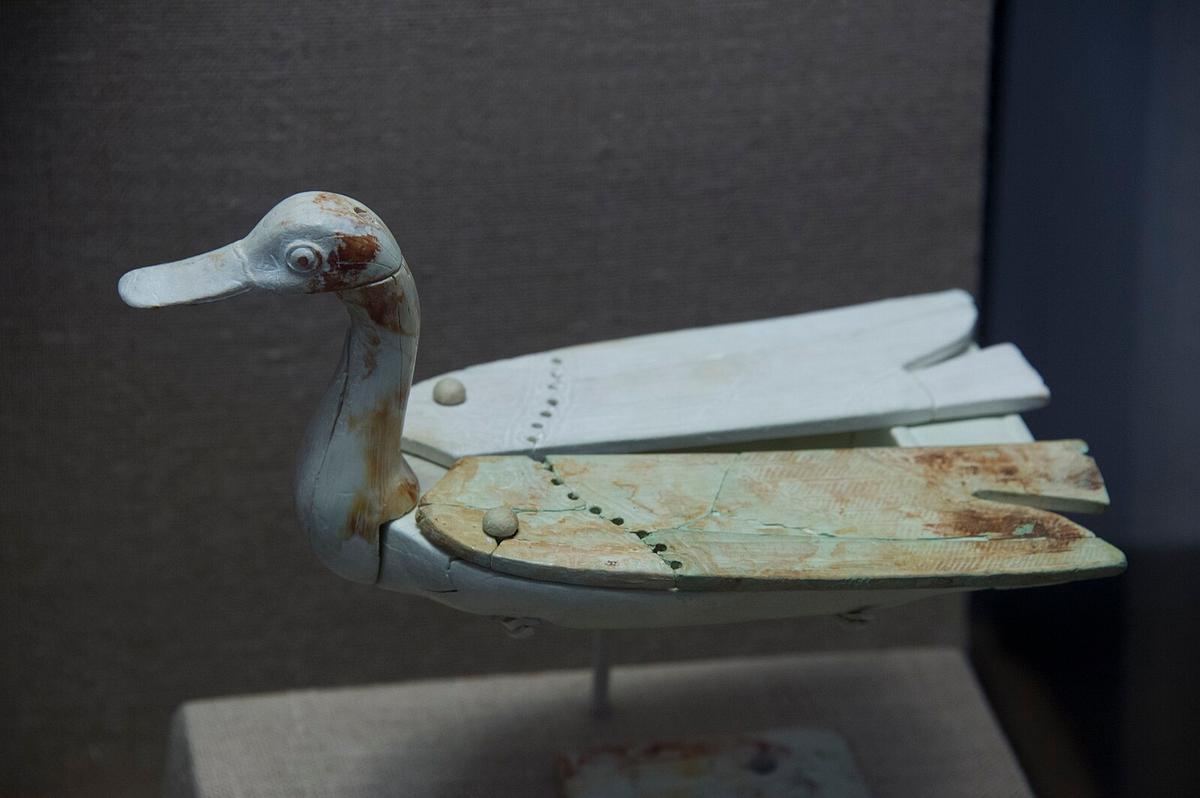
One of the many artifacts found at the Uluburun shipwreck was this duck-shaped cosmetic dish. The wings swing back to reveal a compartment to store beauty products. Dosseman/CC BY-SA 4.0
The career-defining discovery proved Bass’s 30-year-old theory that maritime trade extended beyond the Greeks, as the ship held artifacts from Africa, Canaan, Cyprus, and Greece.
A Lasting Legacy
Bass was arguably the most important pioneer in the field of underwater archaeology. He continued to influence the field for the rest of his life (though not in the field after 1986). He taught at Texas A&M until 2000, becoming Distinguished Professor Emeritus in 2001. He gave many lectures, wrote hundreds of articles, and either wrote or edited 12 books.Along with receiving support from the INA and Texas A&M, Bass received support from the National Endowment for the Humanities, National Science Foundation, Institute for Aegean Prehistory, and National Geographic Society. He received grants 36 times over the course of 39 years.
The National Geographic Society also awarded him the La Gorce Gold Medal in 1979 and its Centennial Award in 1988. The Archaeological Institute of America awarded him its Gold Medal for Distinguished Archaeological Achievement and its Bandelier Award for Public Service to Archaeology. His most notable award was the National Medal of Science presented to him by President George W. Bush “for pioneering ocean technology and creating a new branch of scholarship, nautical archaeology, thereby providing new knowledge of the histories of economics, technology, and literacy.”
Upon his passing in 2021, UNESCO acknowledged him as “one of the persons who laid the foundations for international standards that are today at the core of the 2001 UNESCO Convention for the Protection of the Underwater Cultural Heritage.”
What arts and culture topics would you like us to cover? Please email ideas or feedback to [email protected]