In a 1783 letter to her son John Quincy Adams, who had accompanied his father to Europe while he served as diplomat, Abigail Adams wrote: “What is it that affectionate parents require of their Children for all their care, anxiety, and toil on their accounts? Only that they would be wise and virtuous, benevolent and kind.”
In an earlier letter sent to John Quincy Adams, Abigail Adams wrote, “Great learning and superior abilities, should you ever possess them will be of little value & small Estimation, unless Virtue Honor Truth and integrity are added to them.”
Abigail Adams wasn’t alone in her view that virtue was of paramount importance in an education. Benjamin Franklin, Thomas Jefferson, George Washington, and others tied the teaching of character and integrity to schooling. Declaration of Independence signer Samuel Adams spoke for many of these men of the early republic when he wrote: “If virtue and knowledge are diffused among the people, they will never be enslaved. This will be their great security.”
For approximately 150 years after the declaration appeared, American schools taught students virtue, largely through early readers, literature, and history. The view of the Founders remained strong: Only men and women of good character could be truly independent and preserve their rights and liberties.
Identify the Problem
In a 2003 address at Hillsdale College, writer and former Secretary of Education William J. Bennett referenced his work as director of the Office of National Drug Control Policy: “Whether I was talking to teachers, school administrators, parents, cops or judges, they wanted to know: Who’s raising the children? What kind of character do our kids have? Who’s paying attention to their morals?

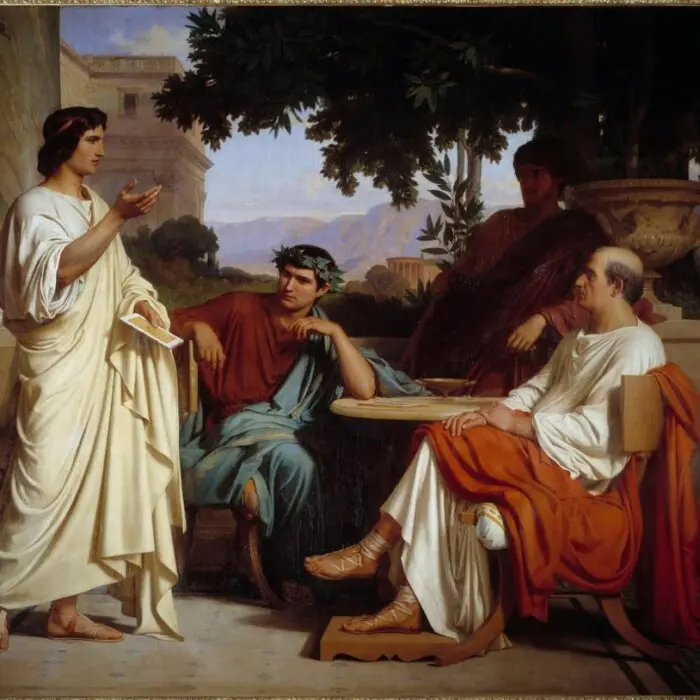
“A judge in Detroit once said to me: ‘When I ask young men today, ”Didn’t anyone ever teach you the difference between right and wrong?“ they answer, ”No sir.” And you know, Mr. Bennett, I believe them. It is a moral vacuum out there.’”
Today’s headlines and data reveal that this moral vacuum is still with us. Although some parents and teachers do in fact include character building in their curricula, other institutions, especially our public schools, have abandoned the intentional teaching of historic virtues.
Whatever else we might think of our American ancestors, the term “moral vacuum” doesn’t apply. From them, therefore, we might take some lessons about character building and how it promotes independence and maturity in the young.
Allow Free Play
Although Abigail Adams believed that children should devote themselves to learning life skills, evidence points to plentiful opportunities for free play in her household, with the children going fishing, reading, playing chess, and taking long walks with their father.
Today, many researchers have found that outdoor fun and free play, two elements of childhood in short supply in our culture, are vital for development. Citing numerous studies in his online article “Free Play Shapes a Child’s Brain,” Harvard Medical School’s Jake Miller demonstrated that daily play unsupervised by adults develops cognitive skills and creativity in children. Other benefits, noted by Louise Savoie in a short article, include improving a child’s skills in independent thinking, getting along with others, and decision-making.
All these attributes are the first stepping stones toward virtue and citizenship.

Require Healthy Chores
From an early age, chores were a part of the routine for American households well into the 20th century. The four Adams children who survived infancy spent part of each day working on the farm and in the house.
Far fewer Americans live on farms today, but every household has chores that need doing. Three-year-olds can pick up toys; 10-year-olds can help in the kitchen and do the laundry; teens can run errands, cook, and help with the younger children.
This simple home training is the beginning of self-reliance.
Seek and Teach Heroes
Like us today, the Founders and many other historical figures recognized the importance of reading, writing, and math as the basics for an informed citizenry. Unlike us, they made virtue a cornerstone of this education.
In his 1788 book, “On the Education of Youth in America,” Noah Webster wrote: “Here the rough manners of the wilderness should be softened, and the principles of virtue and good behaviour inculcated. The virtues of men are of more consequence to society than their abilities; and for this reason, the heart should be cultivated with more assiduity than the head.”
In a 1778 letter to young John Quincy Adams, Abigail Adams revealed how this character training worked. She wrote: “You have been taught to ... view vice as ‘a monster of so frightful mein that to be hated, needs but to be seen.’ Yet you must keep a strict guard upon yourself, or the odious monster will soon loose its terror, by becoming familiar to you. The modern history of our own times furnishes as black a list of crimes as can be paralleled in ancient time, even if we go back to Nero, Caligula or Caesar Borgia.”
First, note that she assumes that her 11-year-old is acquainted with three figures from history beyond the ken of most of today’s students. Next, she uses history as a teaching tool to separate vice from virtue. Finally, she directly urges her son to “keep a strict guard” against evil.
To help young people refrain from vice, which is a barrier to maturity, and to embrace virtue, we can use history this way as well. The past provides us with real heroes, figures from history who performed deeds worthy of imitation. All too often today the young find their heroes in sports figures, celebrities, online influencers, and superheroes. They need flesh-and-blood exemplars from our past, that sort of figure described by Theodore Roosevelt “who is actually in the arena ... who spends himself in a worthy cause.”
Independence = Rights + Responsibilities
George Washington was 16 when he received his first official assignment as a surveyor. John Adams entered Harvard at age 15. Jefferson was not quite 17 when he first sat as a student at The College of William and Mary. Abigail Adams was 19 when she married.
Although most young people today don’t enter adulthood quite so fast, by age 18 they should be capable of standing on their own two feet, able to head off to college, the military, or the workplace. With the liberties won with that coming-of-age, they should also recognize that rights bring responsibilities. They should be able to talk to a professor about a grade, confer with a boss about workplace matters, and know how to perform such simple tasks as keeping track of a bank account.
With their education, these fledglings should also know what Jefferson meant when he once wrote, “Without virtue, happiness cannot be.” And with their training in the virtues, they should know as well that independence, whether political or personal, only works when governed by that rudder of virtue: self-restraint.
Here we’ll give Abigail Adams the final word. In a separate letter to her adolescent son, she wrote, “Having once obtained this self-government, you will find a foundation laid for happiness to yourself and usefulness to mankind.”