This copy is for your personal, non-commercial use only. Distribution and use of this material are governed by our Subscriber Agreement and by copyright law. For non-personal use or to order multiple copies, please contact The Epoch Times Reprints.
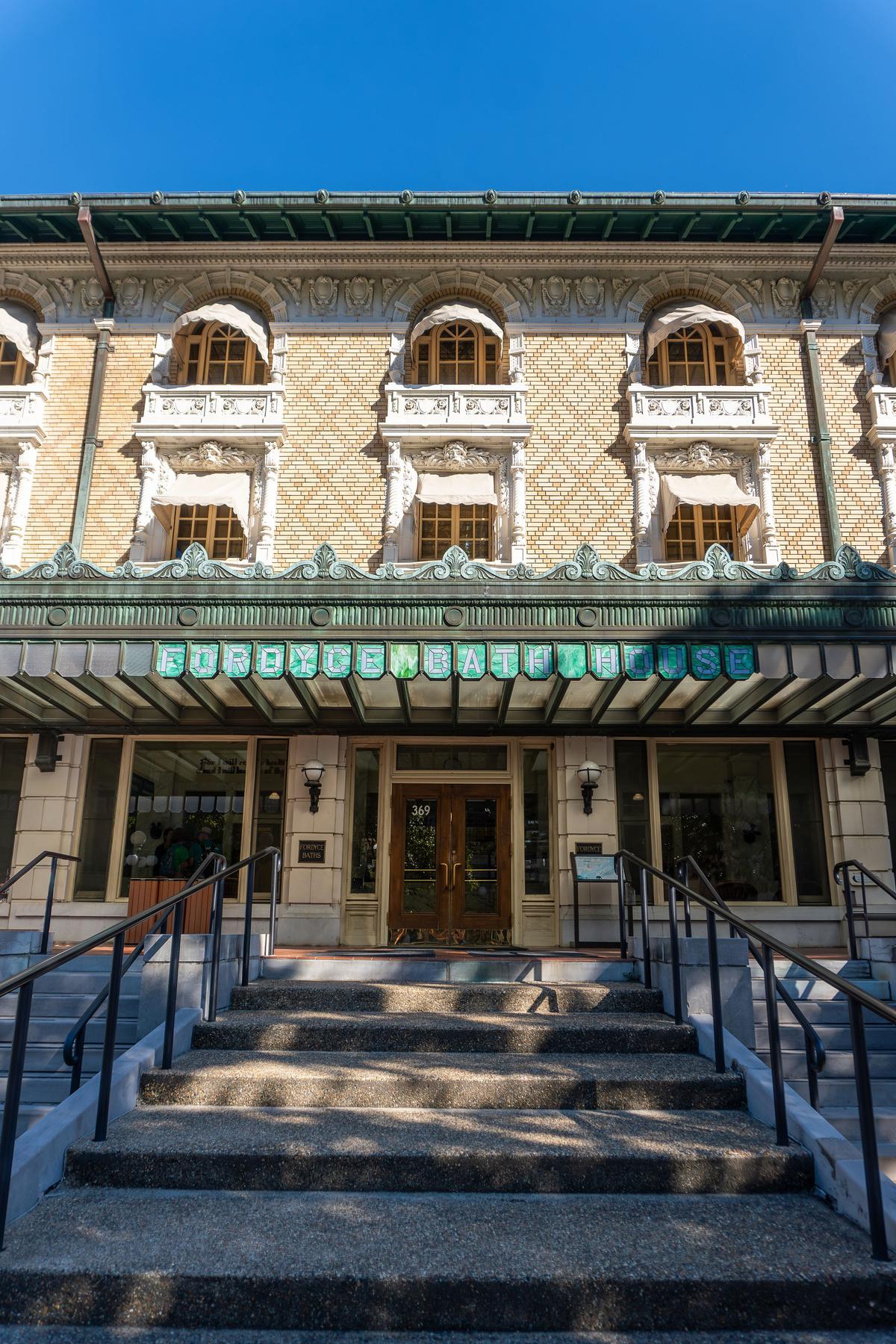
Although all the bathhouses in Hot Springs National Park are impressive and distinct, Fordyce is especially recognizable for its size, as well as its red, Spanish-style hip roof. The ground-floor facade features cream-colored enamel brick, while the second and third floors present a brown and light yellow brick arranged in a diamond pattern. RN Photo Midwest/Shutterstock
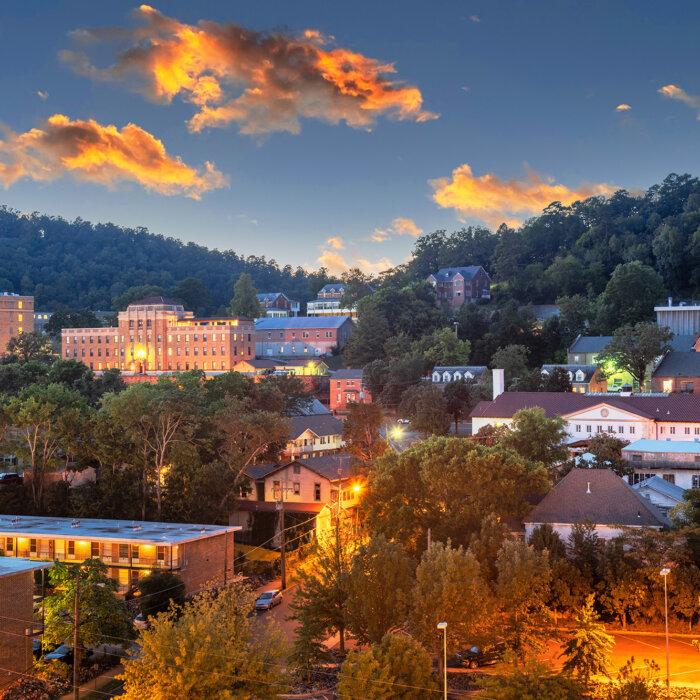
Hot Springs National Park in Arkansas is unique in its symbiotic relationship between the natural and the man-made. Since hot springs bubble up in the area, eight unique 19th- and early 20th-century bathhouses were built to accommodate visitors. The Fordyce Bathhouse is the largest and most opulent architectural standout on the Grand Promenade, a half-mile trail that runs parallel to Bathhouse Row.
The 28,000-square-foot Fordyce Bathhouse was built on a foundation of Arkansas Batesville limestone. The structure was designed by the Arkansas architectural firm of George R. Mann and Eugene John Stern, who also designed the Arkansas Capitol.
Designed in the Spanish Renaissance style, the bathhouse was reported to be “the most palatial” by the Sentinel Record when it opened on March 1, 1915. Fordyce has three main floors, two courtyards, and a basement.
The rectangular building is distinguishable on the Grand Promenade for its wide, decorative, copper marquee, as well as for its terra-cotta frieze, or sculpted ornamentations around the front-facing windows. The interiors see an abundant use of ceramic tiles, marble, and stained glass.
Fordyce operated as a bathhouse until 1962. It was renovated and restored in 1989 and eventually opened to the public as the Fordyce Bathhouse Museum and Hot Springs National Park Visitor Center.
Stained glass spelling the words “Fordyce Bath House” hangs prominently from a copper marquee that showcases medallion designs and is topped with a repeating pattern of ornamental finials. The frieze designs around the windows display water-related motifs such as shells, starfish, dolphins, mermaids, and aquatic birds. Additionally, over some windows there is a frieze sculpture of the head of Neptune, god of the sea. EWY Media/Shutterstock
Tray ceilings, marble walls, a tiled floor, and stained-glass transoms greet visitors inside Fordyce’s lobby. The expansive 12-by-60-foot entryway exhibits at each end a faience tile (fine tin-glazed pottery) fountain bedecked with designs of cupids and shells. MikeGoad
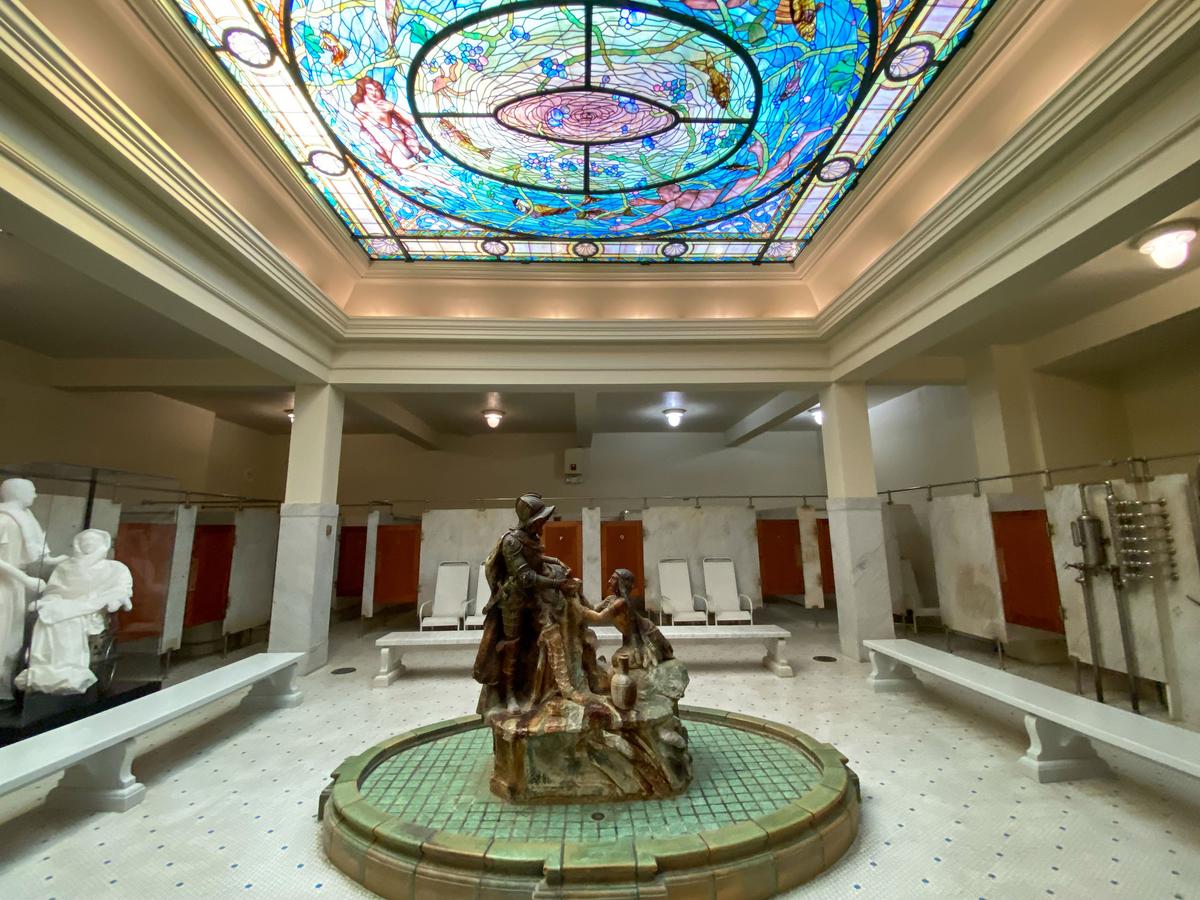
The showpiece room at Fordyce is the Men’s Bath Hall. In addition to being surrounded by marble columns and benches, the massive tray ceiling is inset with a stained-glass skylight. Central in the room is a large sculpture titled “Fountain of Youth,” depicting a scene of 16th-century Spanish explorer Hernando de Soto being given spring water by a native woman. EWY Media/Shutterstock
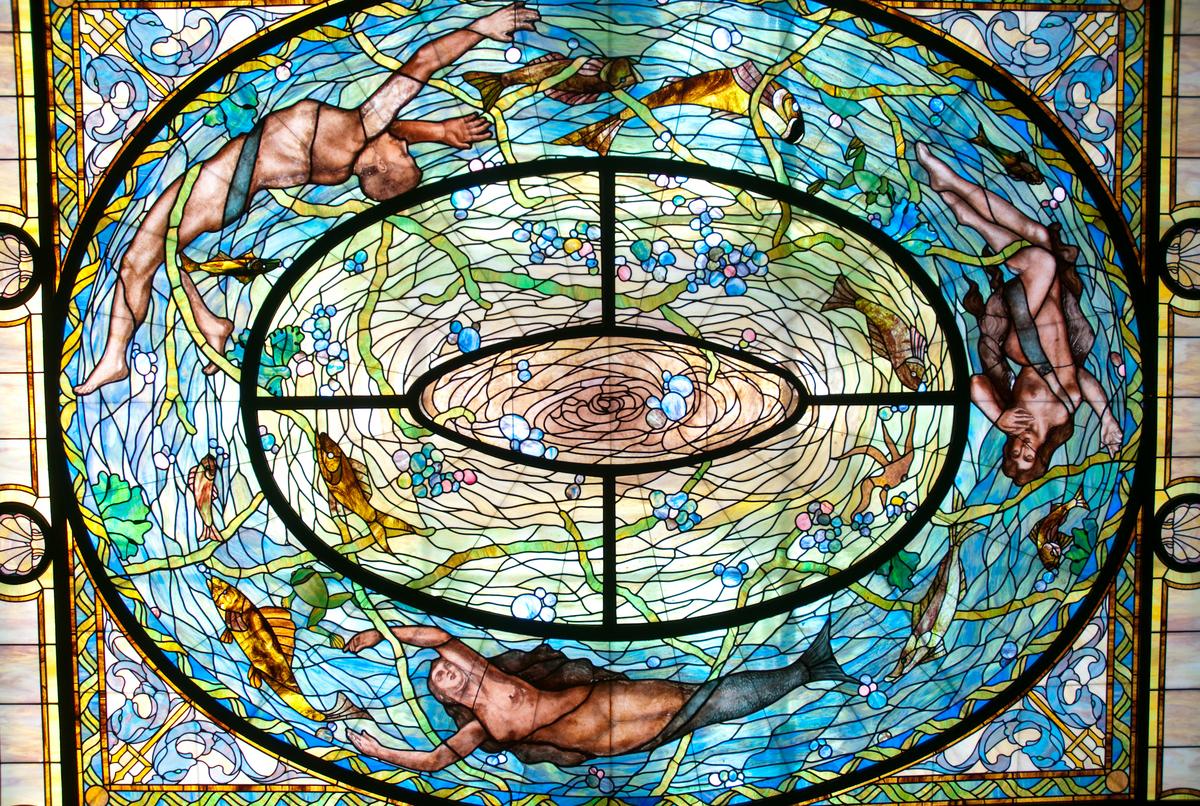
The Men’s Bath Hall's most stunning feature is its 8,000-piece, art-glass ceiling displaying an elaborate underwater scene that represents Neptune's daughter, mermaids, and sea creatures. The colorful glass was designed to convey movement, as if all the elements were in a swirl of water. Zack Frank/Shutterstock
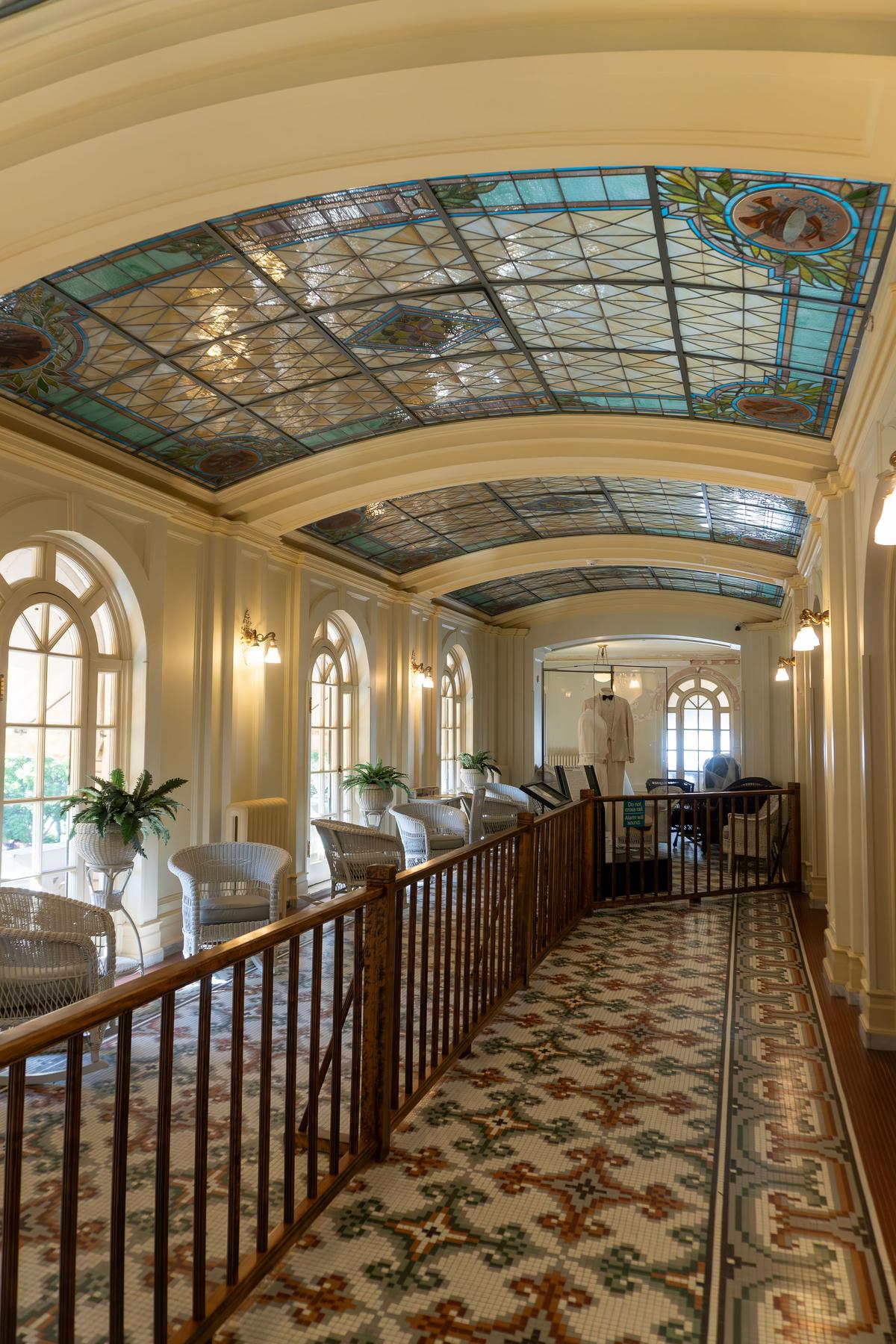
The 100-by-20-foot gathering room on the third floor has been referred to as the assembly room and music room throughout its centuries-plus history. An intricate, patterned-tile floor in varying hues is illuminated by natural light streaming through large, arched windows. The room is made more opulent by its five-panel, arched-vault, stained-glass ceiling. EWY Media/Shutterstock
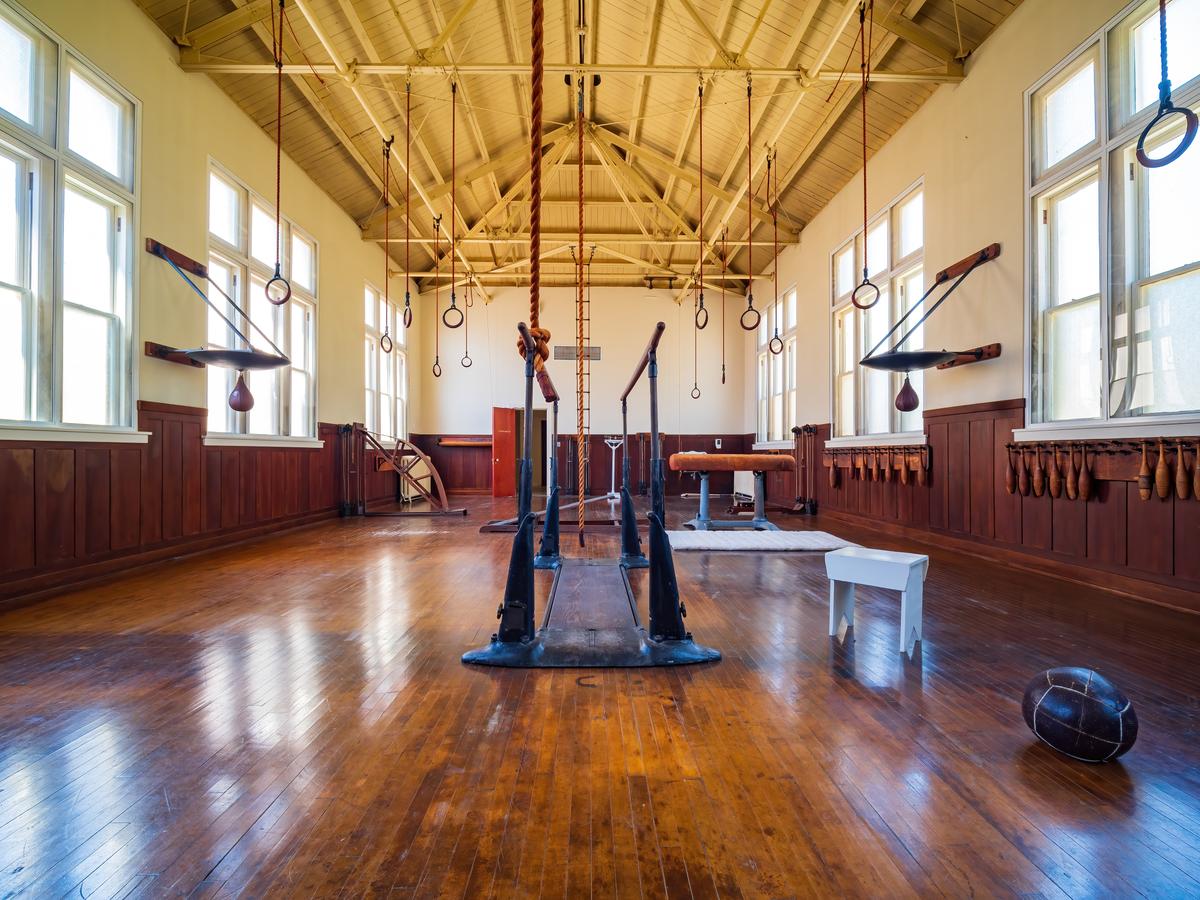
When Fordyce was constructed in 1915, its third-floor gymnasium was considered the largest and best equipped in Arkansas. From an exposed, vaulted metal ceiling hang exercise rings; the room’s flooring is sanded and varnished maple. Kit Leong/Shutterstock
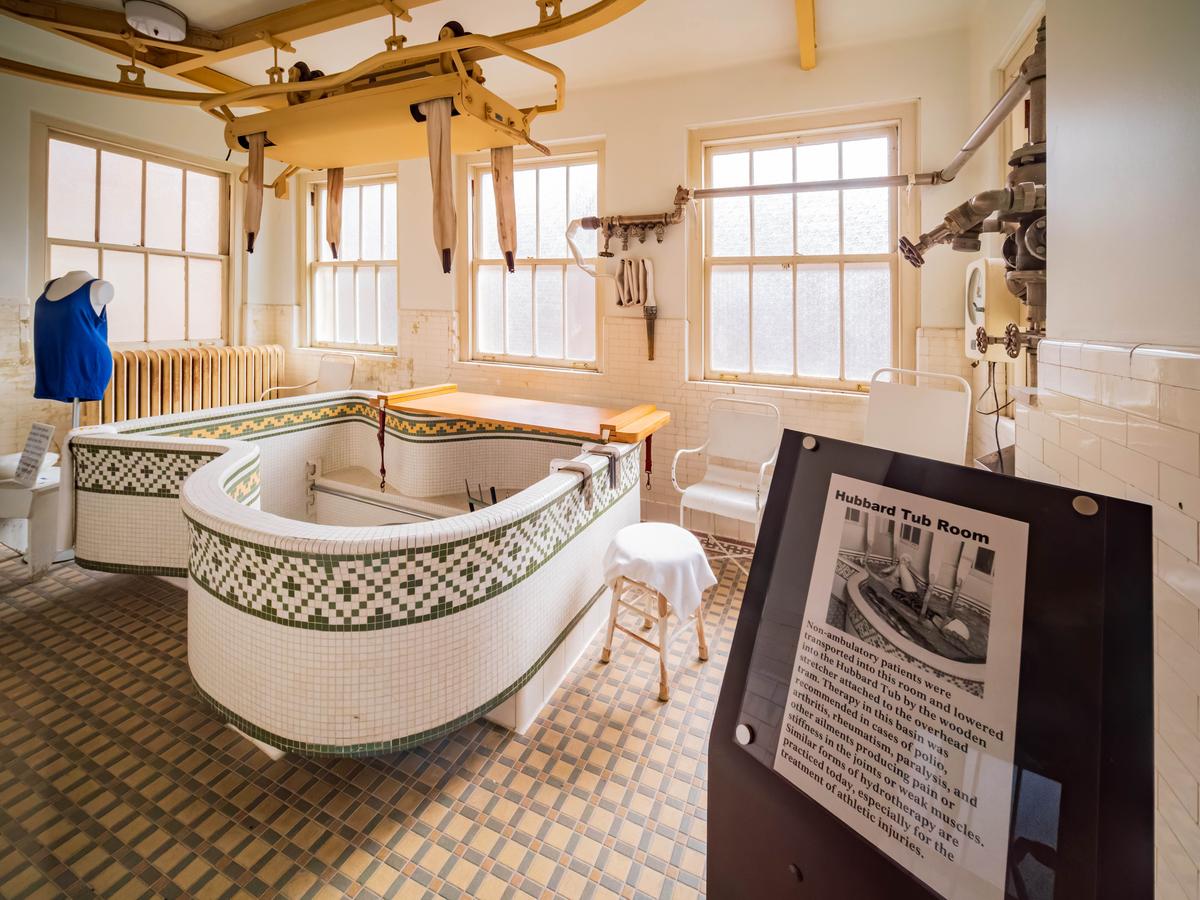
The Hubbard Tub room includes a deep, therapeutic bathtub. Designed by engineer Carl Hubbard, the tub was constructed with tiles by the Mosaic Tile Co. of Ohio. The olive green tile pattern in the tub is accentuated by a complementary floor tile pattern. Overhead in this utilitarian room at Fordyce is an electric hoist for assisting individuals who once enjoyed a soak in the large, embellished bathtub. Kit Leong/Shutterstock
What arts and culture topics would you like us to cover? Please email ideas or feedback to [email protected].
A 30-plus-year writer-journalist, Deena C. Bouknight works from her Western North Carolina mountain cottage and has contributed articles on food culture, travel, people, and more to local, regional, national, and international publications. She has written three novels, including the only historical fiction about the East Coast’s worst earthquake. Her website is DeenaBouknightWriting.com