Moustiers-Sainte-Marie
The 1,500-year-old village of Moustiers-Sainte-Marie, officially designated as one of the Most Beautiful Villages of France, is poised at the entrance of the deepest canyon in Europe, the stunning Gorges du Verdon. On the slopes between the village and the river, tucked back along a small country road, a grand 17th-century building houses the Bastide de Moustiers, the auberge and restaurant created by one of France’s most famous chefs, Alain Ducasse.The flower-bedecked village of Moustiers-Sainte-Marie, founded in the fifth century by monks, is a cobblestoned collection of narrow winding streets, houses, small shops, and restaurants separated by the chasm of the Adour River and its cascading waters. Arched stone bridges link the two sides of the village, which is further distinguished by a gold star hung upon a chain suspended between the village cliffs. The star is said to have been put there by a knight to show his thanks for his safe return from the Crusades.
Perhaps he also made a pilgrimage to the Chapel Notre-Dame de Beauvoir, hewed into the rocky cliffs above the village. The 12th-century chapel has been a pilgrimage site for 900 years and can still be visited by climbing the 262 heavily worn stone steps that begin near the last street of the village.
Four hundred years after the chapel was built, Moustiers faience pottery became the darling of Europe’s ruling classes. King Louis XIV had ordered the gold and silver tableware of the court to be melted to finance his wars. The nobility followed suit. But with what to replace gold and silver? The king and his court discovered the brilliant, white-glazed faience of Moustiers, with delicate motifs of medieval and mythological figures hand-painted in deep blue, green, and gold. This became the tableware of choice. The trend spread across Europe, and the prosperity of Moustiers soared until the French Revolution and its subsequent turbulence across Europe, plus imports, affected the market.
Gorges du Verdon
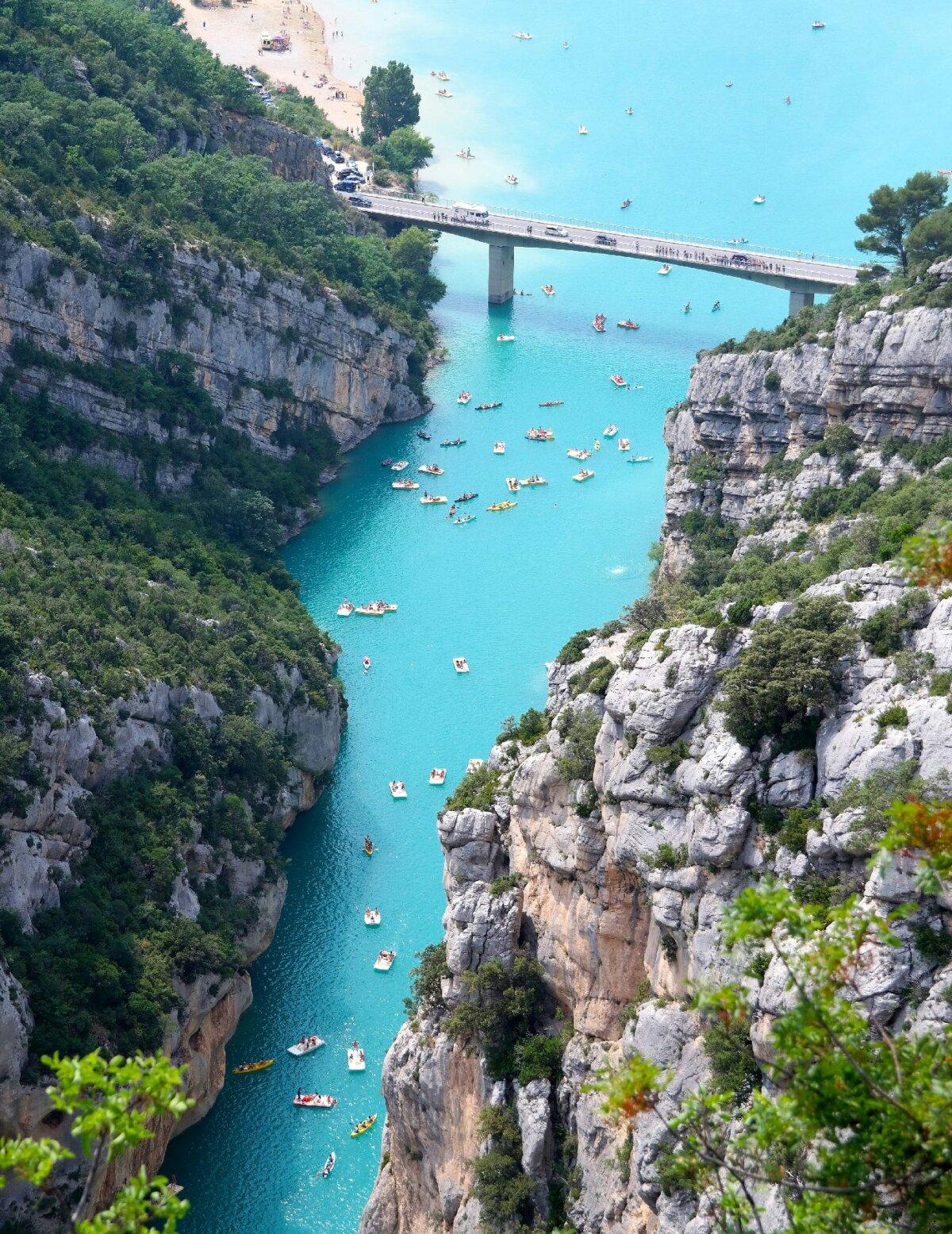
For millennia the waters of the Verdon River coursed wild through the canyon and across the plain below to eventually reach the Durance River. When the Verdon was dammed in the 1970s, the village of Les Salles-sur-Verdon was flooded, the waters rose behind the dam, and the huge Lac de Sainte-Croix was created.Today the striking turquoise-green waters of the river and lake are a major recreation destination. Campsites are abundant, and visitors can rent pedal boats, electric boats (no motors allowed), canoes, or kayaks to explore the canyon. Even an hour or two will take you deep into the natural canyon, where eagles often soar overhead and the silence can feel primeval.

The Gorges du Verdon is also a paradise for hikers and rock climbers, although a guide should be considered by all but the most experienced. From the tops of the cliffs, paragliders can often be seen sailing above the gorge and over the lake before landing on the sandy beaches.
Bastide de Moustiers
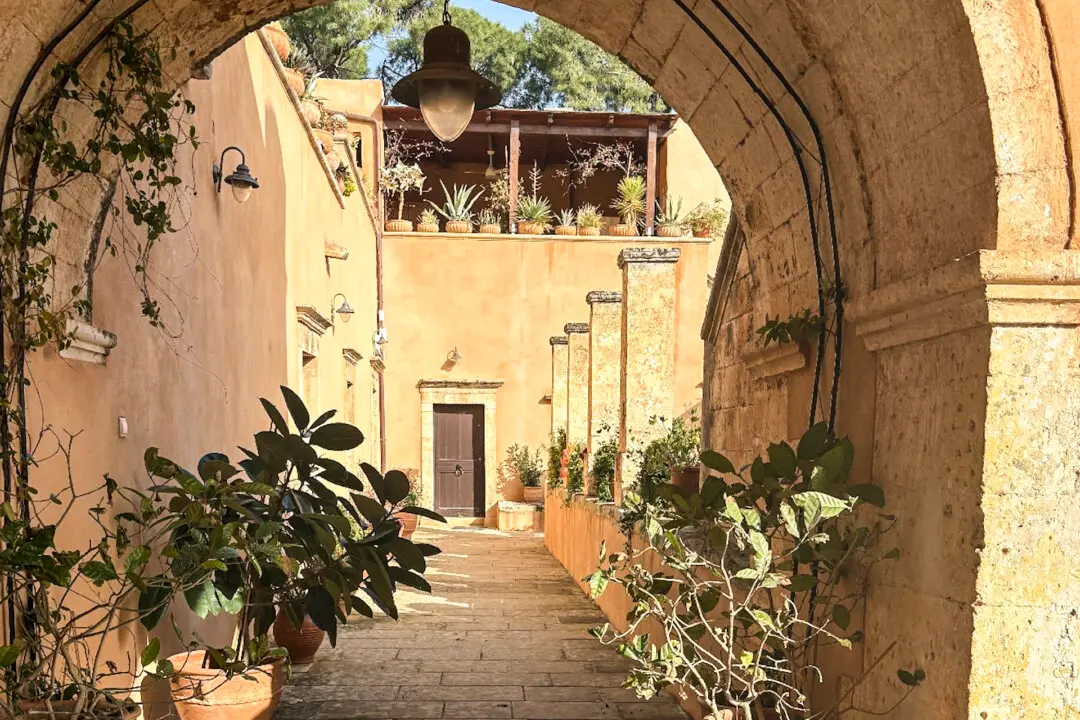
On the descent from Moustiers, less than halfway to the lake, a small, hand-lettered sign indicates the turn for the Bastide de Moustiers. Following the narrow road, which passes workshops and recently built villas, will take the visitor to the fanciful wrought-iron gates, auberge, and restaurant of France’s most decorated chef, Ducasse.To enter, press the button by the speakerphone. The gates will swing open to reveal a curving drive lined with olive trees, cypress, lavender, and rosemary and past a scattering of stone cottages to arrive at the bastide and its flagstone terrace overlooking the valley below. For much of the year, the terrace and its dining tables are shaded beneath large white umbrellas, giving the appearance of being in the clouds.
Originally, the 17th-century property was envisioned as a personal retreat for Ducasse, but it gradually evolved into an 11-room auberge with a vast vegetable garden, swimming pool, and a restaurant that quickly earned a Michelin star. The dining room, exquisitely decorated with period furniture and Moustiers ware, as are the accommodations, is upstairs from the terrace. It is here in rainy or inclement weather that lunch and dinner are served. Breakfast for guests is served here or on the adjoining small upper terrace.
On my recent visit the lunch menu featured wild partridge, baby roasted potatoes, and braised greens as the main course, preceded by several intriguing small courses featuring vegetables from the bastide’s impressive potager. The cheese course, which followed the partridge, retained the sumptuous style of presentation of days gone by. At least a dozen local cheeses arrived on a large olive-wood serving platter atop a trolley, accompanied by a few select condiments.