Author Robbie Arnott, an Australian originally from Launceston, Tasmania, is best known for his acclaimed novels “Flames,” “The Rain Heron,” and “Limberlost.” He’s already received several major literary award nominations and wins, both in Australia and internationally.
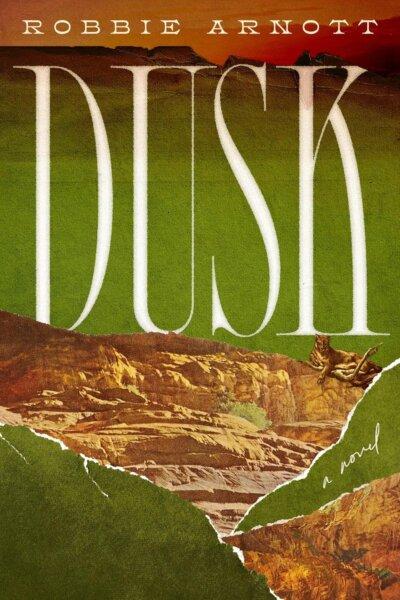
His latest novel, “Dusk,” starts with beautiful prose, captivating heroes, and haunting imagery on every page. Midway through, I was beginning to suspect that this might be one of the best reads I’ve come across this year.
Sibling Bonds
The relationship between the Renshaw twins, Iris and Floyd, is the foundation of “Dusk.” Their parents are drunkards, thieves, and murderers. Petty theft and cons are the only trades passed down to the siblings, as the family steals crops and food from those who aren’t vigilant enough to guard their stores. Once the twins strike out on their own, they remain steadfastly loyal to one another in the harsh and impoverished existence of early Australian frontier times.Unfortunately, the reputation of the Renshaw name makes it nearly impossible for anyone in the “lowlands” (probably somewhere in Queensland, though it’s never specified) to trust them enough for any honest work. Iris is the physically stronger of the two because a devastating spine injury puts Floyd in a persistent state of pain, ebbing and raging almost at random.
The story begins after they catch word of a large bounty being offered for the killing of a puma named “Dusk.” The female puma is a slaughtering machine, roaming the highlands, decimating the sheep herds, and killing men who track her. It might be the last of a displaced breed in the whole country.
The presence of the pumas is the legacy of a mad idea to cull the exploding deer population, these themselves were imported by a previous generation of sentimental fools. “The deer were meant to keep to the forests, waiting to be run down and shot. But they preferred the grass,” then multiplied like rabbits and bullied the sheep off the land.


The Quarry
Neither of the Renshaws is well-suited for the job. Floyd’s condition hinders his movements when it’s bad; Iris has a rather smallish stature. But, more importantly, they don’t have any firearms. Furthermore, the last time they attempted something similar—hunting a rogue wolfhound that turned on its master—it almost ended in fatal disaster. But “they were hungry, out of work, low on hope,” and the bounty on Dusk was the only opportunity available for avoiding starvation.They cross paths with other hunters after the bounty, including a man named Patrick Lees. He sparks something in Iris, and Floyd teases her that she’s keen on him. But trust comes very slowly for anyone in this lawless frontier.
The job looks even bleaker when they learn that a professional hunter who traveled all the way from South America, a man nicknamed Patagonia, hasn’t been heard of since he left a month before. What chances do the twins have? But what are their chances elsewhere?
Admirable Skills
Arnott concentrates his immense writing talents to endow a rich poetry to the land and the creatures that inhabit it. The people, too, are as real as oil painting brushstrokes on a canvas that is each page. One particular setting, a tavern in the highland wilderness built within the bleached skeleton of what was probably a prehistoric whale, is especially haunting.However, as interesting as the idea of ancient bones lying about the untamed lands might be, Arnott revisits this image again and again to the point that it becomes gimmicky. By the third appearance of giant bones, you might be wondering if this is a Western or an Edgar Rice Burroughs novel.
The plot, too, takes a bit of a “Hollywood” turn midway through the book, touching on weary tropes about animal justice, xenophobia, and toxic masculinity. One could argue that there’s nothing wrong with these in a story, but the promise made at the start of “Dusk” was to provide visceral realism, not social justice. To reveal them halfway through will likely turn off some readers.
Arnott’s writing style has been compared to Cormac McCarthy many times, but I think this is a mistake. For one, he’s nowhere near as mean as McCarthy, whose voice in works like “Blood Meridian” or “The Road” can give “stark” or “blunt” a new meaning. If anything, Arnott’s style is more reminiscent of Steinbeck—bleak at times, yet able to find beauty in the roughness.
Scarred as Iris is, she cannot help but be drawn into the majestic nature of the highlands as she traverses them for the first time. Her thoughts share these vistas with us, and they’re a lush delight. It’s a great pity, however, that “Dusk” didn’t stick with that realism to the end. Our loss.