When Hollywood made the transition to sound after decades of silent films, filmmakers struggled with how to integrate musical accompaniment into the synchronized soundtrack. Live accompaniment to pre-recorded images was one thing; music magically emanating from an unseen source to support the events in a talking picture was another.
As the film score gained a footing in early sound films, a handful of talented composers paved the way through trial and error. With training in classical music and backgrounds in stage productions, three men in particular shaped the cinematic score in the 1930s.
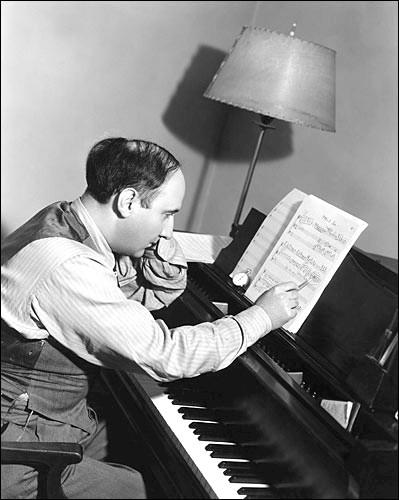
Russia to Broadway
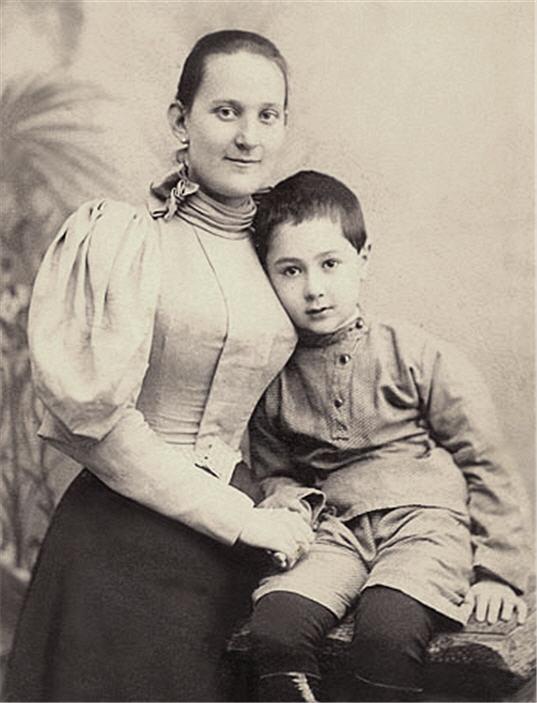
Tiomkin (1894–1979) was born in Kremenchug, Poltava, formerly a part of the Russian Empire, now in modern-day Ukraine. His father was a doctor, and his mother was a pianist and music teacher. His family was of Jewish descent.He began his musical studies with his mother. He received his formal training at the St. Petersburg Conservatory, where he studied piano with Felix Blumenfeld, Isabelle Vengerova, and Alexander Glazunov. He dedicated many chapters of his autobiography, “Please Don’t Hate Me!” to these formative years in Russia.
The Bolshevik Revolution of 1917 didn’t immediately affect the young man. He worked on government projects and played the piano to accompany Russian silent films. In 1921, he moved to Berlin to live with his father among fellow Russian exiles.
There, Tiomkin continued his piano studies for the next few years; he began composing and made his debut as a concert pianist. He eventually began performing as a piano duo with his friend Michael Khariton, traveling to Paris in 1924 and eventually New York in 1925.
In New York, the duo performed on the vaudeville circuit and accompanied a ballet troupe run by Albertina Rasch. In 1927, he married Rausch. In the next few years, Tiomkin composed and performed ballet music.
In the late 1920s, Tiomkin began establishing himself as a concert pianist of good reputation. He gave a recital at Carnegie Hall, at which he performed works by contemporary composers. One of his most noteworthy performances was playing in the European debut of George Gershwin’s “Concerto in F” at the Paris Opera in 1928.
Capra’s Films
One of Tiomkin’s most important partnerships in Hollywood was with the quintessential maker of heartwarming Americana films, Frank Capra. The two men enjoyed a close friendship. However, it was a few years before the successful director asked his fishing buddy to score one of his films, since he was unimpressed with Tiomkin’s score for “Alice in Wonderland” (1933).The first film Tiomkin scored for Capra was an offbeat project, “Lost Horizon” (1937). Tiomkin’s Eastern European background suited the Eastern mysticism of the fantasy adventure, and he shared Capra’s enthusiasm for the unusual story.
Capra gave Tiomkin carte blanche on the score, and the composer responded by using a full orchestra with unusual instruments to develop the lush, exotic sound they both imagined. Tiomkin planned dramatic scoring in the death scene of the lama. Capra instead wanted the music to be simple, to reflect the simplicity of the Buddhist leader.
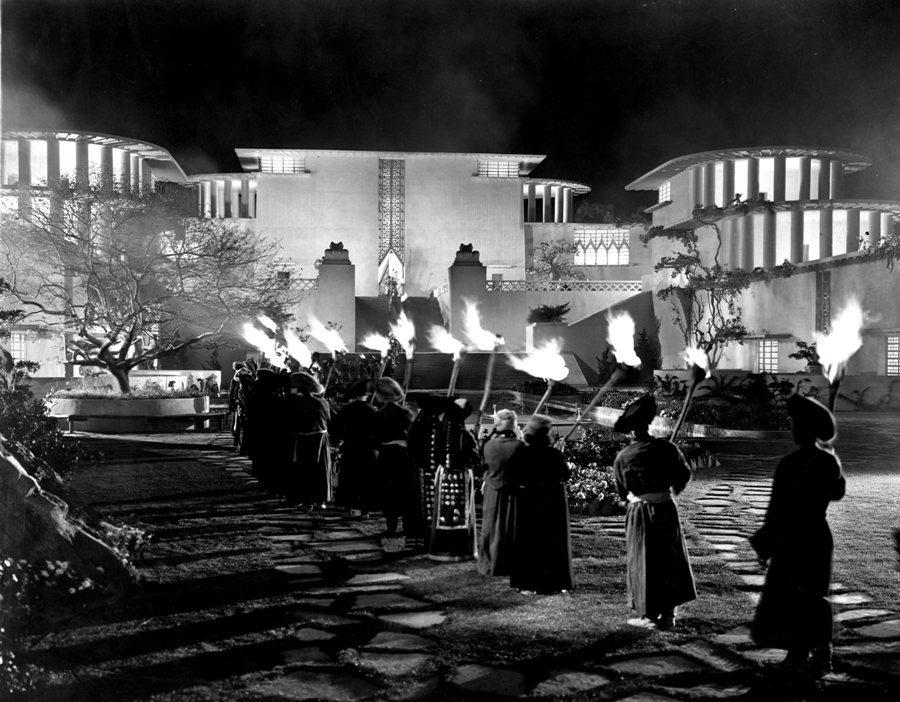
In his characteristically sensitive manner, the composer defended his reasoning behind the scoring, saying, “I must be honest.” His words didn’t convince Capra, but the finished product did. The score received an Academy Award nomination for Best Score, although it was credited to the head of Columbia’s music department, Morris Stoloff. Despite the film’s financial failure, its success boosted Tiomkin’s acclaim in Hollywood. A few years later, Capra conceded: “You were right, Dimi, about the music for the death of the lama.”
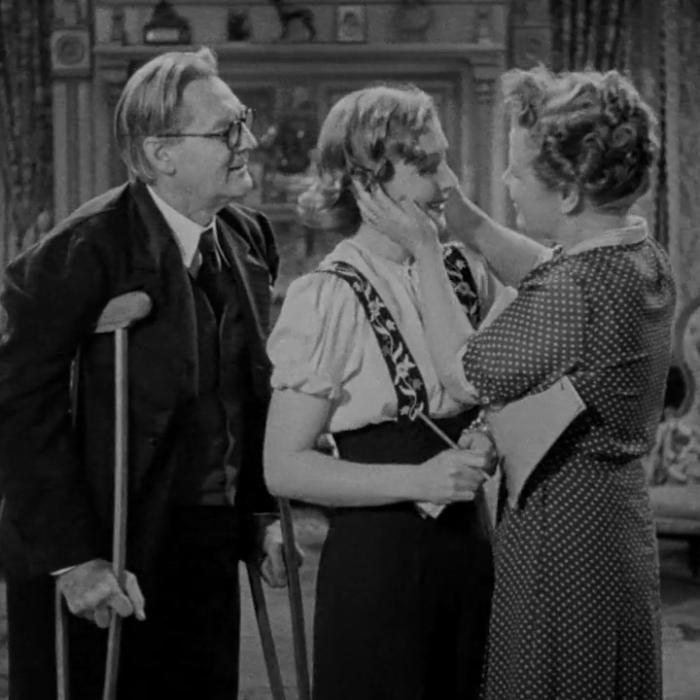
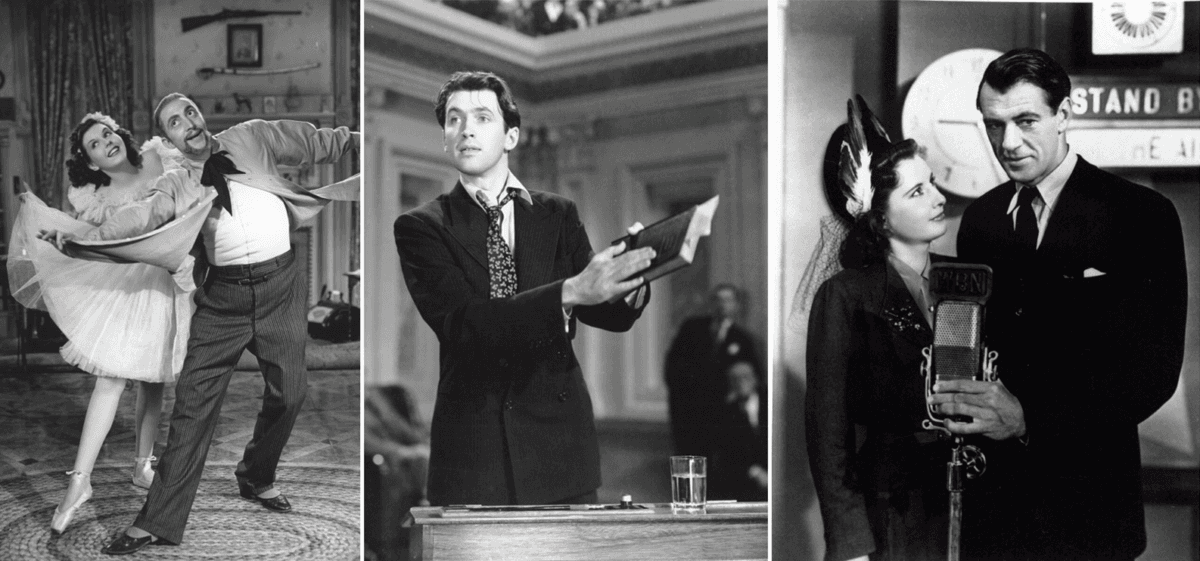
Tiomkin wrote the scores for Capra’s next three films, “You Can’t Take It With You” (1938), “Mr. Smith Goes to Washington” (1939), and “Meet John Doe” (1941), which remain among the director’s most famous films.
The Golden Decade
The period from 1948 to 1958 has been called Tiomkin’s “Golden Decade.” During these 10 years, he composed 57 film scores, with an average of five per year.He received eight of his 22 Academy Award nominations during that decade, including three of his four wins. In that time, he also received the first seven of his eight Golden Globe nominations.
During the 1950s, Tiomkin moved into the genre of suspense, scoring “Strangers on a Train” (1951), “I Confess” (1953), and “Dial M for Murder” (1954) for director Alfred Hitchcock. He tried his hand at horror with “The Thing From Another World” (1951). Nevertheless, this Russian-born concert pianist by training would end up achieving his greatest success in an unlikely genre: the Western.
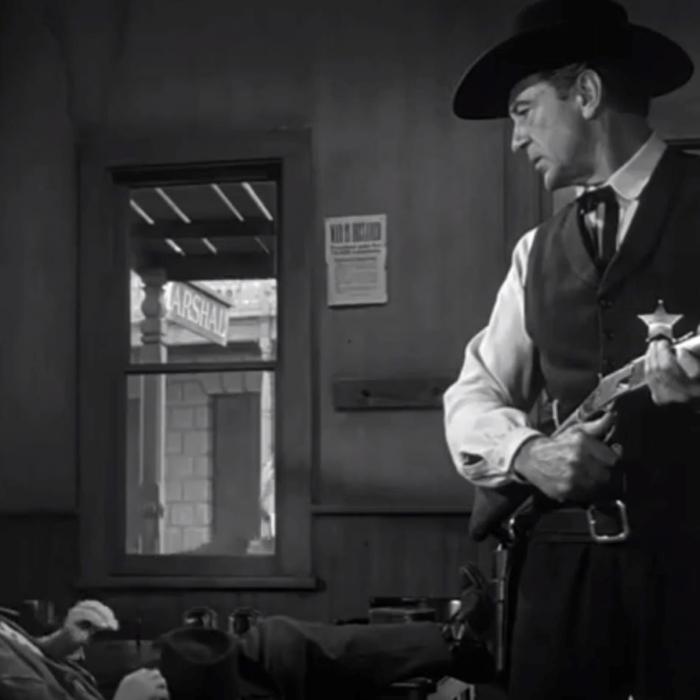
Tiomkin moseyed into the Western world in 1946 with David O. Selznick’s “Duel in the Sun.” His first major success in the genre was “High Noon” (1952), a Western starring Gary Cooper and Grace Kelly. He won two Oscars for this movie—Best Score and Best Original Song for “Do Not Forsake Me, Oh My Darlin,” lyrics by Ned Washington, which Tex Ritter sang in the film.
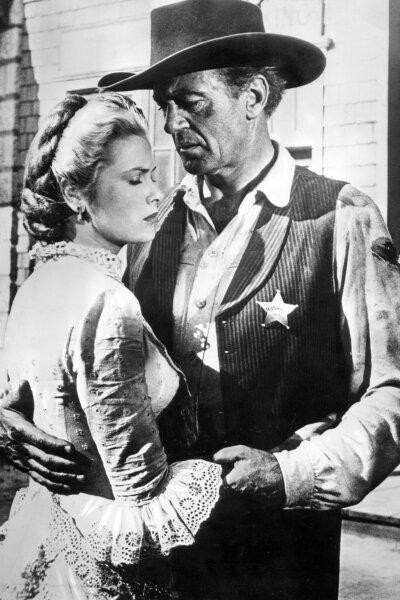
This was his first time winning at the Academy Awards after many years of nominations. The success of the theme song, as Frankie Laine debuted after the picture’s release, made the movie a hit. Tiomkin is credited with starting this trend of having a very catchy title song for movies.
“The High and the Mighty” (1954) and “Giant” (1956) are two of his other most lauded Western scores. He also wrote background music for several Western TV series in the 1950s and 1960s.
Tiomkin’s greatest notoriety came not from one of his scores but from his acceptance speech at the 1955 Academy Awards. Upon winning Best Score for “The High and the Mighty,” he gave thanks and credit to the masters of classical music, listing composers Beethoven, Brahms, Schubert, Grieg, Mozart, Mendelssohn, and several others.
In his autobiography, he recounted how the audience “gave me credit for getting off the big joke of the occasion. I was hailed as a wit.” However, he admitted that “it was unconscious humor,” as his joke was completely misunderstood, “and the laugh was on me.”
As he explained in the final chapter of his autobiography, Tiomkin was sincere in his gratitude to the classical greats.
Throughout his long and impressive Hollywood career, he combined a rich history of musical tradition with the distinctly American melodies found in our folk songs. He combined them with sincerity and charming good humor to create masterful scores which are still beloved today.