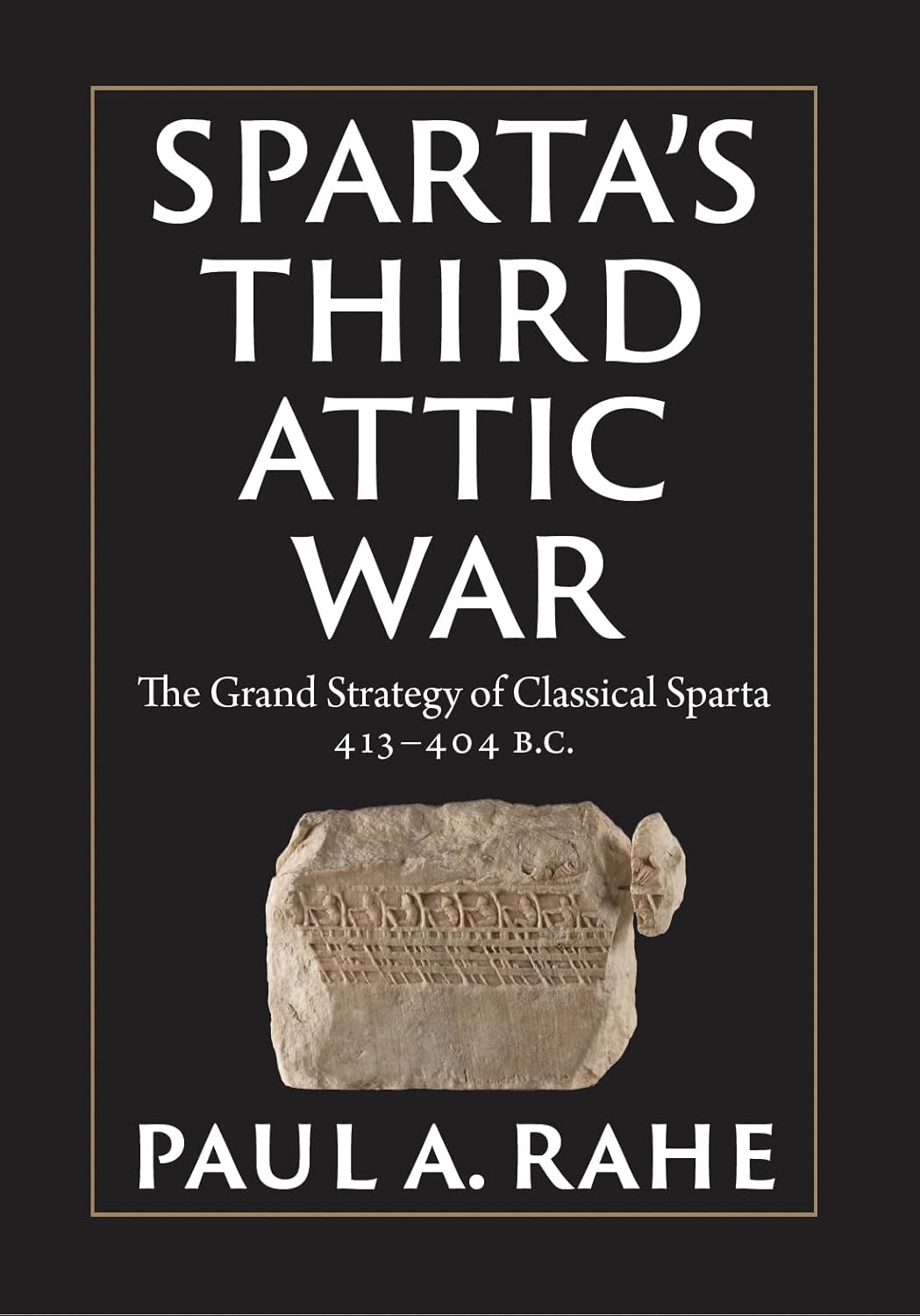
“Every political regime contains within the seeds of its own destruction.” While reviewing Paul Rahe’s new book, I jotted down this line because of the truth behind the statement. Among my many notes taken, I jotted down a number of Rahe’s clever insights. I find it good practice to not only make notes when reading historical works, but to pull down the fruits of others’ mental labors.
Having read Rahe’s previous book, “Sparta’s Sicilian Proxy War,” I anticipated finding a cluster of insights. What I didn’t anticipate after having completed his most recent work is how that subtle, yet finely crafted line, written in the early pages, was a foreshadowing of what would take place several hundred pages later. This long connection over the arc of the book demonstrated that Rahe, one of America’s most accomplished historians, doesn’t waste words—even for the sake of making an insightful statement.
Read Slow to Keep Track
Along with modern American and European sources, Rahe pulls extensively from the classic sources, including Thucydides, Xenophon, Ephorus, Diodorus Siculus, and Herodotus, consolidating them into a seamless narrative. While doing so, he also notes when a contemporary author is incorrect, or, at least, most likely incorrect in their assessments; these issues typically happen when the “account makes little sense or is inconsistent with contemporary evidence.”We are necessarily introduced not solely to the world of the ancient Greeks (or Hellenes), but also to the Persians, who play a significant role in the conflict, specifically financially. The author, however, demonstrates how the world of the Persians worked; the power of and behind their Great Kings; and most interestingly, their political intrigue.
When it comes to the Greeks, the number of important and semi-important figures Rahe presents are extensive. It quickly becomes nearly impossible to keep track of who is who, as many remain in the story for only short periods of time, although this does not include the number of primary figures who maintain a presence throughout. To an extent, though, keeping track of individuals is less important than keeping track of the results of their actions. That is where the narrative lies; though with its very many moving parts, even the transpiring actions can become difficult to track.
Behind the Front Lines
Overall, though, it is the subject—war between ancient Greece’s two great powers, Athens and Sparta—that makes the narrative so engaging. Although Rahe takes us onto the battlefields or, most often, onto the seas, he spends most of his time presenting the political chaos in the numerous city-states, the military strategies of the Athenians and Spartans and their specific allies, and the intrigues conducted by fellow officers, none more intriguing than the Athenian Alcibiades.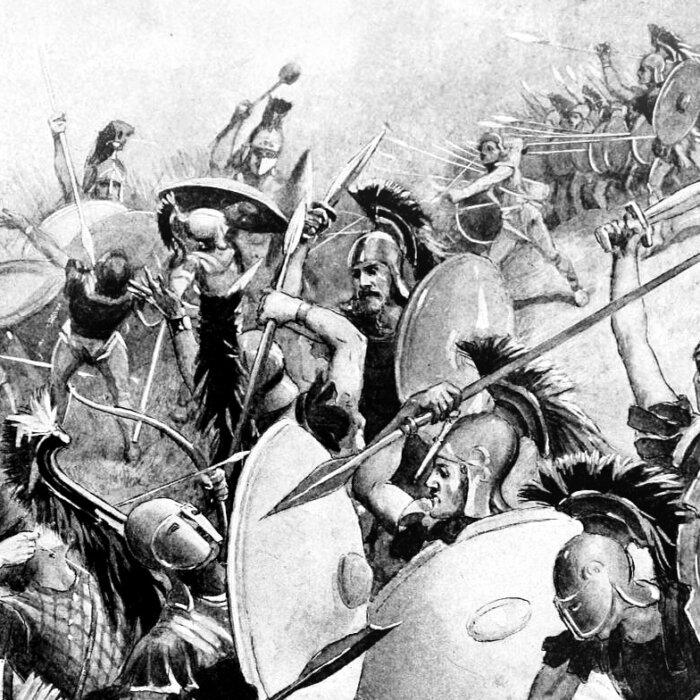
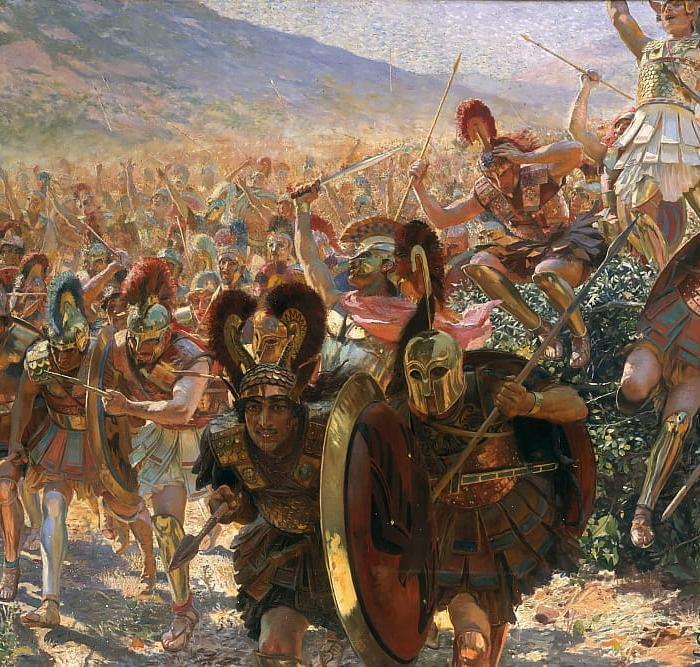
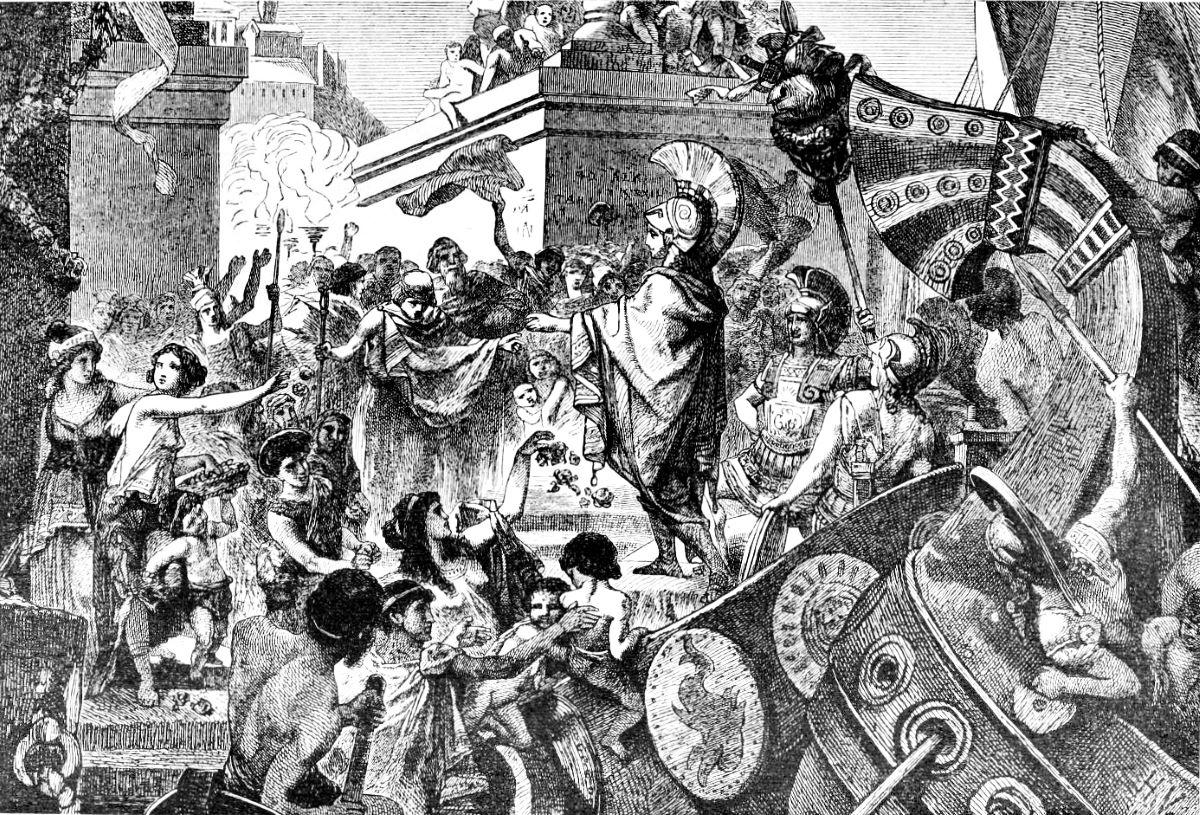
Alcibiades, the brilliant statesman and general, as well as deceptive traitor, fits the bill as the indecipherable villain. Readers will indeed wonder, considering Alcibiades’s past among the Athenians, why they continued to trust him; but such was the overall brilliance of this notably handsome and oratorically gifted statesman. Rahe demonstrates how Alcibiades knew with whom to conspire and how to manipulate, not only the politics of Athens, but also the fears of the politicians concerning the threat of war and the displeasure of an often rabid citizenry.
A Grand Study
The political intrigues of this near 2,500-year-old story are similar to our modern era. This makes these historical lessons even more valuable. Of course, Rahe makes no overt connections to the modern era, but he doesn’t have to. Just as with the opening quotation of this review, Rahe’s work—and more widely, works—makes those connections quite clear.As the book’s timeline comes to an end, it’s the final months that prove to be the Athenians’ ultimate undoing. Furthermore, it is in the final pages of the book that Rahe’s long, thorough, and dense narrative that finally bears the fruit of what seemed to be his mere, clever political truth. Indeed, at least for me, it felt like a light suddenly shone on the entire political landscape of Athens’s defeat. The “seeds of its own destruction” were indeed from “within.”
“Sparta’s Third Attic War” is a brilliant study on the final years of one of history’s most famous wars. For military or ancient history enthusiasts, Rahe’s work is a must-read. Prepare to read it slowly, take notes, and learn about the varied facets that make up the ancient conflict.