There’s a common belief that urban dwellers have an incomplete or romanticized picture of country life. The gap likely comes from real structural differences in daily routines, economic pressures, infrastructure, and social norms that are hard to fully grasp without living them.
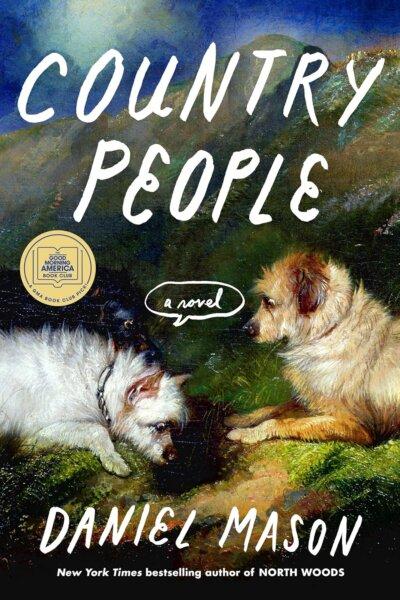
Perhaps it was this idea that inspired Daniel Mason to write his newest novel, “Country People.”
Those familiar with Mason’s work know he often has his heroes venturing into new, mysterious lands. While you wouldn’t necessarily think of Vermont in that way, Mason’s near smorgasbord of offbeat characters will make you wonder if this particular Vermont is on a different planet.
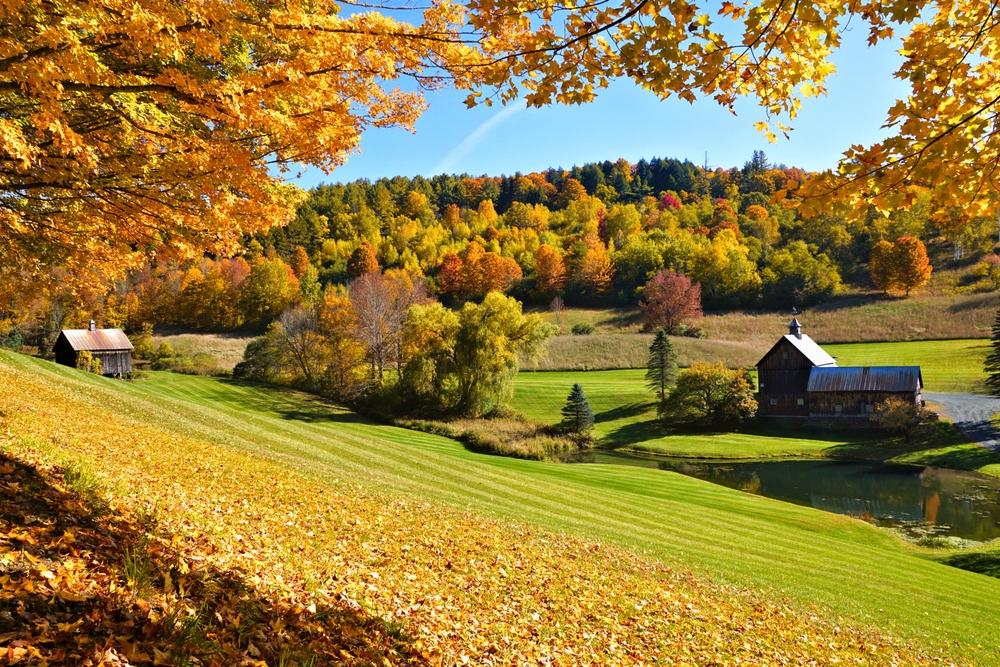
New World England
“Country People” centers on the California-raised Krzelewski-Petrosian family.The dad is Miles, a perpetual graduate student; he’s 14 years into a dissertation that’s drifted from an obscure troubadour to Rabelais to Chekhov to, at last, Russian peasant folktales. He’s more gifted at collecting stray enthusiasms than finishing anything.
His wife, Kate, is his opposite; she’s a decorated Milton scholar with tenure at 32. Her quiet and successful battle against a multiple sclerosis diagnosis has only sharpened her drive. Their children, 12-year-old Wesley and 9-year-old Olive, are budding obsessives themselves.
Wesley has a memory like a steel trap and feels compelled to obliviously correct people around him—frequently to their annoyance. However, he’s beginning to cultivate a serious case of skepticism that’s in danger of tipping into YouTube-fueled paranoia. He often latches onto and accepts new concepts, regardless of how fantastical they might be.
Oddballs and Eggheads
One day, Kate accepts a visiting professorship at a small Vermont college. The family has the good luck of getting to stay for free at the home of a local economics professor while he’s on sabbatical. Miles’s job will be to shepherd the kids and, theoretically, finally finish his dissertation.Up to now, the family’s been sheltered in a world of elite scholarly pursuits in Silicon Valley. Even the kids act like academics. Olive has two stuffies named Hegemony and Freudenschade. They were aware that their old home had poor people, but “they were just better hidden.”
Recognizing that there’s more to life than what they’ve known, Miles and Kate look upon the new job as an opportunity to explore new horizons and shake things up. To become … well, you can guess by the title.
One of their first experiences comes from the dazzling and bizarre processed-food aisles of a local gas station. Who knew such things existed?
As you can imagine, the novel leans hard—successfully, too—into charming quirkiness with more than a dash of absurdism and satire.
Kate acquires a South Asian student in her Milton seminar, who’s improbably named Franz Kafka (a common name back home, he insists with a straight face). The family meets a nature guide whose passion for the Hollow Earth theory is matched only by his contempt for flat-earthers.
A recurring radio call-in show supplies a chorus of rural eccentrics, none stranger or more endearing than Bev. She’s a perennial caller with a knack for stumbling into the inexplicable, whether finding a human-ish skull in her chimney or digging up strange worms with little blue eyes.
Meta-Academics
Academics and pseudo-academics populate the story. Mason’s own writing style operates as something of a meta-joke, reading like a scholarly field study of a strange, never-before-observed culture. It works exceptionally well, letting us laugh at and enjoy the family’s wandering explorations while still empathizing with their flights of fancy.Mason is clearly more invested in constructing interesting characters than depicting realistic Vermonters; you rarely meet anyone who feels genuinely ordinary or recognizable as someone actually from New England. Everyone’s a bit like the eccentric residents of Garrison Keillor’s Lake Wobegon, but kicked up a notch.
For a good stretch of the book, it seems as though the family’s impulsive wanderings might comprise the entire plot. Dark realities still exist in this world, yet they’re often cluelessly avoided through providence or pure dumb luck. While it’s all very entertaining, readers might start to wonder whether all this safe quirkiness is building toward anything.
Slowly, Mason weaves together the family’s scattered encounters, meshing them with their evolving storylines and centering around a subject hinted at in strange quotations in the opening pages. Toward the end, the family’s luck seems poised to run out, but Mason delivers an awakening climactic crisis that neatly pulls every thread together.
“Country People” is a shaggy, digressive delight, which is less concerned with plausibility than with the pleasure of getting delightfully lost. It’s well worth it, for city and country folk alike.