Correggio (1489–1534), though not as well-known today as his peers Leonardo, Michelangelo, Raphael, and Titian, was a profoundly influential Italian Renaissance artist. His narrative works are marked by luminous lighting effects, intense emotion, and pioneering original interpretations. Scholars rank him alongside the most illustrious artists of his era.
Illustrious Illustrator
Correggio was born Antonio Allegri in the town of Correggio, hence his name, near the city of Parma in the Emilia-Romagna region of Italy. Art historians believe that he trained in Mantua, perhaps under the great Andrea Mantegna (circa 1431–1506). Mantegna’s influence can be seen in Correggio’s work, along with that of Leonardo, Venetian painting, and Rome’s examples of the oeuvres of Michelangelo and Raphael.In 1519, Correggio moved to Parma and spent most of the following decade there. It was the place of his greatest activity, but because it was a regional area, his work has garnered less fame compared to contemporaries working in Florence, Rome, and Venice. Correggio’s sumptuous fresco cycles of ambitious and unprecedented illusionism were made in Parma. They include “Assumption of the Virgin” in the city’s cathedral.

Reggio’s Adoration
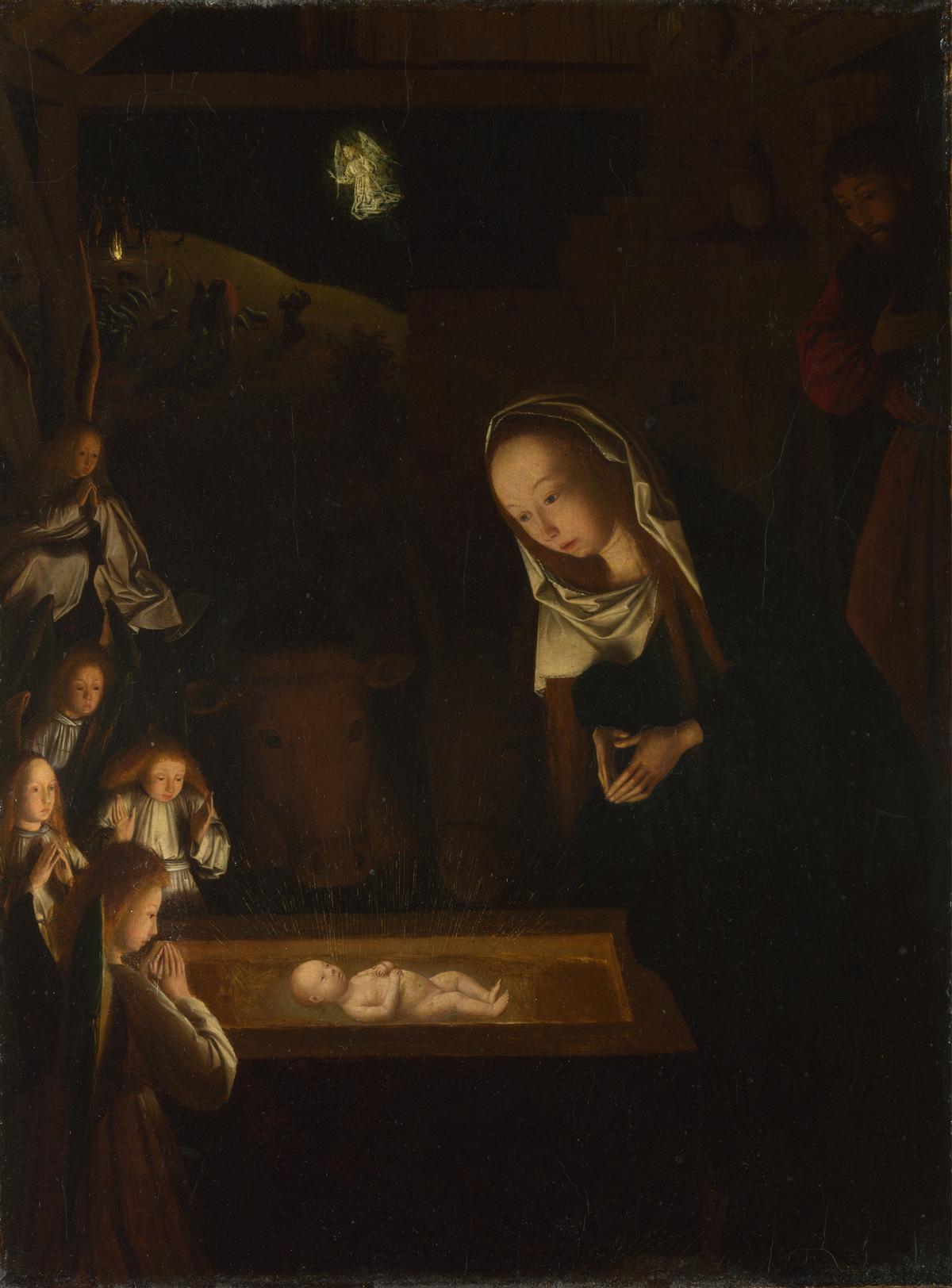
“The Holy Night” features supernatural light emanating from the Christ Child, which is the only light source apart from faint twilight on the horizon. This dramatic device draws the viewer intimately into the composition. The iconography of a divine luminosity from the newborn Jesus originated in Flanders at the end of the 15th century.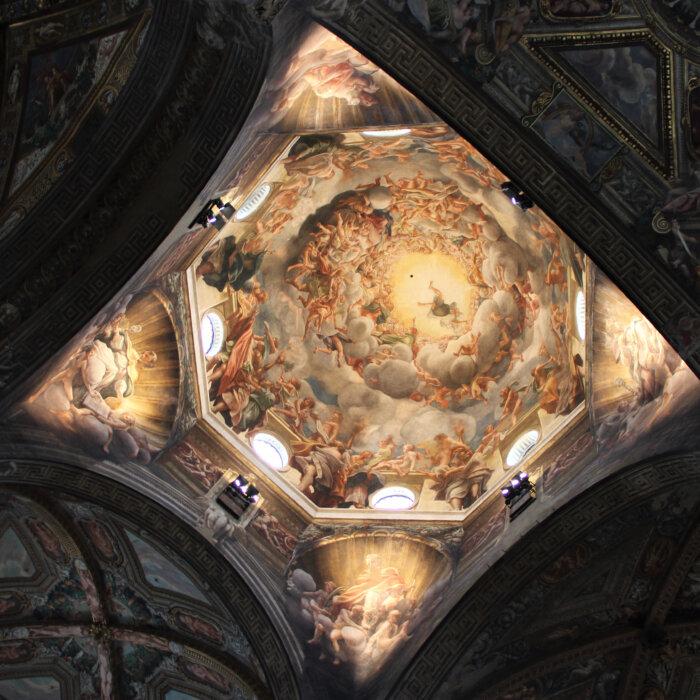
London’s National Gallery owns “The Nativity at Night,” possibly made around 1490, by Early Netherlandish artist Geertgen tot Sint Jans (circa 1455/65–1485/95). It was inspired by nighttime Nativity works by Flemish Hugo van der Goes (circa 1440–1482) that are now lost.
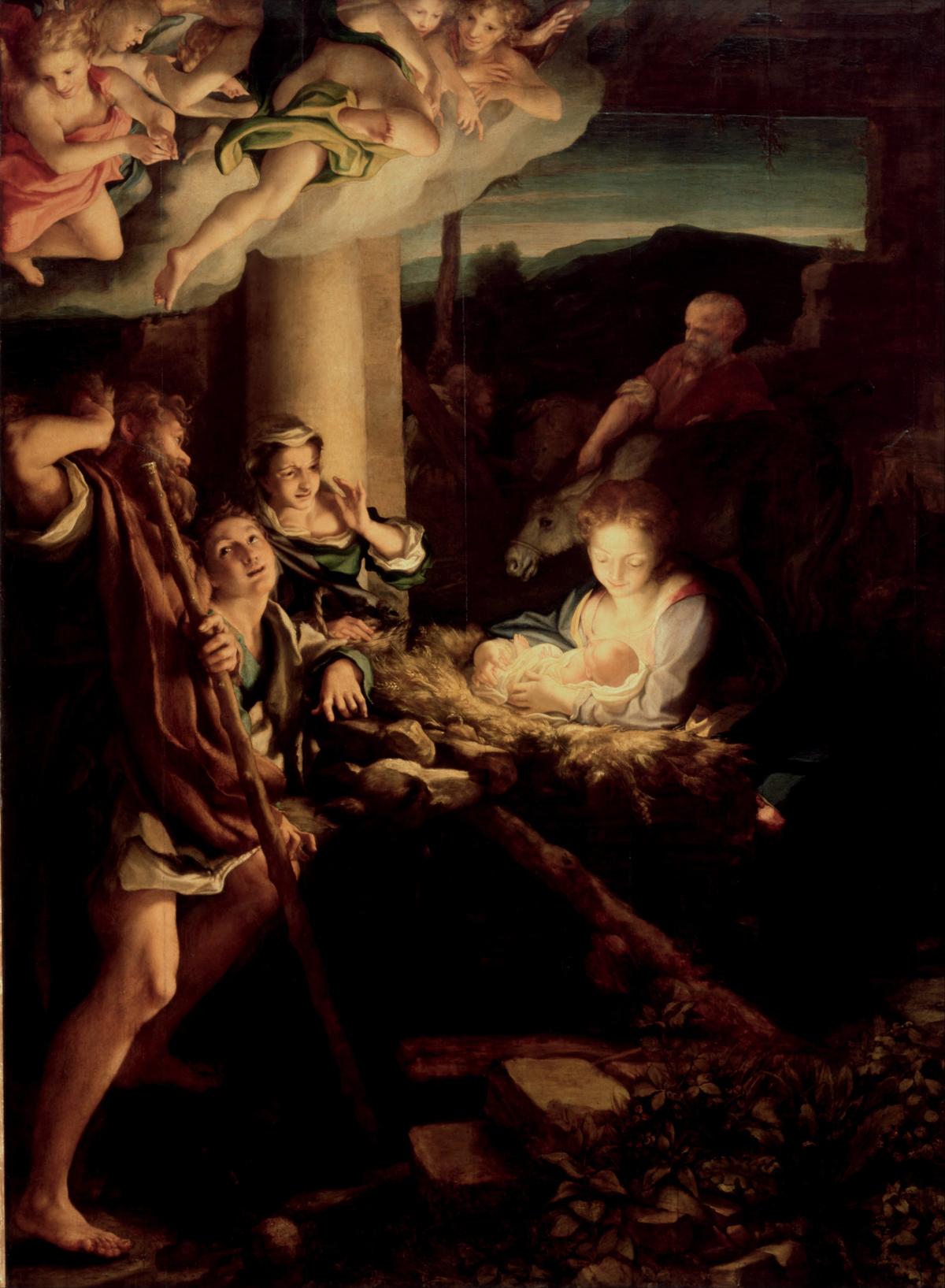
In Correggio’s version, the Madonna cradles Christ, who lies upon a straw-strewn cot. His light shines and diffuses across the scene. Mary’s loving face glows while the shepherdess on the left shades her eyes from the overwhelming brilliance. The rejoicing angels twist and whirl, depicted with precise foreshortened perspective.
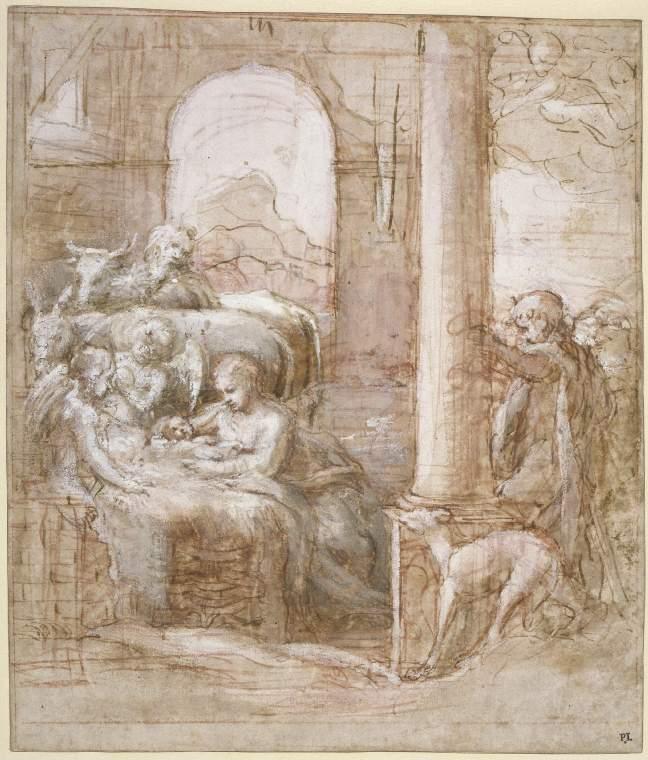
Correggio was a talented draughtsman. All of his surviving drawings are preparatory sketches for painted works. Among the finest of these is at the University of Cambridge’s Fitzwilliam Museum. A highly finished work on paper, “The Nativity With the Arrival of the Shepherds” is composed of a mixture of red and white chalk, brown wash, and ink.
Correggio’s mature works herald the 17th century baroque movement and influenced subsequent artists, including the Italian Carracci brothers, the Flemish Rubens, and French rococo artist François Boucher.
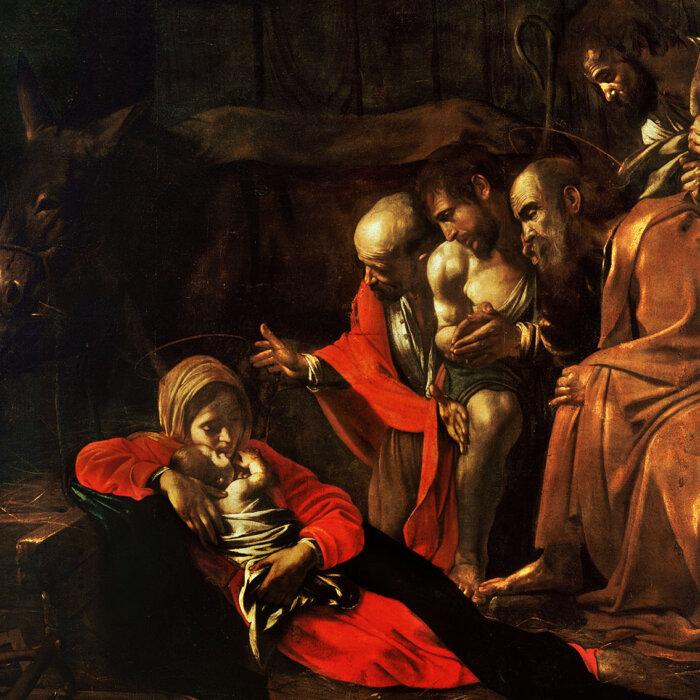
In the 18th century, “The Holy Night” was a seminal work for painters. The German Anton Raphael Mengs (1728–1779) made several artworks depicting the Adoration of the Shepherds that were inspired by this Correggio painting. An esteemed example is at Madrid’s Prado Museum. The Prado has a current exhibition devoted to Mengs on view through March 1, 2026.
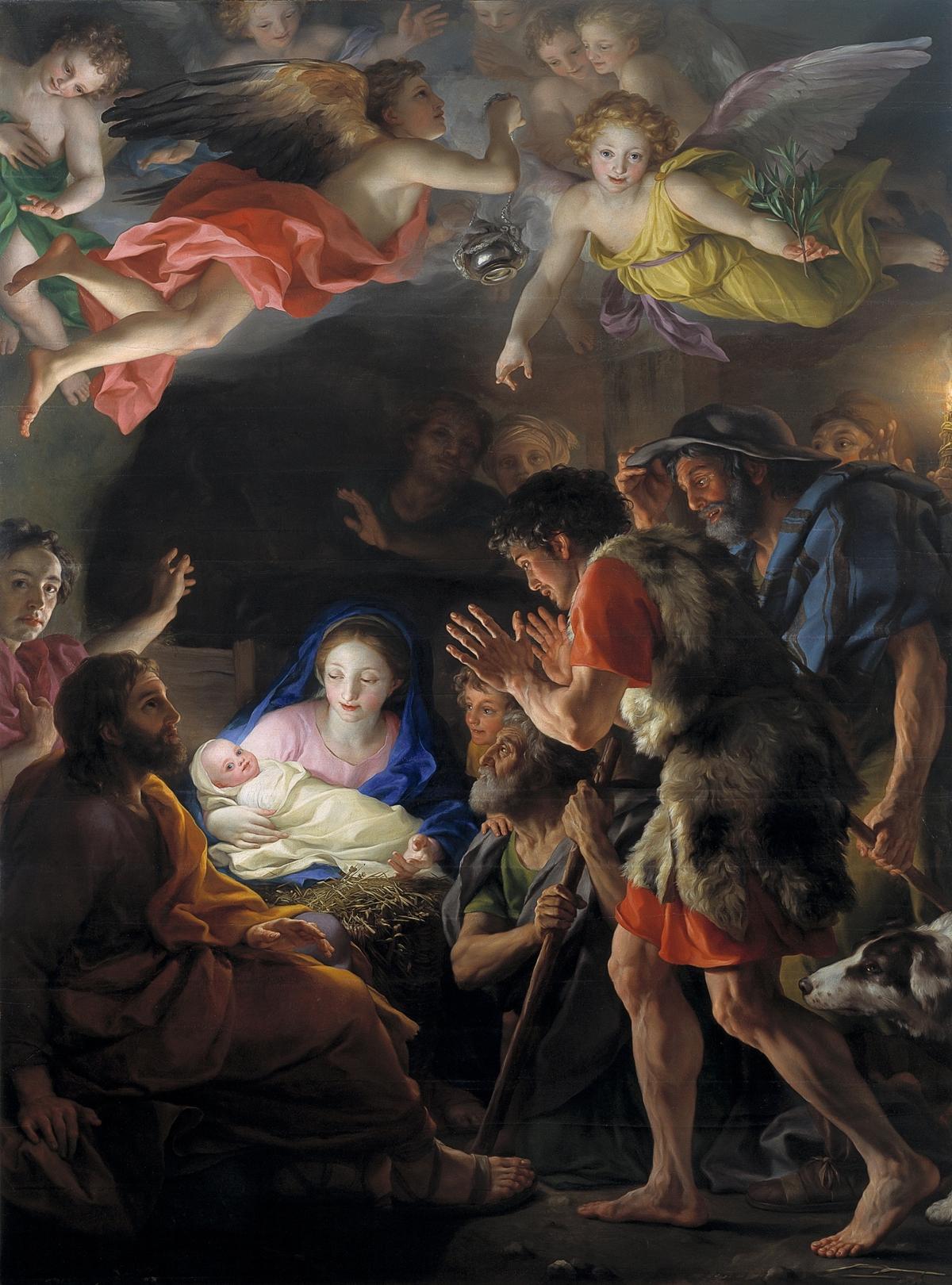
As in Correggio’s work, the nocturnal scene features a glowing Baby Jesus. The Prado explains, “The composition reveals a profound study of perspective and of illumination. It uses a strong play of lights and shadows marked by the light emitted by the Christ Child, which defines the other volumes.” The shepherds gather around the Holy Family and are overlooked by angels. Behind the seated Saint Joseph is a portrait of the artist. He looks out at the viewer and gestures to the miraculous birth.
Correggio’s art, especially “The Holy Night,” has inspired artists for generations. His remarkable talents in technique, narrative, and sentiment, coupled with his visionary style, led to magnificent artworks that still evoke awe in those who gaze upon them.