Sunlight pouring through stained glass sets walls and floors alight with a shifting, ethereal glow. The windows mesmerize, but their beauty is more than decorative. Each image holds meaning, weaving symbolism and structure to convey deeper ideas. American artist and designer Charles J. Connick (1875–1945) understood this deeply. He reshaped stained glass by blending medieval craftsmanship with early 20th-century innovation.
In the early 20th century, stained glass in the United States was dominated by opalescent styles popularized by Louis Comfort Tiffany and John La Farge. While visually striking, these windows often felt like paintings set in glass rather than integral parts of the architecture. Connick reimagined the medium, skillfully uniting medieval craftsmanship with modern design.
Early Life and Influences
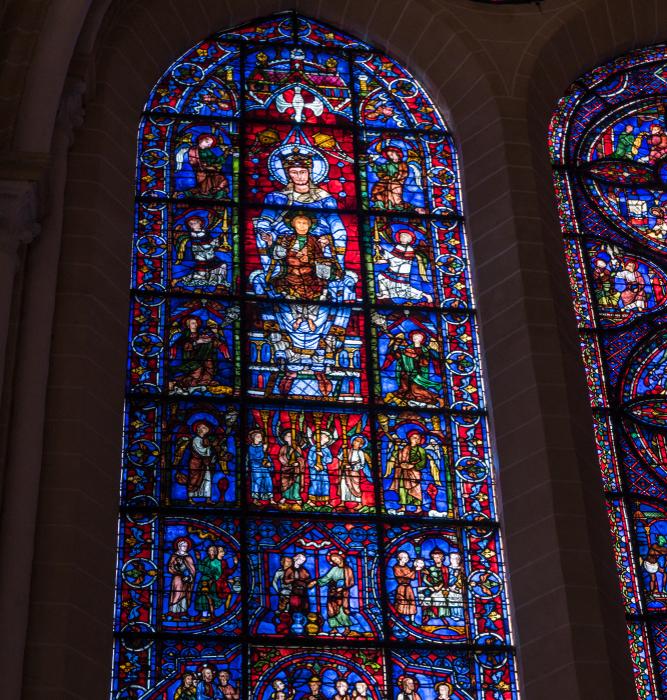
Born in 1875 in rural Pennsylvania, Connick grew up with limited education and few resources. His first exposure to stained glass came at the firm Rudy Brothers and Reich, where he began learning the craft. He became fascinated with both the making of windows and their historical principles, reading extensively about medieval Gothic design. Gradually, he came to believe that modern stained glass should return to medieval methods and values.In the early 1900s, Connick traveled to France and England, visiting renowned cathedrals. The stained glass at Chartres Cathedral made a particularly strong impression. He concluded that medieval windows achieved their power by uniting light, structure, and meaning—a principle that became central to his own work.

Boston Studio and Design Philosophy
In 1913, Connick opened the Charles J. Connick Studio in Boston, Massachusetts. Organized along Arts and Crafts principles, it functioned as a collaborative workshop where artists and craftsmen shared responsibility. Their work was guided by a unified vision: to create windows that complement a building’s proportions, materials, and symbolism, rather than exist as isolated artworks.Material choice played a key role in the studio’s work. Connick rejected thick, opaque opalescent glass in favor of thinner, translucent glass, like that used in medieval windows, believing that illumination, rather than pictorial detail, should define stained glass. He also introduced structural innovations, such as staggering solder joints instead of aligning them in rows, producing a more rhythmic, lively surface.
Landmark Commissions: Grace Cathedral
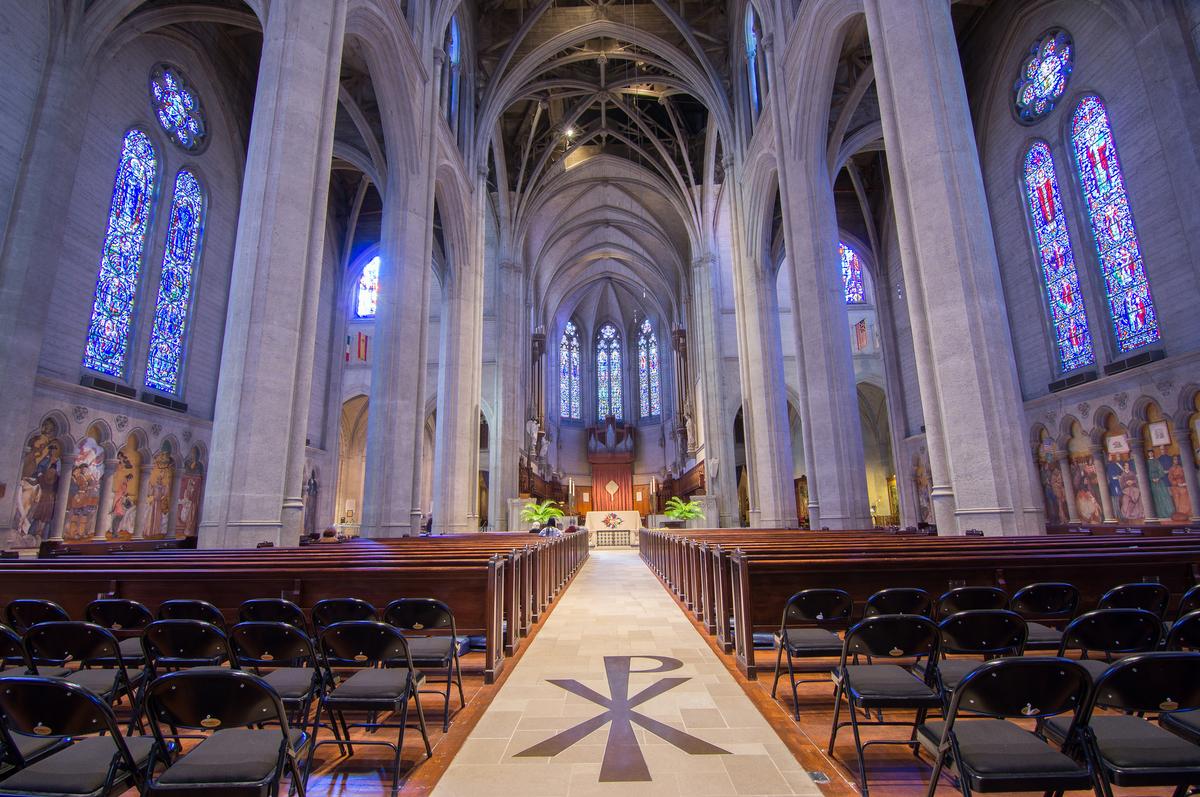
One of Connick’s most notable projects was Grace Cathedral in San Francisco, California. The church began as Little Grace Chapel during the 1849 Gold Rush, with miners among its first congregants and gold dust offered as collection. Unfortunately, fire caused by the 1906 San Francisco earthquake destroyed the original building.
Decades later, as plans for a new cathedral took shape, Connick was commissioned to bring his vision of stained glass to the project. Construction began in 1927, but the work proved challenging, as the building remained only partially completed until nearly 20 years after his death.
Grace Cathedral now houses 68 named windows by five different artists, with half created by Connick’s studio. Among the highlights is a radiant depiction of St. Hilda of Whitby, one of the monumental choir saints. A 7th-century Northumbrian royal, St. Hilda became abbess of several monasteries, including Whitby Abbey. The window—with its sapphire blue and gold accents—exemplifies Connick’s skill in harmonizing color and light with architectural style.

Expanding Themes and Literary Inspiration
Connick expanded the thematic range of stained glass, striving to create windows that spoke to contemporary audiences. He introduced distinctly American subjects, themes seldom seen in the medium at the time. While biblical imagery remained central, he frequently incorporated historical figures alongside traditional religious subjects. This reflected his belief that stained glass could serve as a medium for cultural and intellectual expression. In keeping with this vision, he often drew on literature, as exemplified by his celebrated window “Tiger” at Peirce Hall at Kenyon College in Ohio.
Set among numerous windows illustrating British and American literary classics, the piece draws inspiration from William Blake’s poem “The Tyger.” It depicts a fierce, fiery-orange tiger set amid deep blue glass. This visual tension mirrors the poem’s exploration of innocence and experience. The poem’s unresolved, thought-provoking questions invite personal reflection, making the window particularly well suited to a university setting.
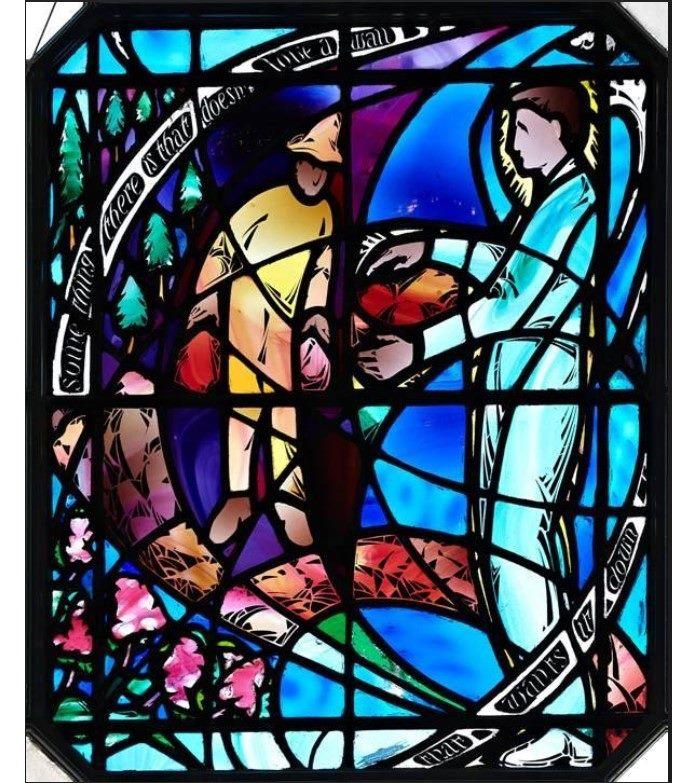
Connick’s literary influence is also evident in “Mending Wall,” created for the Newtonville Branch Library in Massachusetts in 1939. The vibrantly colored window depicts Robert Frost’s poem of the same name, including the inscription: “Something there is that doesn’t love a wall/ that wants it down.” Frost’s poem follows two New England neighbors repairing a stone wall, prompting the narrator to question its purpose. One neighbor embraces tradition, stating, “Good fences make good neighbors,” while the narrator challenges this view, exploring the invisible walls people build between themselves.
Legacy and Influence
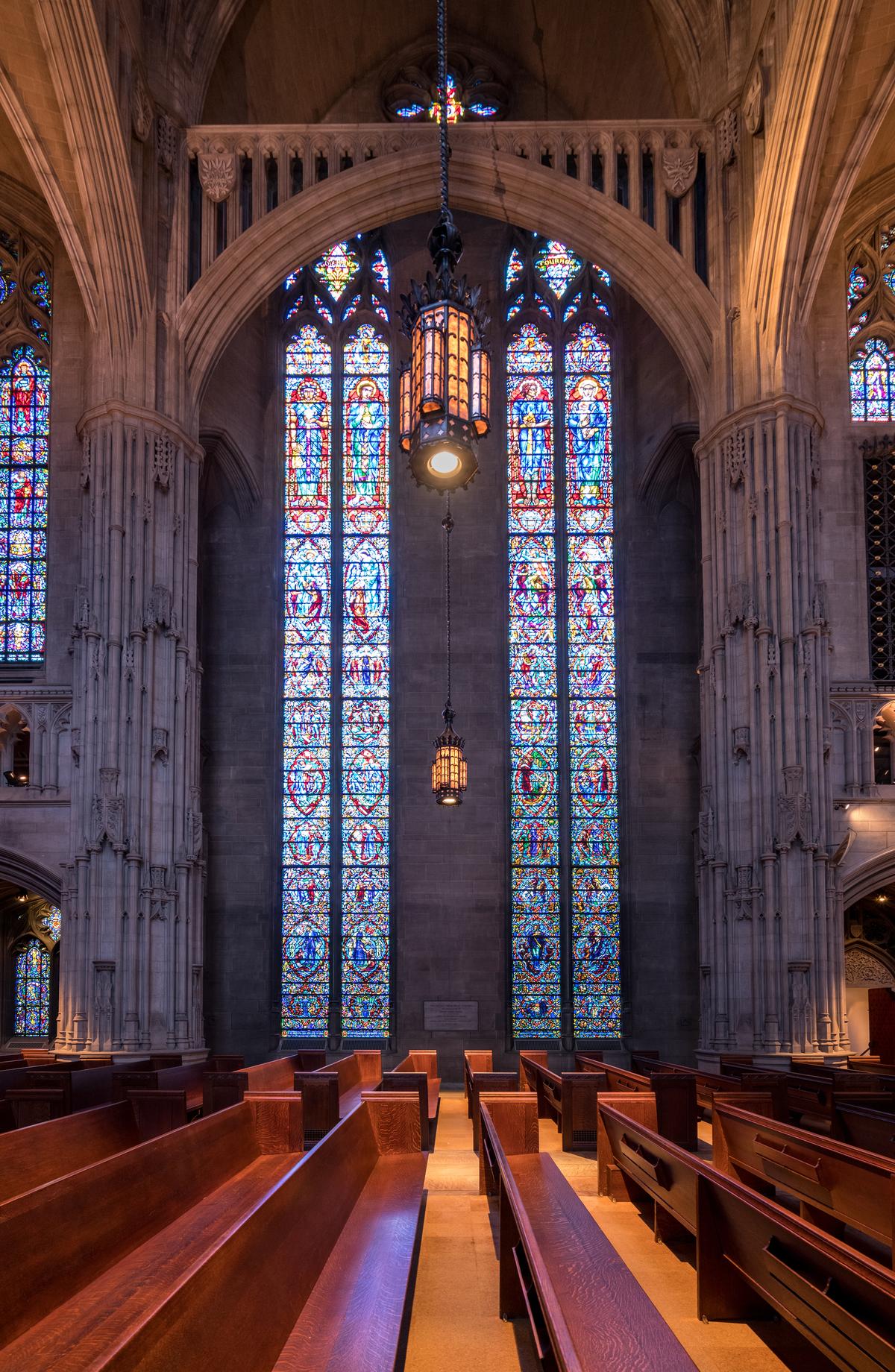
Connick’s studio became known for jewel-like, symbol-rich windows that helped revive stained glass in the United States. He adapted medieval principles to modern contexts, combining traditional color harmonies with bold, graphic designs. Connick was also a prolific writer and educator, using lectures and publications to share the philosophy behind his work and foster a deeper appreciation for stained glass as a serious art form. In his influential book, “Adventures in Light and Color” (1937), he argued that stained glass should not be seen as a painting, but as a medium defined by light.
Over the decades, Connick’s Boston studio flourished, its reputation spreading nationwide. By the time of his death in 1945, it had transformed countless spaces—churches, hospitals, universities, and more—into environments bathed in gentle light. Guided by his associates, the studio continued for four more decades, ultimately producing some 15,000 windows for over 5,000 projects, leaving a lasting imprint on the American landscape of stained glass. Most of the studio’s drawings, sample panels, and records were donated to the Boston Public Library. Today, the Charles J. Connick Stained Glass Foundation collaborates with the Boston Public Library and MIT’s Rotch Library to preserve these archives and promote public understanding of the art through lectures, publications, films, and tours.
Connick is now celebrated as one of the most influential American stained-glass artists of the 20th century. By blending time-honored methods with modern innovation, he elevated stained glass into works that fill their spaces with both radiant beauty and profound meaning. His windows stand as luminous testaments to the power of design, craftsmanship, and the transcendent language of light.