By the time Herakles is commanded to confront the Erymanthian Boar—his Fourth Labor—his education has already taken a decisive turn. The labors before it began to dismantle the crude caricature of the hero as nothing more than a being of unstoppable violence. In the legend of the Nemean lion, brute confrontation was unavoidable; in the labor of slaying the Lernaean Hydra, force alone proved dangerously inadequate. Then, with the Ceryneian Hind, his third labor, Herakles encountered something rarer still: the necessity of restraint in the presence of the sacred.
The Meaning of the Boar
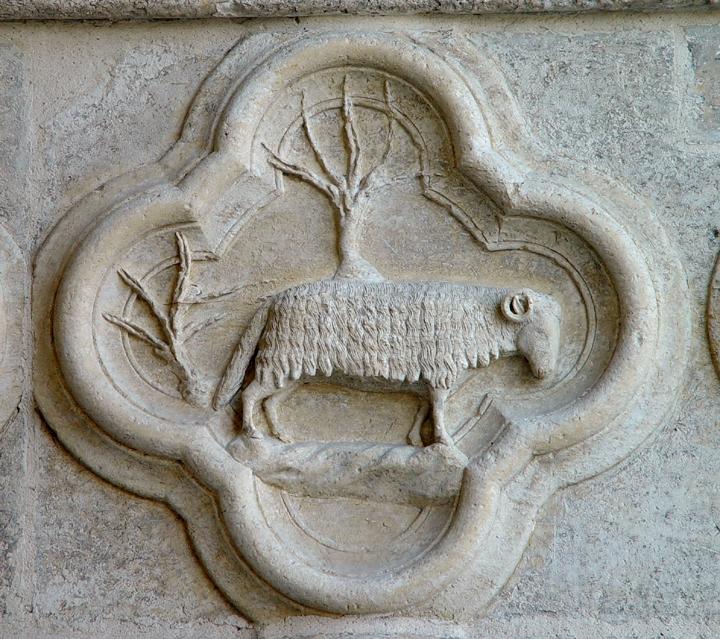
Astrologically and symbolically, this labor belongs to Aries, the sign of fire in its most primal form: impulse, aggression, momentum, and the will to charge forward. Aries energy is neither good nor evil in itself. It is simply powerful. Untamed, it destroys; disciplined, it becomes courage, initiative, and leadership. The Erymanthian Boar is Aries ungoverned—instinct without conscience, force without direction.The task given to Herakles is crucial: He is not instructed to kill the Boar, but to capture it alive. This single condition transforms the labor from an act of slaughter into a moral test. The problem is not how to destroy rage, but how to contain it; not how to eliminate energy, but how to govern it. This is the education of fire—not extinguishing the flame, but preventing it from becoming a wildfire.
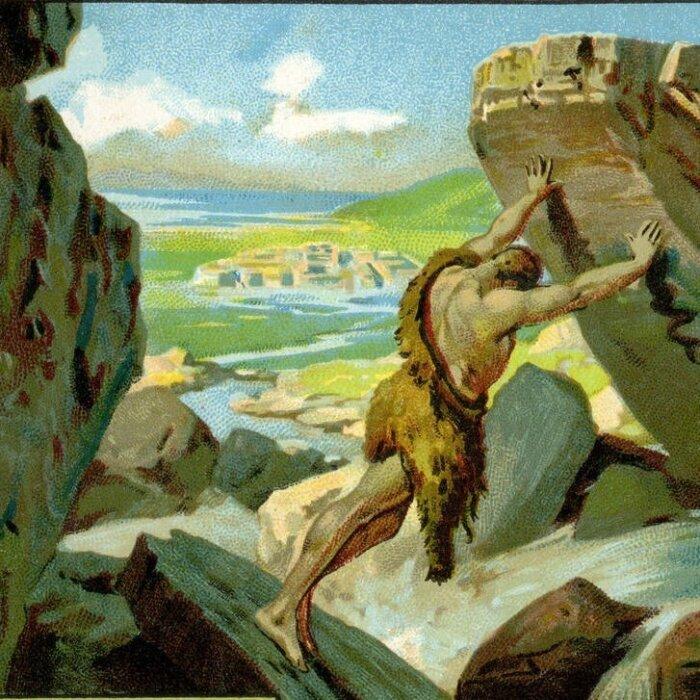
The setting reinforces the lesson. Herakles drives the Boar not in the heat of summer, but into the snowbound highlands of Mount Erymanthus: There, after dislodging it from a thicket with loud hallos (according to Robert Graves’s “The Greek Myths”), he drives it into a deep snow drift and leaps upon its back.
The imagery is deliberate. Fire is mastered not by opposing it with equal heat, but by drawing it into cold, into stillness, into a landscape where its frantic charge exhausts itself. Herakles does not match rage with rage. He lets the Boar’s own fury undo it. Eventually, mired in snow and fatigue, the animal can be seized and bound.
The Back Story
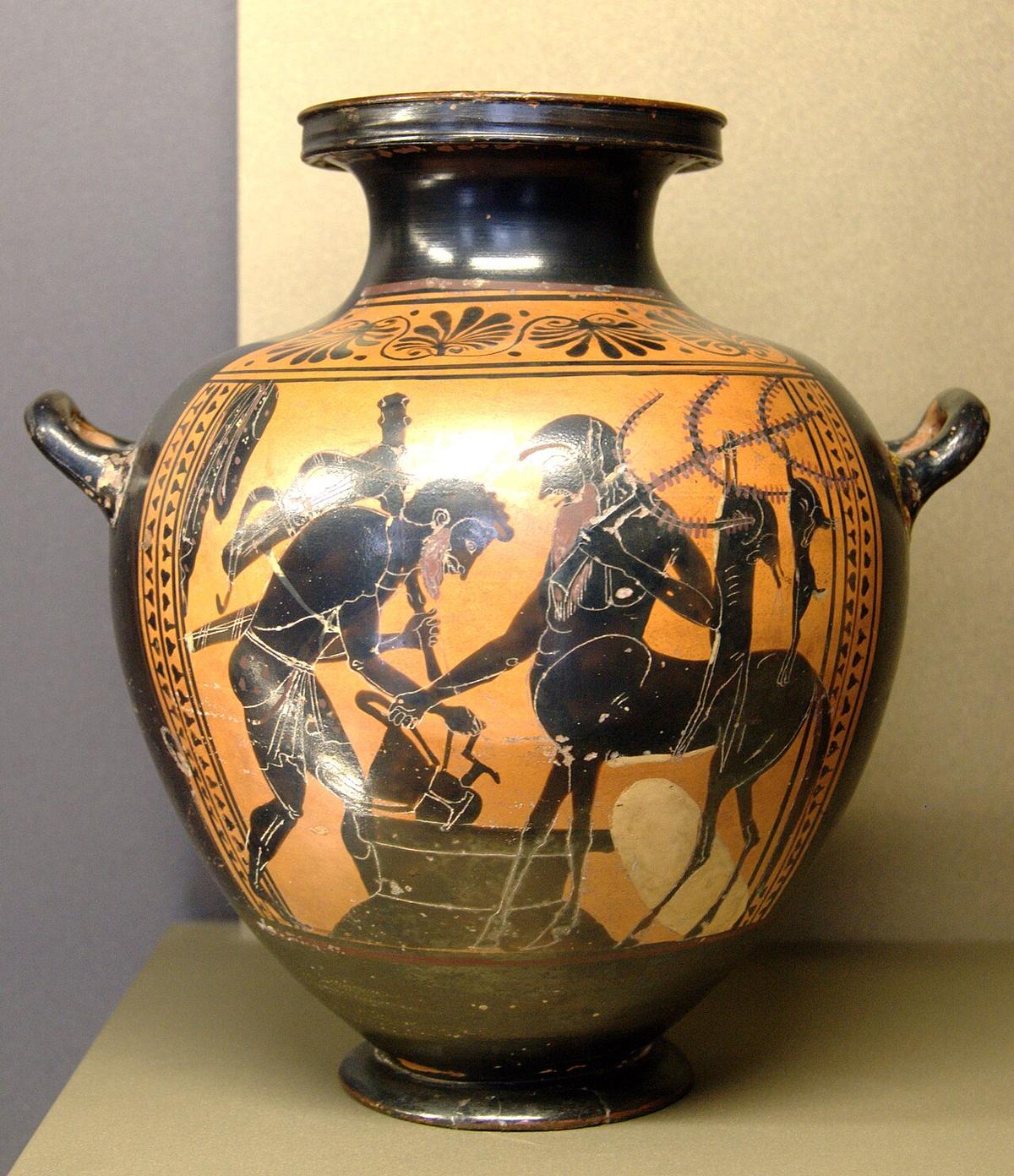
Yet the Boar labor is not only about the beast. Interwoven with it—and prefacing it—is one of the most troubling episodes in the Heraklean cycle: the death of his friend, the centaur Pholus, and the violent chaos that erupts among the centaurs more generally. What begins as hospitality and friendship degenerates into bloodshed, when wine—another symbol of ungoverned appetite—is introduced. Rage spreads contagiously. Violence multiplies. Innocents suffer. Herakles himself, though not acting maliciously, becomes the catalyst for disaster.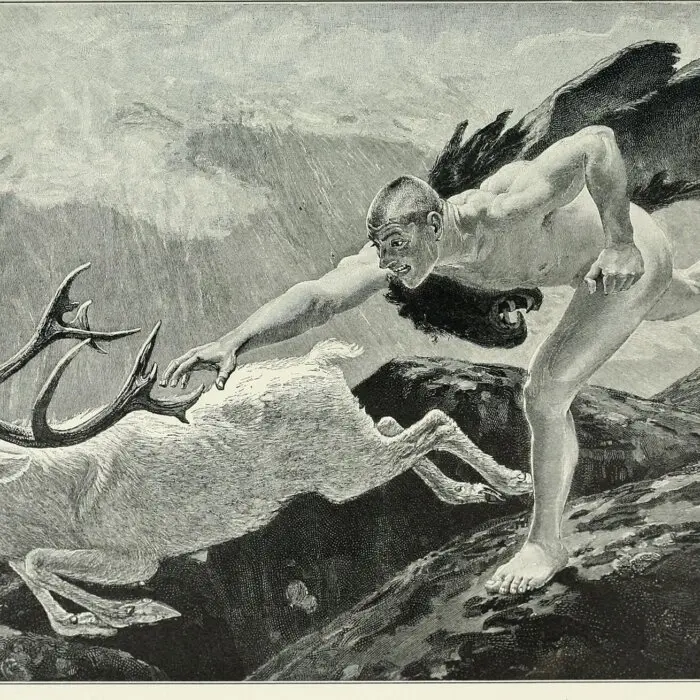
This episode casts a long shadow over the labor. It suggests that fire, once unleashed, rarely remains contained. Anger does not stay personal; it spills into communities. Force does not act in isolation; it propagates itself. Even the hero is not immune from the unintended consequences of violent escalation, which actually occasions his own death. The centaur Nessus escapes the fury of Herakles, but only to meet him later when Herakles finally dispatches him.
Properly Channeled Emotions
There is an important psychological dimension here. Many of us fear anger, aggression, and intensity—either repressing them entirely or indulging them recklessly. The Boar labor offers a third path. Rage is not denied, nor is it indulged; it is acknowledged, confronted, and carried. Herakles literally shoulders the bound Boar and brings it back to civilization. Fire, once captured, becomes energy that can serve rather than destroy.This is why the labor feels so contemporary. We live in an age of constant provocation, outrage, and moral panic. Our public discourse often resembles the Erymanthian slopes: a landscape where anger feeds on itself, where every charge invites a counter-charge, and where destruction is mistaken for strength. The Boar reminds us that the real task is not to win the shouting match, but to prevent the stampede: a lesson for social media at least?
In the sequence of the Labors, this fourth task marks a turning point. Herakles is no longer simply reacting to threats; he is beginning to govern force itself. The hero’s education now includes the hardest lesson of all: learning when power must be used, and when it must be restrained—and understanding that the two require equal courage.
It is a dilemma that has not diminished with time. Modern leaders find themselves caught in the same tension: publicly committed to peace, yet sometimes constrained to act decisively and even forcefully in a dangerous world.
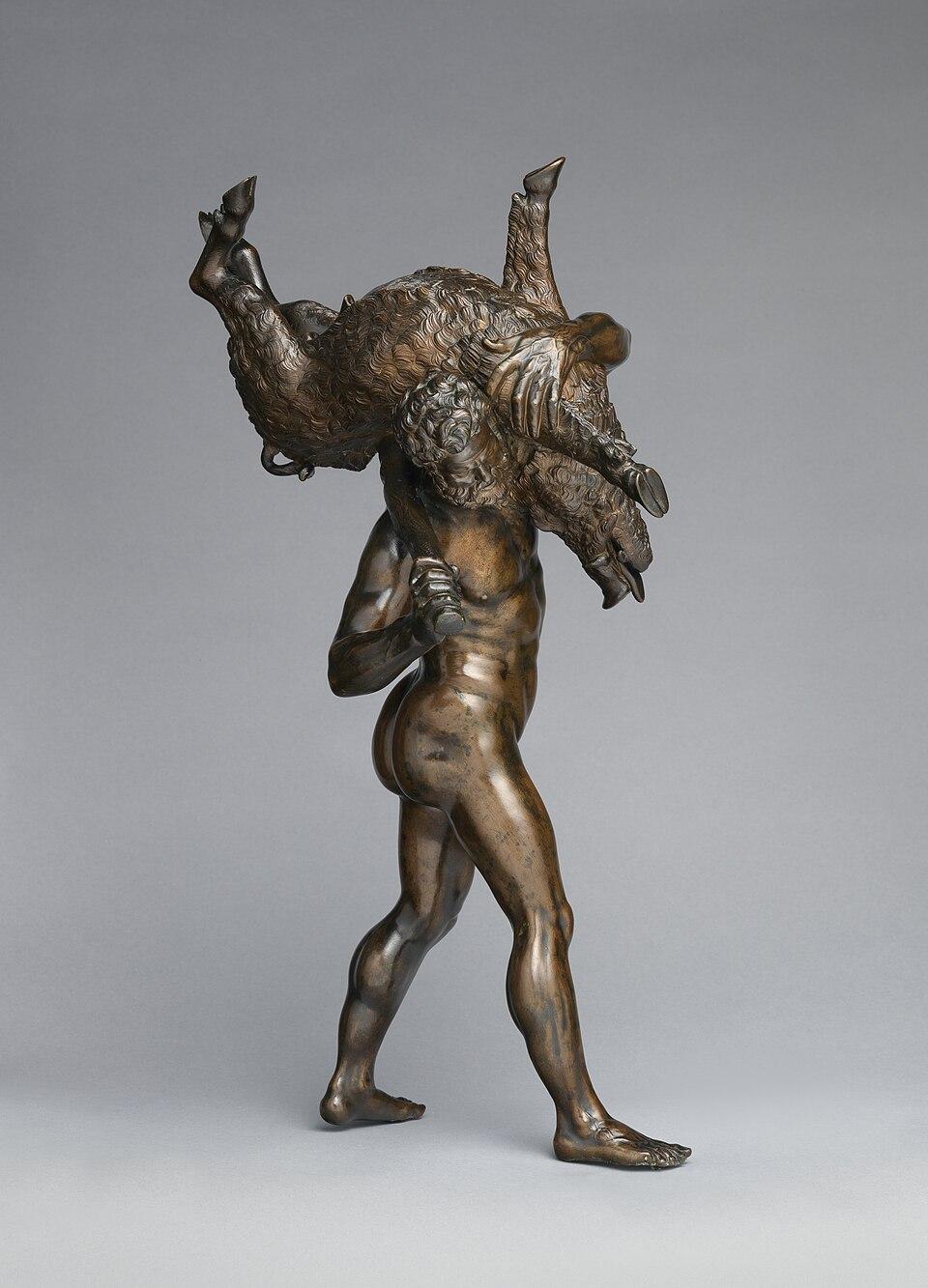
As with Herakles and the Boar, the judgment is rarely clear in the moment. It is only retrospectively—sometimes long afterwards—that we decide whether the balance between restraint and force was rightly struck. Perhaps that is the deeper point of the labor: Not that power should never be used, but that it should never be used without first having learned how to restrain it.
Where the Hind asked Herakles to be gentle, the Boar asks him to be measured. Where the Hind demanded patience, the Boar demands self-command. Together, they reveal a deeper truth about heroism: that greatness lies not in unbroken strength, but in the capacity to hold fire without being consumed by it.