This copy is for your personal, non-commercial use only. Distribution and use of this material are governed by our Subscriber Agreement and by copyright law. For non-personal use or to order multiple copies, please contact The Epoch Times Reprints.
Cathedral of St. Andrews: Classically Gothic With an Island Vibe
In this installment of ‘Larger Than Life: Architecture Through the Ages,’ we study the juxtaposition of Gothic-inspired design and royal Hawaiian influences.
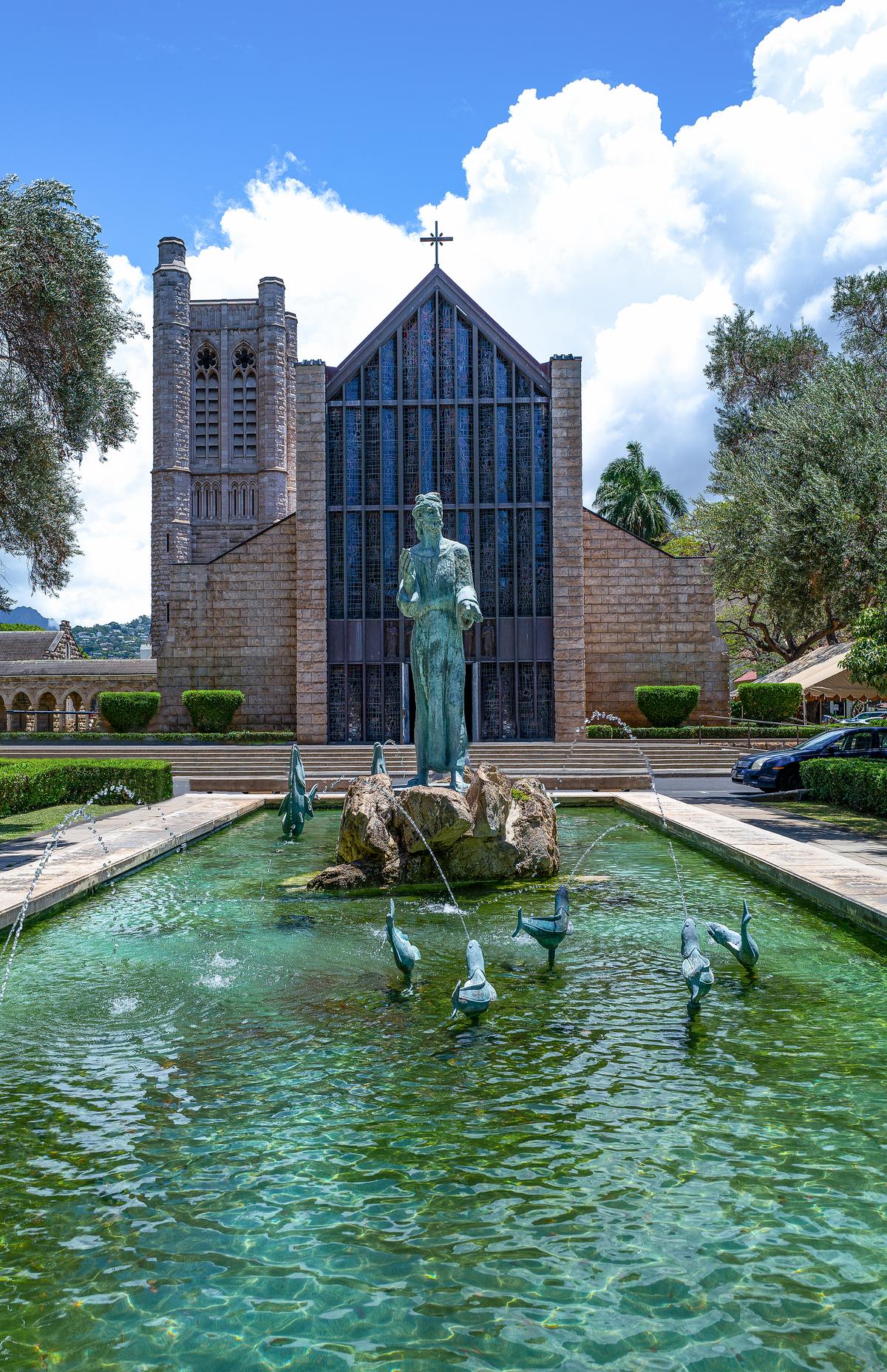
While many of the cut-stone arches, pillars, and windows of the Cathedral of St. Andrews were constructed in England and shipped to Oahu, the main walls were built with stone quarried on the Hawaiian island. While the exterior tower, open-passageway cloister, and overall design of the stone-block church is Gothic in style, its massive floor-to-eaves bronze and stained-glass entryway is contemporary, having been added in 1958. Al Opalchuk/Shutterstock
One mightn’t expect to find an imposing Gothic-style cathedral on the Hawaiian island of Oahu, but the Cathedral of St. Andrew in downtown Honolulu is complete with a bell tower, columns, and vaulting. While the Episcopal church is primarily classic in its design, the street names on and near where it is located—Queen Emma Square and King Street—provide a hint that its presentation and history evoke more than a copycat European ecclesiastical style.
In fact, it was because of Queen Emma, the wife of Hawaii’s ruling King Kamehameha IV from 1855 to his death in 1863, that the cathedral came to fruition. In 1862, both husband and wife were baptized into the Christian faith and began to raise funds to build a church. After her husband’s death, Queen Emma traveled to Europe to visit many churches and raise money for the Cathedral of St. Andrew’s construction. While in England, she obtained architectural plans from the London firm of Carpenter and Slater. On the plans was written the description: “simple cathedral of modified 12th century French Gothic architecture.”
Upon returning to Honolulu, the cornerstone for the Cathedral of St. Andrew was placed in 1867 by her husband’s successor and brother, Kamehameha V. The constructed church could seat up to 800 people, as well as provide ample areas for the traditional chancel (where the altar, pulpit, lectern, and seating for the clergy and choir are located), ambulatory (covered interior passageway), and clerestory (upper level of windows).
The main sanctuary part of the cathedral was not completed until 1886. Queen Emma died the year before and was unable to attend services in the building she championed for two decades of her life. Twenty years later, two additional bays were added to the original two bays of the nave, and the bell tower was constructed. In the mid-20th century, the cathedral’s striking entryway wall of stained glass was installed.
Named for a disciple of Jesus, the Cathedral of St. Andrew features a 40-by-80-foot, limestone-bordered pool with a 10-foot bronze statue representing the imagined likeness of the fisherman turned missionary. Unveiled on Dec. 24, 1959, the St. Andrew statue sits atop a rock and is surrounded by fish fountains to convey the church's location on a Hawaiian island. “Go ye into the world and preach the Gospel to every creature” is a directive from the book of Matthew in the Bible; this verse is inscribed in the stone pedestal. Gimas/Shutterstock
In frieze-like fashion, but actually installed in shallow niches, are bronze figures representing six of the 12 apostles. Two were crafted in Italy and positioned in 1965, while the other four were created by a Honolulu sculptor, Rosalie Young Persons, in 1970. All six sculpted figures appear over the sanctuary’s main bronze doors in a panel that separates a wall of stained glass. Farragutful/CC-BY-SA-4.0
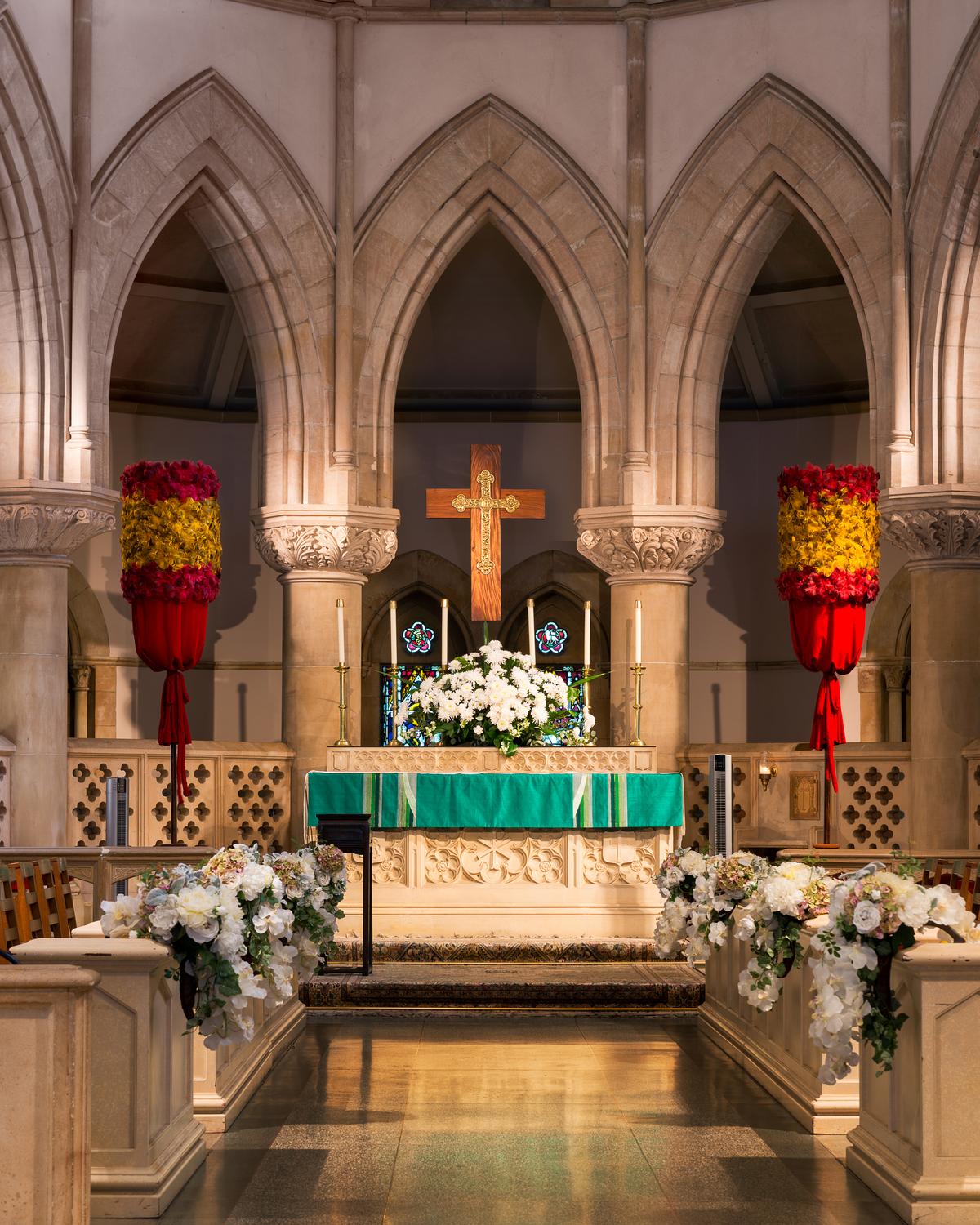
In the sanctuary, behind the altar, are three Gothic-style pointed arches sitting atop round columns with capitals sporting carvings of Hawaiian island tropical foliage. The altar is crafted from Caen-stone, a soft limestone quarried in France. In contrast to the European Gothic features, the kahili decorations on poles flank the centerpiece cross. Kahili represent the royalty of Hawaii and are generally made from red and yellow feathers. Out of respect for the Hawaiian Islands’ exotic and vibrantly colored birds, the practice has always been to ensnare them and take only a few feathers at a time for use in embellishments such as kahili, before releasing them back into the wild. Nagel Photography/Shutterstock
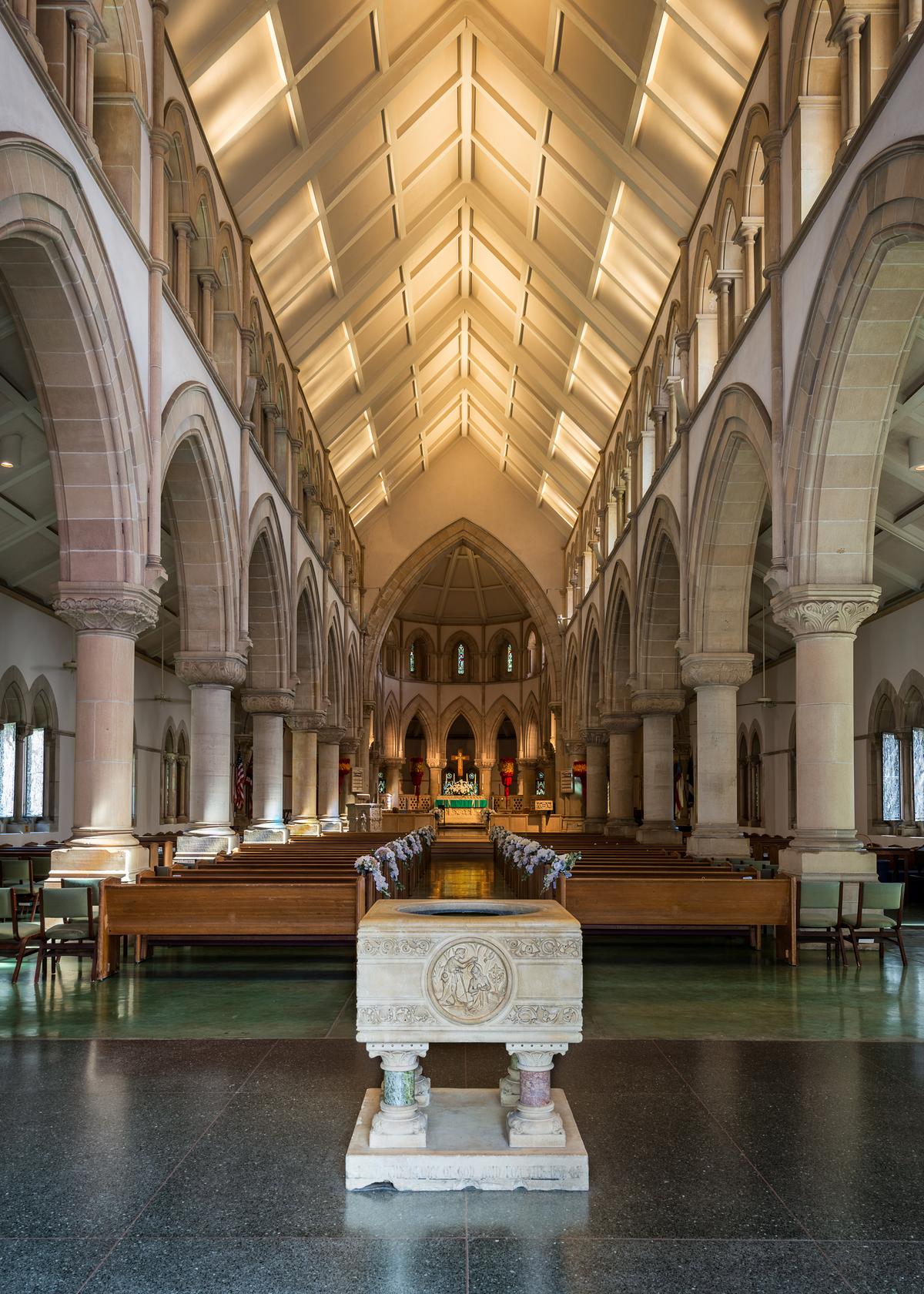
A more modern paneled and vaulted ceiling sits atop two stories of quintessentially Gothic pointed arches. The stone columns supporting the arches, in the ambulatory and clerestory areas of the cathedral’s sanctuary that lead to the chancel, have capitals decorated with stone carvings of both classical designs, such as acanthus leaves, and Hawaiian flowers and plants. The square baptismal font is carved from the same French quarried limestone as the altar: Caen stone. Nagel Photography/Shutterstock
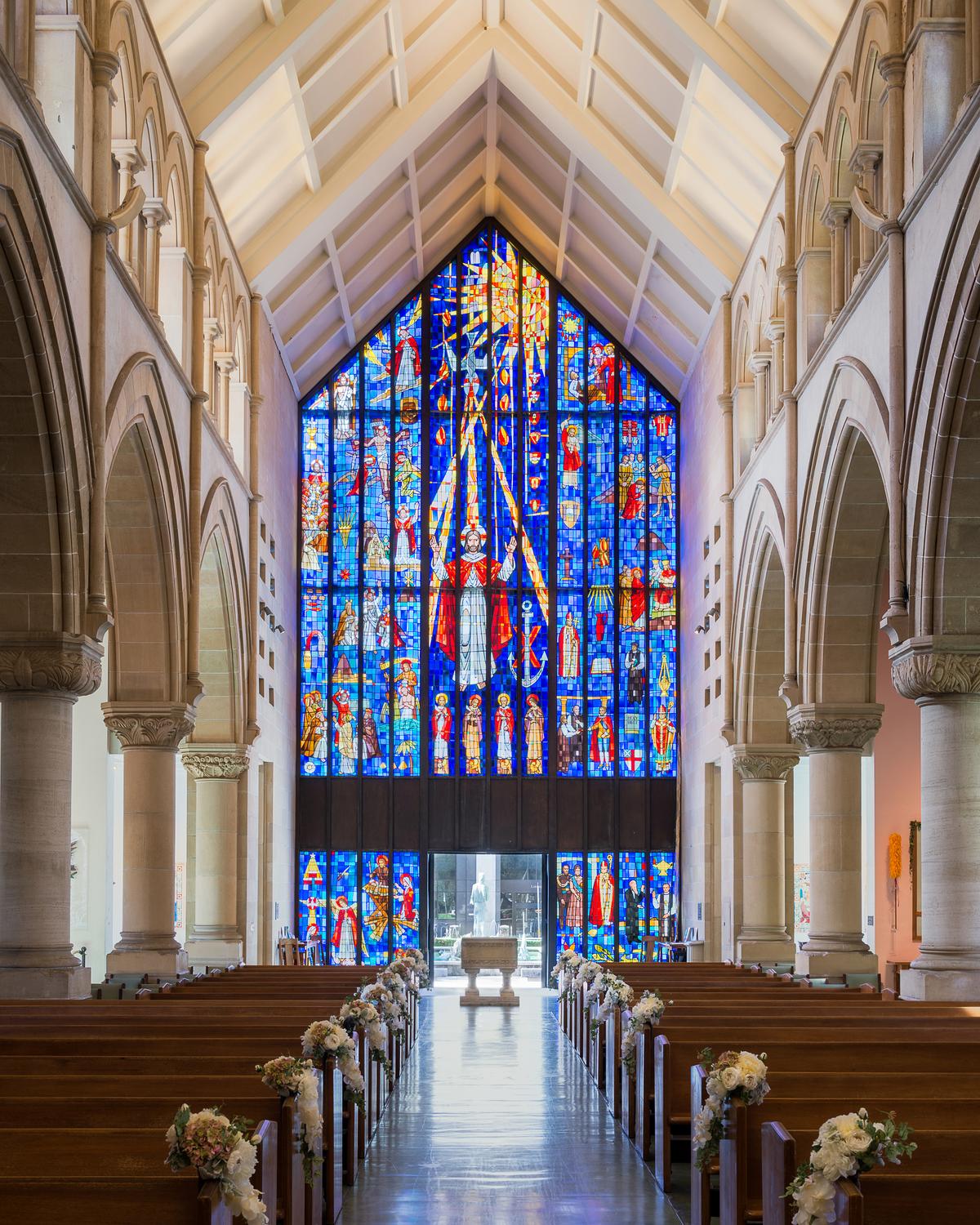
Within intricate vertical and horizontal intersections of bronze-clad stainless steel supports is a massive wall of hand-blown stained glass. Besides depicting European explorers on the Hawaiian Islands, the vibrant stained glass includes scenes of Christ's life, the creation of the Anglican church, and elements of Hawaiian royalty and leadership. Nagel Photography/Shutterstock
Four octagonal stone-block columns form the cathedral’s bell tower. Its pointed Gothic arch windows are outfitted with ventilation louvers and six-leaf carved cutout Gothic designs called sexfoils. Inside the tower is a set of eight bells cast in England. Trained volunteer bellringers are responsible for the sounds emanating from the tower.
What arts and culture topics would you like us to cover? Please email ideas or feedback to [email protected].
A 30-plus-year writer-journalist, Deena C. Bouknight works from her Western North Carolina mountain cottage and has contributed articles on food culture, travel, people, and more to local, regional, national, and international publications. She has written three novels, including the only historical fiction about the East Coast’s worst earthquake. Her website is DeenaBouknightWriting.com