Miles of flat, desert-like vistas dotted with sagebrush, rabbitbrush, and an occasional juniper or pinion pine separate tiny towns in much of Nevada. Cliffs and canyons rise and fall to break up the repetitive terrain.
The state’s population of around 3.3 million is concentrated around the Las Vegas and Reno areas, but much of Nevada’s population is distributed across the state—many of them farmers or ranchers—congregating near towns that sprang up due to mining or pioneering in the 19th and early 20th centuries. What eventually connected them all was the railroad.
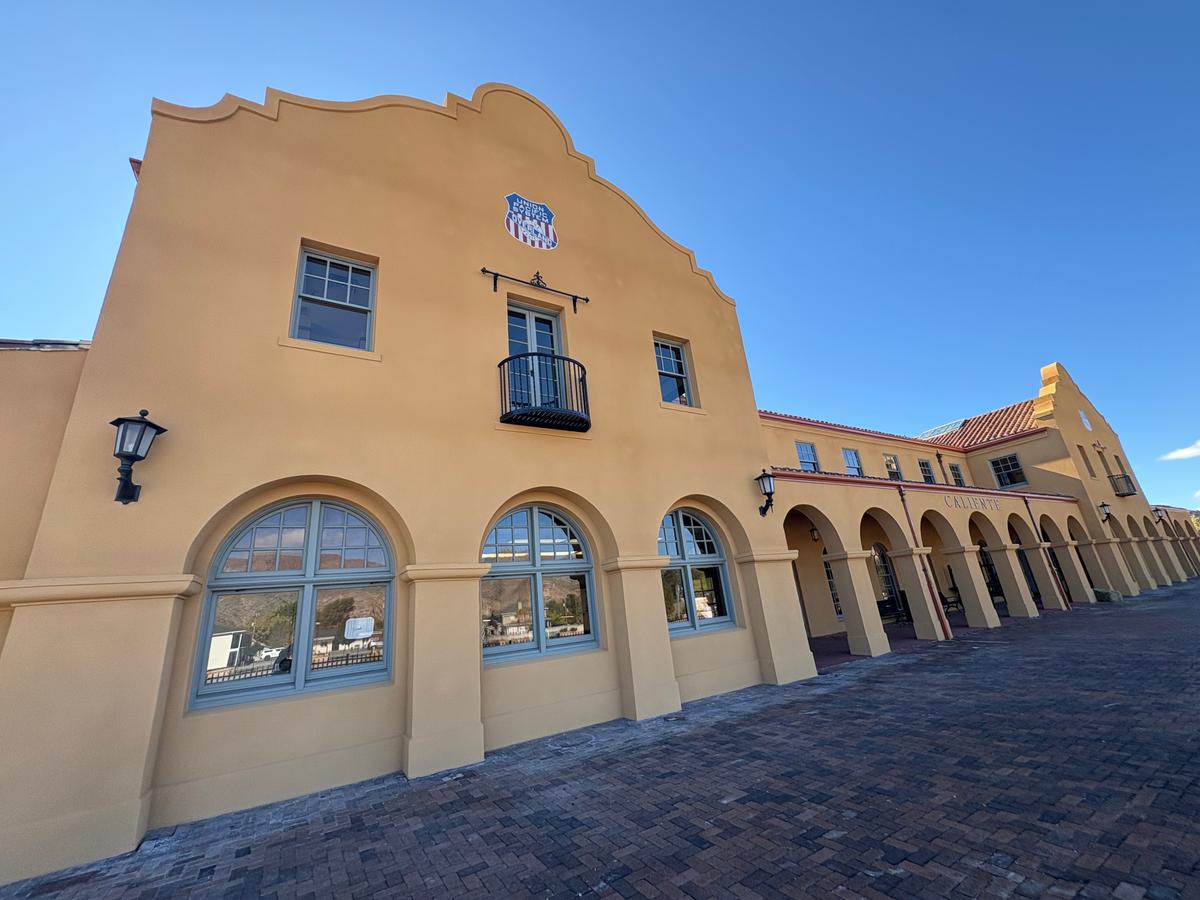
Halts, or railroad stops with just a platform instead of a depot, were situated at every town along the Nevada rails. In fact, few had an actual depot. But one depot built in Caliente, Nevada, architecturally rivals historic depots in some big cities.
A Local Hub
The 58-foot by 207-foot Mission Revival-style building was constructed about 100 years ago by John and Donald Parkinson, a father-son architectural team based out of Los Angeles. The Union Pacific Railroad commissioned the design and construction of this expansive, two-story wood-framed depot with stucco siding. They chose the site because of its location on a direct rail halfway between Salt Lake City and Los Angeles. The Caliente depot is considered the first major depot designed by the father-son duo. They soon became sought after for the design of other Mission Revival architectural style depots in California and Utah.Caliente sprang up shortly before the Parkinson duo designed the depot. In the early 1900s, Caliente—with picturesque, rocky, multi-hued cliffs as a backdrop—began thriving because of the area’s silver ore and the town’s natural hot spring. When the railroad line was finished in 1905, the town’s population increased quickly to almost 2,000 residents by 1910. At the time, that was greater than the population of Las Vegas. At least a dozen sets of rails that ran past the town were installed. By 1920, Caliente was bustling with tourists and travelers who stopped at a wooden depot. It burned down in 1921.
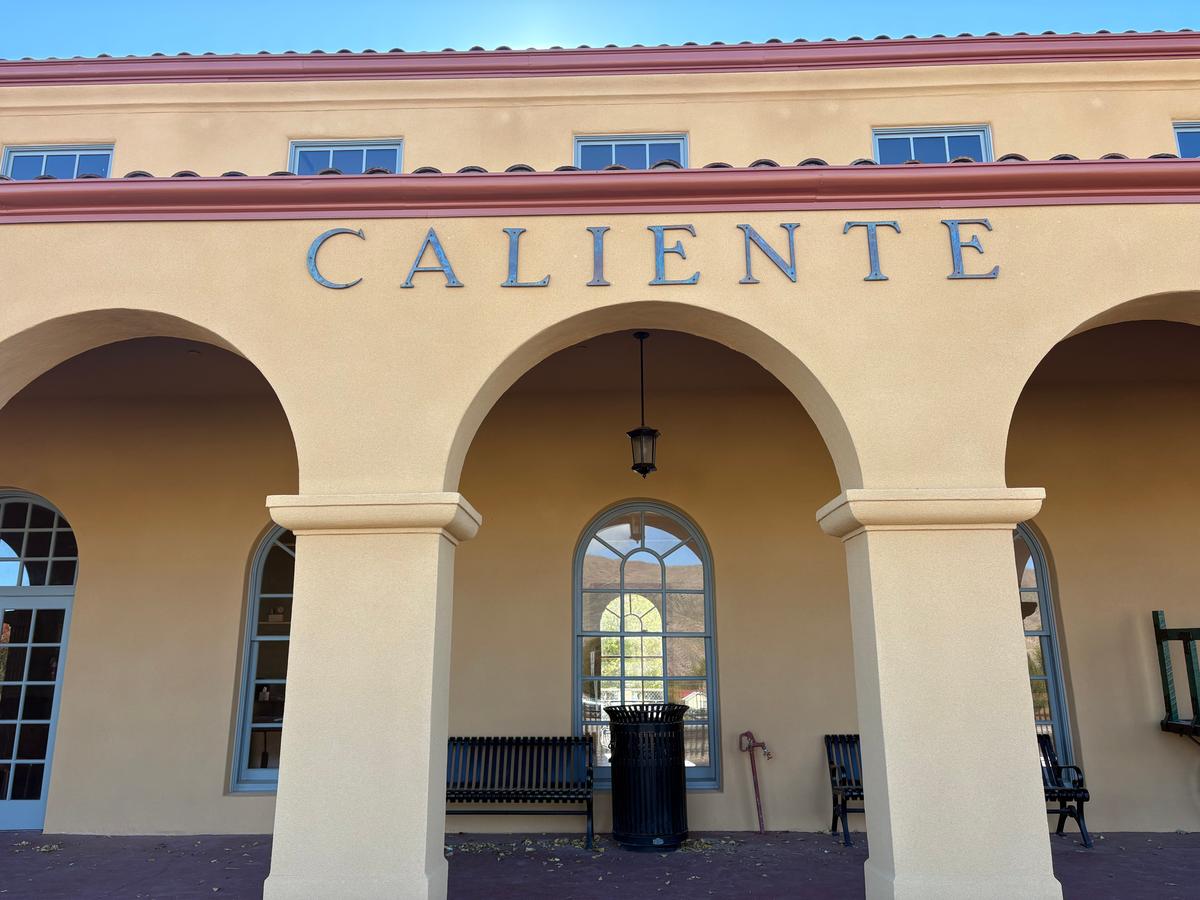
When the current Caliente depot opened in 1923, its solid-oak interior hosted travelers who desired a meal. They could dine in its large chandelier-apportioned dining room on the first floor or at its more casual lunch counter. Upstairs, there were at least 25 rooms and baths.
The depot also served as the community’s gathering place, with various social activities offered. One might say the depot was Caliente.
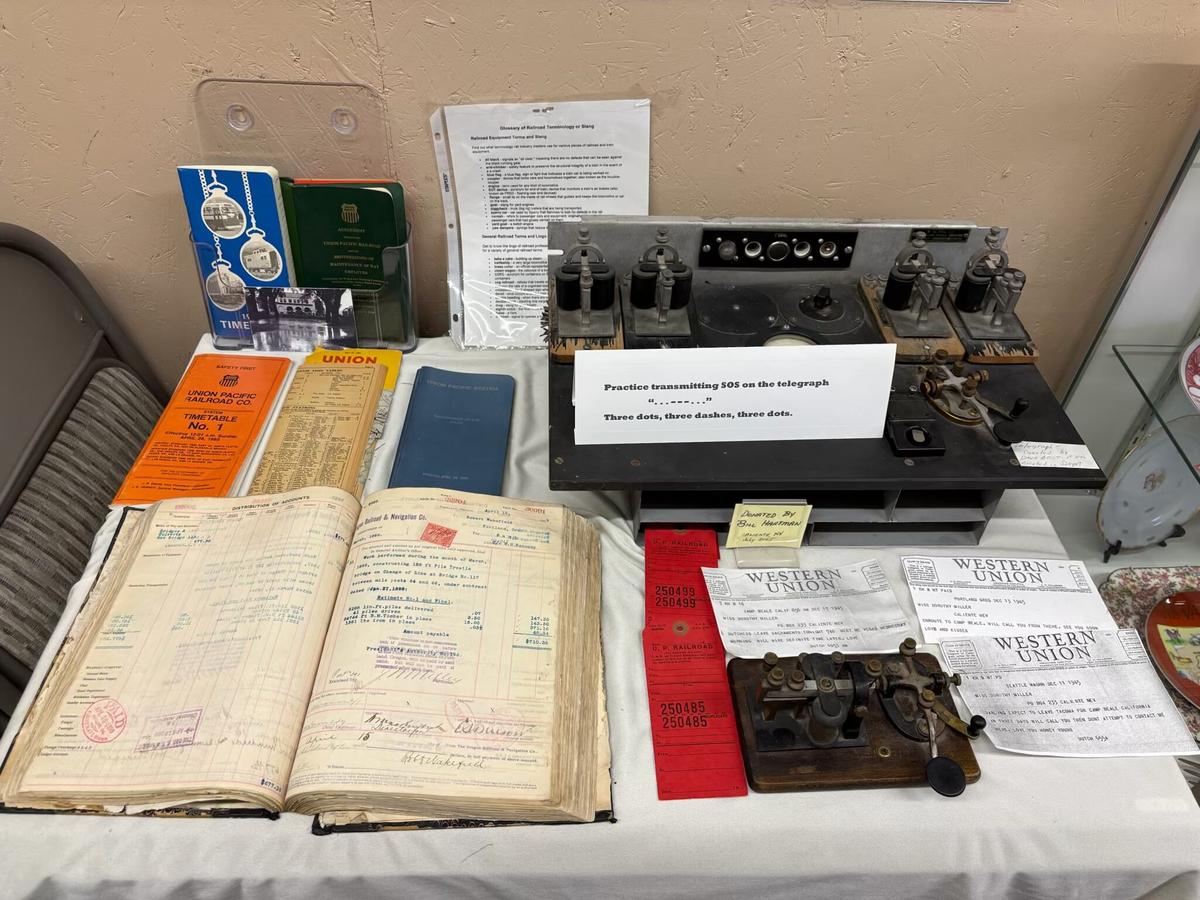
Remnants from the depot’s glory days are on display in the adjacent Box Car Museum. Table china that sports the Union Pacific logo and detailed western scenes was once used to serve meals. The museum also showcases train lanterns and the depot’s original architectural plans. A telegraph machine conveys how travelers sent communications when they stopped at the Caliente depot, and a railroad log book demonstrates meticulous record keeping.
Saved From Demolition
Caliente Depot’s heyday was short-lived. Several factors contributed to fewer people traveling and stopping at the depot: the Great Depression, tracks damaged by floods, and the replacement of steam engines with diesel locomotives, which led to Union Pacific’s hub moving to Las Vegas.“The diesel could travel farther and have less problems with cars and engines, so the round house in Caliente wasn’t needed,” explained Rick Phillips, a native of the town and chairperson of the Box Car Museum. His uncle was a conductor for Union Pacific.
Commuter services gradually tapered off after World War II, and by the 1970s, the depot was slated for demolition. But Caliente’s leaders organized and secured an affordable lease of the building from Union Pacific. In 2019, the state of Nevada approved $2 million for a renovation, and grants were secured. A total restoration was completed by early 2025, and today, the first floor of the depot houses the town hall, sheriff’s office, and a library.
That’s not all. The depot also occasionally provides space for various Caliente events, such as the local high school’s prom. The town’s plan is for additional grants to be secured so that other interior spaces can be completed—with an ultimate goal of once again offering accommodations so visitors can experience an overnight stay in a historic Western depot.
Freight trains, not passenger trains, continue to ramble past the Caliente depot, but they don’t stop. Still, visitors annually flock to this southeastern part of Nevada to enjoy multiple state parks within a 30-mile radius—all of which offer a variety of unique geological features, from Cathedral Gorge’s slot canyons to Kershaw-Ryan’s 700-foot tall volcanic rock walls. Inevitably, they notice the prominent wide, desert-yellow building and are drawn to learning more about its history.