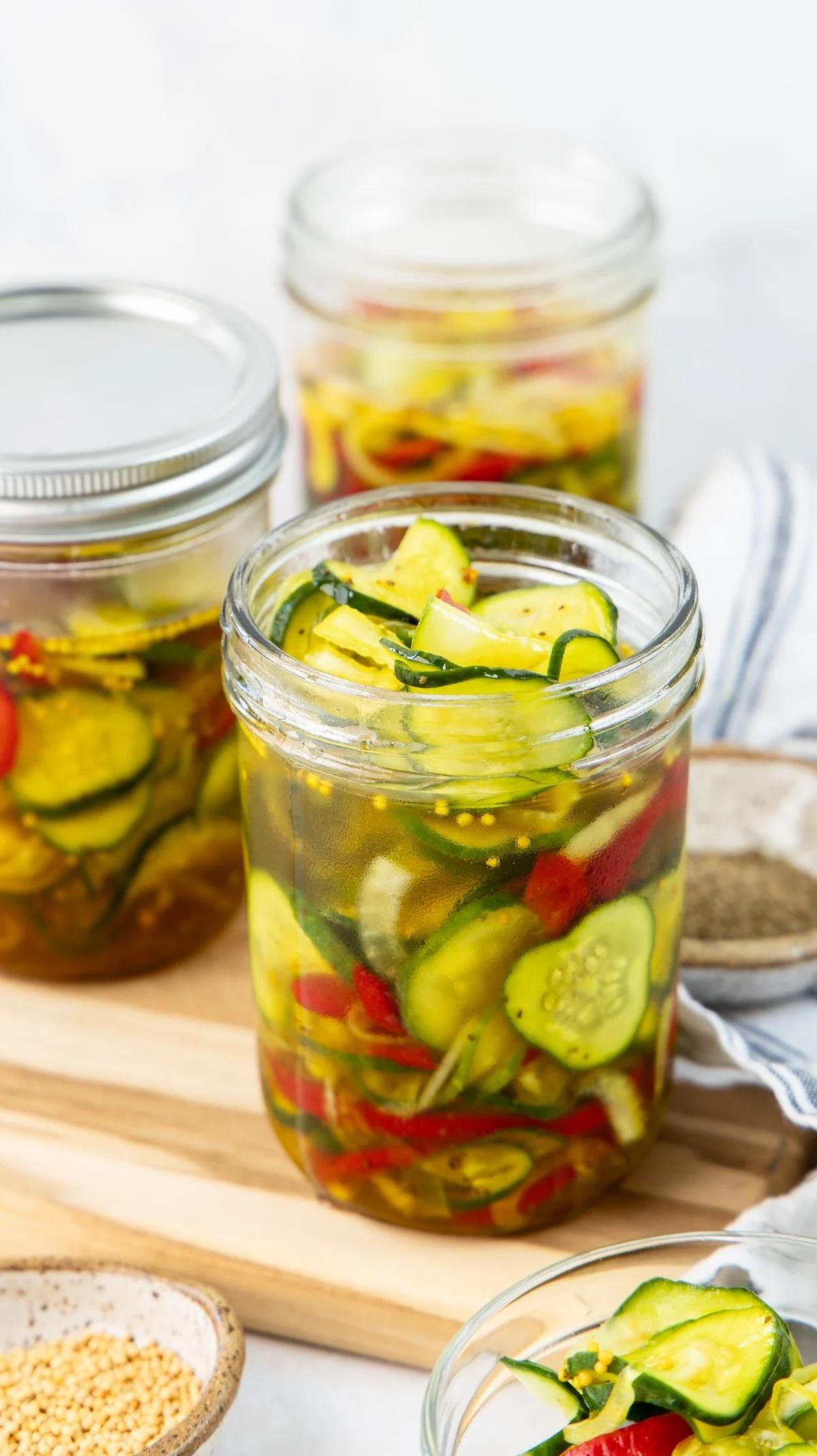
Crisp, sweet, and tangy with a hint of spice, these bread and butter pickles are a summertime staple. They’re quick to make—no canning required—and so much better than anything from the store. You simply layer cucumbers with onions and peppers, pour over a brine infused with warm spices, and let the fridge do the rest. If you’re new to pickling, this recipe is the perfect place to start: simple, foolproof, and guaranteed to convert you into a homemade-pickle person.
In case you’ve ever wondered about the name: Some say bread and butter pickles date back to the Great Depression, when farmers would trade jars of their homemade pickles for everyday staples like bread and butter. Others point to the simple bread-and-butter sandwich, a cheap but filling meal of the time that was made far better with a few tangy pickles tucked inside.
What You’ll Need to Make Bread and Butter Pickles
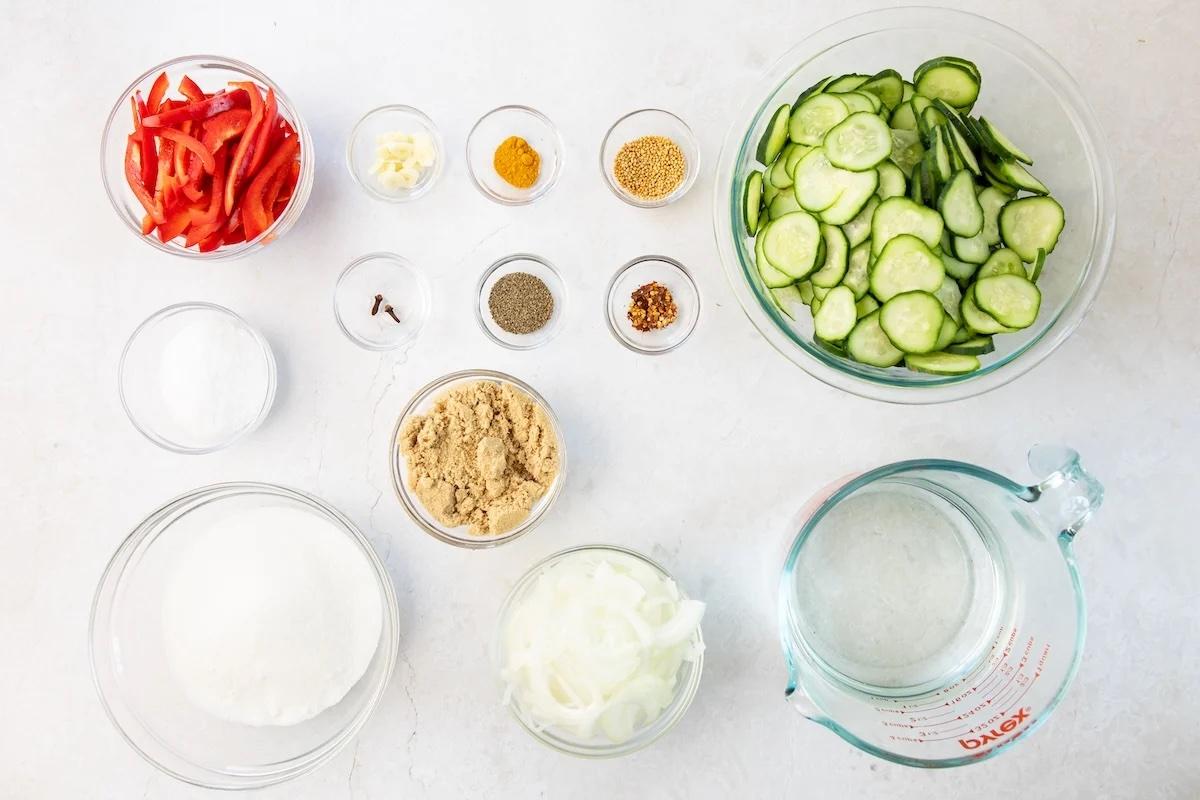
- Cucumbers: Always use Kirby or pickling cucumbers. They’re short, squat, and sometimes full of warts, but they make deliciously crisp pickles.
- Yellow onion, red bell pepper, and garlic: Yellow onion, red bell pepper, and garlic: The onion and pepper pickle right along with the cucumbers, adding sweetness, crunch, and color to the mix (the pepper is optional, but it makes the jars especially pretty). The garlic adds a punch of flavor without overpowering.
- Salt: Draws out excess moisture from the veggies so the pickles stay crisp.
- White vinegar, granulated sugar, and light brown sugar: The base of the brine—vinegar brings tang, while the mix of white and brown sugar creates the signature sweet-and-sour balance.
- Mustard seeds, celery seeds, ground turmeric, whole cloves, and crushed red pepper flakes: This spice mix is what gives bread and butter pickles their classic flavor—warm, a little tangy, lightly spiced, and just a touch of heat.
Step-By-Step Instructions
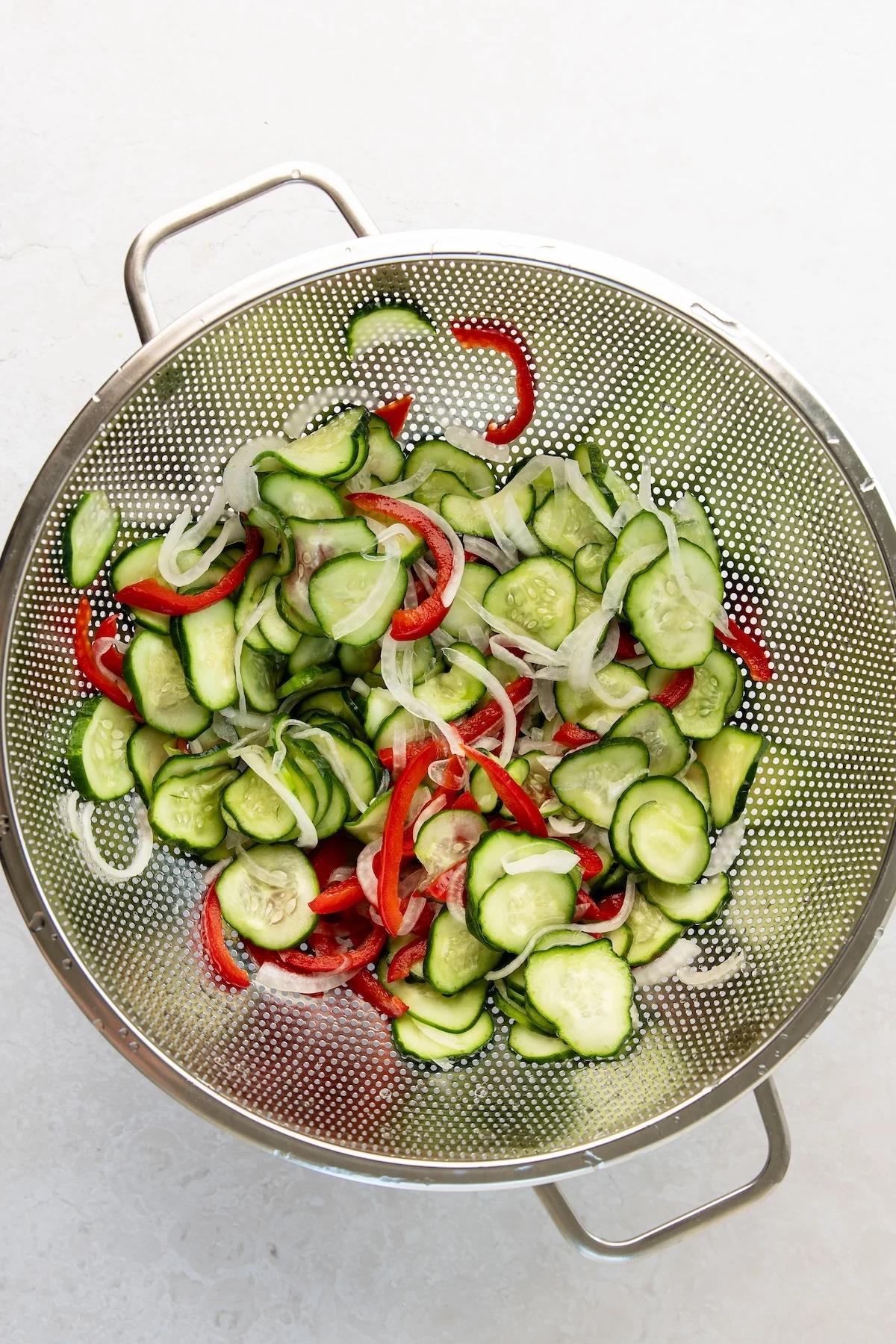
Step 1. Salt the veggies. In a large bowl, toss the cucumbers, onions, and bell pepper (if using) with the salt. Cover and refrigerate for 2 hours to draw out excess water. Rinse well under cold water, then drain thoroughly.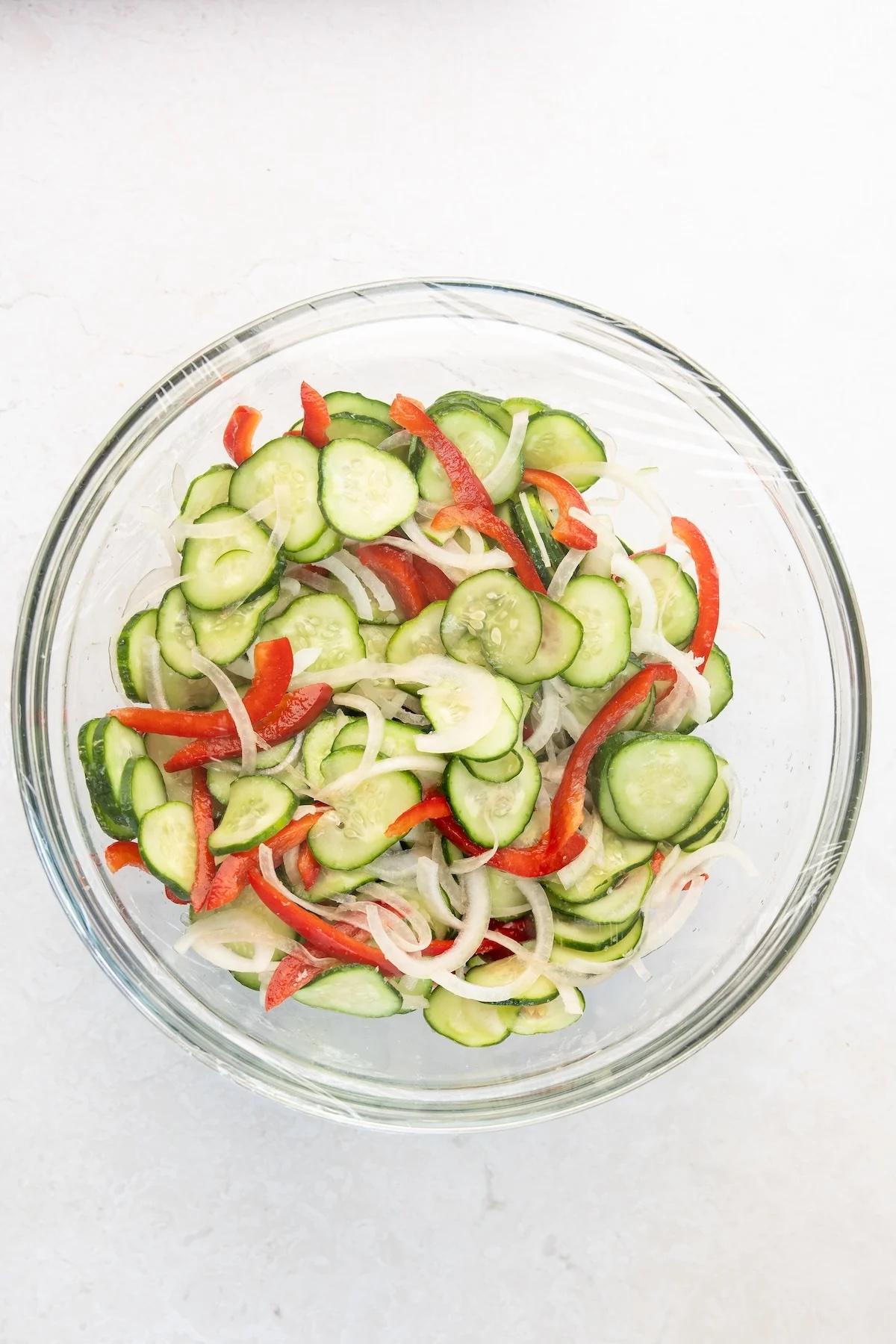
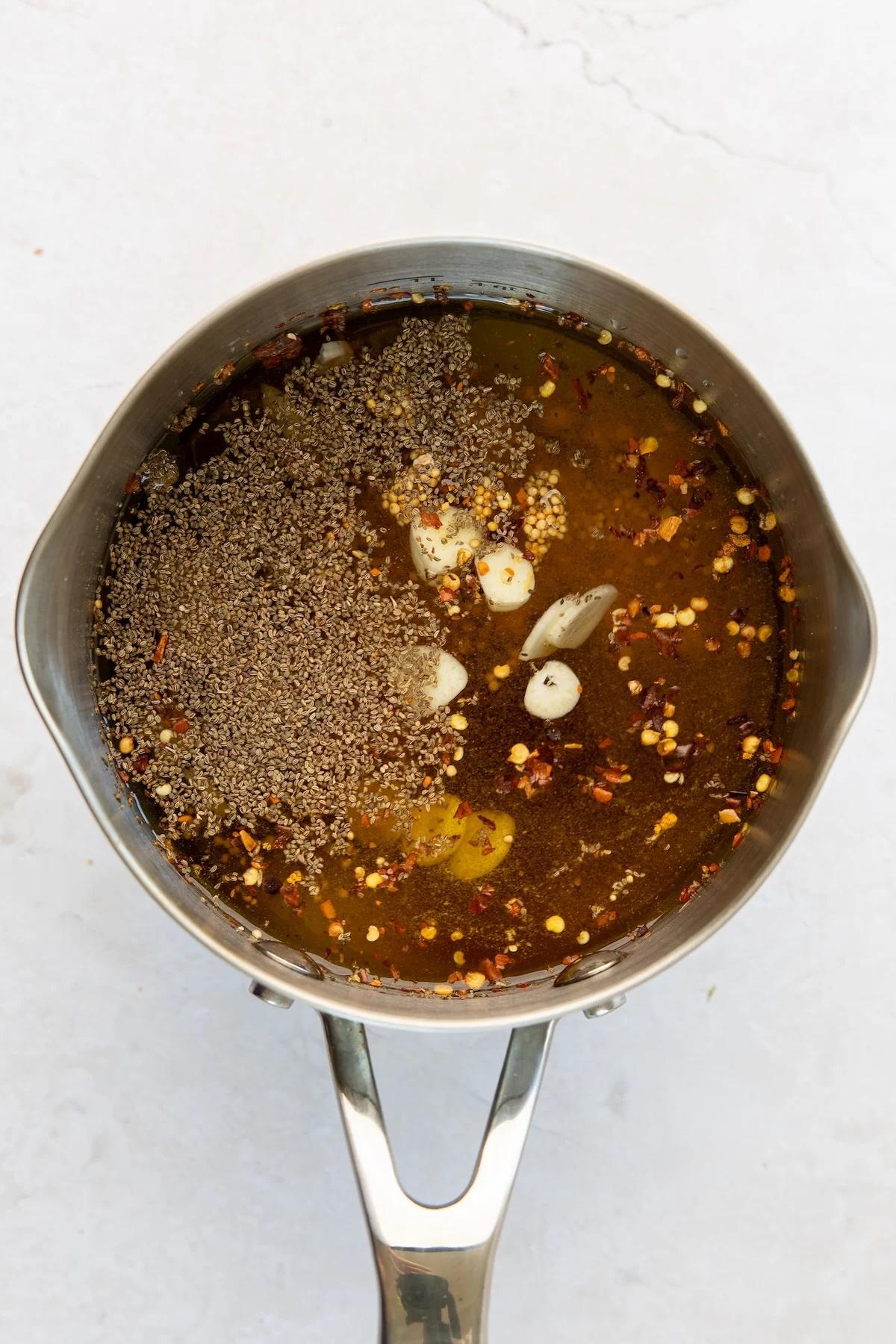
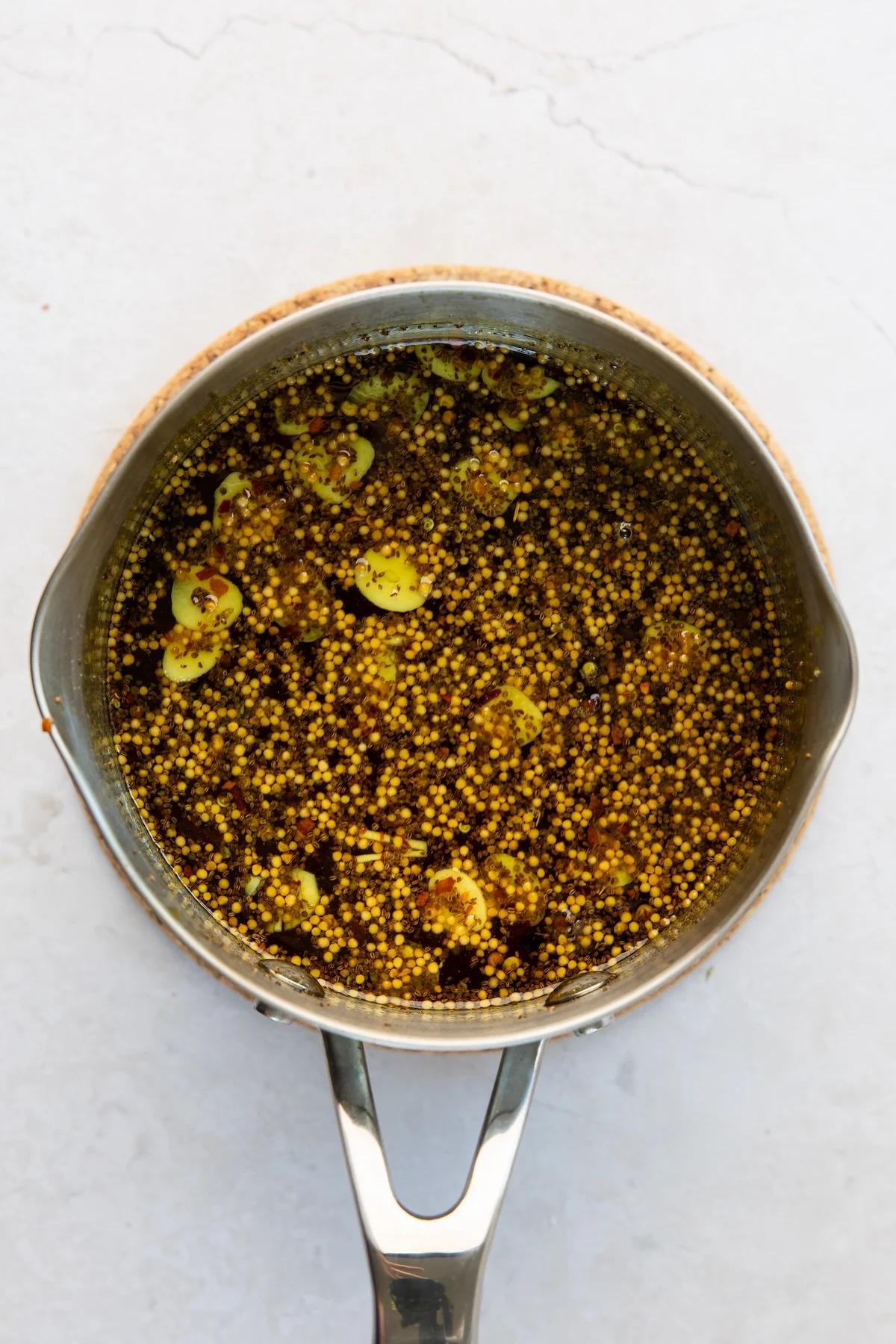
Step 2. Make the brine. In a medium saucepan, combine the vinegar, granulated sugar, brown sugar, garlic, mustard seeds, celery seeds, turmeric, cloves, and red pepper flakes. Bring to a simmer, stirring until the sugar dissolves, then remove from the heat and let cool (speed this up by transferring to a heatproof container and chilling in the fridge).

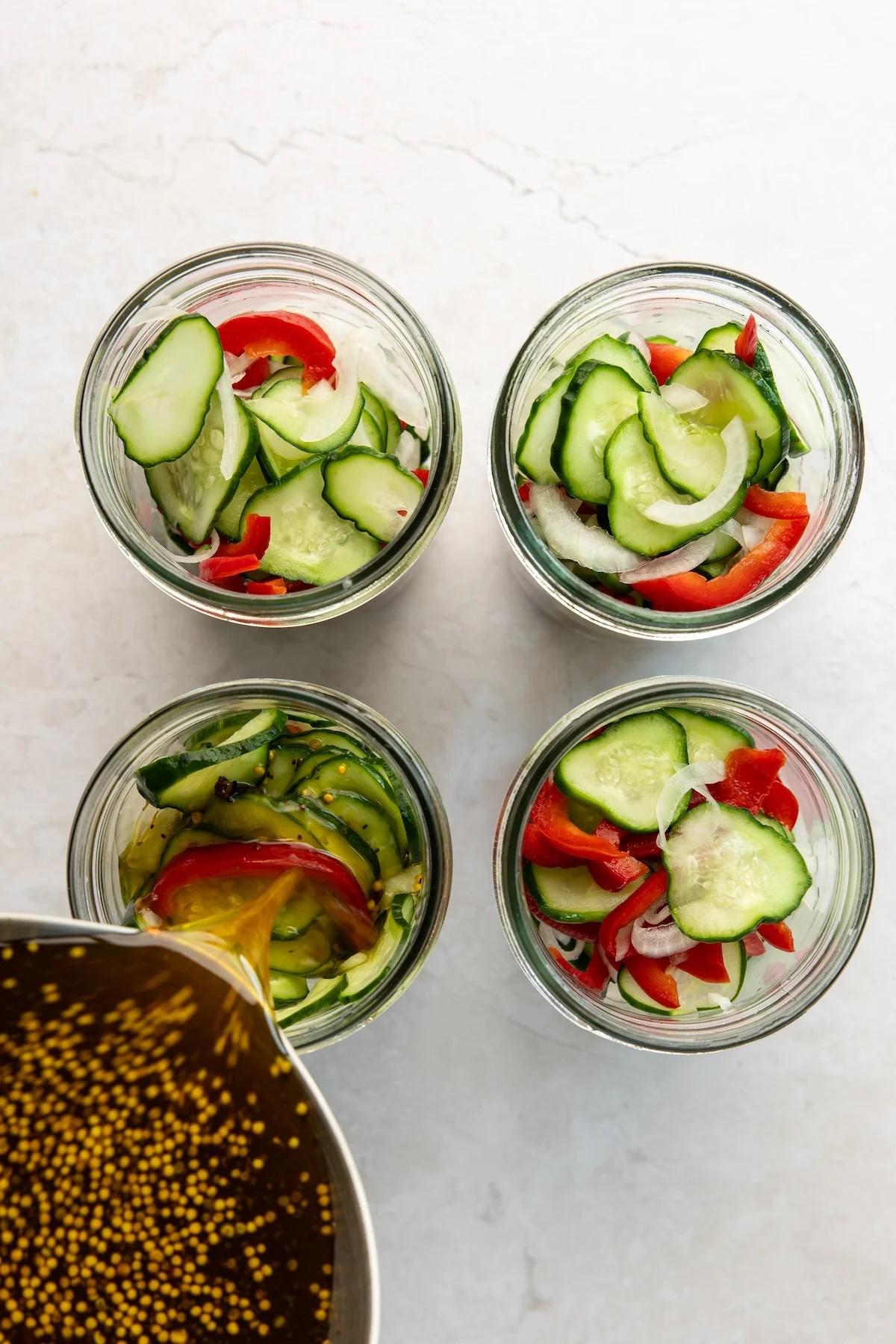
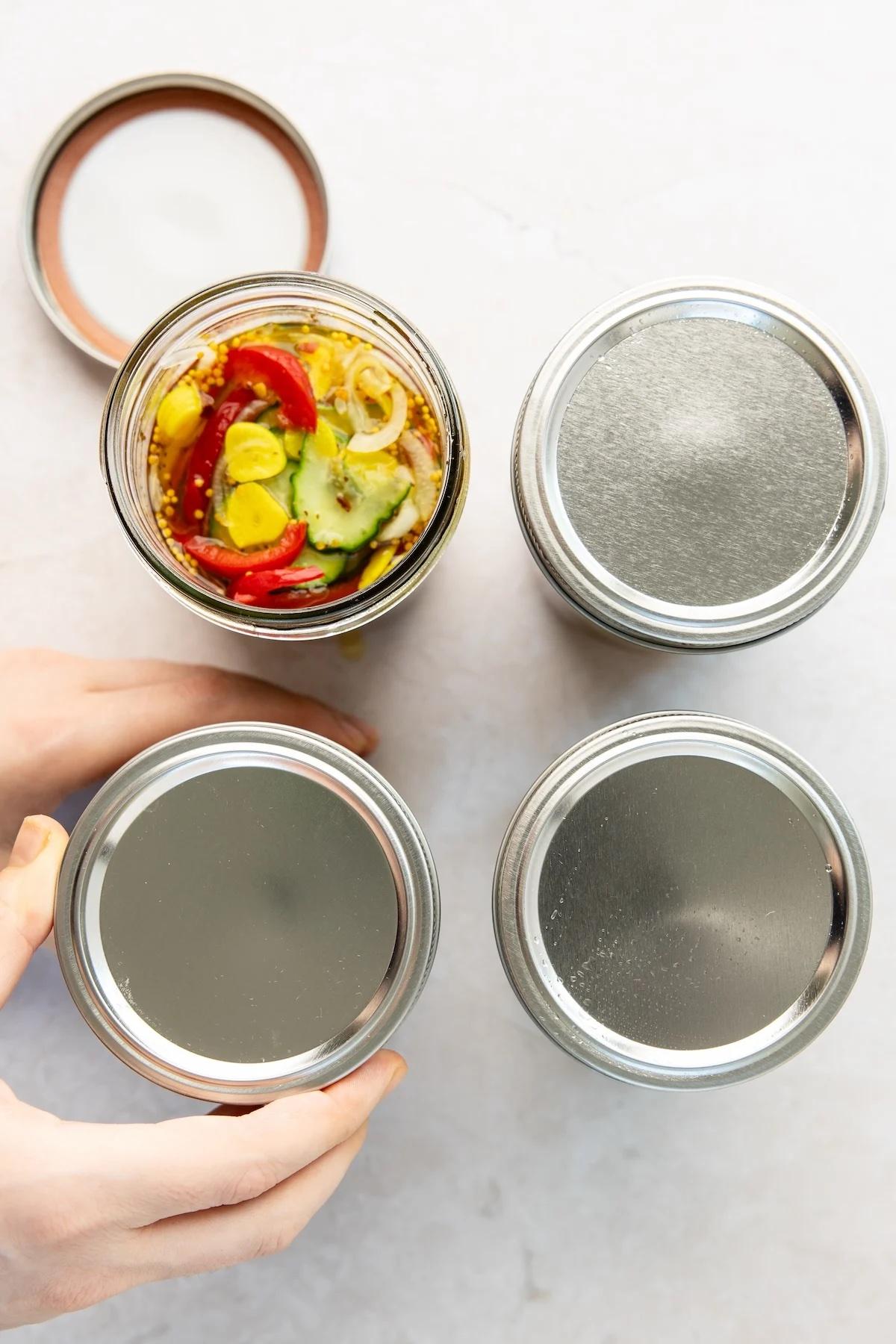
Step 3. Pack the jars and begin pickling. Divide the cucumbers, onions, and peppers between 4 clean pint jars (or 1 quart jar). Pour the brine over top, ensuring the vegetables are fully submerged. If needed, top off with a splash of water. Seal the jars and refrigerate for at least 24 hours before serving. They’ll keep in the fridge for up to 1 month.
Pro Tip: Go through a jar fast? Don’t toss the brine—you can reuse it for a second batch. As long as it looks clear, smells fine, and hasn’t been hanging out in the fridge for more than a couple of weeks, just add fresh salted-and-drained veggies and you’re good to go. If the brine is older or cloudy, bring it to a simmer, strain out any solids, let it cool, then reuse.
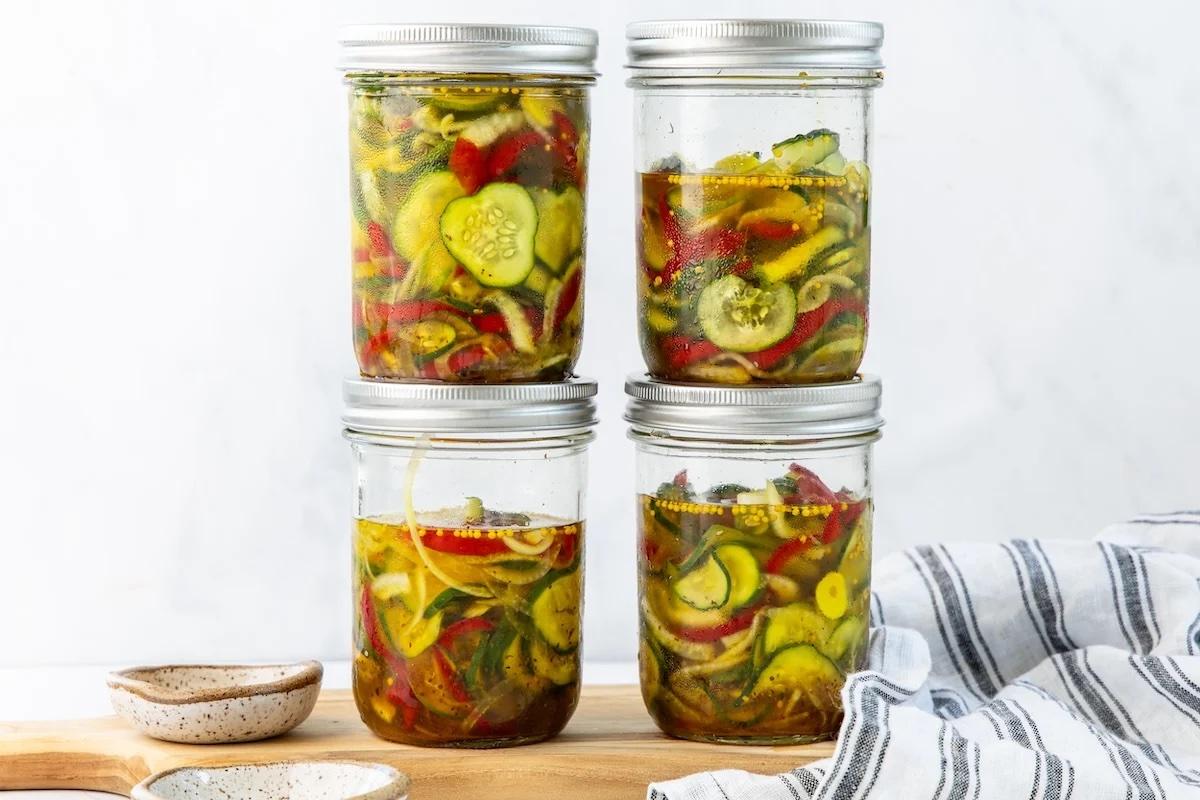
Bread and Butter Pickles
Makes 4 jars Prep Time: 20 minutes Cook Time: 5 minutes Total Time: 25 minutes, plus 2 hours to salt and 24 hours to pickle in the fridge- 2 pounds Kirby cucumbers (6 to 8), sliced into 1/8-inch (3-mm) rounds
- 1 small yellow onion, halved and thinly sliced
- 1 small red bell pepper, thinly sliced (optional)
- 1/4 cup kosher salt
- 2 1/4 cups distilled white vinegar
- 1 1/4 cups granulated sugar
- 1/2 cup (packed) light brown sugar
- 2 cloves garlic, thinly sliced
- 1 1/2 teaspoons mustard seeds
- 1 teaspoon celery seeds
- 1/2 teaspoon ground turmeric
- 2 whole cloves
- 1/2 teaspoon teaspoon crushed red pepper flakes
Make the brine: In a medium saucepan, combine the vinegar, granulated sugar, brown sugar, garlic, mustard seeds, celery seeds, turmeric, cloves, and red pepper flakes. Bring to a simmer, stirring until the sugar dissolves, a few minutes. Remove from the heat and cool to room temperature (you can speed this up by transferring the brine to a heatproof container and chilling in the fridge).
Pack the jars: Divide the cucumbers, onions, and peppers between 4 clean one-pint jars (or one large one-quart jar). Pour the brine over top, making sure the pickles are fully submerged. (If you come up a little short on brine, it’s fine to top off the jars with a splash of water—just make sure the cucumbers are fully submerged.)
Pickle: Seal with lids and refrigerate for at least 24 hours. They will keep nicely for up to 1 month in the fridge.