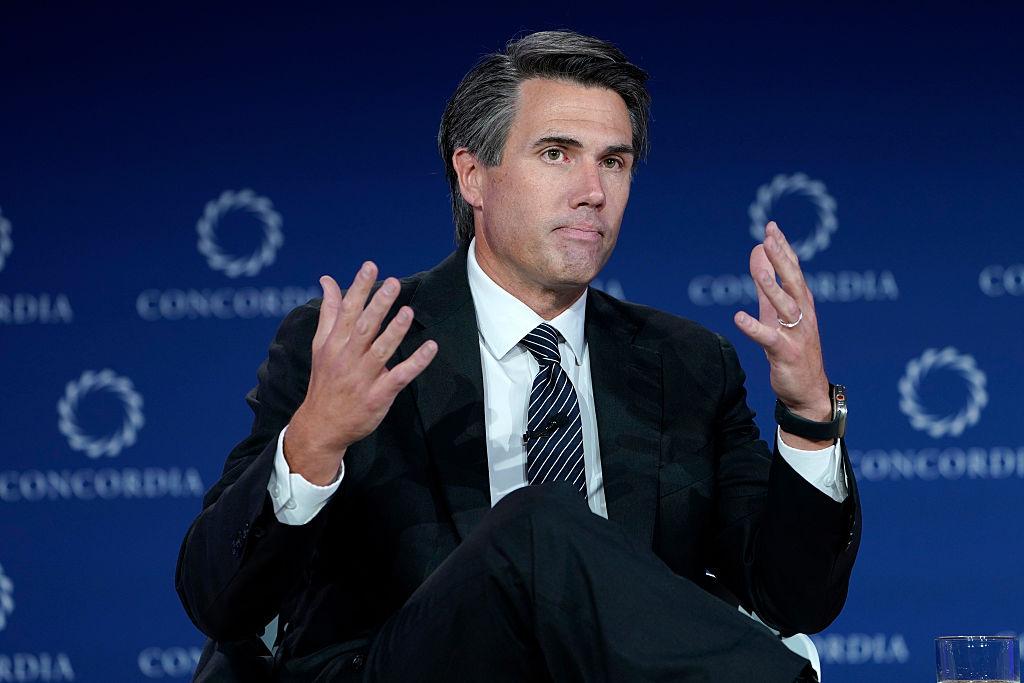
If you are only familiar with Leland Vittert from his work in television news, it would be easy to assume he has the world on a string. In his current position as an anchor on NewsNation and earlier in his career as a correspondent for Fox News, Vittert epitomizes self-confidence and cogent communication skills.
Whether he’s interviewing a contentious newsmaker or reporting from the midst of a war zone, Vittert always comes across on camera as being in control of his surroundings.
But this wasn’t always the case. As detailed in his autobiography “Born Lucky,” Vittert publicly acknowledges the challenges he overcame as a child on the autism spectrum.
A Difficult Beginning
“Lucky” was Vittert’s childhood nickname. It was bestowed on him in 1982 during a cesarean delivery. During his birth, it was discovered the umbilical cord was knotted twice around his neck. Had he been delivered naturally, he would have most likely been stillborn.While the circumstances of his birth didn’t create developmental disabilities, Vittert’s parents were hard pressed to understand his behavior during his early years. He didn’t speak until he was 3 years old, and his parents accepted a speech therapist’s diagnosis that he was just a late bloomer. But his initial social skills were erratic and he preferred not to interact with other children. Subjects like math and science came easily to him, but forming basic sentences was a grueling challenge.
“It was social reasoning—reading cues, interpreting context, communications—where I was hopelessly lost,” Vittert wrote, adding how the only answer “experts could offer to explain the gap between my intellectual capacity and social capacity was ‘social blindness.’”


A Father’s Intervention
Vittert went into school unprepared for assimilation, and both his classmates and teachers viewed him as weird. The abuse he received from classroom bullies reduced Vittert to a daily tearful breakdown upon coming home. Incredibly, even an uncle took to insulting him for behaving so differently.Mark Vittert, the author’s father, appointed himself as guide to acclimate his son to the world around him. Endless lessons in person-to-person communications helped break the young Vittert from his habit of endless talking. The lessons also gave him skills to know when to pause and how to read people’s reactions during a conversation. Vittert even watched videos of stand-up comics to understand how they worked an audience to gain a positive reaction.
The elder Vittert also encouraged intensive push-up regimens to give his son the physical strength that could buttress the emotional trauma he faced from bullies. Vittert would later discover and excel at rowing.

The Media Business
While broadcast journalism might not seem like the most obvious career path for someone on the autism spectrum, Vittert speculates his condition could have been the proverbial blessing in disguise.“People have said that I have this ability to just hammer someone with questions and never let up,” he writes. “Maybe that comes from the social deficit side of things.”
In documenting his formative years, Vittert turns his book into a sincerely moving love letter to his father, giving him full credit for having faith and patience as he grew up. His description of the treatment he received from elementary school through college offers a Dickensian level of harrowing and unrelenting cruelty.
Unfortunately, the tone of the book shifts significantly once Vittert is freed from the scholastic orbit and can find his way as an independent adult into the media profession. This section of the book has drama. Incidents range from frontline coverage in Middle Eastern combat zones to his controversial questioning of a Trump aide over claims of a rigged 2020 election that resulted in his firing from Fox News.
The writing in this part of the book lacks the enthusiasm and passion that enriched what came before it. Vittert’s anecdotes are burdened with too many examples about the irritating and annoying petty politics within his industry. In some passages he comes across as annoyingly impatient for immediate success. He also sets off an unintentional laugh when he described NewsNation colleague Bill O’Reilly as someone who “sold more books than any nonfiction author in history.”
Until enervation sets in during its later chapters, “Born Lucky” is a truly inspiring memoir. Vittert deserves praise for sharing his personal struggle. Hopefully, his experience can be an inspiration to others facing similar situations.