You never forget the very first moment you see a penguin in Antarctica. The initial thought: very cute. Second: looks exotic. And then? Wow, this awkward, flightless bird is totally, amazingly alien to me.
Visiting the polar regions, in many ways, can feel like a trip to another planet. There are vast stretches of ice and snow and glaciers and white mountain peaks, and so much open ocean. You have the feeling of being an explorer, of truly sailing to the edge of the map—and then going beyond it.
The absolute highlight is the wildlife, every time. The joys of spending time with animals you won’t see anywhere else on earth, completely at home in their environment. These animals have lessons to teach those of us from warmer climates.
To Make It Work, Work Together
Back to the penguins. These are funny little animals that I could honestly watch for hours. Gentoo, chinstrap, Adélie, macaroni, king—all different types of penguins. Waddling across the snow, sometimes lying flat on their chests and propelling themselves downhill with their wings (a movement called “tobogganing”), chasing each other. It’s like a show, but they’re wholly unaware they’re on stage.The massive rookeries on South Georgia Island are unforgettable places. At St. Andrews Bay to Salisbury Plain, king penguins gather by the hundreds of thousands. They stretch to the mountains and sea, as far as the horizon.
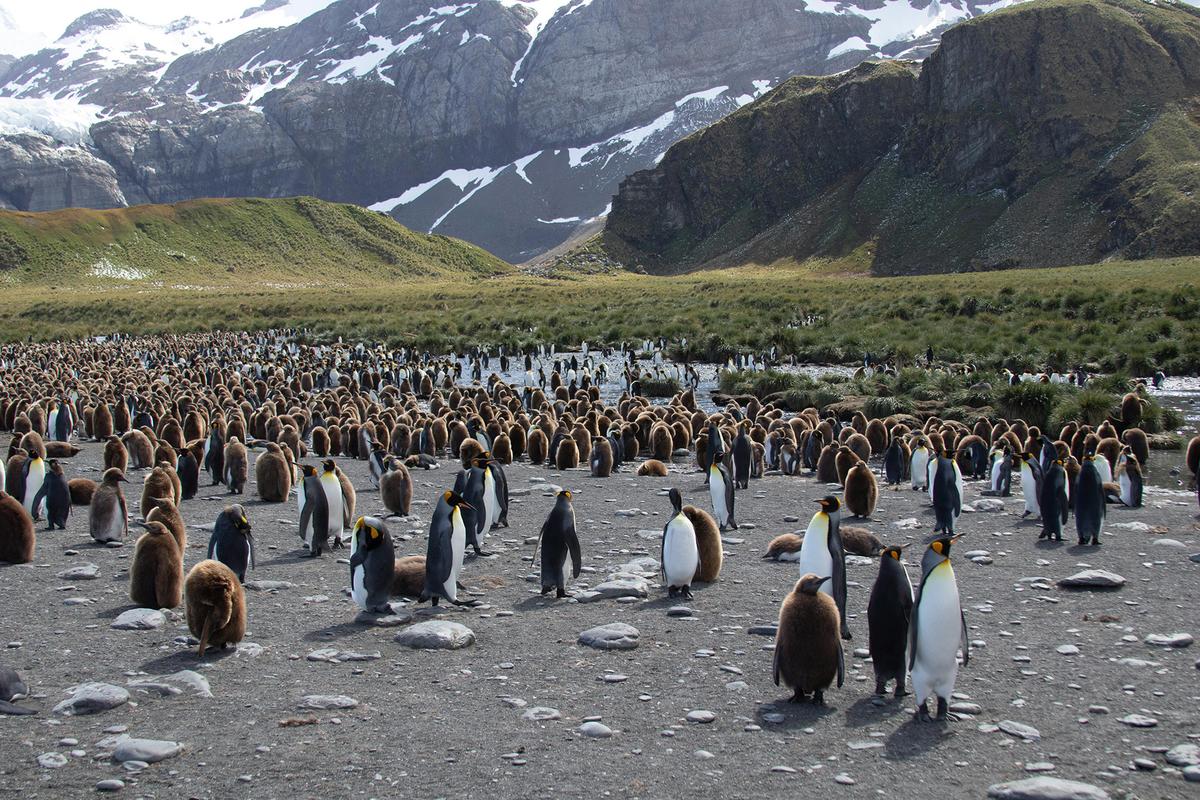
Once, mesmerized by the masses, I crouched to take a photo. When I turned around, I realized that a couple of kings had waddled up right behind me and were eyeing me like I was the weird being, the outsider—which, of course, I was. Satisfied in their little sortie, they turned and moved back down the hill, one beside the other.
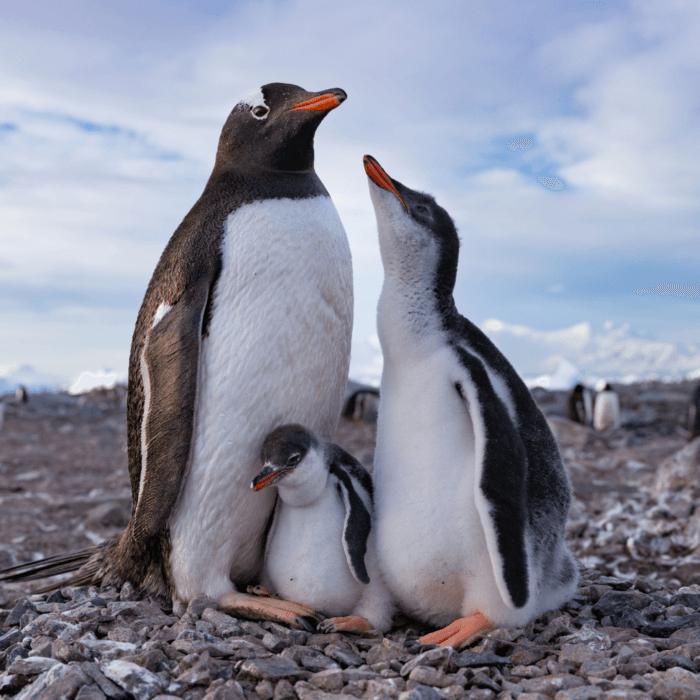

But even in the dramatically smaller colonies along the rocks of the South Shetland Islands or along the Antarctic Peninsula, the behavior is similar—and compelling.
Penguins work together as couples; some even mate for life. They pair off and build their rock nests in tandem, one gathering materials while the other assembles them. They signal each other with distinctive calls. To sustain life, one will go fishing out on the waters. They are much better swimmers than walkers; some reach speeds of 20 miles per hour and can dive down as deep as 800 feet to find something to feed their young.
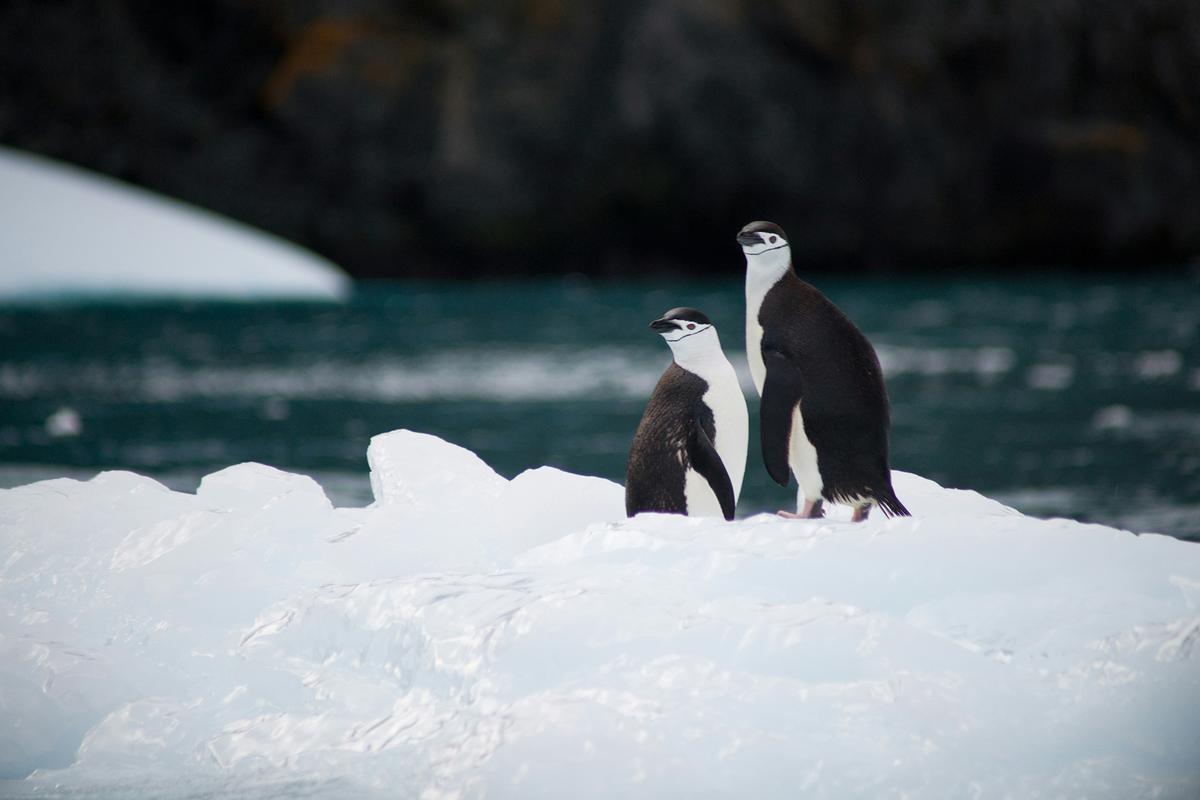
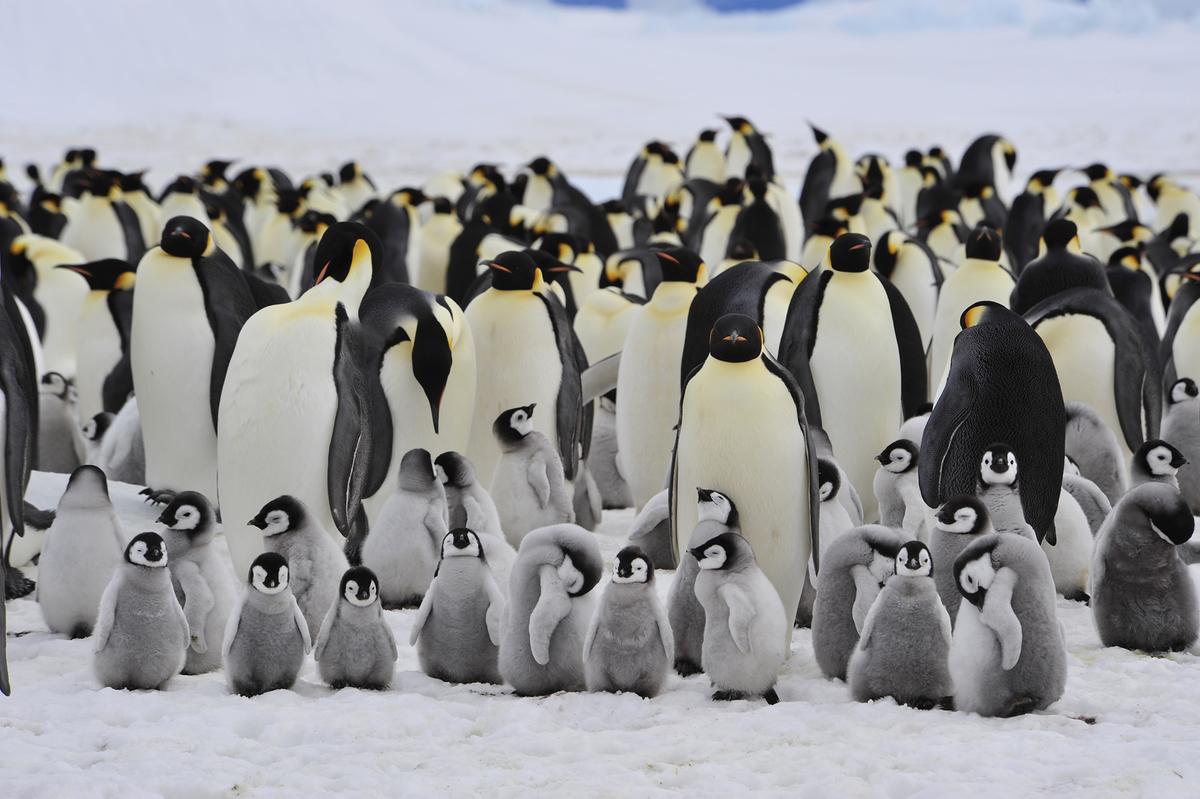
As a big group, penguins cluster together. This is for security, showing strength in numbers to ward off various predators, including the dastardly skua, a bird that swoops over to steal eggs and chicks. Their closeness works for simple warmth, too. Huddling together shields them from the wind and conserves heat.
Polar Bears Don’t Care
They’re massive, majestic, and truly fascinating creatures. Little-known fact: Their skin is actually black, the hollow hair on their hides reflecting light and appearing white while the skin absorbs the warmth.While we’re most accustomed to seeing them swagger, menacingly, across the ice, polar bears are actually marine mammals. Their Latin name is Ursus maritimus. Despite the fact that they can weigh more than 1,700 pounds—by far the world’s largest land-based predator—polar bears can swim for days at a time.
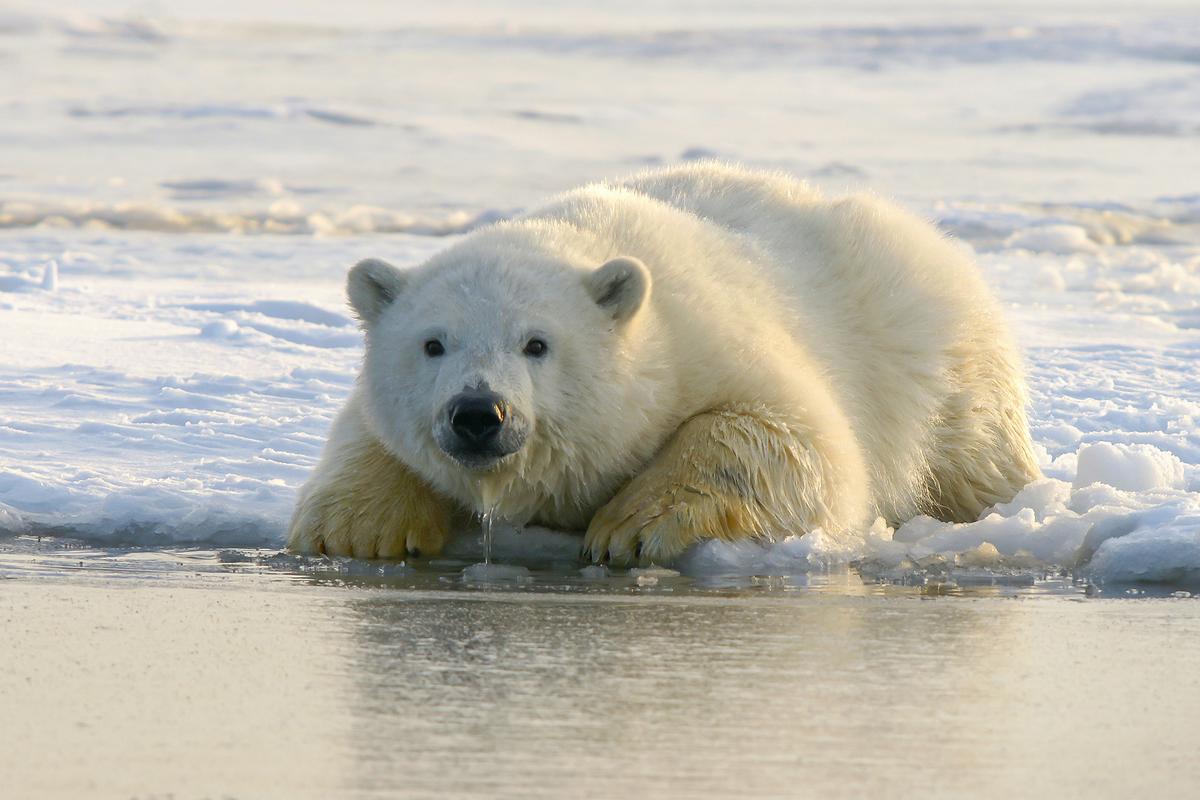
And here’s the thing that I always return to: Unless you cross their path, these bears don’t really care about you. I get kind of the same feeling as when I stare at the stars at night—the realization that, no matter what troubles or worries I may be experiencing in my own life, they’re small in the grand scheme of things.
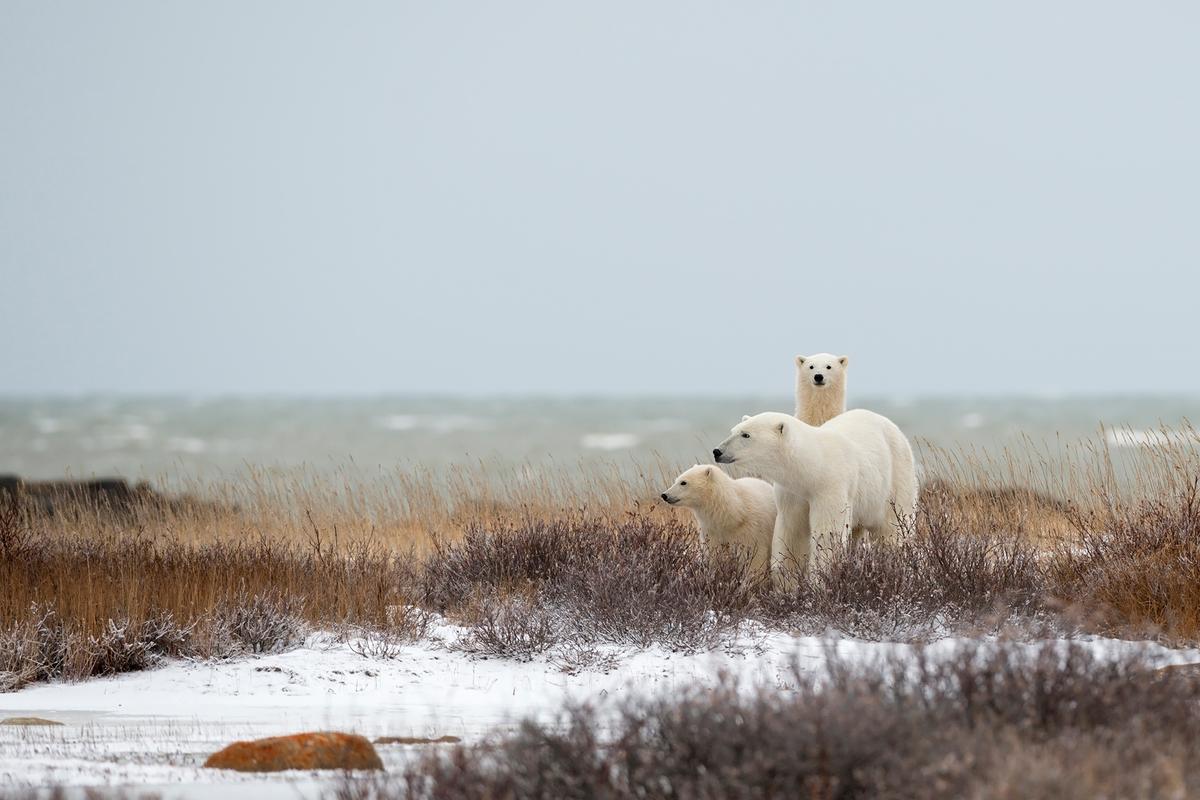
Some polar bears migrate by the hundreds along Hudson Bay in Canada’s North in search of prey and food. It’s a simplicity that’s rather reassuring.
There’s a Lot We Don’t Know
Have you ever gotten close to a pod of humpbacks when they’re feeding? Or orcas, when they’re hunting? Whether you’re watching from shore or in a little inflatable boat on the water or from above in a helicopter, there’s an energy there. Intelligent communication ripples through the air and down below, too.These are very intelligent animals. Depending on their type (baleen or toothed), they communicate using either infrasonic, long-distance “songs” or echolocation clicks and whistles.
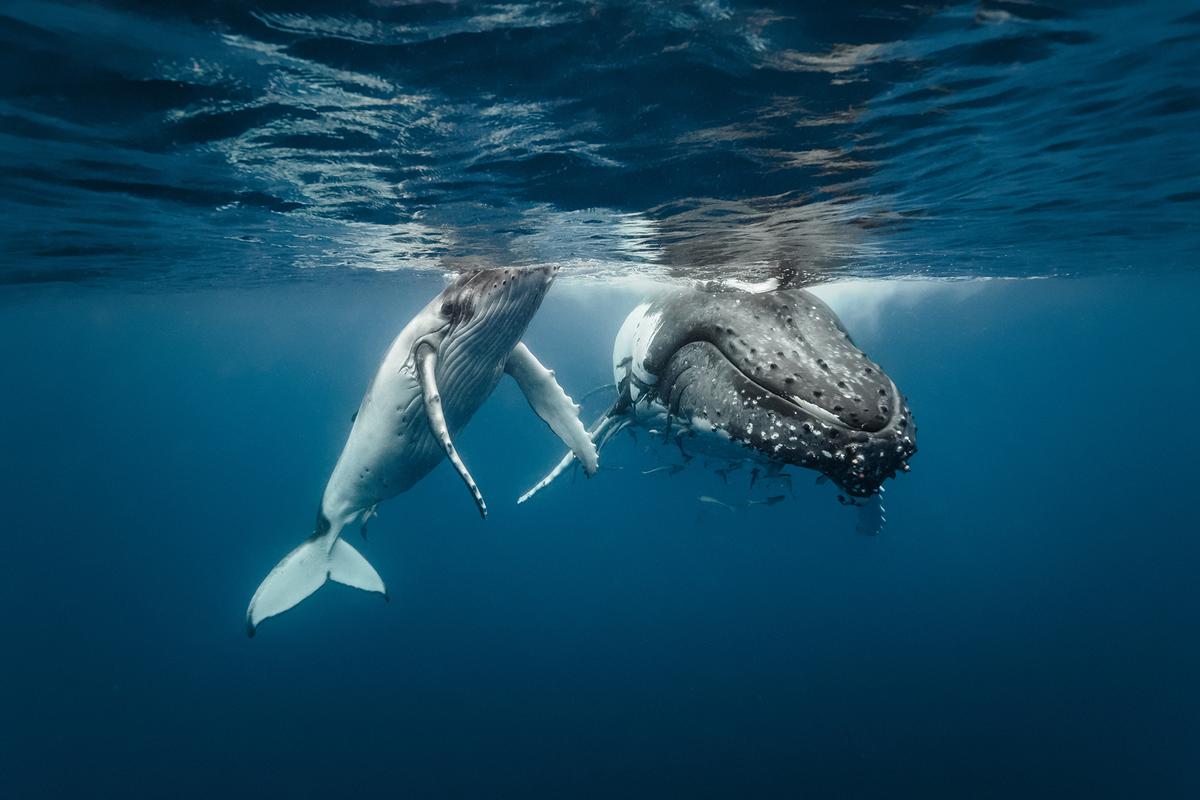
They live and work in pods, which have complex social structures, even bonding by playing together. They teach, learn, and feel grief and empathy.
And here’s the thing: There’s still a lot we don’t know. On a small-ship cruise to the wildest parts of the British Columbia coastline, a guide called our group up onto the open decks. An orca was out there, on its own, just playing around, whirling and creating a froth by slapping its fins.
“Why?” I asked.
The guide cocked his head and said, “This behavior isn’t well understood.” So we don’t really know.
Somehow I found it reassuring that whales have their secrets, too. And as our knowledge of them grows, it’s inevitable that we will learn more about ourselves and our world, too. All the more reason to safely experience these compelling creatures—and penguins and bears, too—whenever possible.
How to See Them
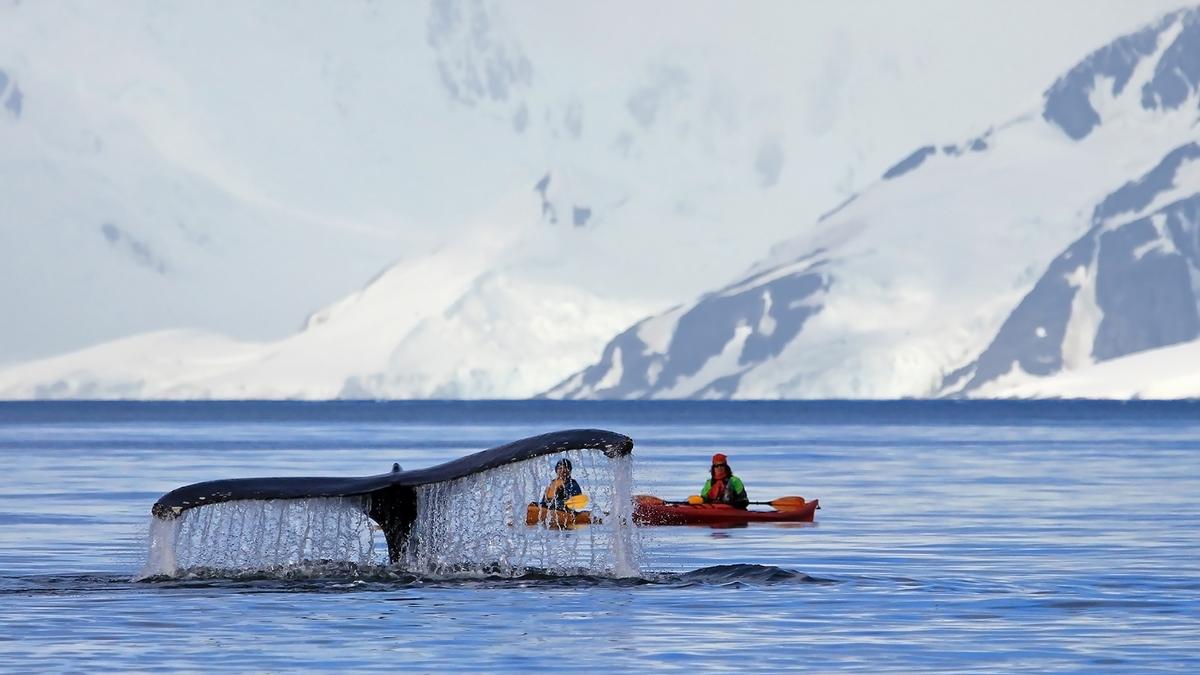
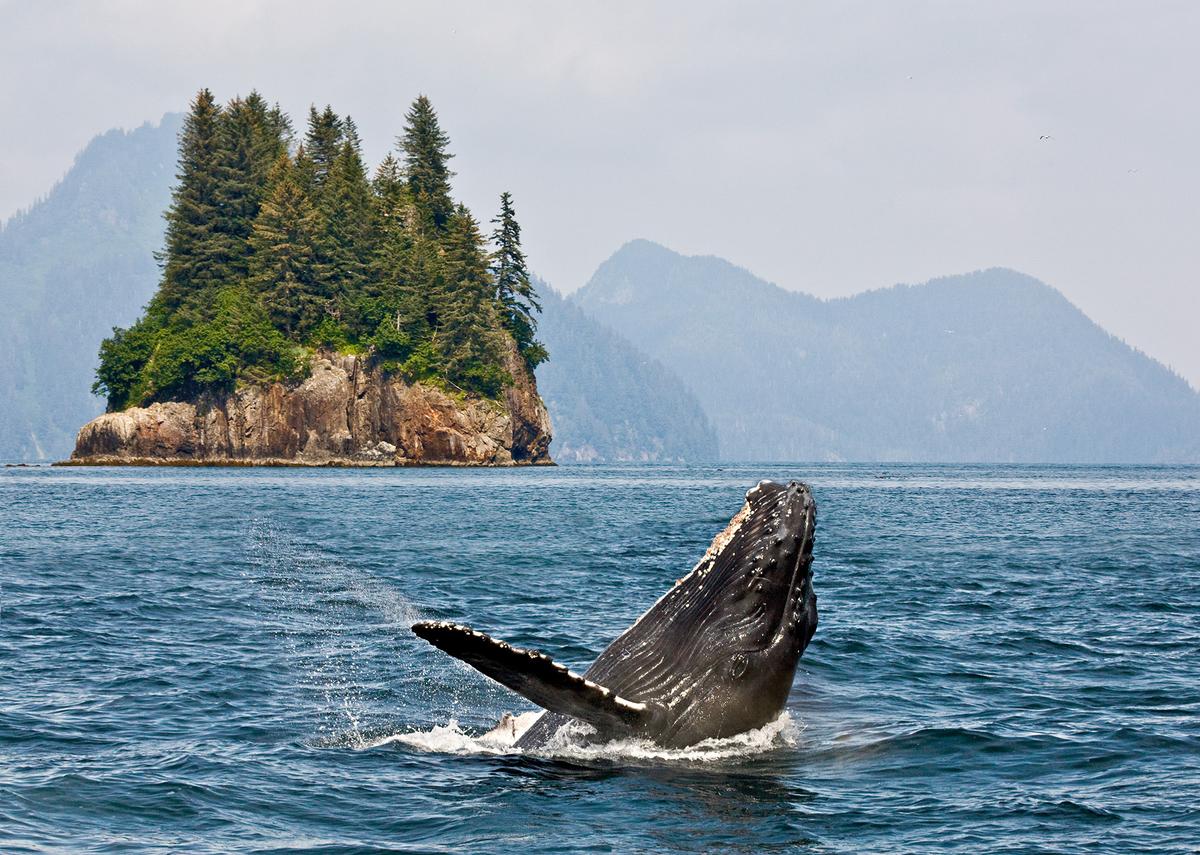
It’s worth building a whole vacation around these majestic animals. For whales, both toothed and baleen, fortunately, you need not go far. Depending on the season, you can hop on a boat and go whale watching up and down the east and west coasts of North America.Polar bears are a bit more of a challenge. On land, at the town of Churchill, on Hudson Bay in the far north of Canada’s Manitoba province, hundreds of these white beasts migrate through the area in the autumn months. You can see them on foot, from scenic flights, and from the windows of giant “tundra buggies.”
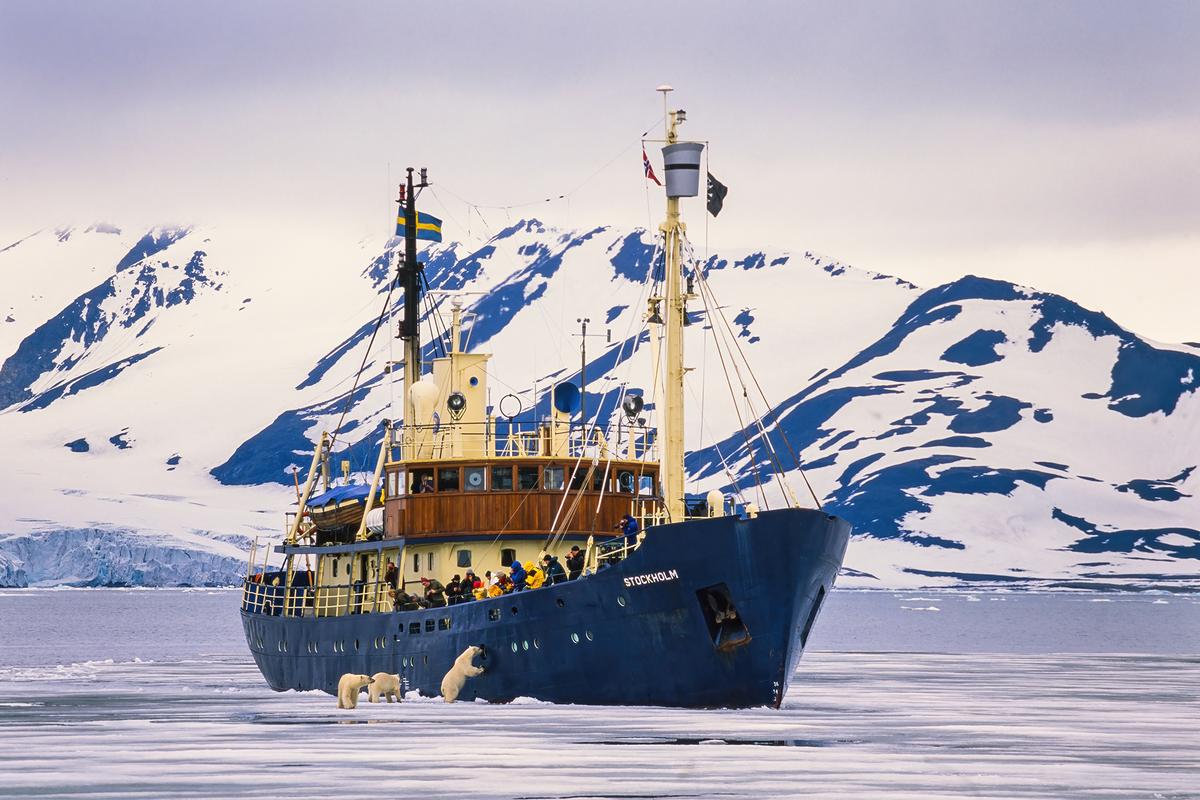
Or take a cruise to Svalbard, a Norwegian island that’s not so far from the North Pole, where the surrounding Barents Sea is filled with as many as 3,000 polar bears.
And penguins? You can spot colonies all over the Southern Hemisphere, from Chile to South Africa, and in Australia and New Zealand. But there’s really, truly no natural environment like South Georgia, an island that’s roughly 100 miles long and home to literally millions of four different types of penguins.
Plus, you can see elephant seals, fur seals, and wandering albatrosses—the world’s largest bird. You can only visit by ship, but there’s plenty to see and learn in what’s been called the “Serengeti of the Southern Ocean.” It’s a life-changing trip.