Mount Vernon Ladies’ Association preserves an often overlooked national treasure: Martha Washington’s Penn Treaty quilt. Its now-faded central toile panel depicts William Penn founding the province of Pennsylvania at Shakamaxon on the Delaware River. An open-armed Penn and his two kneeling men proffer money and gifts to the native Lenni Lenape tribe.
The copper-plate printed linen (toile) replicates an engraving by John Hall titled “William Penn’s Treaty With the Indians.” Hall based the engraving on Benjamin West’s popular painting of the same title. Penn’s son, Thomas, commissioned West to commemorate the legendary event, although the Pennsylvania Academy of the Fine Arts notes that the painting is allegorical rather than historical. West’s patriotic painting was replicated in prints and on fabrics across the country.
The National Gallery of Art, in Washington, holds a colorful version of Hall’s 1775 engraving, which helps us imagine the once-brilliant monochrome toile in the quilt. Hall reversed West’s composition for the engraving; Penn and his entourage stand on the right rather than the left.
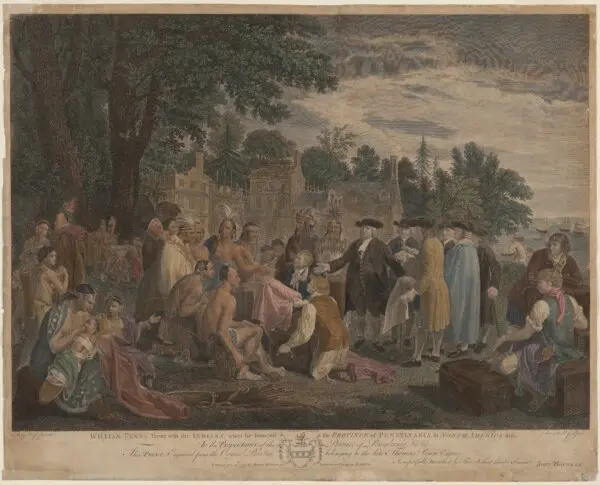
“William Penn's Treaty With the Indians,”1775, by John Hall, after Benjamin West. Engraving and etching with watercolor on laid paper; 16 13/16 inches by 23 1/4 inches. The McNeil Americana Collection, National Gallery of Art, Washington. Public Domain
The First Lady’s Fancy Quilt
A series of patterned borders frames the square piece of Penn Treaty toile. According to Mount Vernon associate curator Amanda Isaac, “This was the most popular composition for high-style, fancy quilts in the Chesapeake region during the Early Republic period.”Once Washington designed the pattern, it was cut, pieced, and basted together, then set into an adjustable wooden quilt frame. Then the quilting began. Often, a group of women would gather to quilt, stitching the three layers, the top, filling, and backing together.
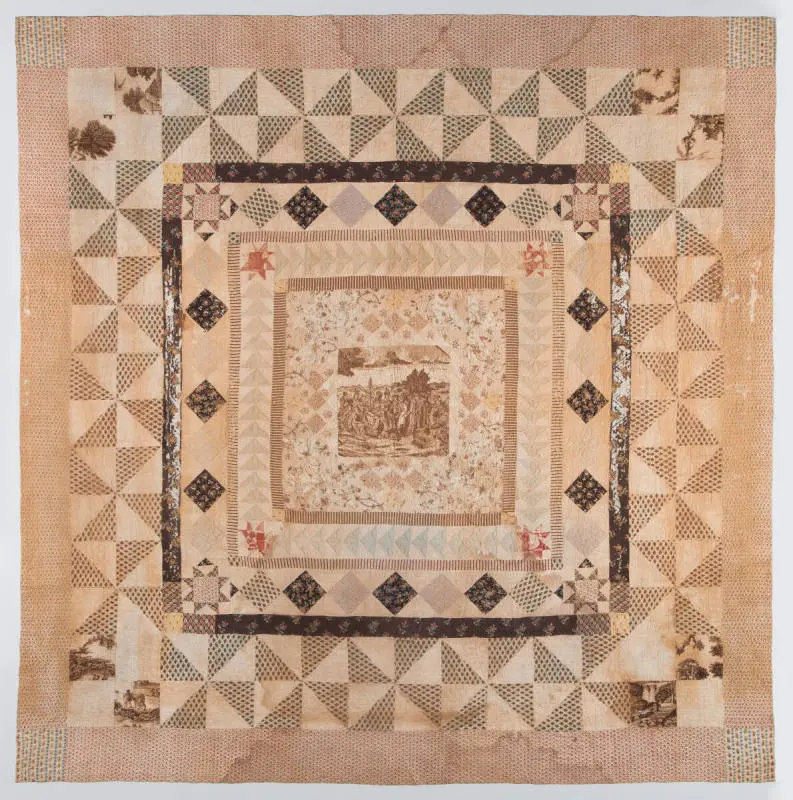
Penn Treaty Quilt, 1790–1802, by Martha Washington. Cotton, linen; 100 3/4 inches by 100 3/4 inches. Gift of Louisa Lear Eyre, 1931; Mount Vernon, Virginia. Courtesy of the Mount Vernon Ladies' Association
More than 20 different painted and printed fabrics were cut in varying shapes and sizes, including stars, triangles, diamonds, and pinwheels, for this quilt. The shapes formed borders of scrolls, chevrons, flowers, and fleur-de-lis. According to Isaac, “At least one of the fabrics, a red-and-blue printed plaid, is also found in a surviving garment, a banyan, or dressing gown, once worn by George Washington.”
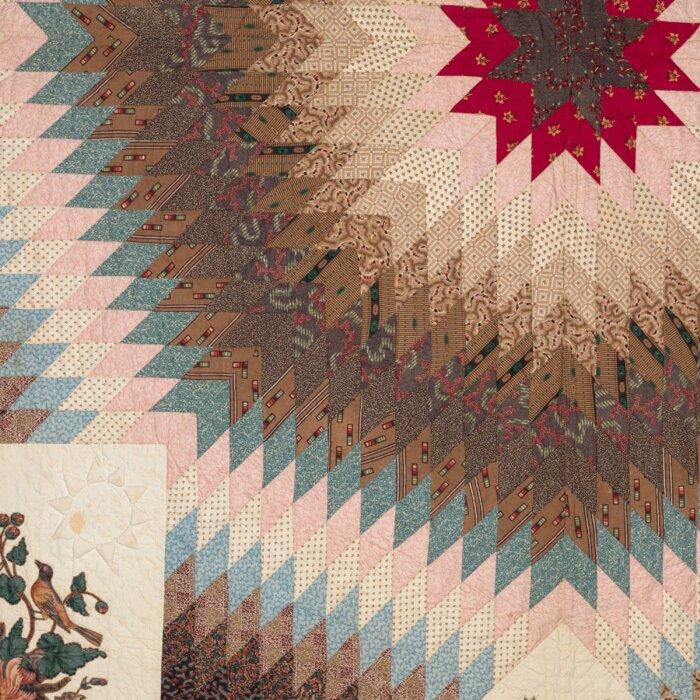
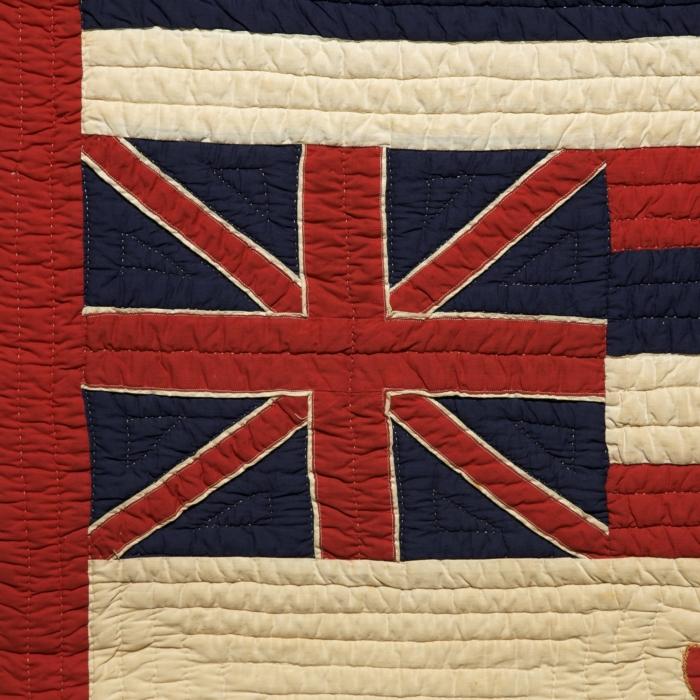
Martha joined her husband on the frontline during the American Revolution, stitching soldiers’ uniforms, and she also set up a sewing circle to support the war efforts.
Washington’s fancy quilt, therefore, represents more than homeware. Each scrap of fabric in the Penn Treaty quilt, from homespun plaid to rich imported silk, represents the pioneering resilience of the early Republic, and its first lady’s love for it—and quilts.
What arts and culture topics would you like us to cover? Please email ideas or feedback to [email protected]