“Commodore” Cornelius Vanderbilt was crude. One of the wealthiest people of the 19th century by way of steamships and railroads, he had earned his fortune through hard work, undercutting the competition, and, at times, via unscrupulous business maneuvers. He was not one for putting on airs.
When William Backhouse Astor died in November 1875, he left behind over $40 million. When Vanderbilt died less than two years later on Jan. 4, 1877, he was worth over $100 million.
Enter Alva
Smith was as headstrong as the Commodore. She wished to be part of New York’s elite, a community of wealthy socialites who belonged to the “old money” families. These families were spearheaded by Caroline Astor, the daughter-in-law of William Backhouse Astor. Caroline had organized an exclusive societal list she dubbed “The Four Hundred.” The number was based upon how many guests could fit in the ballroom of her illustrious home. Alva, despite her marriage to William Vanderbilt, was not on the list.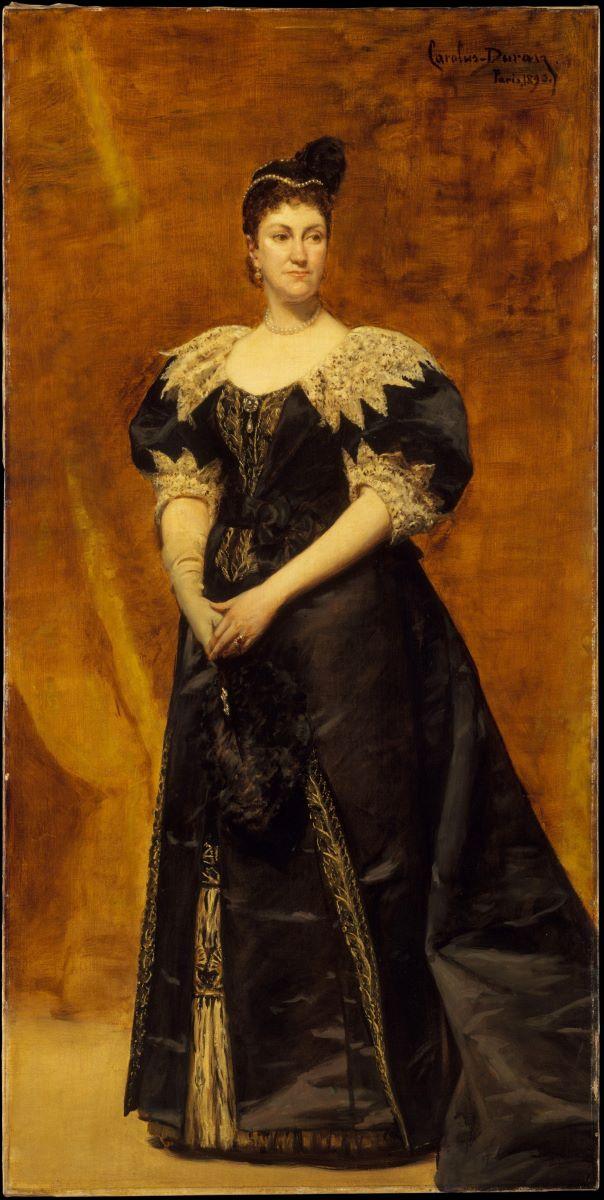
The Vanderbilts, according to the Astors and her influential community, were viewed as part of New York’s “new money” families, which included the Morgans, the Goulds, and the Rockefellers. These were families who had made their fortunes during and after the Civil War. Alva was undeterred. She had the determination, and, now that she was a Vanderbilt, she had the means to break into the seemingly impenetrable Four Hundred.
‘A Battering Ram’
In 1882, a year before Hunt’s creation was completed, the Vanderbilts made their presence known on Fifth Avenue when William Sr. purchased three large townhomes for his daughters, which were dubbed the “Triple Palaces.” These three homes took up a city block between 51st and 52nd Street. Alva’s single home, which she would ironically dub Petit Chateau, was a corner residence on 660 Fifth Avenue and 52nd Street, across from the Triple Palace. The purpose of the mansion was not simply to flaunt her wealth, or even to flaunt convention, as the design of the home was hardly traditional. She had something else in mind:Alva planned a large housewarming party for March 26, 1883. The party was to be a costume ball, which would host 1,200 guests—three times that of the Astor house. While the ball was still being prepared, Alva invited local journalists to visit her home to build up anticipation for what would undoubtedly be New York’s grandest party.
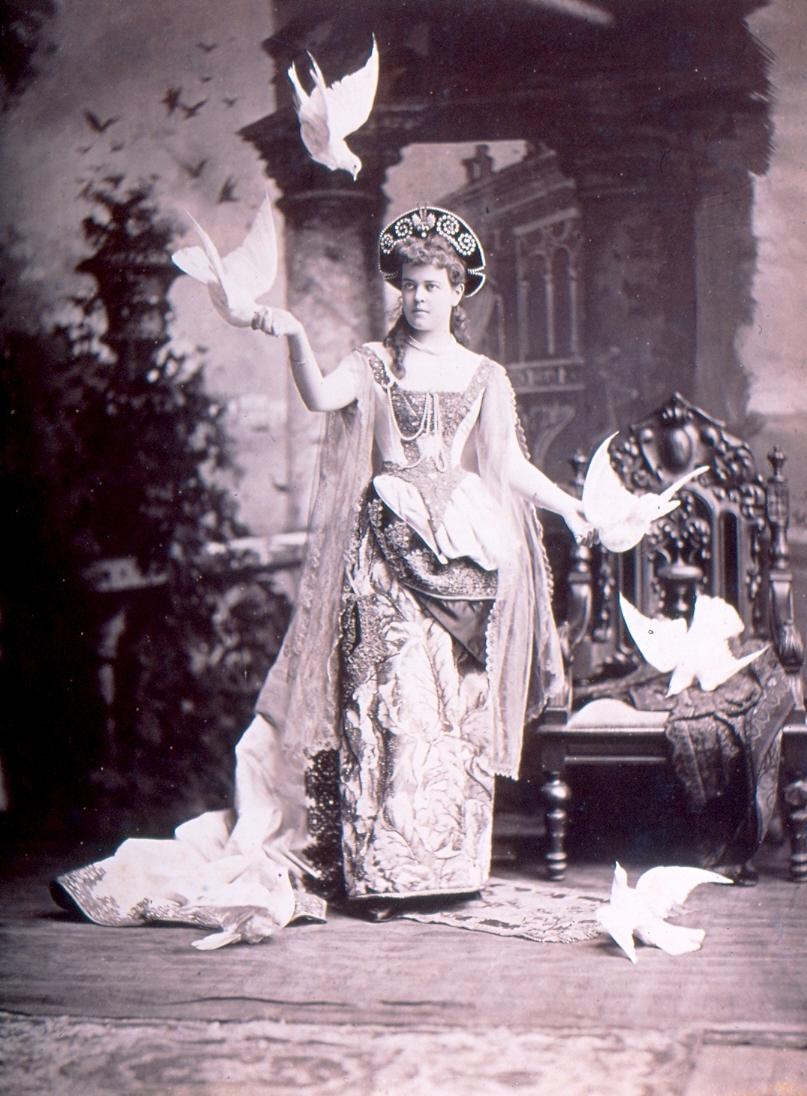
The invitations were hand-delivered via Vanderbilt servants. An invitation did not arrive at the Astor house. Astor’s daughter, Carrie, implored her mother to do something. Astor inquired about an invitation, but Alva informed her it would be impossible to invite the Astors as they had never called upon the Vanderbilts. Alva had played her hand perfectly, though quite expensively—the party cost about $250,000 (about $8 million today).
The Grand Battleground
This battle between the old-money and new-money families had been won by the Vanderbilts. But this was simply part of the groundwork the new-money families were laying to remove the stranglehold the old money families had on New York society.In New York City, indeed, throughout Europe, there was no better locus classicus of high society than the grand opera houses. New York’s opera scene had centered around the Academy of Music since its construction in 1854. It was the largest opera venue in the world at the time of its opening. Though it could house more than 4,600, the box seats were limited to 18. Much like Astor’s Four Hundred, the traditional gentry had established the Knickerbocker circle, which protected box seats from the “Newcomers.”
The opera was an opportunity for members of the wealthy elite to be seen. Indeed, the arrival of these old-money families often upstaged the opera performance itself. Many showgoers purchased tickets to not only see the performance, but also to catch a glimpse of New York’s finest. As post-Civil War millionaires continued to spring up, the limited seating arrangement became a source of aggravation and humiliation for the latest members of New York’s high society.
The Opera War
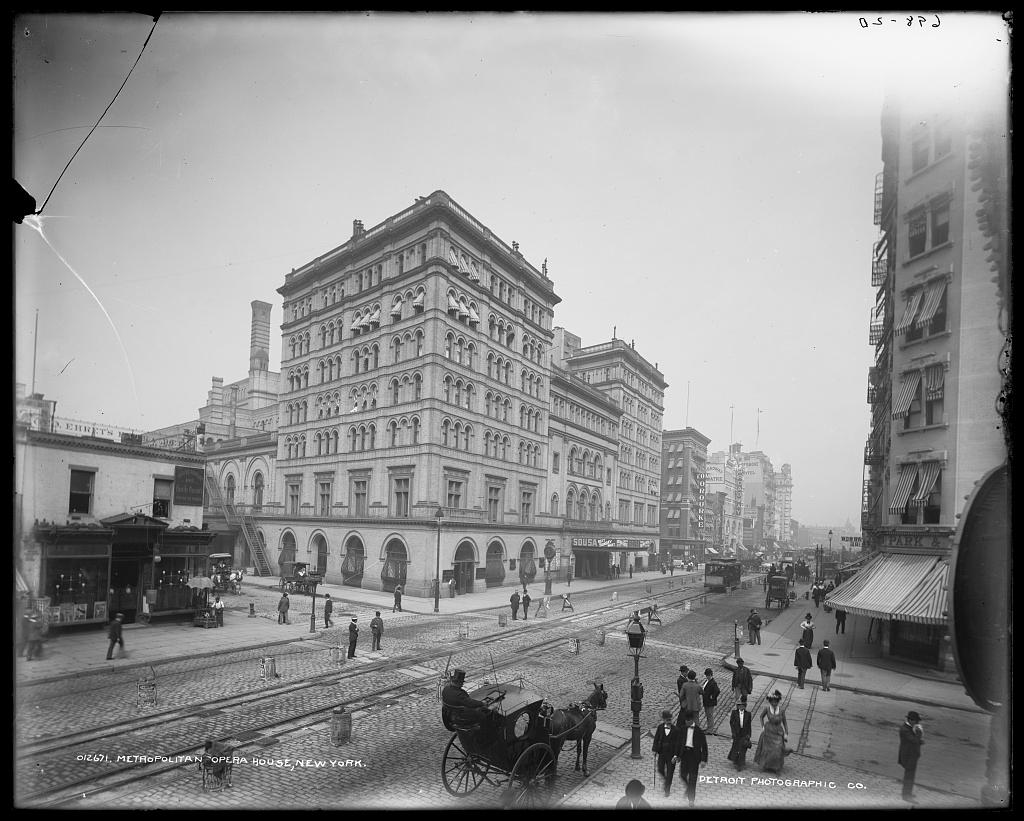
In short order, George Henry Warren, a lawyer for the Vanderbilt family, who had been in negotiations regarding expanding the Academy seating, secured enough capital from 62 subscribers for the new opera project. The new-money families organized the Metropolitan Opera Company, and, on April 10, 1880, the committee held its first meeting.
Despite the enormous price tag of $1.7 million (approximately $54 million today), to purchase the site and build the house, a site at West 39th Street and Broadway was acquired for the new opera house in March 1881. The committee commissioned J. Cleveland Cady, one of New York’s best architects, to design and build the new opera house. Cady’s portfolio included work for churches and universities, and he had recently designed the American Museum of Natural History.
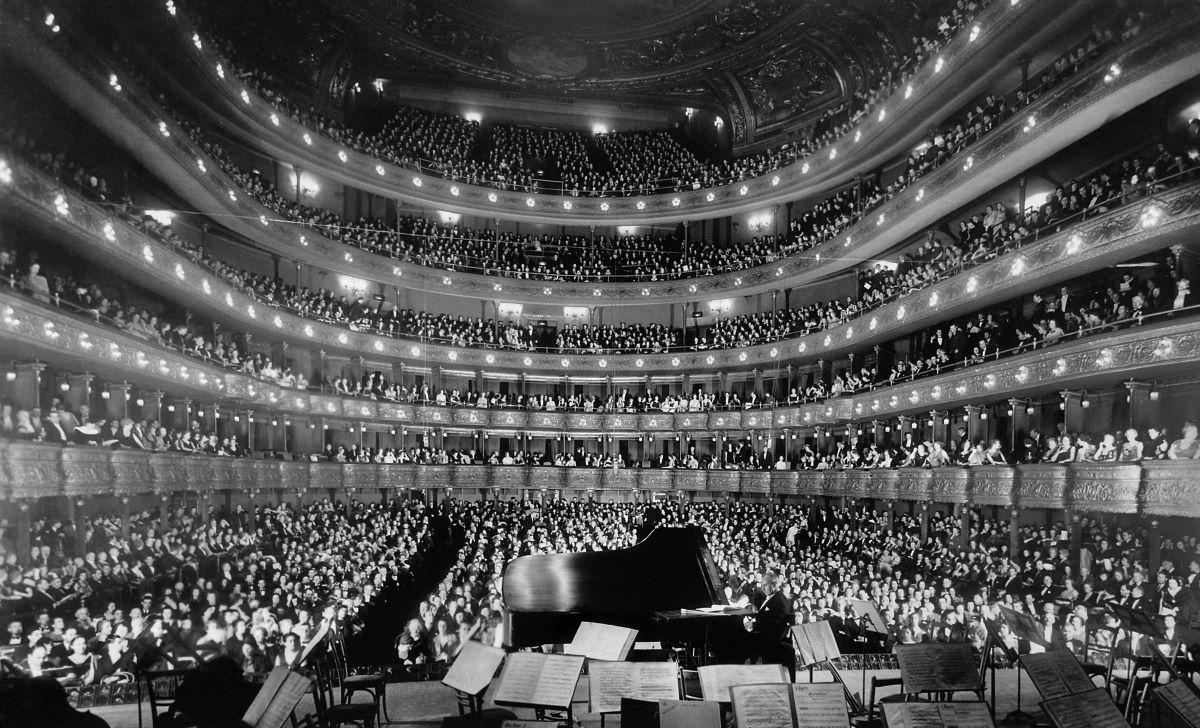
The construction of the Metropolitan Opera House began. The opera house, which would become known as The Met, had five balconies, a main floor, and standing room for 380 people. Compared to the Academy of Music, it could house only 3,389 attendees. Most importantly, though, at least for the new American aristocracy, there were two levels of box seating and a row of baignoires, which had seating for 210 people known as the Golden Horseshoe. The new-money families of the Vanderbilts, the Morgans, the Goulds, and the Roosevelts would now have their place in the grandest of spotlights.
When the opera season of 1883 approached, the Metropolitan Opera Company decided to launch their season on the same night as the Academy of Music. It was during this week in history, on Oct. 22, 1883, that the Metropolitan Opera House hosted its first performance and began what became known as the Opera War.
Interestingly, the Met’s season opened with French composer Charles Gounod’s most famous opera, “Faust.” Unlike the main character of the opera, the devil’s bargain for the Vanderbilts and the new-money elites paid off. By 1886, the Academy stopped its opera performances, giving way completely to the Metropolitan Opera House and the overwhelming sway of the new-money families.