By the time Chandresh Kedhambadi stepped into the ballroom-sized cavern, he could tell the glacier had been holding its breath for centuries.
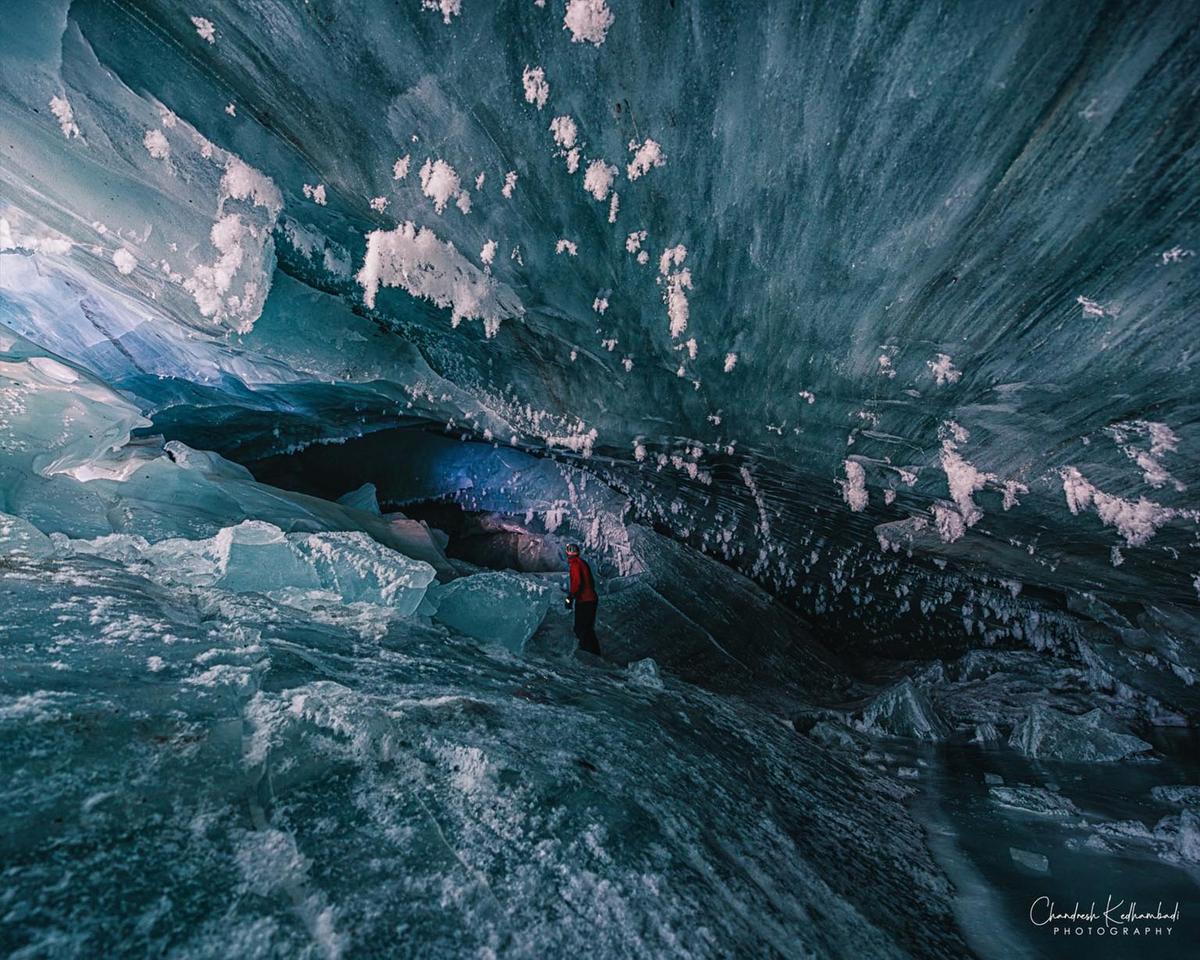
In late 2020, Kedhambadi—at that point a Calgary-based chemical engineer with just four years of photography experience—guided his camera deep into the Athabasca Glacier, a colossal tongue of ice spilling down from the Canadian Rockies in western Alberta. Gazing at the translucent surfaces, he found a landscape frozen in time.
“When you look into the ice, the ice bubbles, the ancient air that’s trapped, you know you’re looking at a lot of history,” Kedhambadi, 50, told The Epoch Times. “The very first time I saw a glacier cave, it was like being transported into another world.”
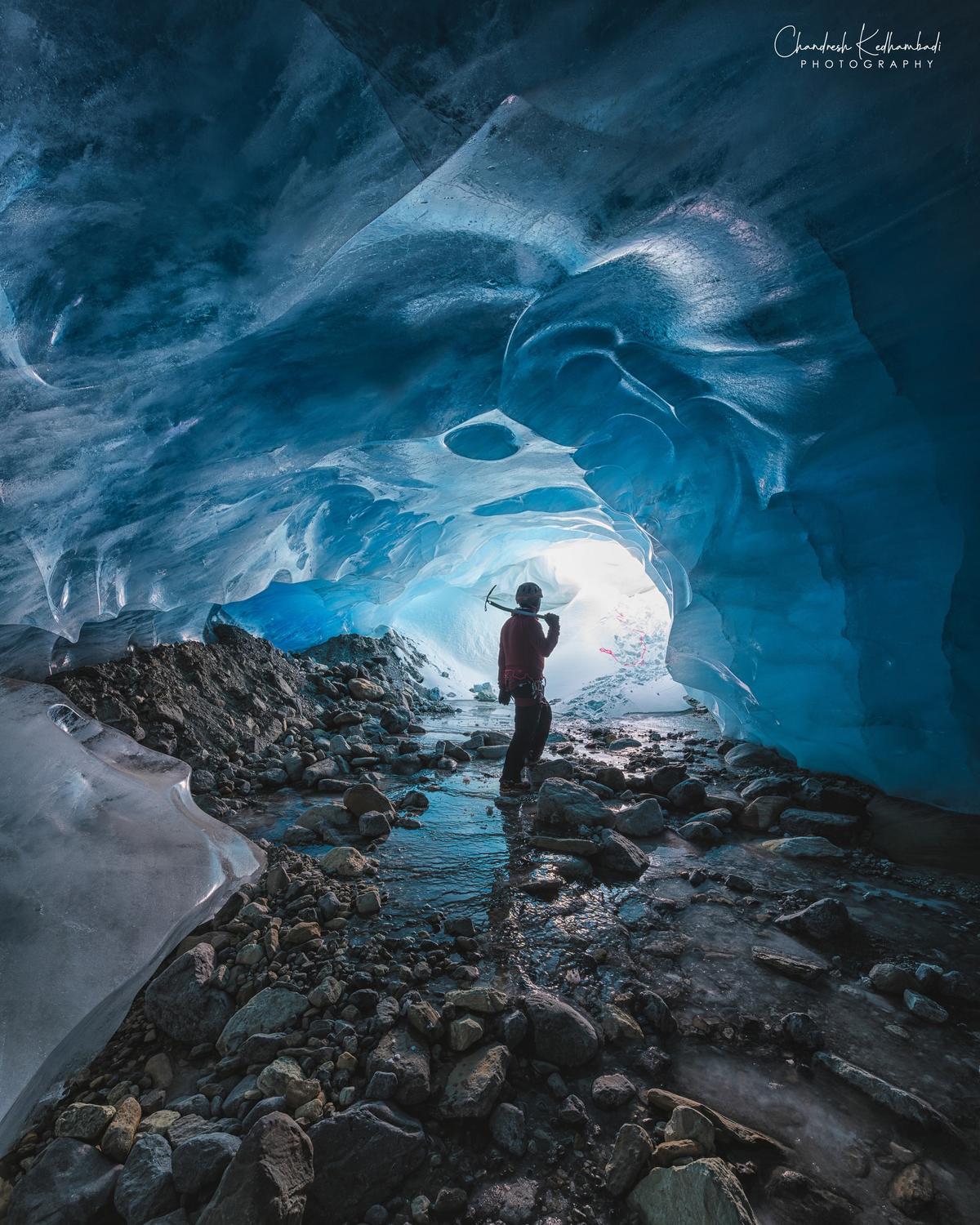
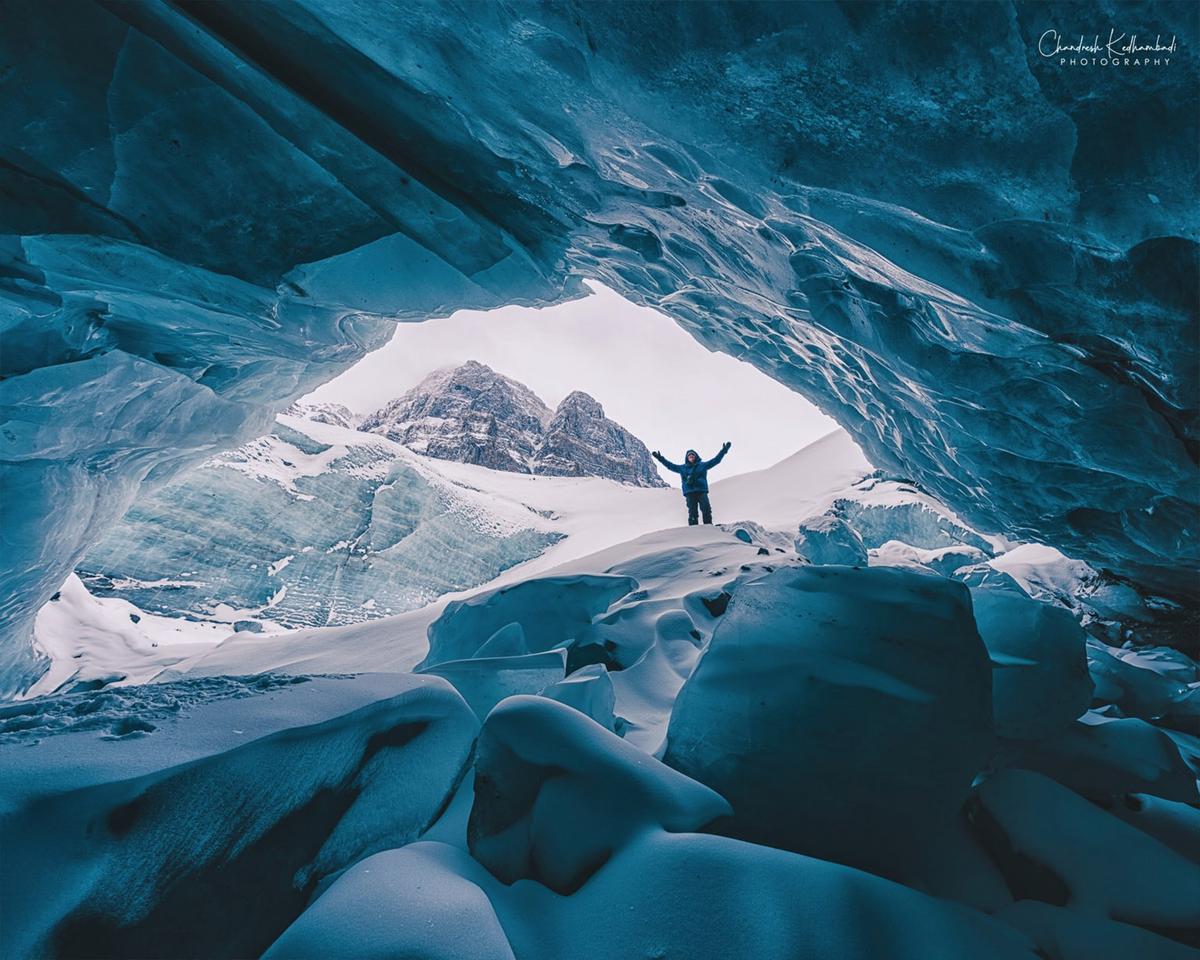
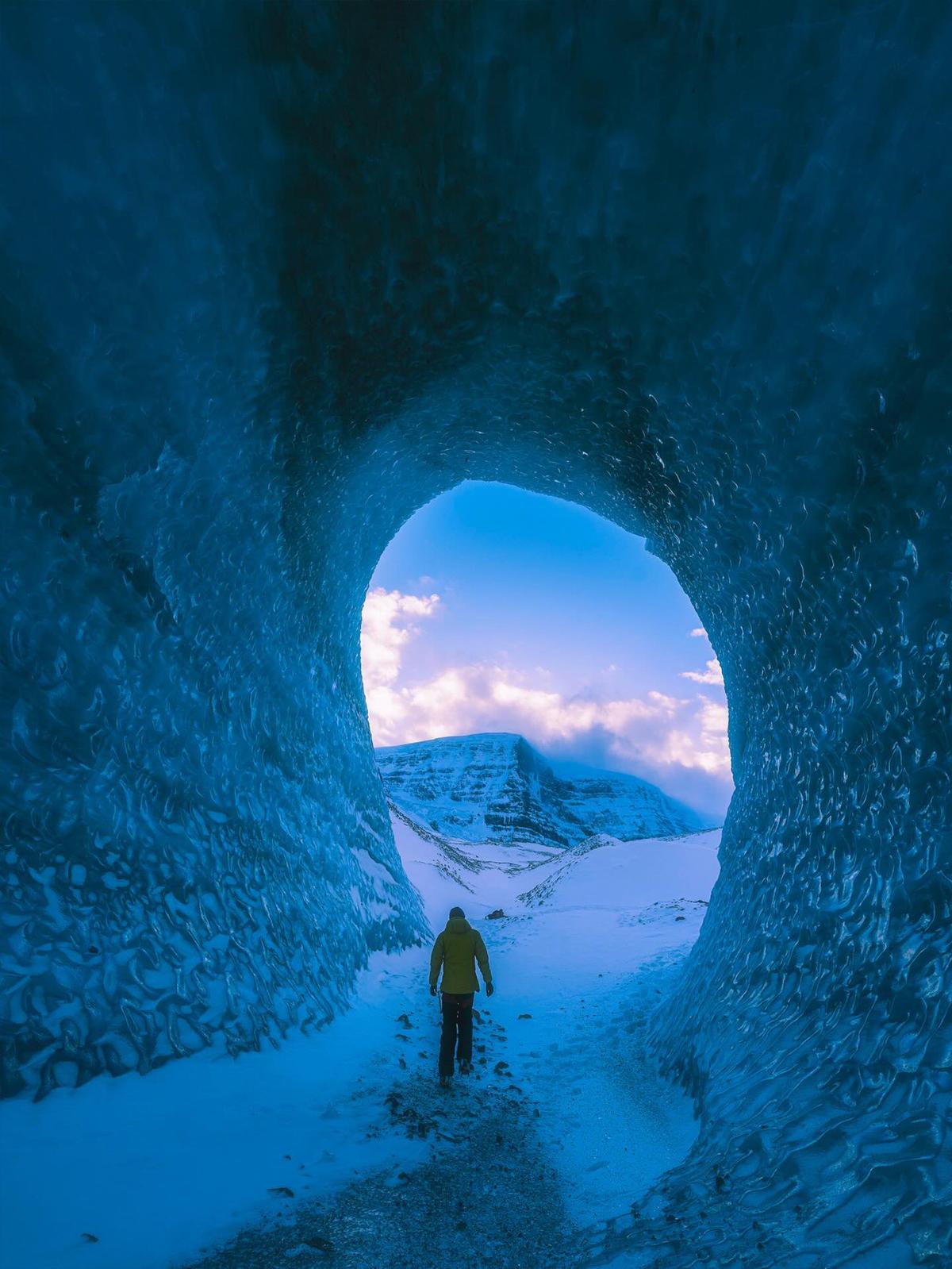
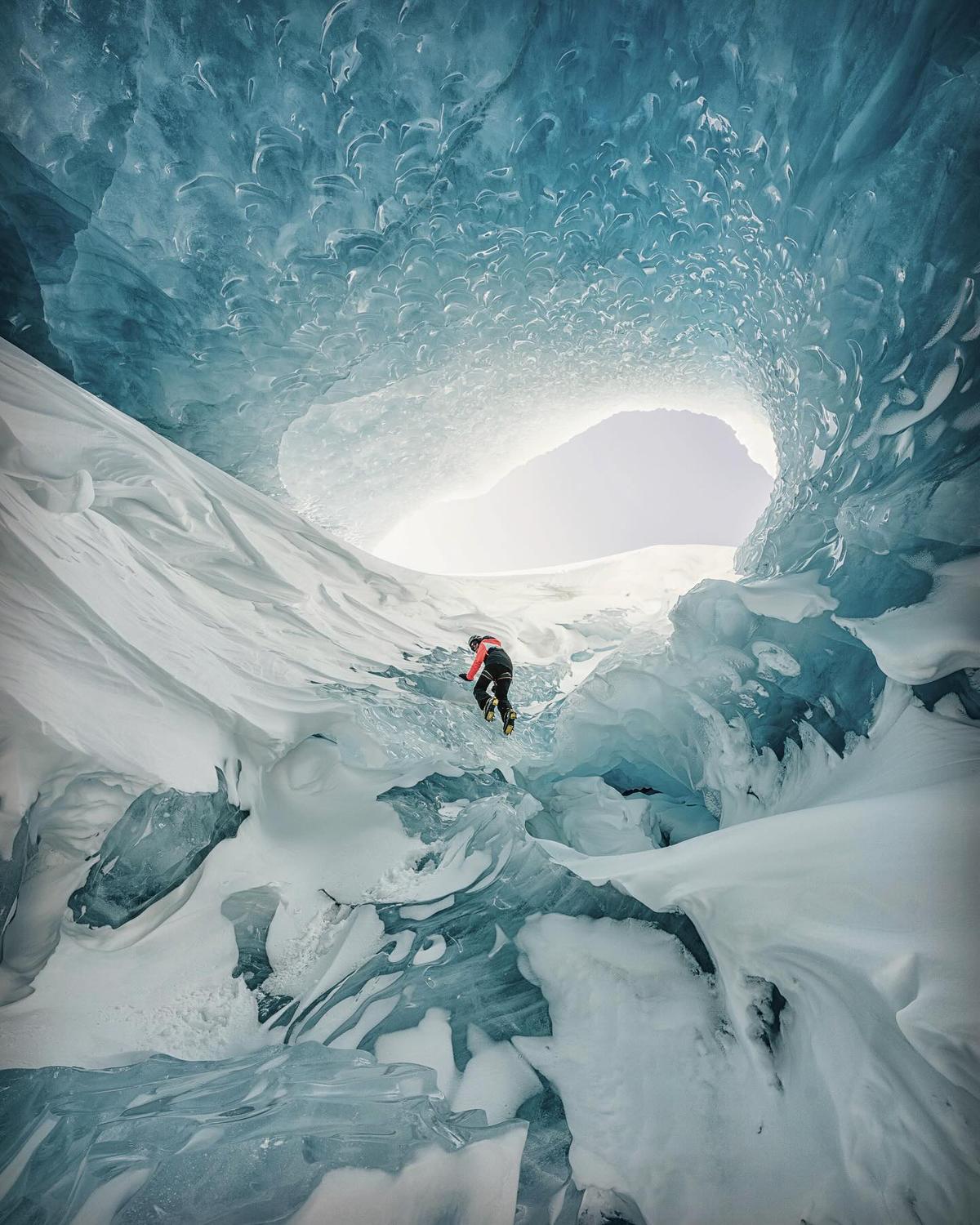
Kedhambadi noted a temporal paradox inherent in glaciers: they are ancient, but the caves within them are fleeting, melting in the glacial equivalent to the blink of an eye.
“From a composition perspective, it completely drew me because each one is so unique,” he said, adding that the rapid cycle of freeze and thaw offers new, unmapped subject matter for his camera each winter.
Glaciers “just hook you,” he said.
Kedhambadi was increasingly lured to study the volatile nature of the icefields, where his engineer’s eye helped him comprehend the shifting landscape.
“People think that these are just structures that sit there, but they’re not,” he said. “They’re dynamic, they’re moving. It’s almost like a river. But you can see the river flow, while you don’t see the ice flow.”
Capturing this ephemeral environment required him to push beyond accessible tourist pathways of the Athabasca into remote sites like the Columbia Icefield and Hector Glacier, where rigorous survival training was required; without cellphone reception, any failure to notice a hidden crevasse could be fatal.
“These are spots which are very remote,” Kedhambadi said. “When things go wrong, you better have the confidence and the training to pull yourself out of those situations.”
The photographer usually explores with four or five other experienced climbers, each towing backpacks loaded with roughly 50 pounds of gear. Their packs hold essential provisions—ropes, pulleys, extra gloves and jackets, and heated socks—along with his heavy cameras and tripods. Because these spaces are structurally safest when the temperature drops below 20 degrees Fahrenheit, expeditions require meticulous planning. A multi-hour trek into the back-country is a race against winter twilight, requiring their collective skills to swing into action in an emergency without relying on search and rescue.
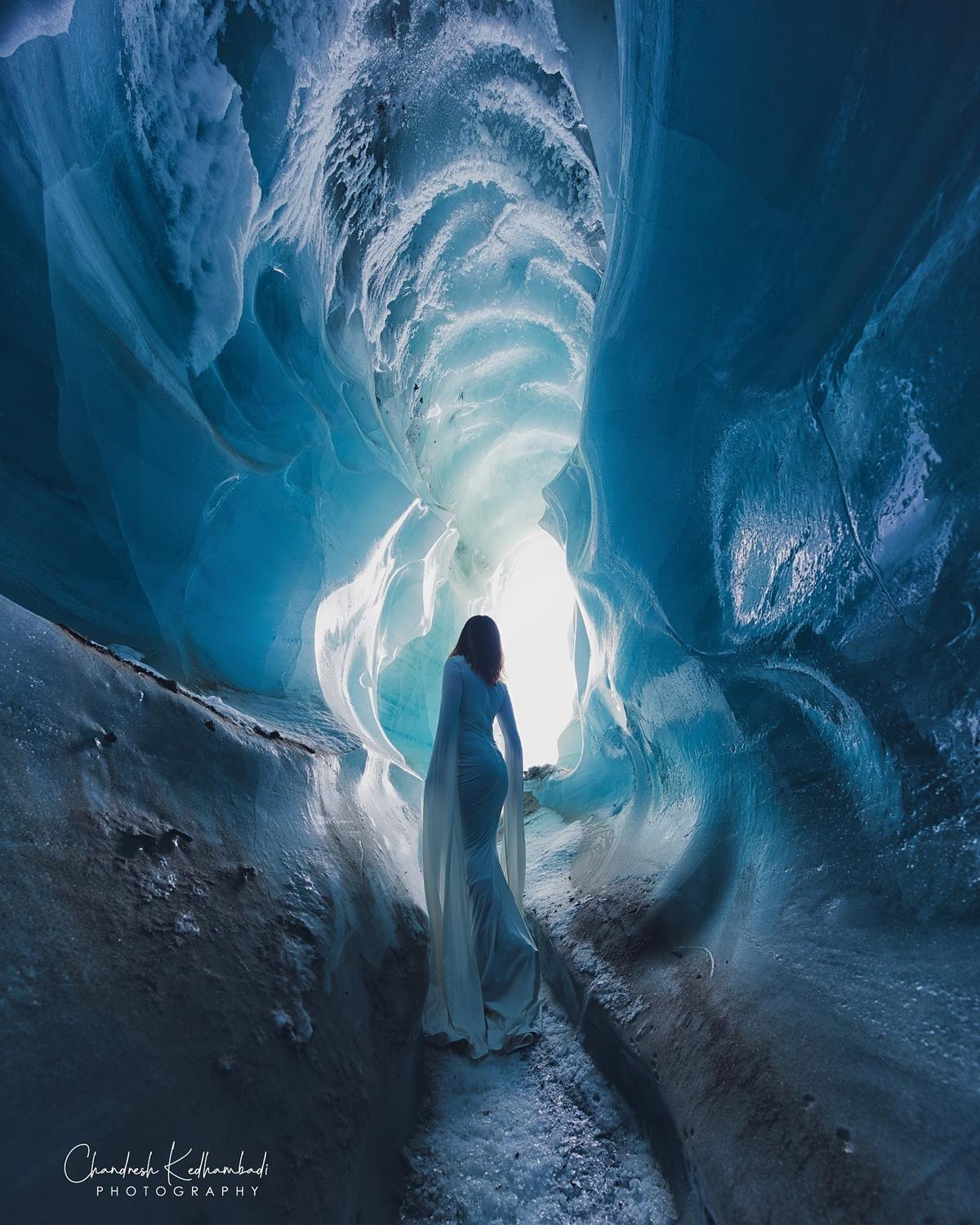
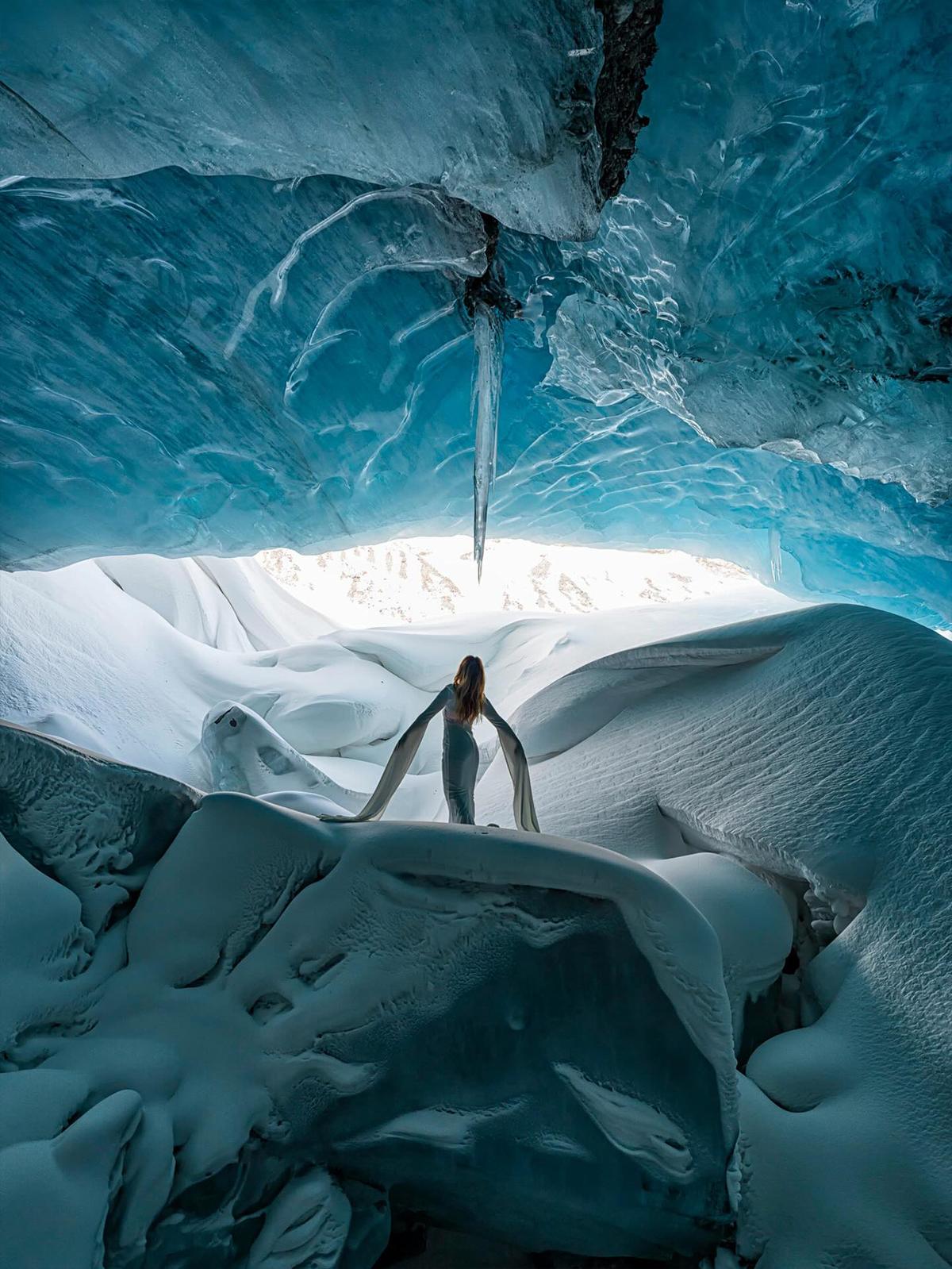
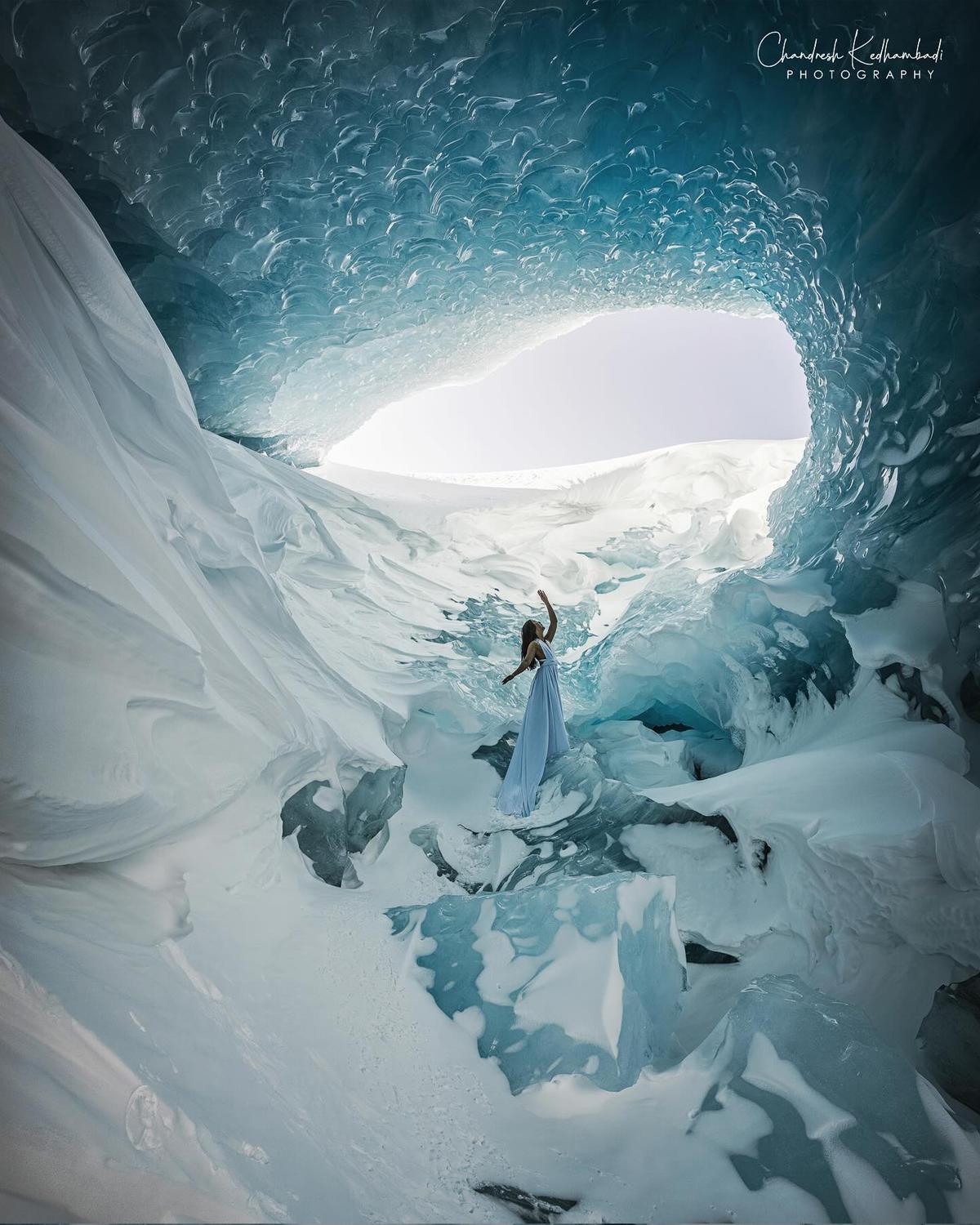
But by autumn the landscape had changed completely. “We went back there in October or November, and that entire block of ice had just melted away,” he said.
From Sun to Ice
Kedhambadi’s photography journey began thousands of miles from the sub-zero ice caves of the Canadian Rockies. As a child, he spent summers wandering his grandparents’ coffee plantation in the Western Ghats, India, a lush mountain range that provided a stark contrast to his urban upbringing in Bangalore.
“Over there, national forests are truly wild,” he said.
Later, chasing a career in chemical engineering carried him across the globe to the oilfields of southern Alberta where, in 2009, he first witnessed the northern lights during a midnight drive. The auroras were a visual catalyst that forever changed his trajectory, leading him to co-found the Alberta Aurora Chasers, a community of night-sky photographers, before turning his gaze to the glaciers of nearby Banff National Park.
“The winter of COVID is when I first went out,” he said, speaking of his sojourn to the Athabasca Glacier.
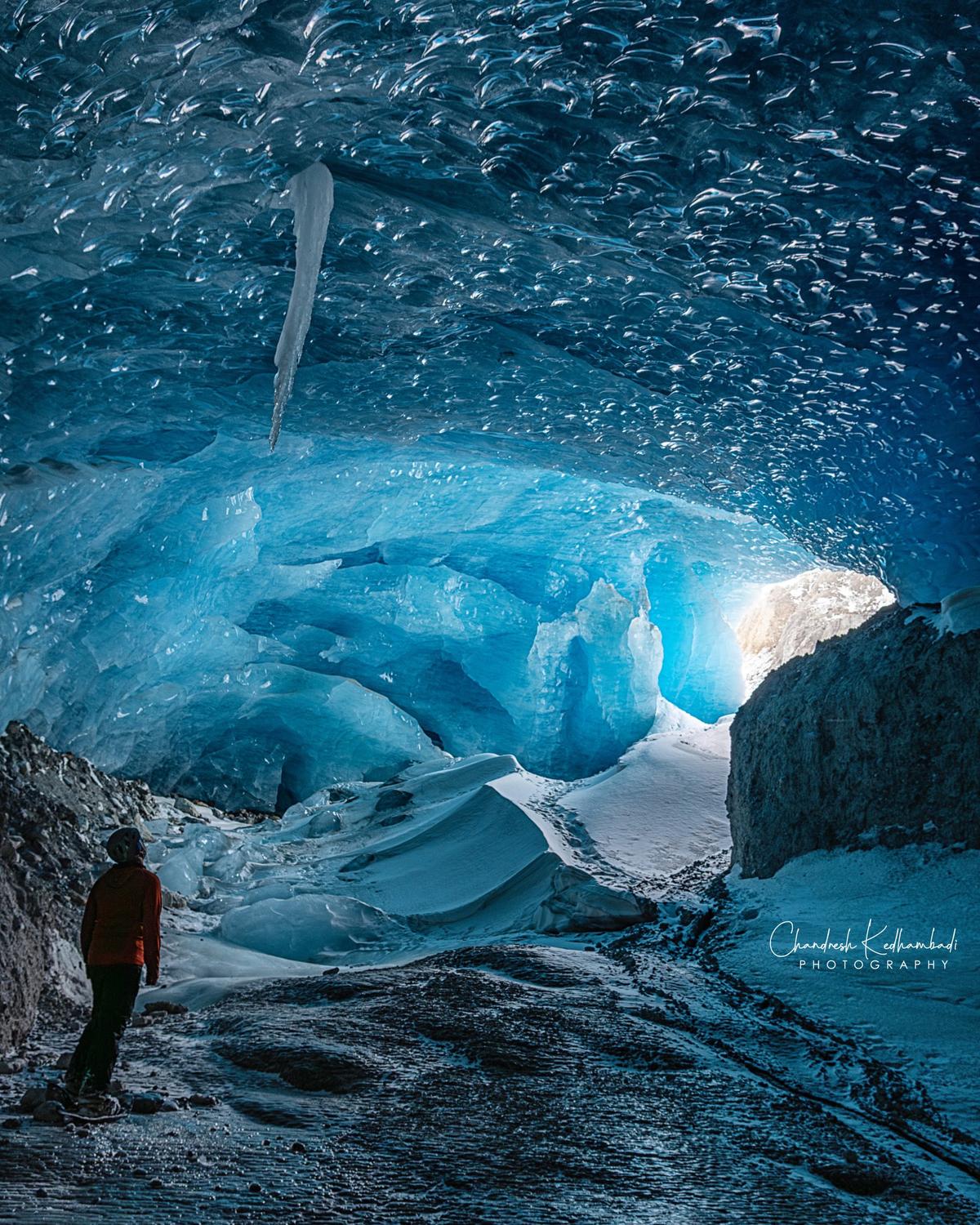
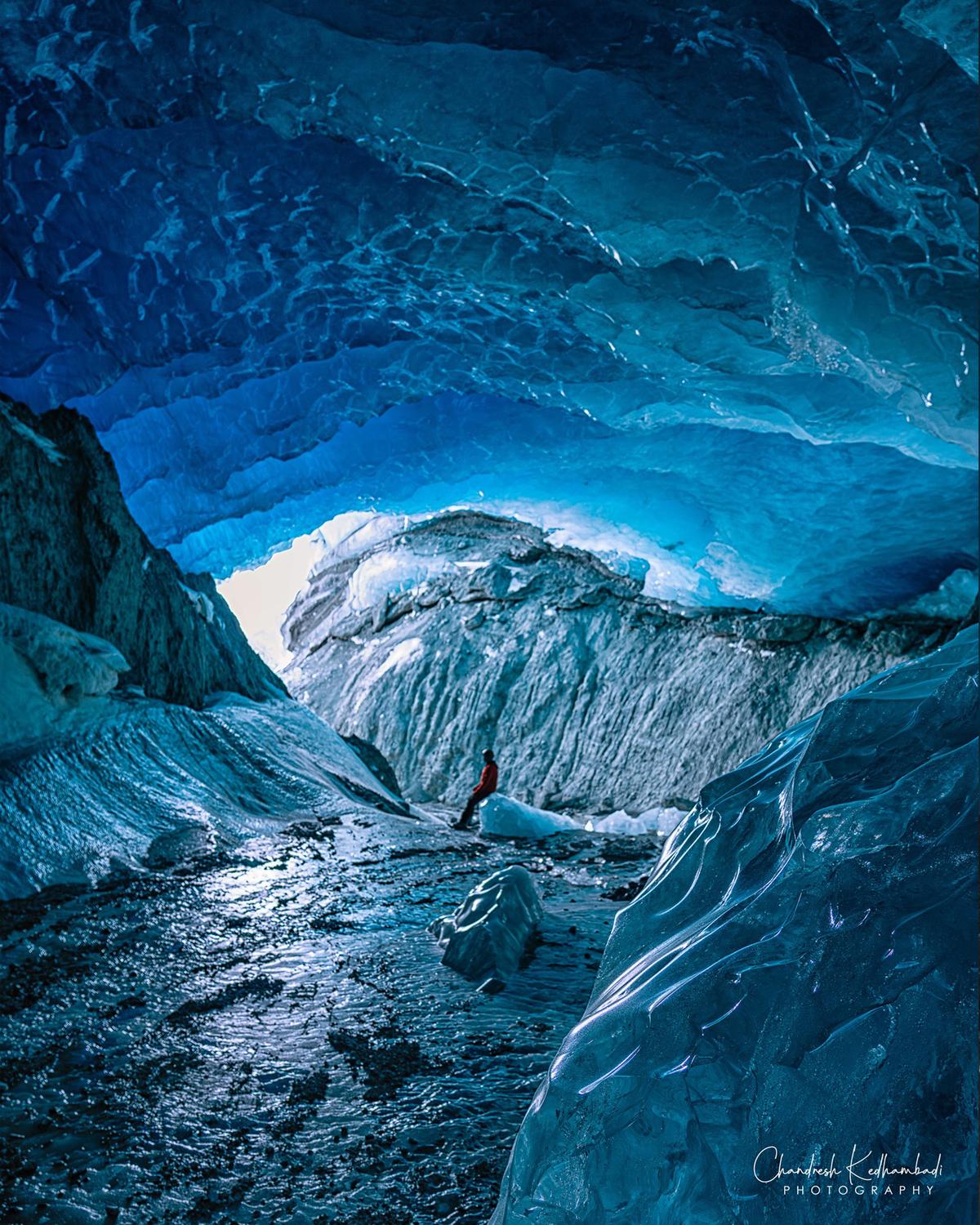
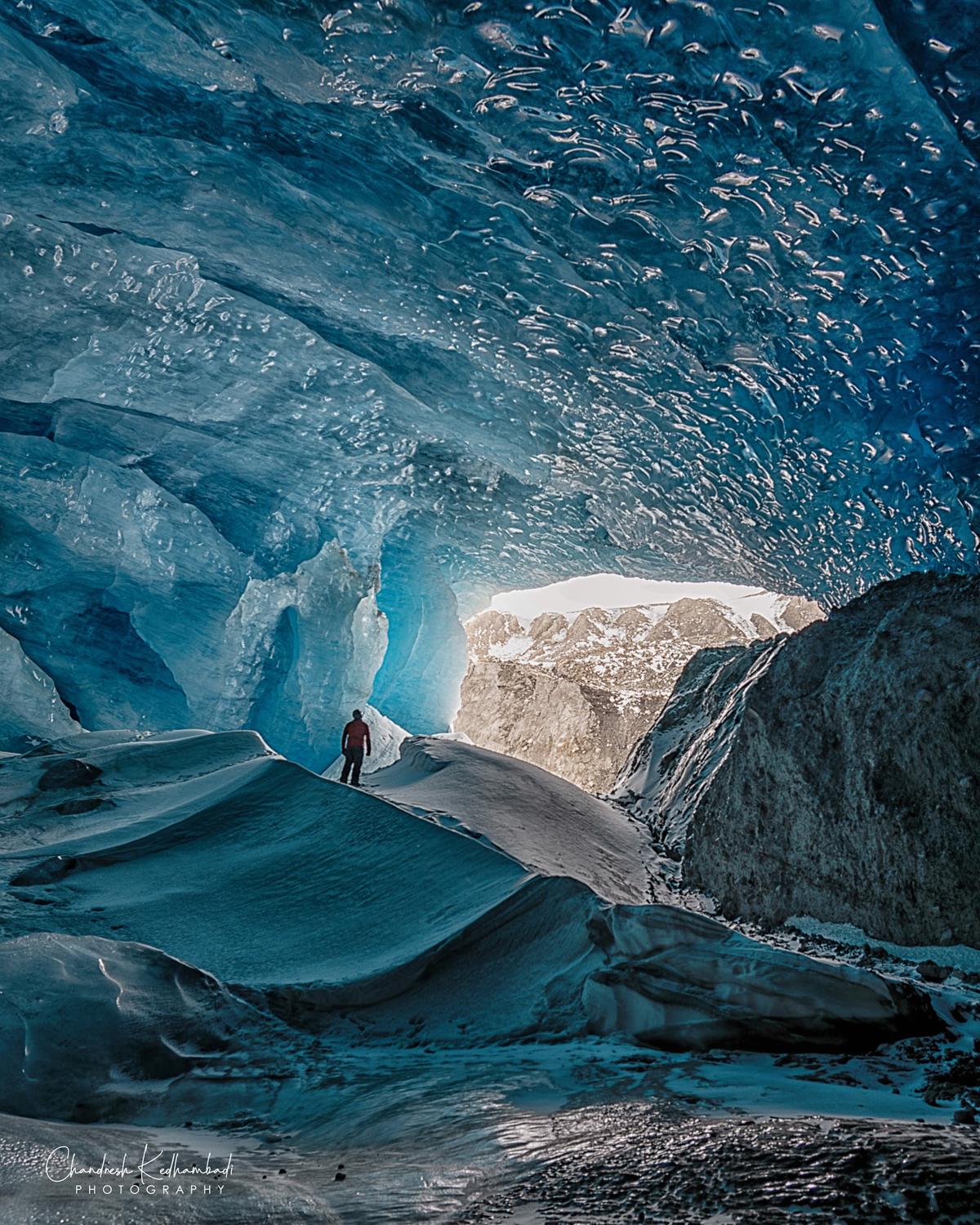
The scope of Kedhambadi’s expeditions soon expanded from independent cave explorations and aurora hunting to collaborations with NASA and a partnership with Sony to archive these water- and wind-sculpted curios of nature.
In March 2026, he ventured into his biggest cavern yet—an undisclosed venue for a project titled “Anitya Nila”—which featured prominently in the recently published coffee table book “The Canadian Rockies.”
Kedhambadi remained tight-lipped about the coordinates of what is considered one of Alberta’s largest ice caves. Glacier visitation has “kind of been crazy the last couple of years with social media,” he said, justifying his omission. But “Anitya Nila” now offers a window into a frozen world destined to vanish in a breath.