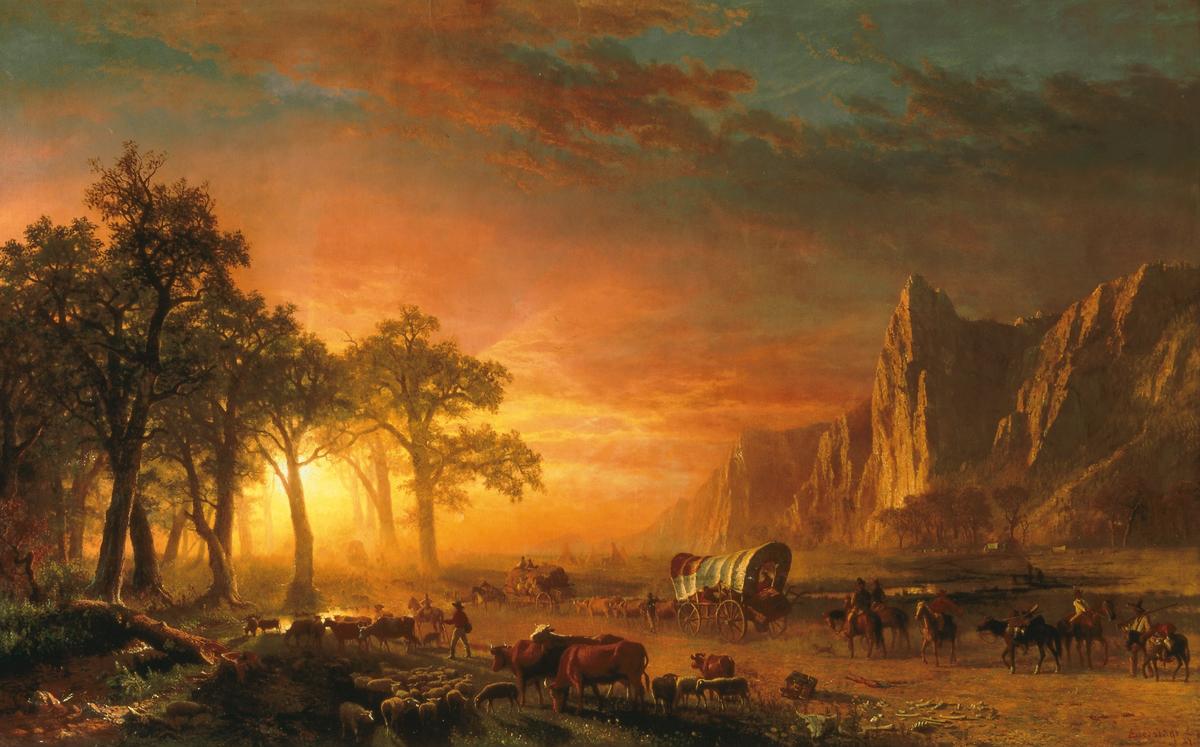
In 1867, at the height of America’s westward expansion, Albert Bierstadt completed one of his most ambitious canvases, “Emigrants Crossing the Plains.” Measuring approximately 60 by 96 inches, the sweeping panoramic exemplifies why landscape paintings were popular in the 19th century. Since 1972, the work has been on view at the National Cowboy & Western Heritage Museum in Oklahoma City, Oklahoma, where it remains among the institution’s most popular paintings.
Early Life and Western Expeditions
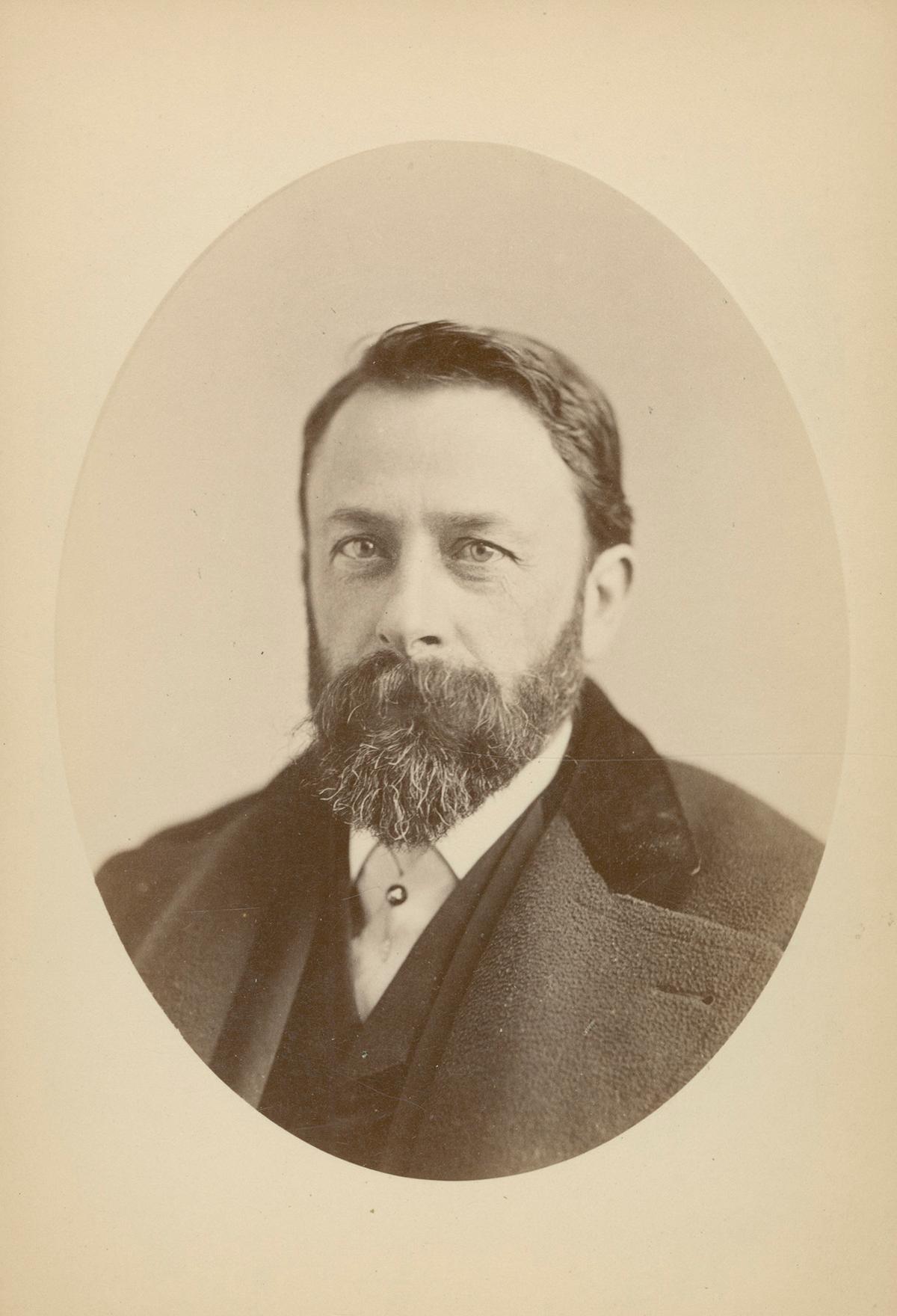
Washington. Public Domain
Bierstadt was born in 1830 in Solingen, Prussia (current Germany), and immigrated with his family to New Bedford, Massachusetts, as a toddler. Despite modest financial means and initial family hesitation about his career path, he showed early artistic promise. In his early 20s, he returned to Germany in 1853 and spent several years studying painting in Düsseldorf. During his years abroad, Bierstadt often visited the mountains, sketching landscapes that would later inspire his comparisons between the European Alps and the Rocky Mountains of North America.
After returning to the United States, Bierstadt exhibited at the 1858 National Academy of Design in New York, gaining critical attention and commercial success. However, it was his journey the following year that proved transformative for his career.
In 1859, Bierstadt set out on the first of several expeditions to the American West. His first trip took him along the Oregon Trail through Nebraska and Wyoming Territory, accompanying Col. Frederick William Lander on a survey expedition.
Romantic Vision and the Oregon Trail
In 1863, Bierstadt embarked on a second western trip along the Oregon Trail, this time with writer Fitz Hugh Ludlow. Near Fort Kearney, Nebraska, they encountered a procession of 50 wagons—German emigrants pushing west, their cattle herd trailing behind. The scene inspired “Emigrants Crossing the Plains” and was among the first of Bierstadt’s works to emerge from this journey.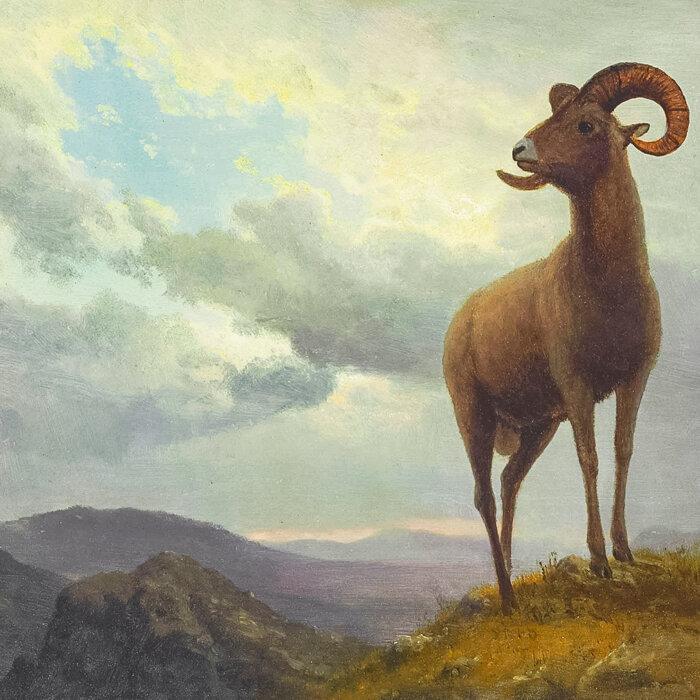
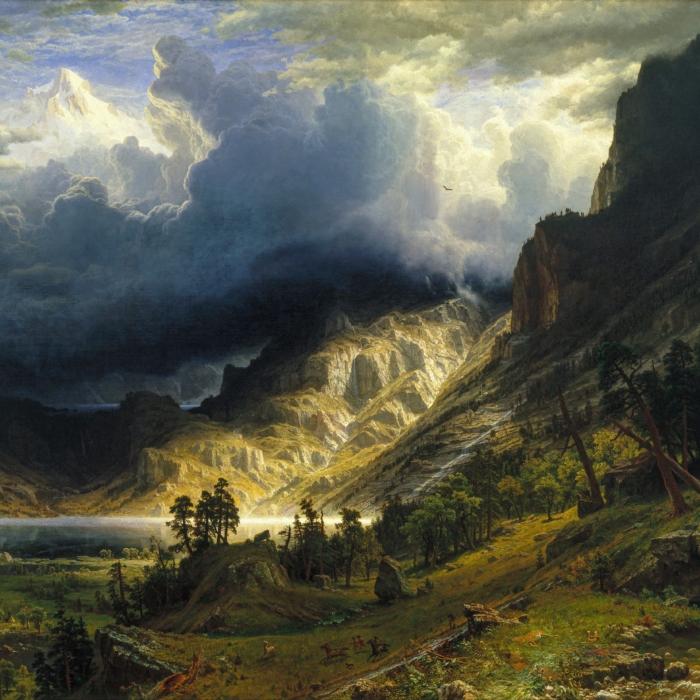
Rooted in Romanticism, the work embraces emotion, awe, and nature’s raw power—dwarfing human presence to suggest both insignificance and spiritual elevation. Bierstadt’s composition emphasizes the scale of the land while situating the settlers within it, their small figures reinforcing the immensity of the scene. Each compositional element guides the eye toward the horizon, underscoring the forward movement of the emigrants’ journey.
Cultural Reflection and Interpretation
Viewed in the 21st century at the National Cowboy & Western Heritage Museum, “Emigrants Crossing the Plains” invites layered interpretation. On one level, it remains a masterwork of 19th-century landscape painting, demonstrating Bierstadt’s command of light, scale, and composition. On another, it serves as a cultural artifact that reveals how Americans once envisioned expansion.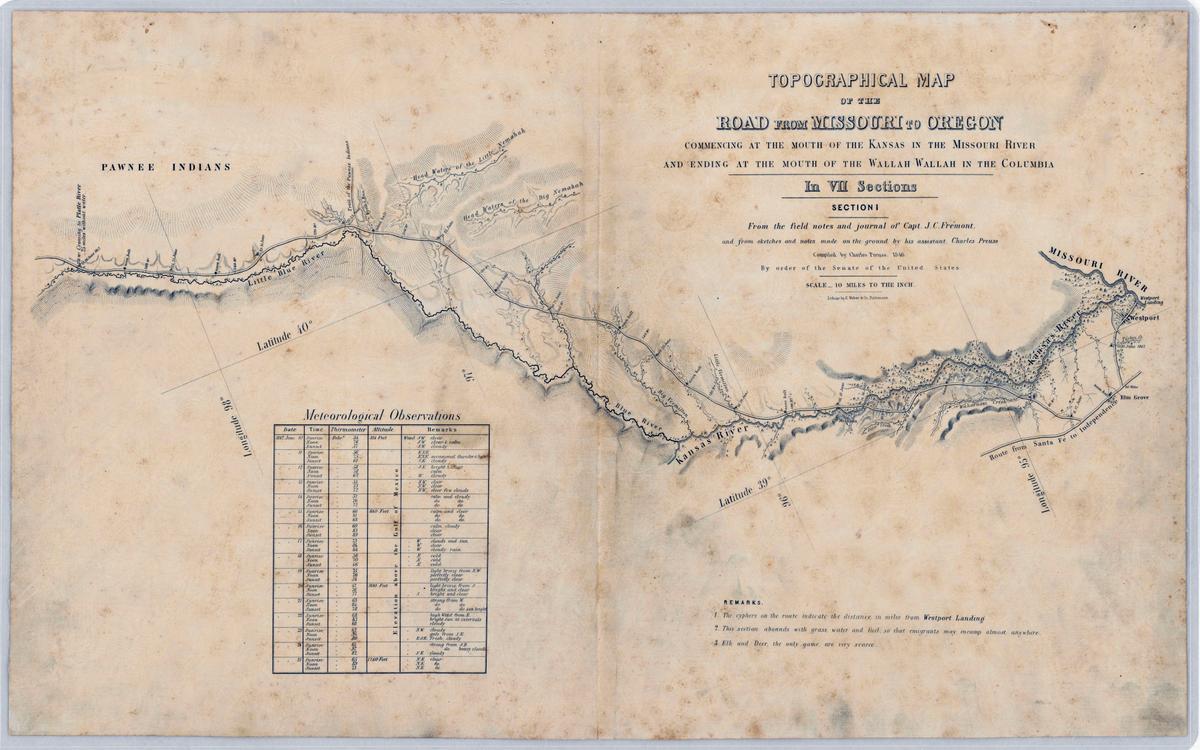
The Oregon Trail was a site of hope and suffering, freedom and displacement. Bierstadt’s painting captures one facet of that story. Its resonance lies in what it represents: the determination and hope of those who pressed toward an uncertain horizon.