A dog, to whom the butcher had thrown a bone, was hurrying home with his prize as fast as he could go.
As he crossed a narrow footbridge, he happened to look down and saw himself reflected in the quiet water as if in a mirror. But the greedy dog thought he saw a real dog carrying a bone much bigger than his own.
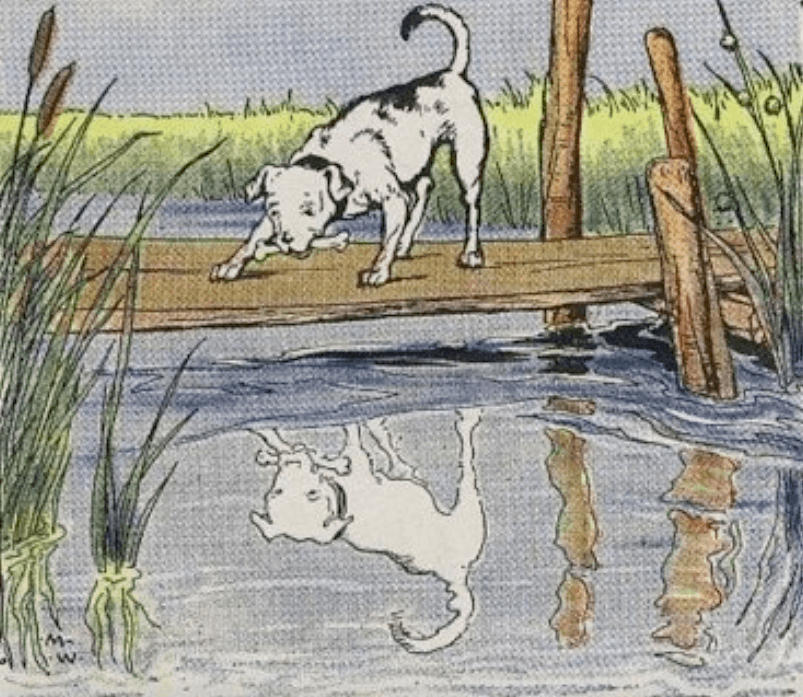
"The Dog and His Reflection" illustrated by Milo Winter, from "The Aesop for Children," 1919. PD-US
If he had stopped to think, he would have known better. But instead of thinking, he dropped his bone and sprang at the dog in the river, only to find himself swimming for dear life to reach the shore.
At last he managed to scramble out, and as he stood sadly thinking about the good bone he had lost, he realized what a stupid dog he had been.
Moral of the story: Covet all, lose all.
This fable is reproduced from “The Aesop for Children” (1919).
Aesop (c. 620–564 B.C.) was a Greek storyteller credited with a number of fables now collectively known as “Aesop’s Fables.” His tales, with their moral value, have long influenced our culture and civilization, contributing not only to the education and moral character building of children, but also, with their universal appeal, to the self-reflection of adults alike who have chosen to embrace the virtues or heed the warnings within.
Share your stories with us at [email protected], and continue to get your daily dose of inspiration by signing up for the Bright newsletter at TheEpochTimes.com/newsletter