Amazingly, from the age of 4, Patti was able to sing opera arias and ballads well. Later, she said that “scales, trills, ornaments and ‘fioriture’ [musical embellishment] came naturally to her, and although she practiced faithfully, never felt like hard work.” From around the age of 8, people began comparing her to a nightingale because of her technique came so naturally it appeared effortless.
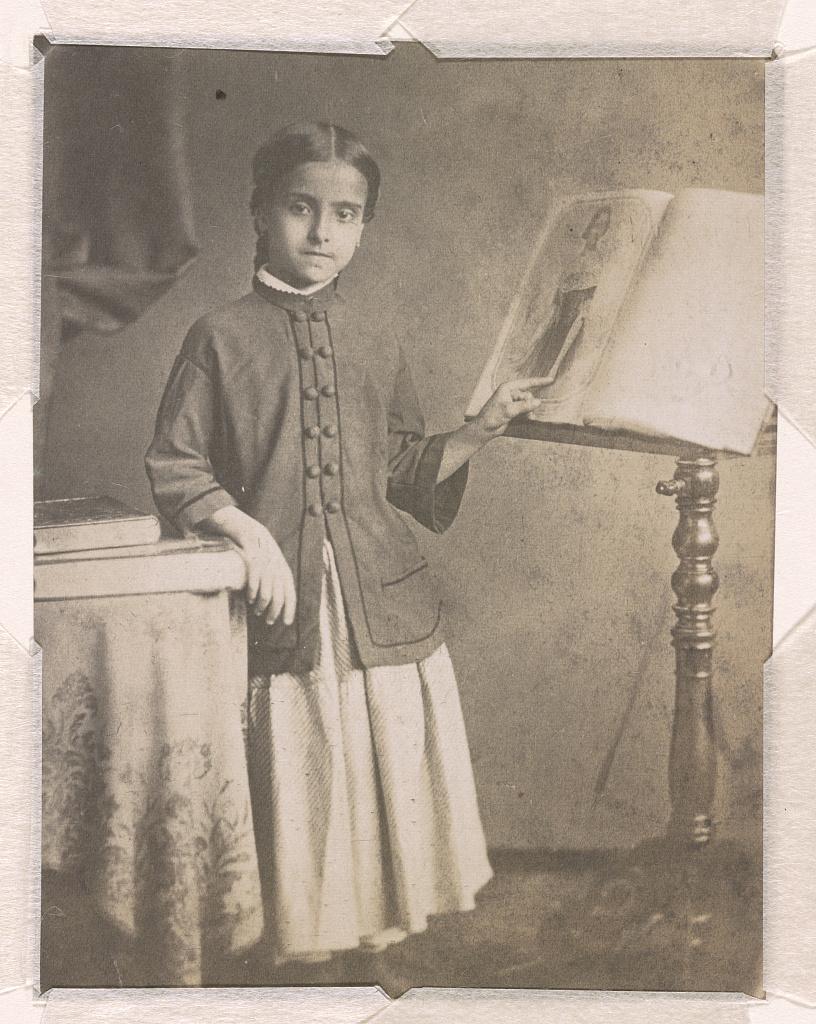
Born Adela Juana Maria Patti on Feb. 19, 1843 in Madrid, she was the youngest of eight children of two professional opera singing parents. Her mother, Caterina, was a successful soprano of tempestuous nature, prone to jealousy of other singers, and her father, Salvatore, was a successful tenor. He eventually toured with little Adelina and continued to manage her career for many years. Her siblings included opera singers and a concert pianist.
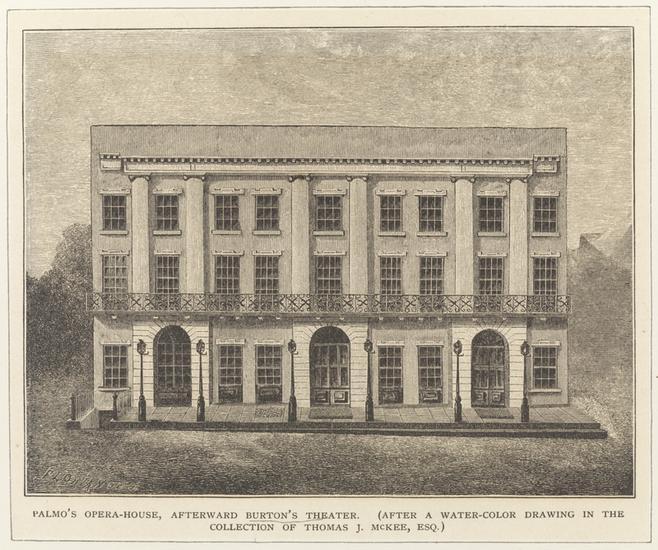
The family moved to New York City in 1846 to begin careers in the Palmo’s Opera House on Chambers Street. As a result of a couple of successful seasons at the 800-seat Palmo’s, Salvatore and a partner were inspired to invest a large amount of money into leasing the new Astor Place Opera House. The “infinitely grander” Astor Place Opera House seated 1,800 patrons, for whom Italian opera was a new experience. Its opening night production of Giuseppe Verdi’s “Ernani” drew the most prominent citizens. However, by the end of their five-month season, the theater was a financial failure.
Patti’s New York debut at 8 years old was a product of that failure. A year earlier, she had noticed some family possessions had been pawned, and begged to help. So, on Nov. 22, 1851, Patti debuted at New York’s Tripler Hall. She sang Carl Eckert’s technically challenging “Swiss Echo Song,” and “I Am the Bayadère.”
She remembered the occasion years later: “I didn’t care for much to eat that evening. … I can still see myself looking for many minutes into the mirror of my bedroom. … [The] curtain went up, and I came on. I think everybody in the house must have applauded.”

She continued, “They told me afterward that from those first notes nobody had any doubt that I was … a born prima donna.” Patti’s neighborhood friends were in the balcony whistling as loudly as they could.
This success prompted Patti’s father to plan a tour for her in the fall, since the family still needed money. The challenging schedule involved “travel by train, steamboat, and stagecoach.” Tiny, 9-year-old Patti was billed as “La Petite Jenny Lind,” for concerts that were accompanied by her brother-in-law, concert pianist Maurice Strakosch, who had also studied singing. In addition to performing as a soloist, he managed Patti’s daily practice, in which he kept a routine of scales and vocal exercises.
In later years, Strakosch proved himself an accomplished manager of Patti’s career. Within a few years, their tours had added a highly popular Norwegian violinist, Ole Bull, and included New Orleans, St. Louis, Chicago, and a few Canadian cities. By the end of the tour, Patti’s share of the profits totaled $20,000.
Patti was 16 when she made her New York City’s Academy of Music debut as Lucia in Gaetano Donizetti’s “Lucia di Lammermoor” to rave reviews. Now called “Diva,” or “Miss Patti” in the press, she launched an 1860s European tour that included Vienna, Berlin, and Madrid, and dominated the musical landscape.
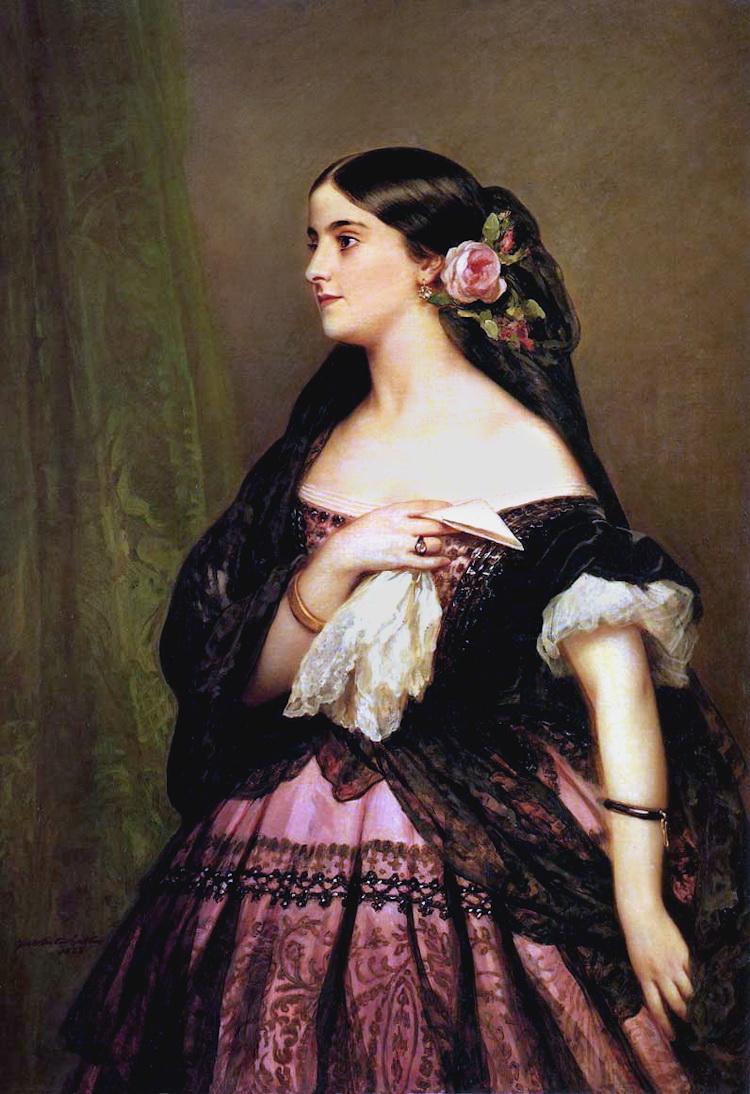
At the height of her career she was getting $5,000 a performance to be paid in full by two o’clock the afternoon of the performance. And then, there were the jewels. Patti received sapphire and diamond earrings from Spain’s Queen Isabella II and, after another performance, a brooch with an amethyst cameo surrounded by 40 pearls. France’s Emperor Napoleon III gifted the singer diamond earrings, and Russia’s Czar Alexander II presented her with a diamond coronet shaped as wild roses.
Apparently, word got out about these gifts, and so others tried to go one better. There was “a gold circlet ornamented with a star of diamonds, a locket covered with diamonds and rubies, an enormous jeweled butterfly in diamonds, and a brooch with twenty-seven large pear-shaped pendent pearls surrounding scrolls of diamonds.”
In 1878, Patti used her wealth to purchase a castle in Wales, halfway between the towns of Swansea and Brecon. She called it “Craig-y-Nos,” or “Rock of the Night.” Eventually, she had an opera theater built on one end of the castle with a portion of the floor that could be lowered to accommodate an audience for performances or raised to use the space as a ballroom. Although she enjoyed her wealth, she was generous in her philanthropy and gave concerts to benefit numerous causes.
Her final performance at Covent Garden, where she had been a regular, was on Feb. 22, 1900—39 years after her debut there. Although retired from opera, she continued to give concerts at London’s Royal Albert Hall and toured some small towns.
A pianist who participated in one of these programs recalled one of Patti’s entrances: “I never shall forget the apparition. She came in like a flame—with diamonds from head to foot, diamonds shimmering and trembling from her hair, gleaming from her neck, glittering from her gown and arms and hands. When she walked she blazed.”
The magnificent Adelina Patti truly went out in a blaze of glory. She died peacefully at Craig-y-Nos on Sept. 27, 1919, at the age of 76.