Dear James: A friend bought an older house with a metal panel ceiling, and I want one for my dining room. Are the materials still available to install one?—Dave T.
Dear Dave: You are in luck. Metal panel ceilings are beautiful, and best of all, they are still available. Today, many people use this decorative idea for stove backsplashes, walls, and wainscoting.
The array of available designs, finishes, and patterns of plate metal tiles is virtually endless. Unique ceilings can easily be designed by using various combinations of patterns, cornices, or crown moldings. You can choose from a Moroccan chrome-plated design with a matching cornice and trim pieces or shiny brass, antique brass, or copper tiles.
The pieces of stamped metal can even be painted if you decide on a different color. Choose an oil-based paint since a water-based one will cause the metal to rust. For a unique design, use two different colors to highlight the surface texture for a two-toned look.
Metal tiles are usually sold in either 2-by-2-feet or 2-by-4-feet sheets. Most metal ceiling panels are made from a thin steel sheet, which is then painted. Steel ceiling panels cost anywhere from $4 to $18 per sheet depending on the finish and style.
If you are worried about the installation process, it may be helpful to try installing a practice metal ceiling on a small area at first. Begin by measuring the dimensions of the area and laying out all of the panels to see how they fit. If you need to trim some of the tiles, use sharp metal shears. Be careful when you do this since the metal edges can be very sharp.
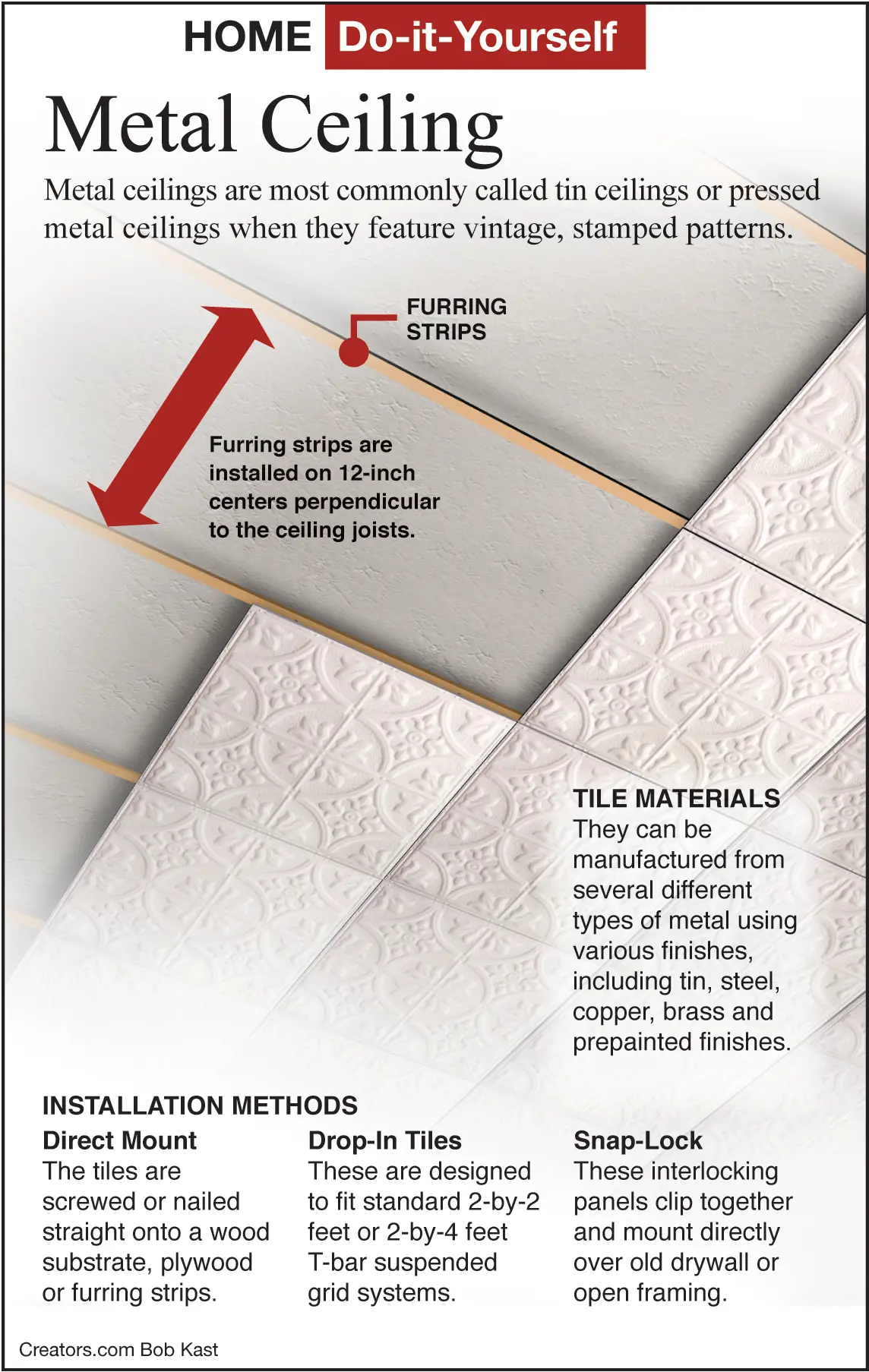
The plates need to be installed over furring strips on an existing ceiling. The strips are usually nailed up on 12-inch centers perpendicular to the ceiling joists. This method will provide a level finished ceiling. You can also install plywood 3/8-inch to 1/2-inch thick, over the entire ceiling for any even better surface level.
Next you need to prepare the metal panels by cleaning them with a metal cleaner. The panels will usually come unfinished and need to be painted on both sides with an oil-based paint or polyurethane. For a truly authentic antique look, you can use tiny conical head nails. Most panel patterns are designed so the nail heads and holes are blended in as an integral part of tile pattern.
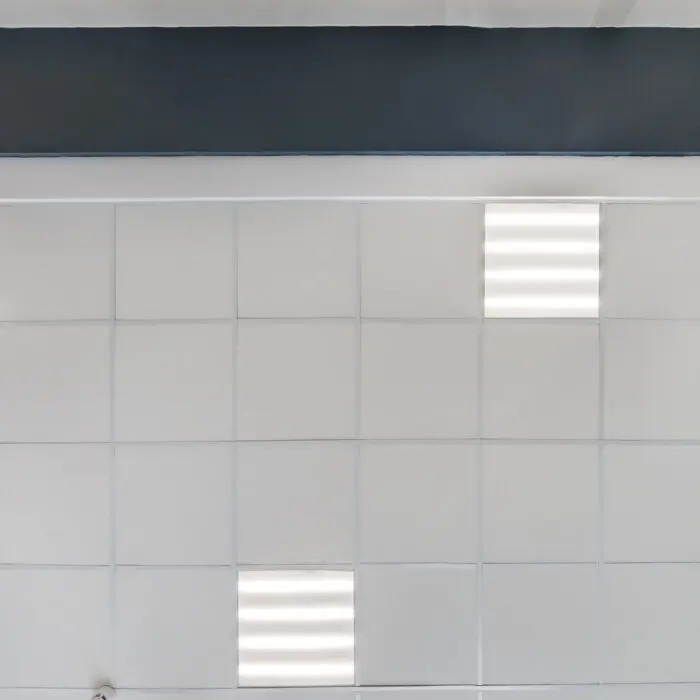
Another installation option is to use a suspended ceiling. The standard size metal panels usually fit well into a standard suspended ceiling support grid pattern. It is a good idea to leave the existing fiber panels in place over the thin metal panels. These help to keep the metal panels flat and stop them from moving.