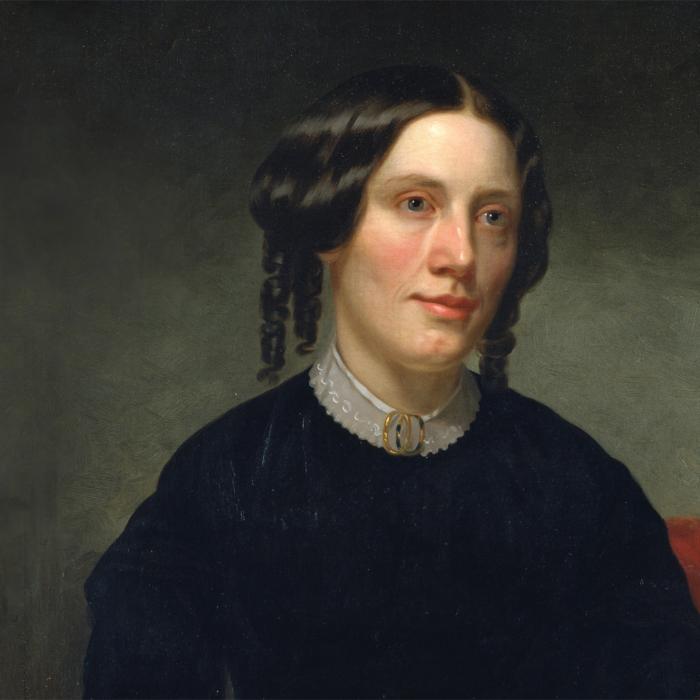
In 1832, Harriet Beecher and Gamaliel Bailey moved to Cincinnati. Beecher, a teacher and talented writer, arrived in Ohio with her minister father, Lyman, who had accepted the position of president at Lane Theological Seminary. Bailey, a doctor and medical journalist, opened a medical practice in the city and became a lecturer on physiology at the same seminary. Although they shared similar interests and moved in the same social circles, their connection would not take root for nearly two decades.
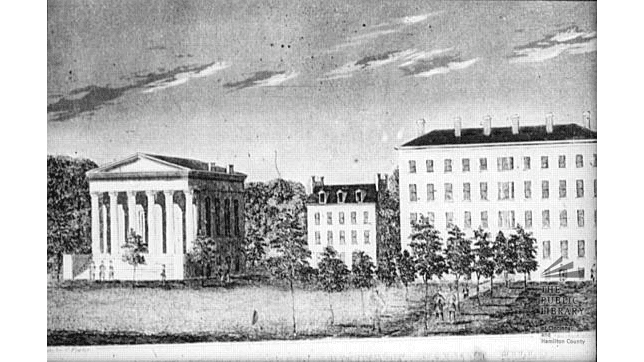
Beecher and Bailey were born in the Northern slave states of Connecticut and New Jersey, respectively: Connecticut abolished slavery in 1848, and New Jersey in 1866. They had both grown up, however, with abolitionist views, specifically Bailey, having moved to Philadelphia as a child. Their upbringings led them to experience the nation’s complex and duplicitous arrangement on slavery, but never more directly than when they arrived in Cincinnati, a city nestled inside the free state of Ohio and bordering the slave state of Kentucky.
The Pulse of the Movement
Bailey, who married in 1833, joined the Ohio State Anti-Slavery Society and assisted in the state’s Underground Railroad. Beecher published her first book, “Primary Geography,” in 1833. Three years later, Bailey advanced his literary career by becoming associate editor for the new abolitionist newspaper, The Philanthropist.As an indication of the free-slave dichotomy, James G. Birney, the owner of The Philanthropist, had first tried to launch his publication in his home state of Kentucky, but after the threat of mob violence, he decided upon Cincinnati.
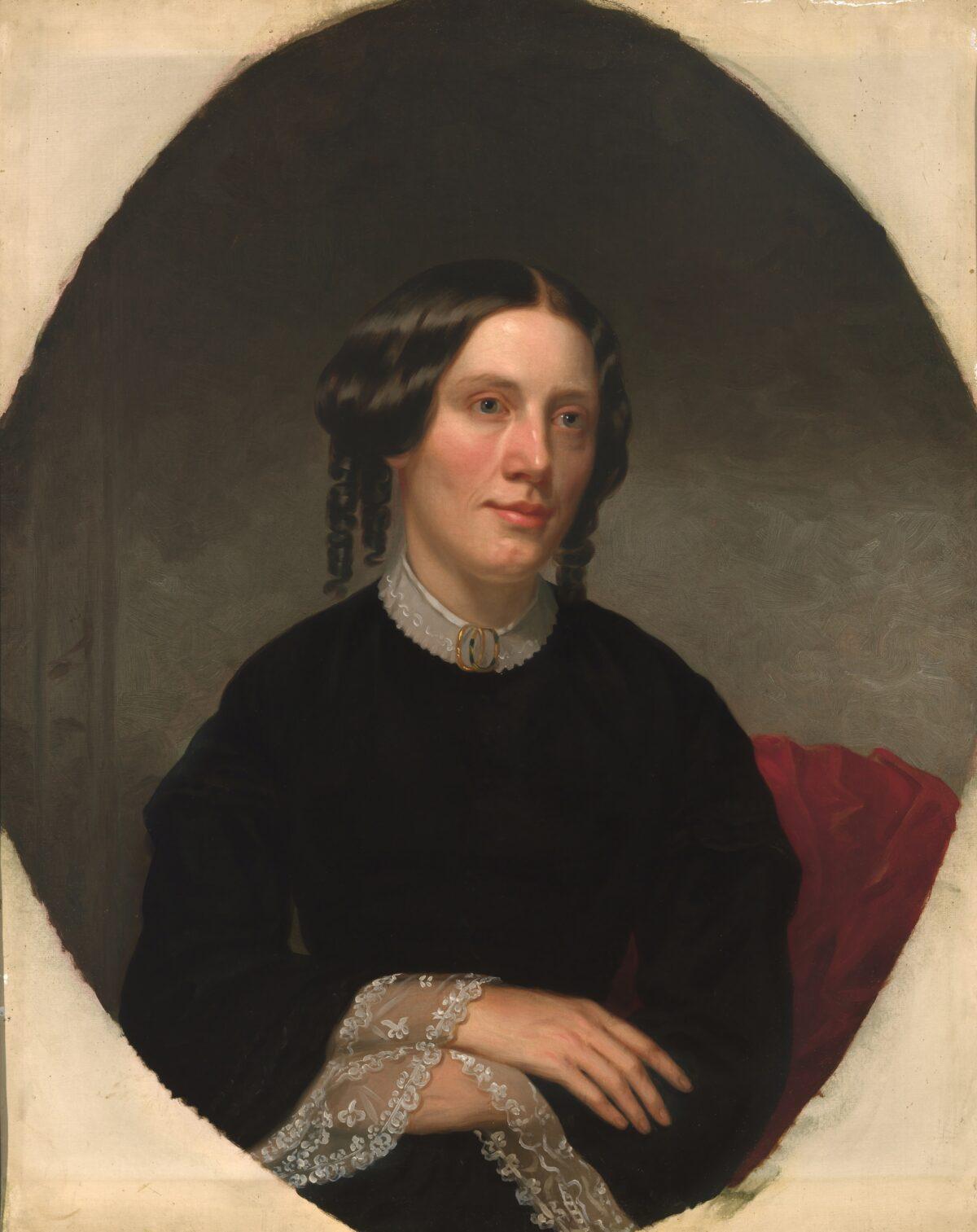
The same year that Bailey became associate editor, Beecher married Calvin Stowe, a professor at Lane Seminary, and changed her name to Harriet Beecher Stowe. Her husband recognized her literary talents and encouraged her writing.
Stowe wrote feverishly on various subjects for various publications, though not always paying ones. She continued to keep her finger on the pulse of the abolitionist movement.
Tragedy and Change
During this span of time, the Stowes’ and the Baileys’ families grew. The Stowes had seven children, six of whom grew to adulthood. The Baileys, however, gave birth to 12 children; only six survived infancy. Though there was the consistent familial tragedy that plagued the Baileys, it was the singular death of the Stowes’ son, Samuel Charles Stowe, in 1849 that prompted Stowes to take up her pen and address slavery and the tragedy of lost family members.An Uneasy Compromise
While Bailey was getting comfortable with his new position in the nation’s capital, America was at war with Mexico. The Mexican-American War began in April of 1846 and ended with the Treaty of Guadalupe Hidalgo, signed on Feb. 2, 1848. The treaty ceded vast portions of Mexican land to America, increasing its size by approximately a third.The new lands became territories, and upon settling the territories, they became states. The massive windfall of new land presented an even greater problem. That problem became apparent in 1849 when California, one of the newly acquired territories, requested to join the Union as a free state.
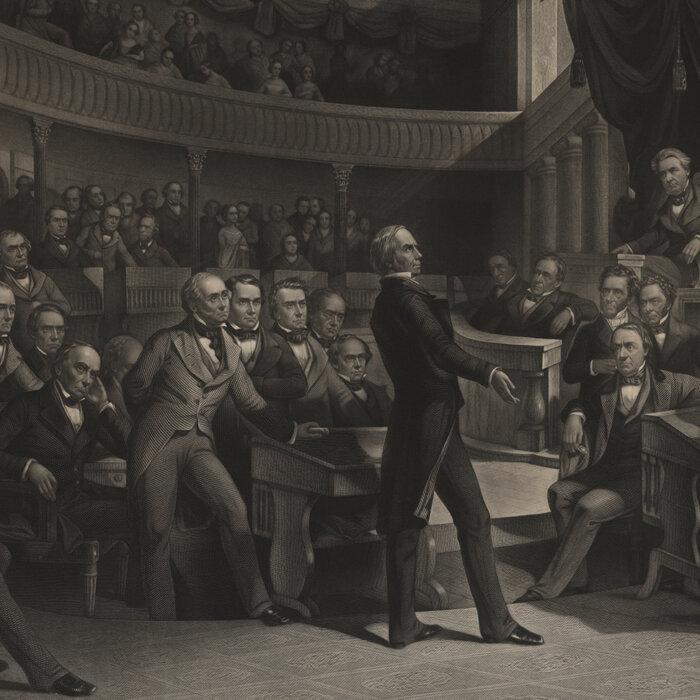
With the addition of California came the addition of senators and representatives, who would shift the balance of power in the favor of the free states. Congress sought a compromise, and Henry Clay, the senator from Kentucky, believed he had a solution that would “adjust amicably all existing questions of controversy” concerning slavery.
Literature and Politics
When the broken-hearted Stowe heard about the passage of the Fugitive Slave Act, she began writing a story about a fictionalized family of slaves.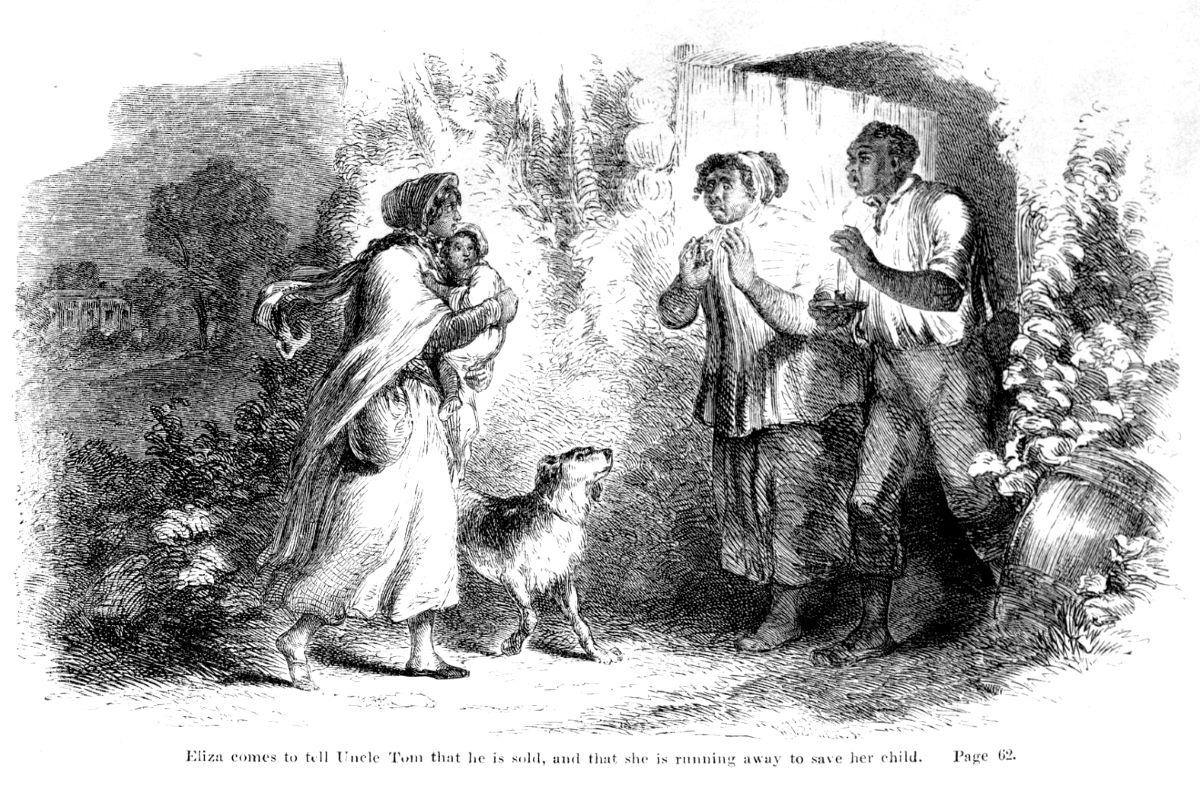
In December 1848, Bailey reflected on the mission of his abolitionist newspaper.
“It is a difficult task in a weekly Anti-Slavery newspaper to mingle literature with politics, so as to provide entertainment for lovers of the former, without interfering with the thorough discussion of the latter; and to keep both subordinate to the presentation and advocacy of the Great Movement in behalf of Human Liberty, to sustain which the paper was established.”
The National Era would soon receive an opportunity to “mingle literature with politics” like never before, and indeed never again. In March 1851, the writer from Cincinnati, Harriet Beecher Stowe, contacted the editor in Washington, Gamaliel Bailey, to offer her story for publication. She anticipated the story to be serialized in three, possibly four installments. Bailey liked the story idea and accepted.
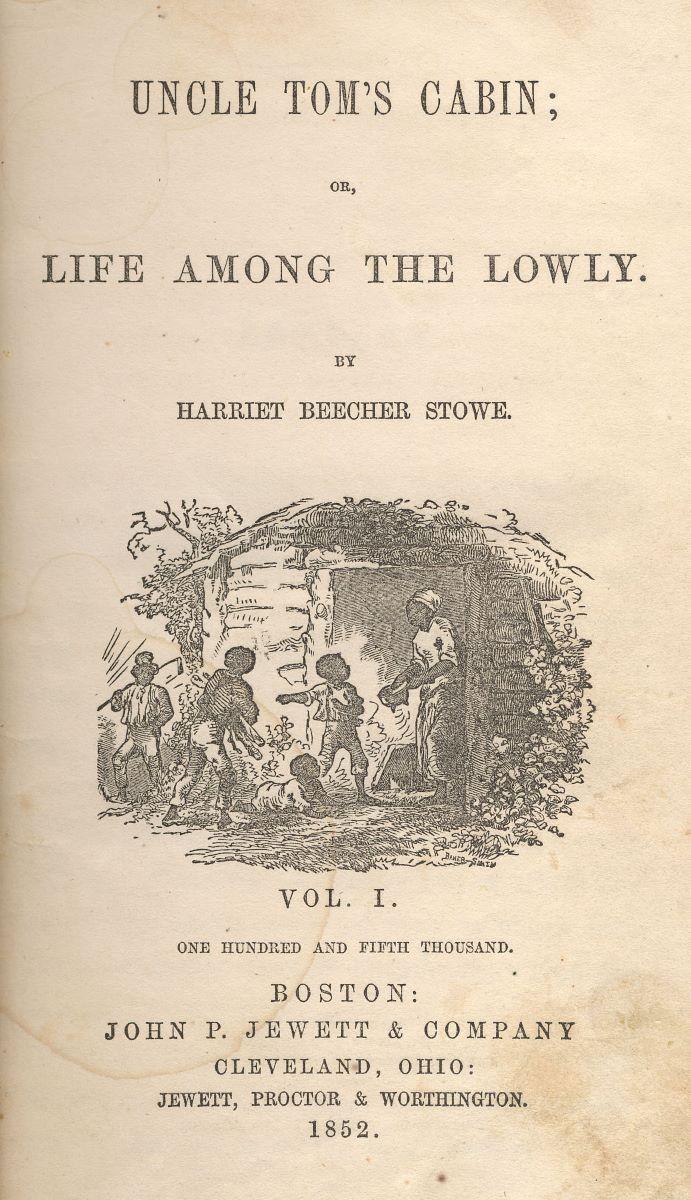
It was during this week in history on June 5, 1851, that The National Era published Stowe’s first installment of “Uncle Tom’s Cabin, or Life Among the Lowly.” The story immediately became a sensation, and placed the issue of slavery in a very different context—changing views, even among abolitionists, from sympathetic to empathetic toward slaves. Over the course of 41 weeks rather than three or four, The National Era serialized the story, its final installment being published on April 1, 1852.
The story was published the same year in book form with approximately 10,000 copies sold on the first week and more than 300,000 copies in the first year.
A Poetic End
Stowe and Bailey, having lived so near each other for years, finally, once separated, collaborated to make the most convincing argument against slavery. Stowe remained a powerful voice for abolition, her legacy forever tied to her most famous book (of the 30 she wrote). When she met President Abraham Lincoln in 1862, it is reported that he looked at her and said, “So you’re the little woman who wrote the book that started this great war.”Bailey continued his push for abolition and maintained his position as one of the movement’s leading figures. He even had a significant role in founding the Republican Party, which brought Lincoln to power, and ultimately ended slavery. His health, however, had declined. In an attempt to recover, he sailed for Europe. While crossing the Atlantic, Bailey died. The timing of his death, however, was almost poetic: June 5, 1859—the eighth anniversary of the first installment of “Uncle Tom’s Cabin.”