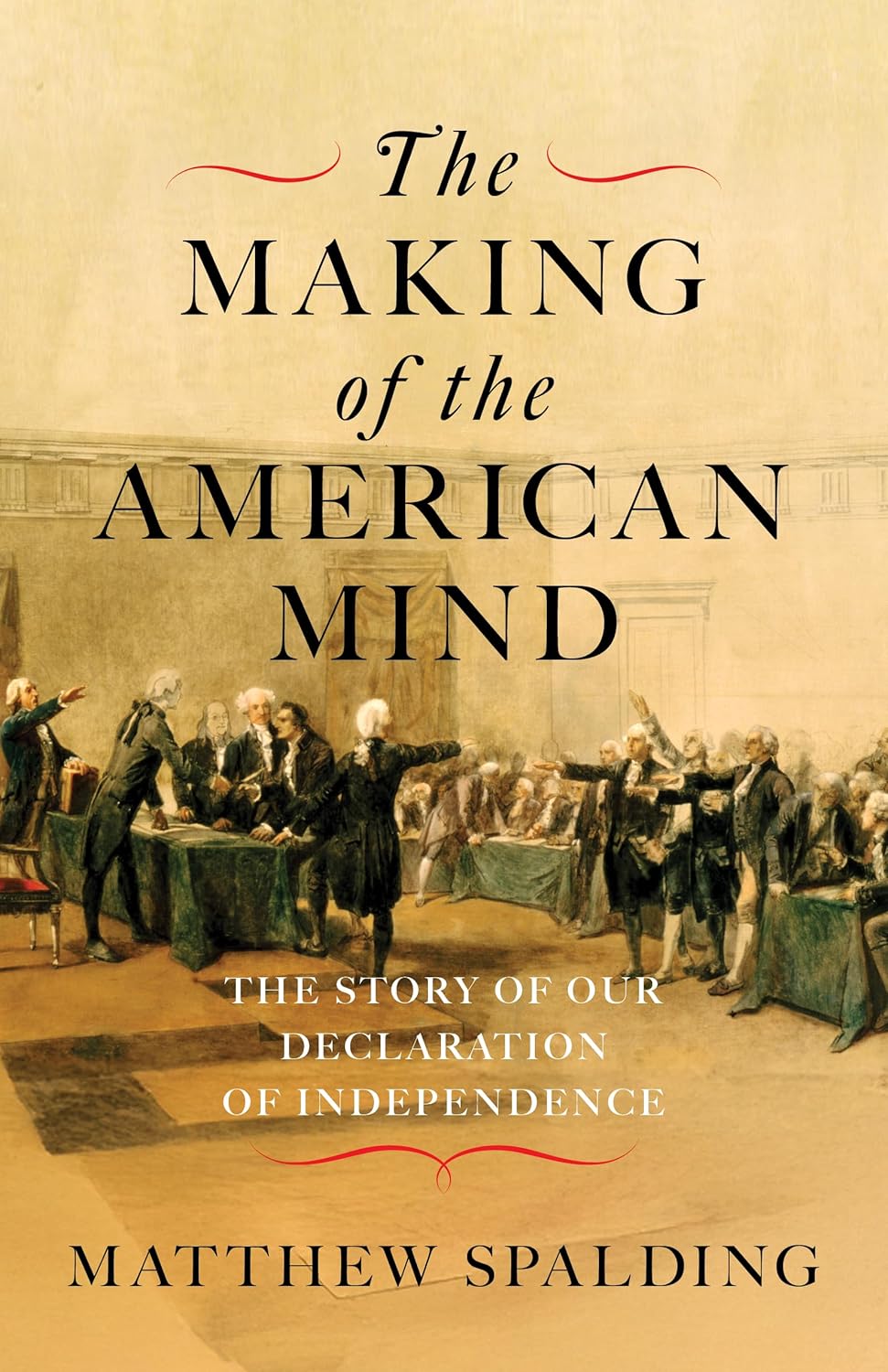
“I am not sure exactly when it was that I fell in love with my country. We each have our own story,” writes Matthew Spalding in the opening pages of his new book “The Making of the American Mind.” “I invite you to join me in falling in love with America again, or perhaps for the first time.”
Origin of Beliefs

Where did our founders come up with their governmental ideas? Spalding goes practically line by line of the Declaration, giving the back story behind the famous words penned by Thomas Jefferson, edited by the other four members of the Committee of Five (Benjamin Franklin, John Adams, Roger Sherman, and Robert Livingston), and further edited by the Second Continental Congress.
The collection of congressional members were intelligent men, who may have disagreed on the timing of declaring independence, but were nonetheless in agreement that they were bound to fight for certain freedoms as humans, generally, and British subjects, specifically. The history of the rights as Englishmen is detailed by the author, presenting the ideas of the theoretical and legal luminaries of British thought, like John Locke, Edward Coke, and William Blackstone.
“So, when England made it clear they were going to settle the American colonial crisis and rule based on their increasingly authoritarian understanding of Parliament’s sovereignty,” Spalding notes, “the Americans concluded that Parliament had become the very font of the arbitrary powers England had rejected in 1688 (the Glorious Revolution).”
The Founders’ Historical Acumen
Indeed, the knowledge of English history was a necessity, but the founders’ historical acumen extended far beyond 1215. Relying on the classical thought of Plato, Aristotle, and Cicero, as well as the Bible, they understood that liberty was not an abstract idea, or merely a British right, but was naturally imparted through the “Laws of Nature and of Nature’s God.” Spalding notes several times in his book how Jefferson commented that his goal with the Declaration was not to submit new ideas, but rather present “the common sense of the subject.”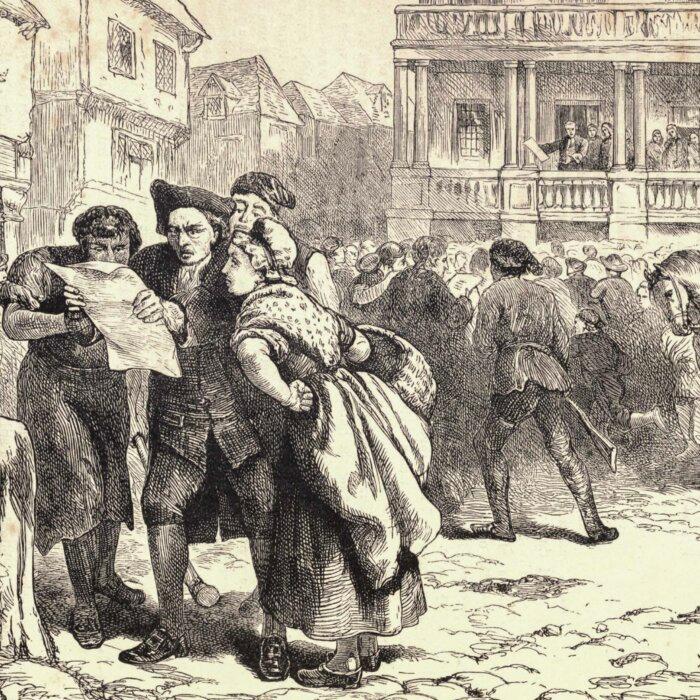
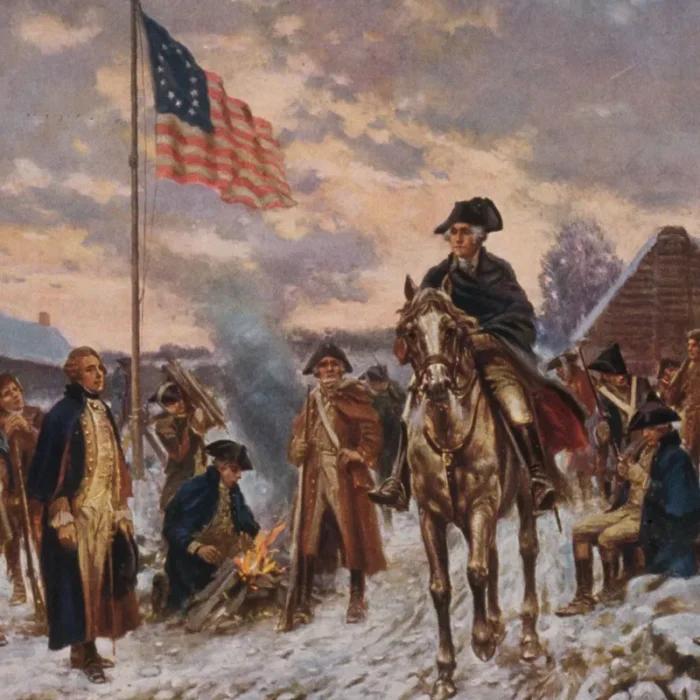
The founders, as Spalding indicates, built upon beliefs and concepts known to be true and governmentally feasible. These beliefs and concepts coincided with human nature, which ensured the founders pursued action against literal practicing tyrants (that is, the king and parliament), and not against belief systems or classes of people, unlike the French Revolution, which arbitrarily and violently pursued both, while also toppling its monarchy.
Both Biography and Love Story
As the book concludes, Spalding provides brief biographies of those who signed the Declaration, and they pledged, as the final chapter is entitled, “[Their] Sacred Honor.” To give a proper picture of how Spalding presented the famous American document “line by line,” the chapters are entitled “When in the Course of Human Events” (the opening words of the Declaration), “The Laws of Nature and of Nature’s God” (demonstrating where the founders believed rights originated), “We Hold These Truths” (arguably the Declaration’s most important line, and, truly, its most famous), “Prudence, Indeed, Will Dictate” (a discussion of this all-important classical virtue), and, before the final chapter and epilogue, “Acts Which May Define a Tyrant” (which itemizes the many infringements conducted by the king).In a sense, “The Making of the American Mind” is a biography of the Declaration of Independence. As the author suggests, it is also a love story—an invitation to love America. For the founders, their love of British history led them to love what England was supposed to be and therefore created a better version on this continent. Spalding has put together a book that will, hopefully, instill an understanding and appreciation of America, as well as for those legal and philosophical minds from long before 1776 that promoted and established our greatest values.