By luck and happenstance, I found myself standing in the middle of Kyle Field before 105,086 fans on a recent Saturday night. I suppose it was the Spirit of Aggieland that brought me there.
I had arrived at Texas A&M University nearly two hours before the scheduled kickoff between the Aggies and the Florida Gators on Oct. 11. Though I had begun my journalism career in sports about 20 years ago, those days were brief, were merely high school sports, and had long been over. I was here covering a sporting event this time as a favor, though to whom the favor was accorded, I’m not sure. My cousin, David Castro, who had recently begun a sports media business, asked if I could cover the game since he would be in Dallas covering the Mexico–Columbia soccer game at AT&T Stadium.
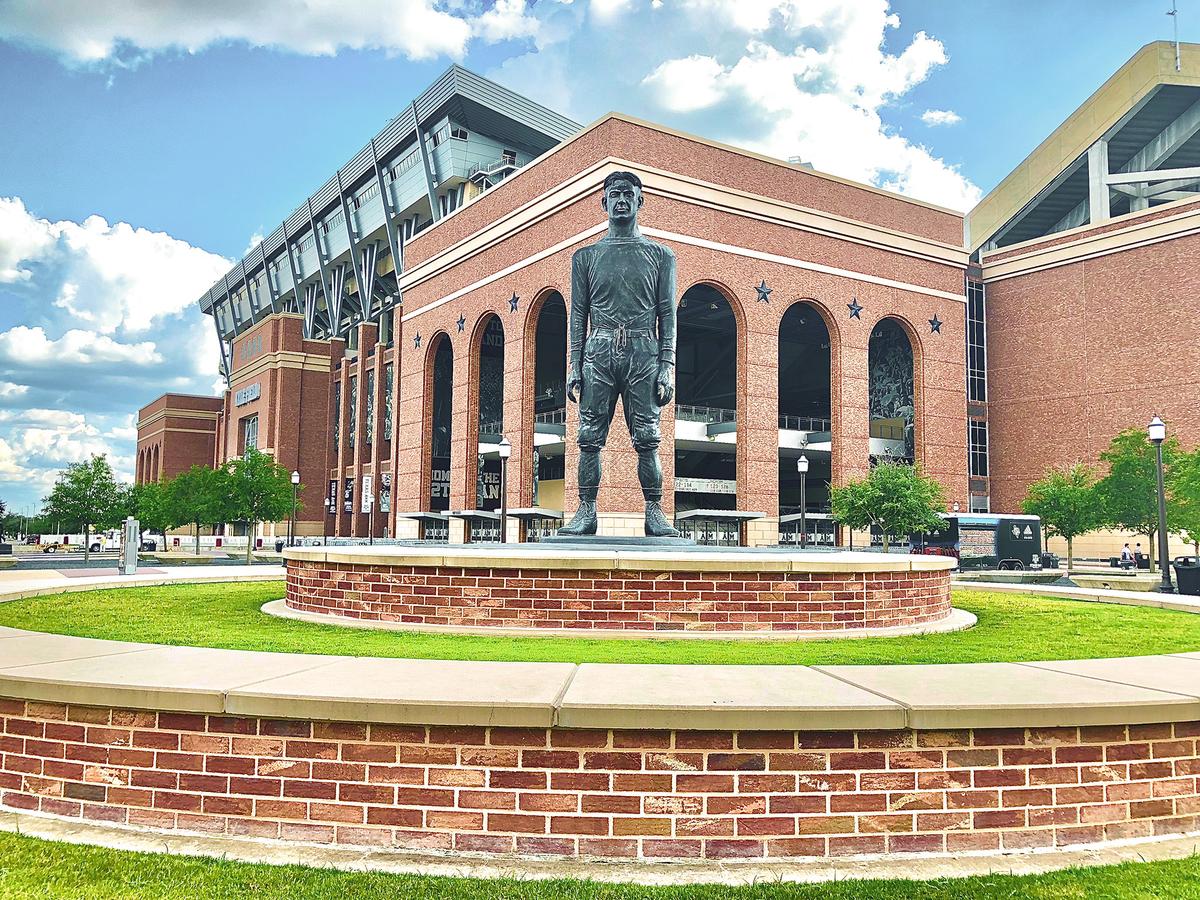
Outside Kyle Field
This towering stadium with its reddish brick facades is an architectural complement to the school known for its grand traditions. As a testament to its traditional roots, Kyle Field, having opened in 1905, is the country’s oldest college football stadium after the University of Pennsylvania’s Franklin Field and Harvard University’s Harvard Stadium. It should be considered, though, that Kyle Field doubles and more than triples the crowd capacity of those two stadiums, respectively.In the shadow of the stadium were rows of large white tents housing a collection of tailgaters, typically represented by family name or a university-supporting organization, and assembled across a large section of the relatively new 20-acre greenspace called Aggie Park. I was met with the smell of barbecue and the sounds of excited chatter about the upcoming game. Texas A&M had found itself in the enviable position, with a 5–0 record, of being ranked No. 5. And facing a 2–3 Gator team, the prospects of ending the night at 6–0 looked promising.
The Press Box
I entered Entry 7, grabbed my press pass, and walked onto the field of the empty stadium. Due to the physical and social proximity (numerous friends and relatives have graduated from the school), I have watched countless Aggie games over my lifetime. I knew what the inside of the stadium looked like based on televised games, but nothing can prepare you for the monstrosity that the field is—especially from the field level. I drank in the sight for as long as possible because I anticipated it being my only moment to be in this position (but sometimes you have to create your own luck, as I will discuss later). I was given until 15 minutes before kickoff to remain at field level. After that, it was to the press box, high above the visitor’s sideline.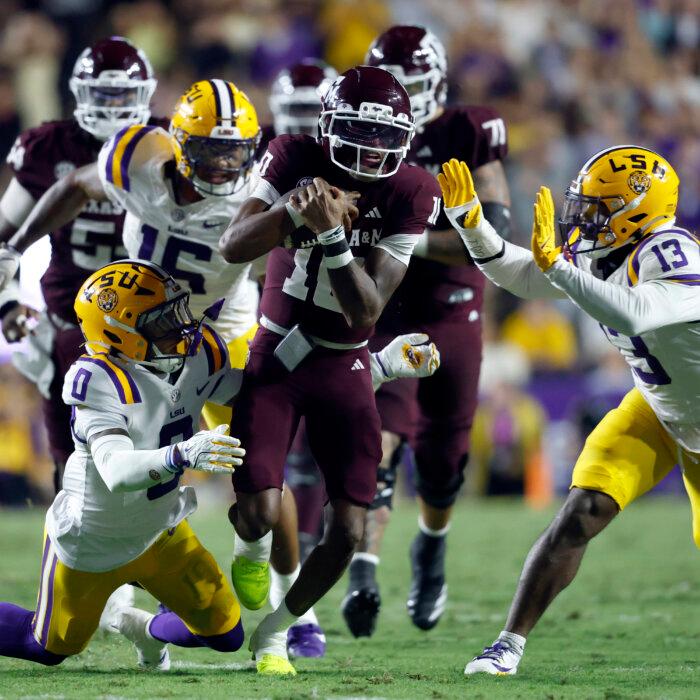
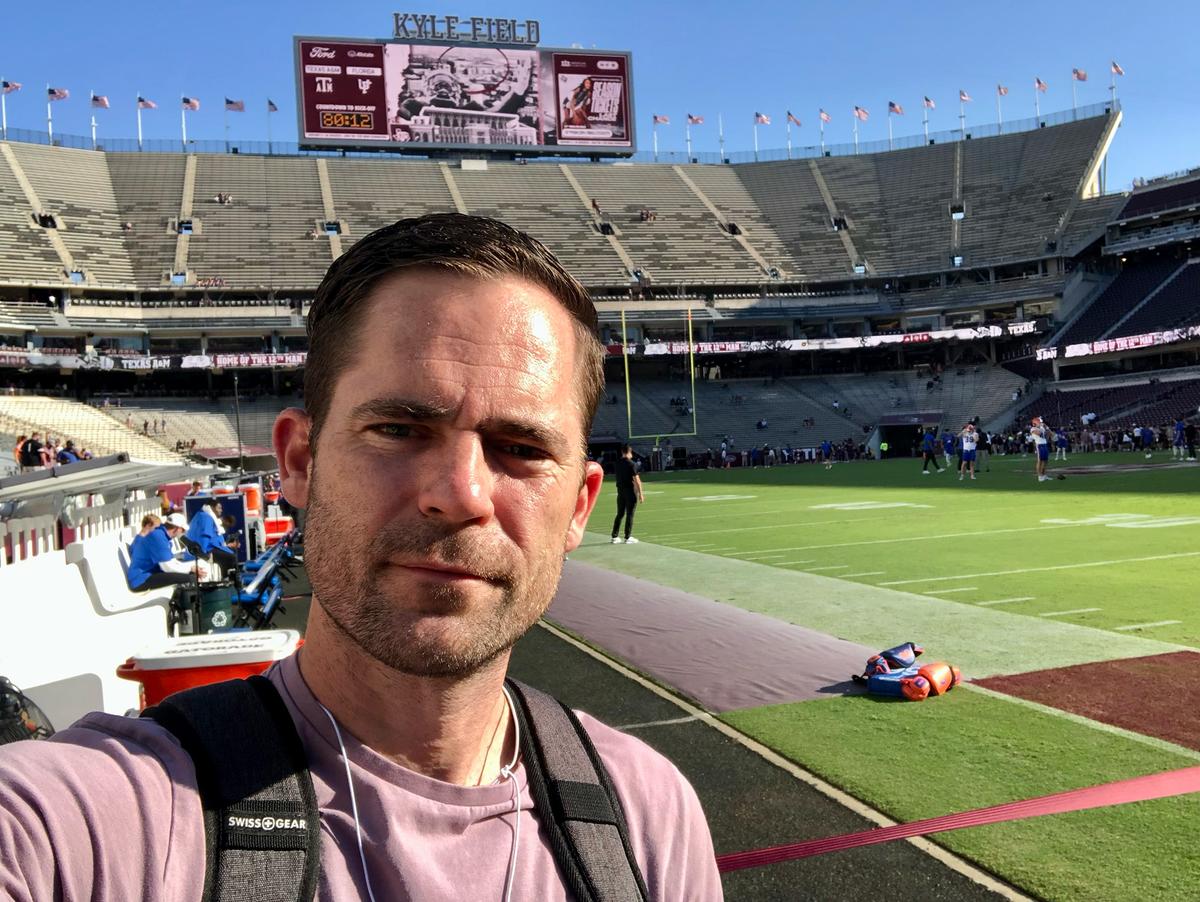
The first quarter began with a Gator drive that ended in a touchdown. The visiting cheers were few in comparison to the muffled roar when the Aggies responded by driving 75 yards for a touchdown in less than a minute. As exciting as that was, “muffled” indeed was, understandably, the operative word. Even the cheers directed by the famous Aggie Yell Leaders in their standard white uniforms were muffled. As the first quarter gave way to the second quarter, I decided the press box was not for me. If I was going to really enjoy my first Aggie game and get some worthy photos and videos, then I needed to be where everyone was. And that is exactly what I did: I went everywhere.
Experiencing Kyle Field
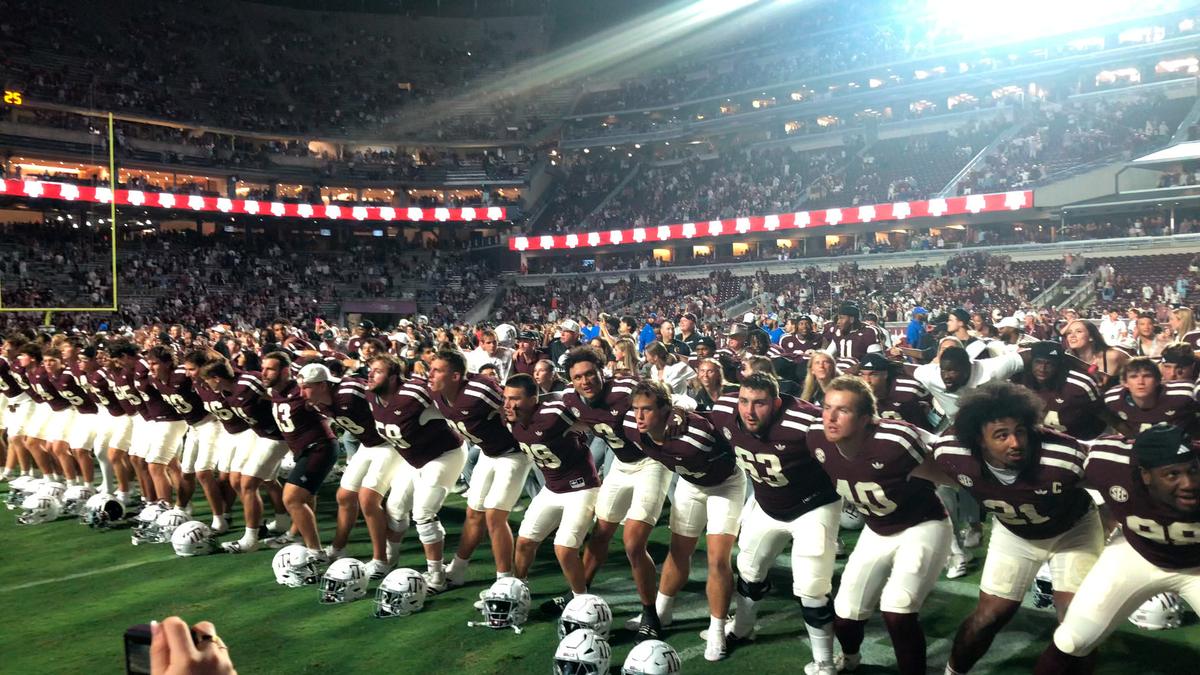
I took the elevator to the 300 section. I got in among the crowd. I walked past the concession stands, screaming fans, a guy with a frightened look on his face being questioned by security, and a splatter of vomit in a walkway (quickly cleaned, by the way) and found a spot along the second bowl behind the south end zone. The crowd slowly bellowed into a roar as the Aggies rushed for a touchdown, the fans swooping upward like a groundswell.One could call them cheers, but don’t suggest that’s the term to an Aggie. They are called yells. These yells are not the half-hearted and hardly original types, such as “Be Aggressive! B-E Aggressive!” These yells—including “Locomotive,” “Military,” or “Farmers Fight!”—are much more elaborate and coordinated, created to keep fans engaged and focused on the action on the field. It is a tradition that goes back more than a century, so the yells have become perfected. No wonder Kyle Field is considered one of the most intimidating places to play for a visiting team.

Joining the Group
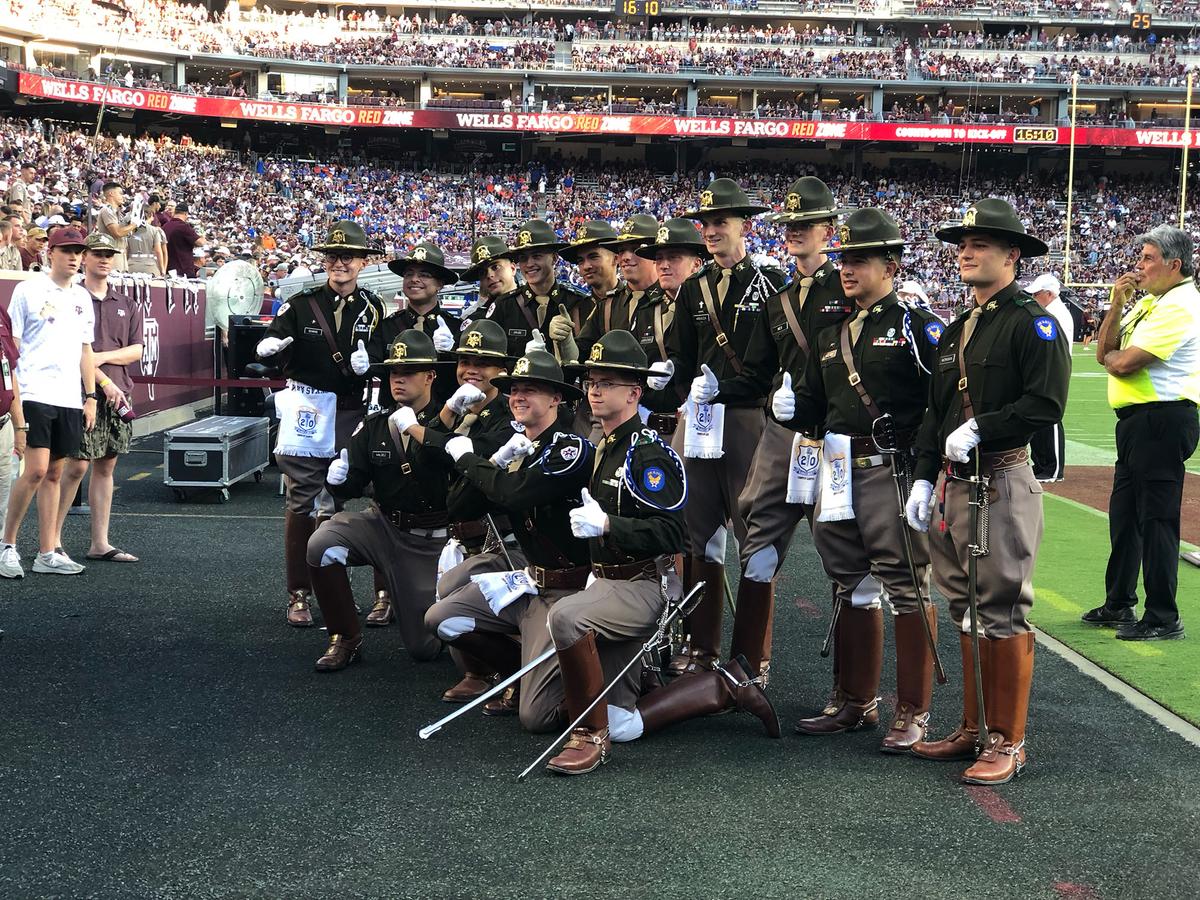
From the student section, I returned to the press box, ate a couple of chili dogs, uploaded my photos and videos, recharged my iPhone, and then made the smartest accidental decision of the night. As the fourth quarter began to wind down, I returned to the elevator. I had planned to get into the lower bowl, perhaps near the band. As I waited for the elevator, the other members of the press joined me. My plans changed. I would go wherever they went, and I had a sense of where they were headed.The story behind the cannon stretches back nearly 125 years. It is a 3-inch, 76.2-millimeter M1902 field gun. It was not donated. It was discovered by a group of the school’s most famous members: the cadets. Members of Company C-1 came across the 2,520-pound cannon in 1974. By 1982, it was fully restored, placed on a carriage and wheels, and fired for the first time. Ever since the 1988 season, the Spirit of ‘02 has boomed after every Aggie score. And it is loud—though not as loud as my cousin, an A&M graduate, suggested it used to be.
After the boom, this small group of journalists, craving to glimpse the action as close as possible, walked along the sideline from the south to the north end zone. The thrill of being on the grass of Texas’s most famous football field was iterated with every Aggie Yell and each eruption from 105,086 fans, all directed downward to us—an experience unlike any other. One can only imagine what it must feel like to be the reason for those cheers—a glorious occasion indeed.
If this was my one chance to experience the height of college football tradition, I’m glad I took it. My cousin suggested I was doing him a favor. It wasn’t even close. It was he who did the favor, and I have an experience of which my friends and relatives—even those who attended Texas A&M University—are insatiably jealous.