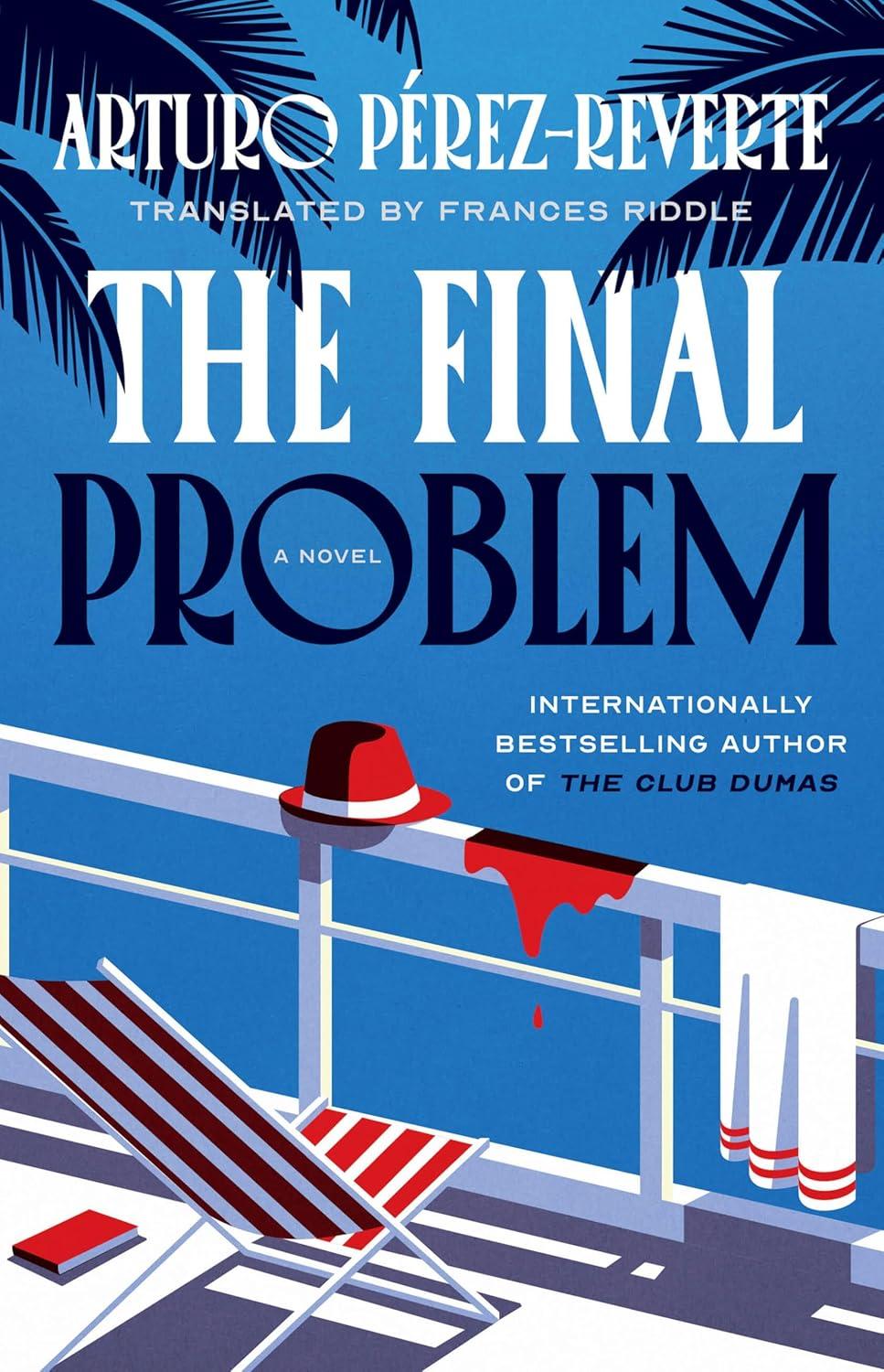
If one was stranded at a small hotel on an isolated island in the Ionian Sea with a murderer on the loose, one would hope for someone like Sherlock Holmes to be on the case. In Arturo Pérez-Reverte’s newly translated mystery novel, “The Final Problem,” this is precisely the case. The Spanish author has written a suspenseful locked-room mystery, but he has done so with an homage to three people—not all of them real. The homage is to Sir Arthur Conan Doyle, Sherlock Holmes, and Basil Rathbone, the famous 20th-century actor to have arguably best portrayed Doyle’s Holmes.
“The Final Problem” places Ormond Basil (who is unmistakably Basil Rathbone, but perhaps for legal reasons could not use the actor’s actual name) on the tiny Greek island of Utakos. Ormond Basil is known immediately on the island as the famous actor who played the famous consulting detective in movies. References abound to those actual movies that Rathbone appeared in, along with countless references and lines from Doyle’s stories.
Fans of Doyle, Holmes, and Rathbone will be consistently delighted by what appeared to me as Pérez-Reverte’s labor of love to honor the trio. There are even loving references to Nigel Bruce, though the name is changed to Bruce Elephantin.

The Acting Detective
When a major storm hits, the nine guests, along with four members of the hotel staff, are stranded on the island’s only habitable location: the Hotel Auslander. When a young woman is found dead, it’s presumed a suicide, but Ormond Basil—the famous on-screen detective—is asked to witness the scene. Suspicions arise that the death may have been the result of foul play. With the police unable to come to the island for days, Basil is asked to look into the mystery.From Basil’s perspective, the request is utterly ridiculous. The author does a fine job of making Basil’s reticence convincing. Asking an actor who played a detective to investigate a murder is indeed a humorous premise, but Pérez-Reverte convinces the reader of its plausibility, even of its necessity. The guests are frightened and Basil is a familiar face with a reassuring, if fictional, persona. Part of the request stems from simply helping put the guests at ease.
Lessons in Mystery
The premise of the book with the island, the guests, the forced isolation, and the murder certainly gives an Agatha Christie vibe—one of Pérez-Reverte’s characters even references Christie’s “And Then There Were None.” Concerning the references, along with a wonderfully crafted murder mystery, readers will receive a bit of an education about the detective genre. Pérez-Reverte’s characters, specifically Basil and another guest, who winds up being Basil’s quasi Dr. Watson, discuss the patriarchs and matriarchs of detective fiction, from Edgar Allan Poe to Christie to Dashiell Hammett, and of course, Doyle.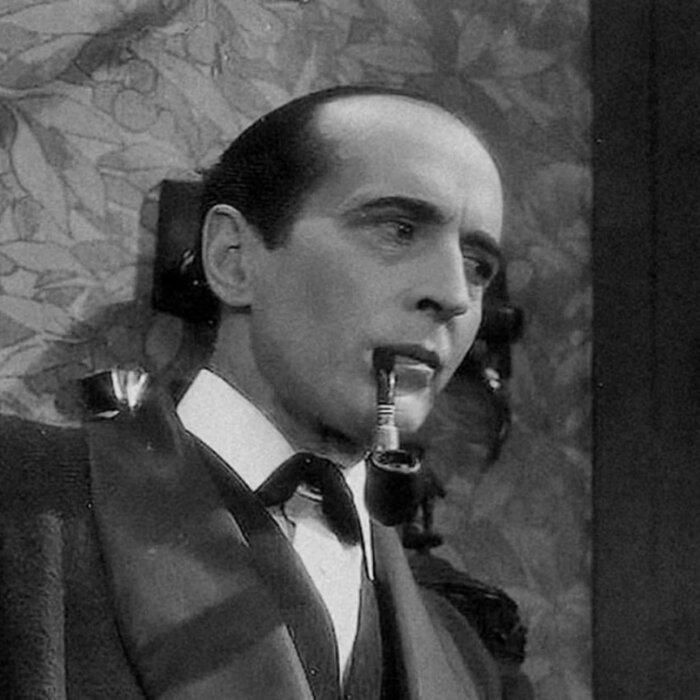
No False Notes
The famous, successful Spanish author (not to mention translator Frances Riddle) proves to be a master of dialogue. There isn’t a false note in the book, and that’s an incredibly difficult task. The dialogue proves believable. And equally important, the characters are believable, as they meet the expectations of their traits, whether unlikeable or lovable—even when they suddenly change from one to the other.Now, given the many references to Doyle’s Holmes mysteries and Hollywood’s film adaptations, some readers may find it an homage overload. Given that I have an affinity for both Doyle’s Holmes mysteries and the Rathbone and Bruce adaptations—both radio and film versions—I found it made the read all the more appealing.
Regarding the mystery itself, there are many twists and turns, though one never feels cheated by the author. The ending is a bit of a curveball, especially after I was nearly certain that I had the murderer pegged, but I suppose it was a pitch I should have seen coming.
Regarding Pérez-Reverte’s ending, it is still satisfying and certainly in the spirit of Sherlock Holmes. For mystery lovers and fans of Holmes, Rathbone, and even Agatha Christie, “The Final Problem” (a title that in itself is a reference to a Holmes mystery) is a fascinating, suspenseful, and very fun read. I loved it. It’s a perfect spring or summer read.