Harry Jaffa died 10 years ago. A political philosopher and a Lincoln historian, he was one of the more influential conservative voices during the latter part of the 20th century. His two greatest works “Crisis of the House Divided” (1959) and “A New Birth of Freedom” (2000) were a personal chronicle of the author’s expanding Lincolnian political perspective.
The Theological-Political Question
Erler work seeks to examine what he terms Jaffa’s “theological-political question.” This examination is a worthy one. There are three figures referenced early in the book, and they provide the basis for the investigation: Plato, Thomas Jefferson, and Jaffa.The initial digging into the “theological-political question” begins with a quote from Thomas Jefferson’s “A Bill for Establishing Religious Freedom.” He states “that our civil rights have no dependence on our religious opinions, any more than our opinions in physics or geometry.”
Erler follows with a quote from Jaffa’s 2012 book, “Crisis of the Strauss Divided.” “Strauss” is a reference to Prof. Leo Strauss, whom Jaffa studied under. In the book, Jaffa noted that the history of man as a political animal is a history of the inseparability of religion and politics, stating, “In the ancient city, citizenship, or membership in a polity, is identical in principle with obedience to the god or gods of that polity. No distinction was possible between civil and religious liberty.”
The inseparability continued until 1787 with the creation of the United States Constitution, which “effected the greatest change ever in the relationship of man to government.”
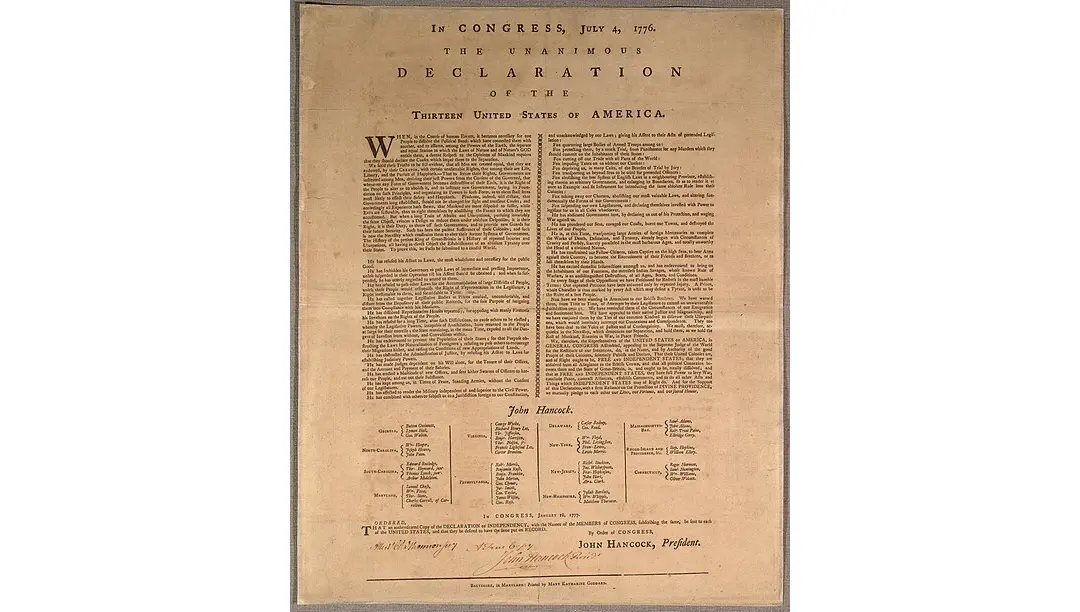
Erler then ends with Plato’s inquiry into whether natural right can become political right. When considering Lincoln and his administration during the Civil War, there is hardly a more pronounced question than this. Can the natural right—that being the statement in the Declaration of Independence and the basis of America’s founding that “all men are created equal”—be recognized and protected by a nation’s political machine?
Lincoln or Jaffa?
As referenced earlier, this examination of the “theological-political question” is a worthy task, and Erler often makes good work of it, primarily by pulling powerful quotes from America’s Founding Fathers, Lincoln, and Jaffa.But the author often becomes sidetracked, leaving the reader, at least this one, wondering precisely where the arguments are leading. Shortly after Erler unearths the Plato-Jefferson-Jaffa ideas for inspection, he moves to the defense of Strauss and Jaffa against criticisms from Michael Zuckert, a political science professor at the University of Notre Dame.
One of Zuckert’s criticisms of Strauss was that he “deliberately made it difficult to understand his works.” In defending this deliberate difficulty, Erler hardly makes his defense clear. This section, though relatively short for a relatively short book, is a sign for what is to come. Erler is defensive, whether rightly or wrongly, regarding the thoughts and works of Jaffa, and therefore of Strauss. There seems to be an anxious defense (perhaps the consistent use of exclamation marks partly gives this away), as if questioning either philosopher is practically unthinkable.
Difficult to Follow
“Prophetic Statesmanship,” as noted earlier, has a trove of grand insightful quotes. Additionally, Erler doesn’t solely highlight Lincoln’s “Gettysburg Address” (as mentioned in the book’s subhead), but highlights numerous Lincoln speeches, such as the Peoria, Cooper Union, House Divided, First Inaugural, and Second Inaugural, as well as the Lincoln-Douglas debates and a smattering of personal letters. These Lincoln writings reveal the 16th president’s theological-political perspective. Erler works through these speeches, dissecting each one, but these dissections rarely provide pivotal insight into Lincoln and the “theological-political question.”This is not to say that there aren’t thought-provoking sections in the book, especially in regard to Lincoln’s thoughts on slavery and the “proposition” that “all men are created equal.” Erler makes an insightful dialectic in the context of the Declaration’s “self-evident truth” claim that “all men are created equal” and the “Gettysburg Address’s” suggestion that this claim had devolved into a “proposition that all men are created equal.” The author writes, “Self-evident truths … can be defended on the basis of reason; but the political efficacy of a self-evident truth is largely dependent upon public opinion.”
Unfortunately, the thought-provoking sections often peter out quickly. Erler relies too much on quotations to bring his points to bear, and this reliance, despite the insightfulness of such quotes, makes the narrative disjointed.
Jaffa’s Last Word?
Additionally, Erler consistently references historical commentators (I assume they are historical commentators) without relating who the people are. Certainly, I could Google them (indeed, I did regarding Zuckert), but shouldn’t the onus be on the author to inform? Perhaps the book was written for fellow-Straussians only, and therefore the identities of these commentators are as familiar to them as Lincoln is to me.Lastly, I found it irritating that there were countless grammatical errors—missing words, duplicate words, misspelled words, errant quotes, and so on. Errors in books are not a surprise; they are in every work that comes out. But, and not to be hyperbolic, I’ve never come across them to this extent. It seemed like confirmation that the disjointed book was written in a fever.
By Edward J. Erler Encounter Books, June 10, 2025 Hardcover: 248 pages
What arts and culture topics would you like us to cover? Please email ideas or feedback to [email protected]