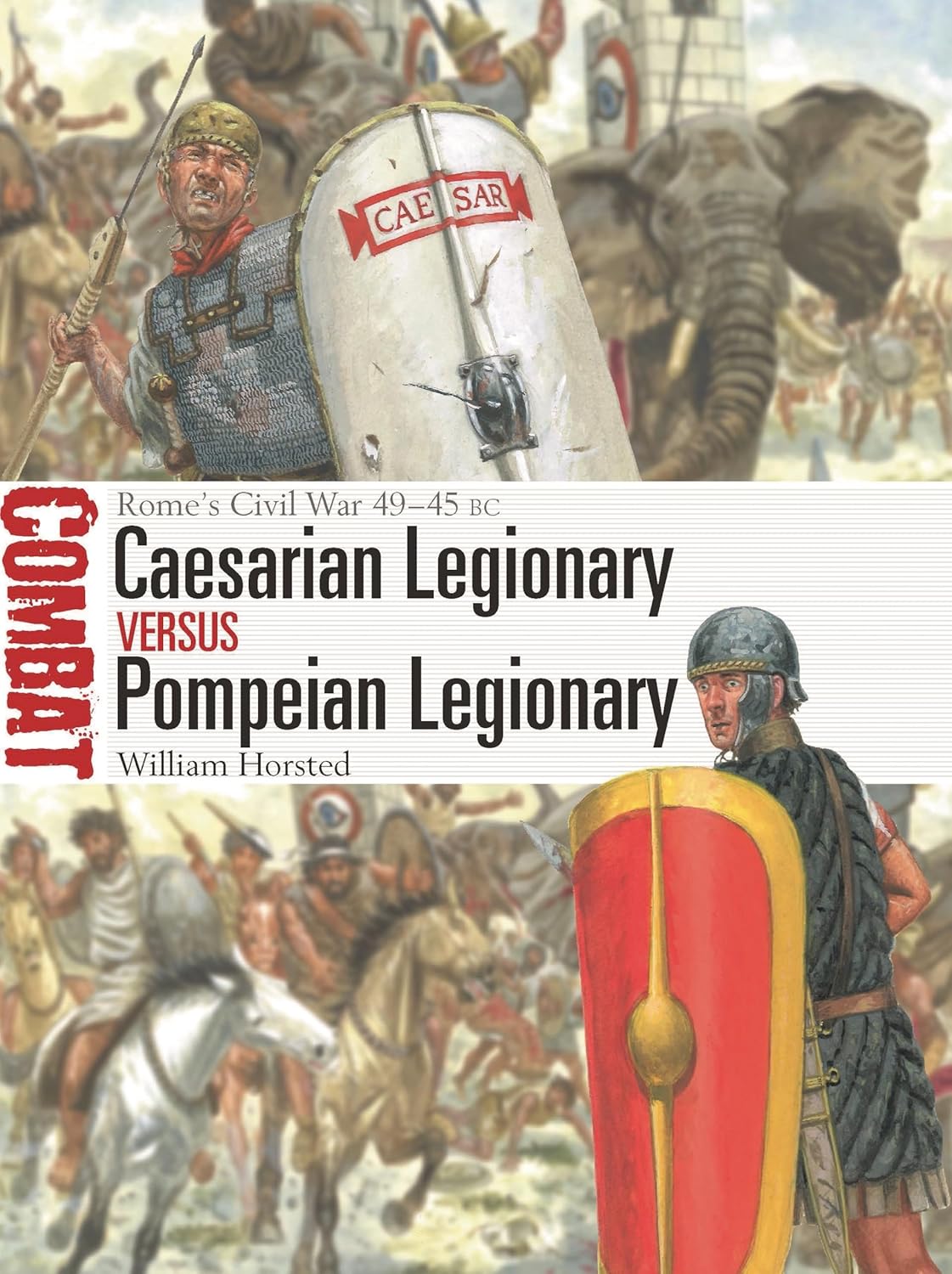
It is one of history’s most famous and most consequential civil wars. It pitted two of history’s most famous generals from history’s most famous republic against each other: Gaius Julius Caesar and Gnaeus Pompeius Magnus (Pompey). In William Horsted’s new study, “Caesarian Legionary Versus Pompeian Legionary: Rome’s Civil War 49–45 BC” readers are treated to the similarities and differences between the two armies. Considering that both armies were Roman, there are understandably more similarities than differences.
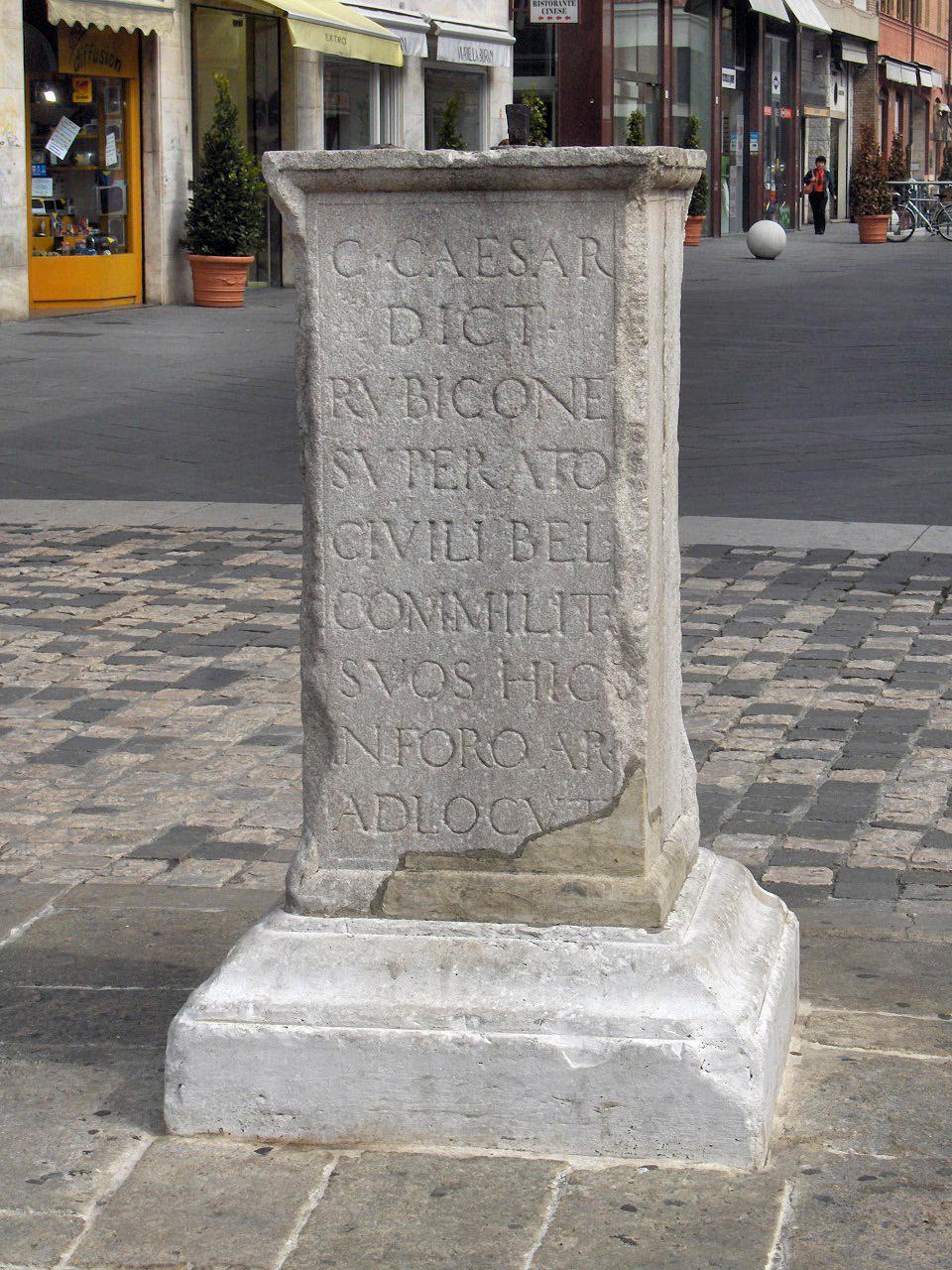
Horsted begins his study with Caesar’s dilemma of whether or not to march on Rome. He had been in the proverbial wilderness for approximately eight years conquering the Gauls (today’s France and Belgium) and had grown in wealth and power. The Roman Senate, for varying reasons, viewed Caesar as a threat and demanded that he leave his army behind, return to Rome, and stand trial before his senatorial accusers. Treason was one of the accusations. Caesar, knowing a march on Rome was an act of war, declared “Let the die be cast” and crossed the Rubicon River toward Rome.
Cults of Personalities
The author intertwines the causes of the civil war with detailed information about the soldiers who fought it. He provides background on how Rome’s military had changed over the decades, well before Caesar became a general. Though touched on only briefly, it becomes clear that, as the Roman army moves from militia to professional army, the soldiers’ loyalty begins to bend closer to its general than to the republic.Caesar’s seasoned army, having fought together for nearly a decade under the famous general, was incredibly loyal to him. This loyalty had, as the Horsted hints, an adverse effect on Pompey, as members of his armies were more apt to switch to Caesar than vice versa.
The Difference Maker
Horsted used three battles to exemplify these differences. At the battle at Dyrrachium, the first example, Pompey had his best opportunity to defeat Caesar. It was because Pompey chose not to press his advantage that Caesar made that conclusion about his rival. By the next two battles—Thapsus and Munda—Pompey was already dead, though the legionaries were still considered Pompeian. In fact, Pompey’s legions ultimately come under the leadership of his two sons, Gnaeus and Sextus, during the battle at Munda.During this battle, several examples demonstrate how different these two Roman armies were. Gnaeus arrived with 13 legions—a very large army indeed—but only four were battle-tested and worthy of confronting Caesar’s legions. Comparatively, Caesar’s legions, though fewer, were more experienced.

Insightful, but Notably Brief
Horsted, along with illustrator Giuseppe Rava, clarified in detail the visual differences between the Caesarian and Pompeian legionaries. The large shields, the short swords, helmets, and “hobnailed” footwear are illustrated. Altogether, though, Horsted’s study primarily focuses on the leadership and strategic differences of the opposing sides.“Caesarian Legionary Versus Pompeian Legionary: Rome’s Civil War 49–45 BC” is an insightful study that breezes through the primary details of the civil war and the Roman armies. Illustrated maps identify the movements and results of these three battles. For readers who are not interested in large volumes on Caesar’s civil war, this is perhaps a suitable book. Unfortunately, for such a short work, it’s hard to justify its price.