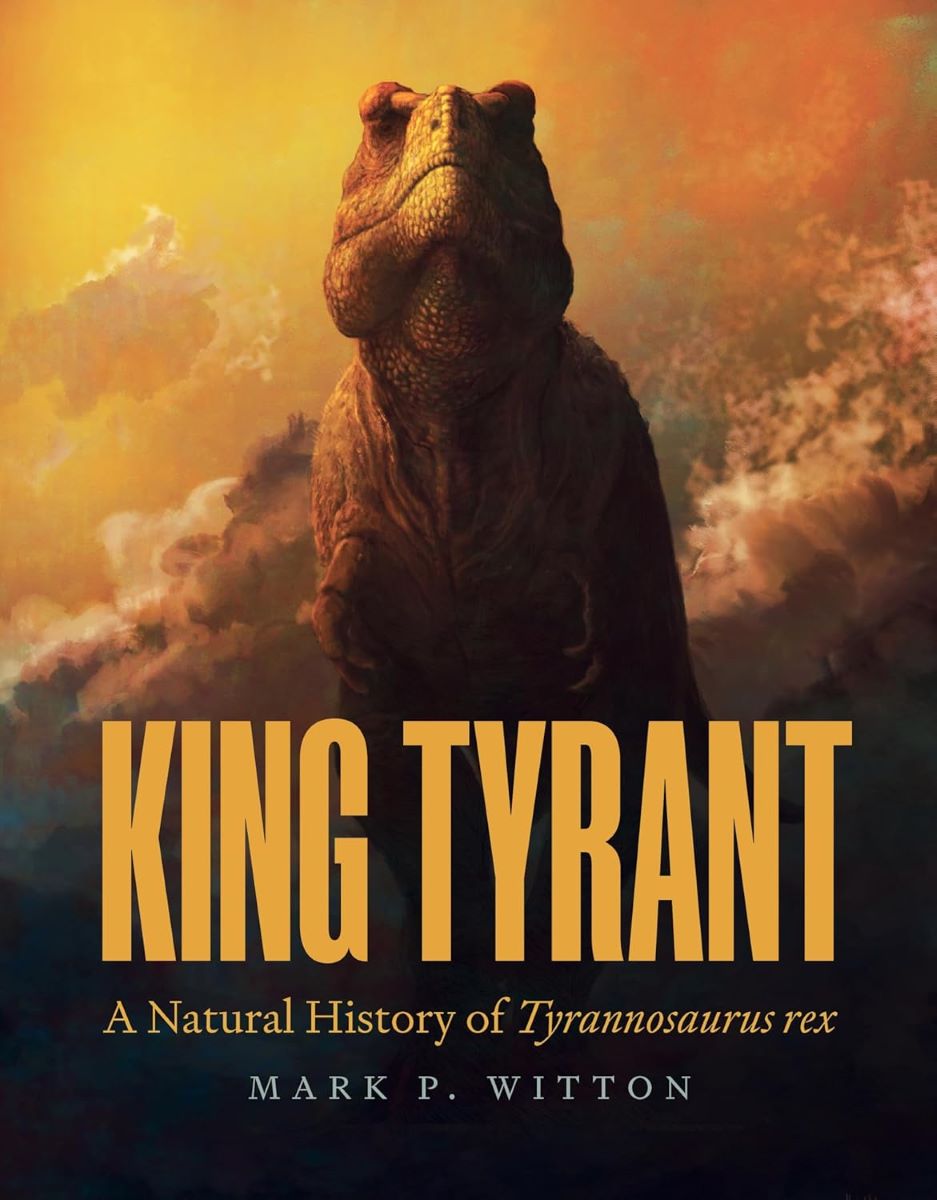
Tyrannosaurus rex is the dinosaur we all pretended to be as kids. If we had to be a dinosaur living tens of millions of years ago, T. rex was the one.
Ever since its fossil discovery at the start of the 20th century, the theropod of theropods has fascinated even those who know nothing more about dinosaurs than what they have learned from the “Jurassic Park” series. When it comes to comparing the Steven Spielberg movies (or Michael Crichton books) and Mark Witton’s new book on the famous dinosaur entitled “King Tyrant: A Natural History of Tyrannosaurus rex,” there really is no comparison.
Witton, who is a paleontological author and artist, has dedicated his life to the study of T. rex, as well as other dinosaurs and pterosaurs. The author-artist’s new work is the history of the most famous dinosaur. Yes, the author goes back to about 70 million years ago, but the primary scope of the book is how much we (or paleontologists) have learned about the powerful bipedal carnivore over the past 120 years.
Readers are introduced to some of the famous paleontologists of the late 19th and early 20th century, like Othniel Marsh, the paleontology chair at Yale University; Edward Drinker Cope, of the Academy of Natural Sciences of Philadelphia; and Henry Fairfield Osborn, who served as president of the Smithsonian Institution’s American Museum of Natural History (AMNH) for 25 years. The former two were in direct competition with each other to secure the most and best fossils, a competition that came to be known as the “Bone Wars.” Although Osborn proves prominent in the early part of the book, he was not directly involved in the “Bone Wars,” though he was mentored by Cope, and thus saw Marsh as his direct competition.
A Popularity Problem?
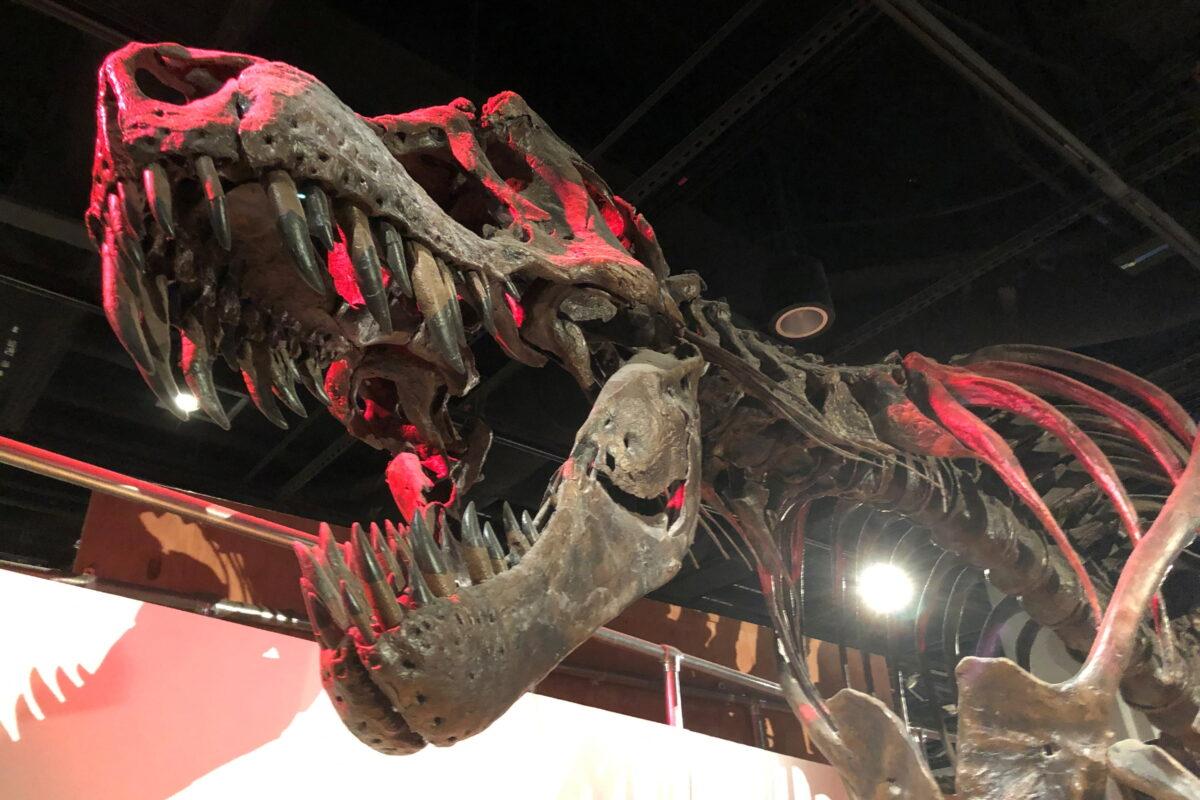
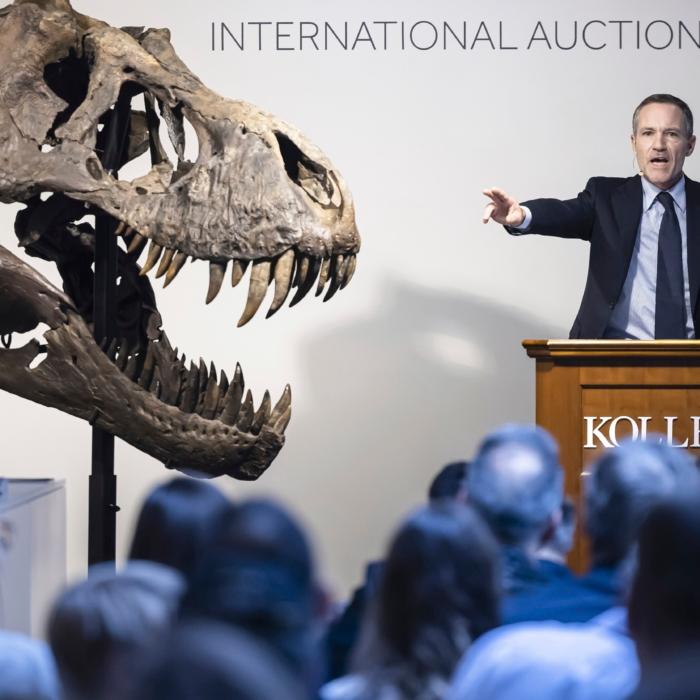
Regarding the film “Jurassic Park,” Witton discusses how T. rex, despite being extinct for tens of millions of years, became a cultural icon. Frightening and powerful were the primary descriptors, but Witton notes that, although paleontology profited from this collective societal interest, which included the growth of the scientific field, there have been downsides to its fame.Witton suggests that “the interesting reality of the animals themselves has become, at times, of secondary importance.” Although the author doesn’t seem to be outright against selling and trading fossils (indeed a profitable and legal industry), he does note that the more this is proliferated, the more fossils find themselves in private collections and away from the public eye, making public education and scientific study more difficult to attain.

Some Authorial Oddities
Witton moves on to discuss the class structure of organisms and how they have changed from the categories of “kingdom, orders, families, and genera” to a clades structure (T. rex relatives, which include Tarbosaurus bataar and Zhuchengtyrannus magnus, are called Tyrannosaurini and, individually, they are called tyrannosaurid). He discusses the uncertain origin, or the “biogeographical conundrum,” of T. rex—either Asia or America. Probably the most fascinating part is the skeletal, digestive, and neurological breakdown of the dinosaur.When it comes to all of these elements concerning the extinct animal, there is a rather irritating conclusion to mostly all of it. Witton, along with apparently every other paleontologist, has no definitive answers to nearly all the questions research has posed over the past century-plus. Of course, it is, at the very least, understandable that being separated from these creatures by tens of millions of years has left a gap in our understanding about that world and the things living in it. Nonetheless, it is Witton who is presenting a book that claims to be “a natural history of Tyrannosaurus rex.”
For whatever questions that can’t be answered, which as I just mentioned is pretty much everything, Witton seems to have a reliable scientific sidestep available: evolution. For those constant “conundrums,” the reader, just as the author, must believe that evolution did indeed take its course. All that is needed is time and more fossils to make those connections. It hardly inspires confidence. Additionally, the author makes some statements that left me scratching my head, like claiming, “Long before Tyrannosaurus, non-dinosaurian Triassic reptiles were experimenting with large-headed predatory body plans.” Experimenting? Like in a lab?
The Coolest Dino Is Not So Cool
Ultimately, I was left wondering why Witton decided to write the book in the first place, considering there is so little known about T. rex. Perhaps that was the reason. Perhaps “King Tyrant” was written to inform dinosaur enthusiasts that not much is known about T. rex. What did stand out when it came to providing information was the connection between studying the fossils and studying existing animals. But that information is hardly groundbreaking. Of course, one could suggest that it is the evolutionary process that has caused the animal kingdom throughout millions of years to remain static (though that does seem counterintuitive, if not counterproductive to the paleontologist’s argument).Readers interested in dinosaurs might find the book interesting, and there are certainly elements that are informative based on the illustrations, graphics, and photos, of which there are plenty. Unfortunately, it is less informative than I had hoped it would be. It overpresents the theoretical questions, which are often ultimately dismissed by the author, making it feel like reading large portions of countless sections throughout the book was a waste of time. And for the topic—the coolest dinosaur that ever lived—it proved to be a pretty boring read, especially for a work that seemed directed toward popular science. When it comes to comparing this to the “Jurassic Park” series—there truly is no comparison, and, for my money, I’ll take “Jurassic Park.”