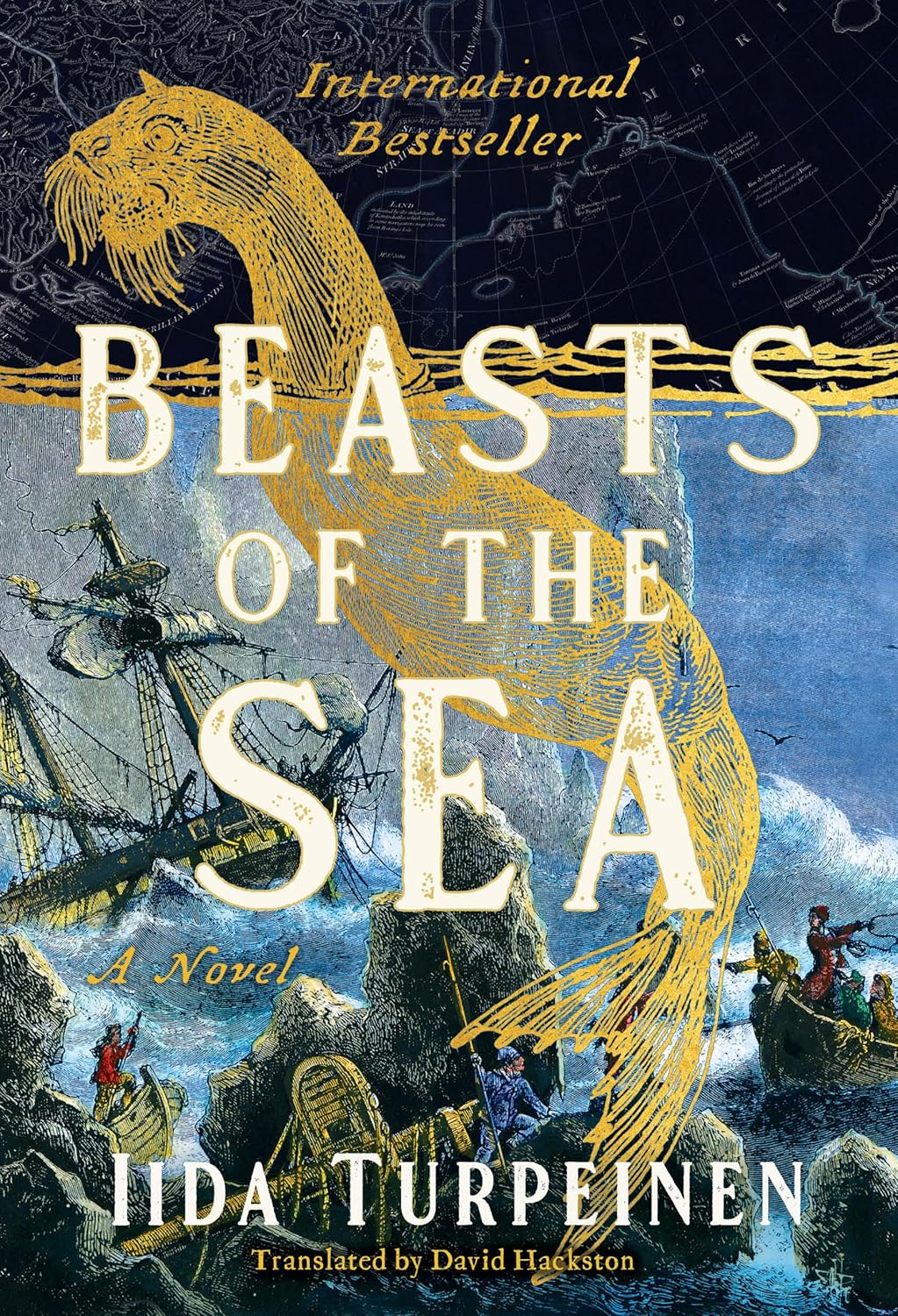
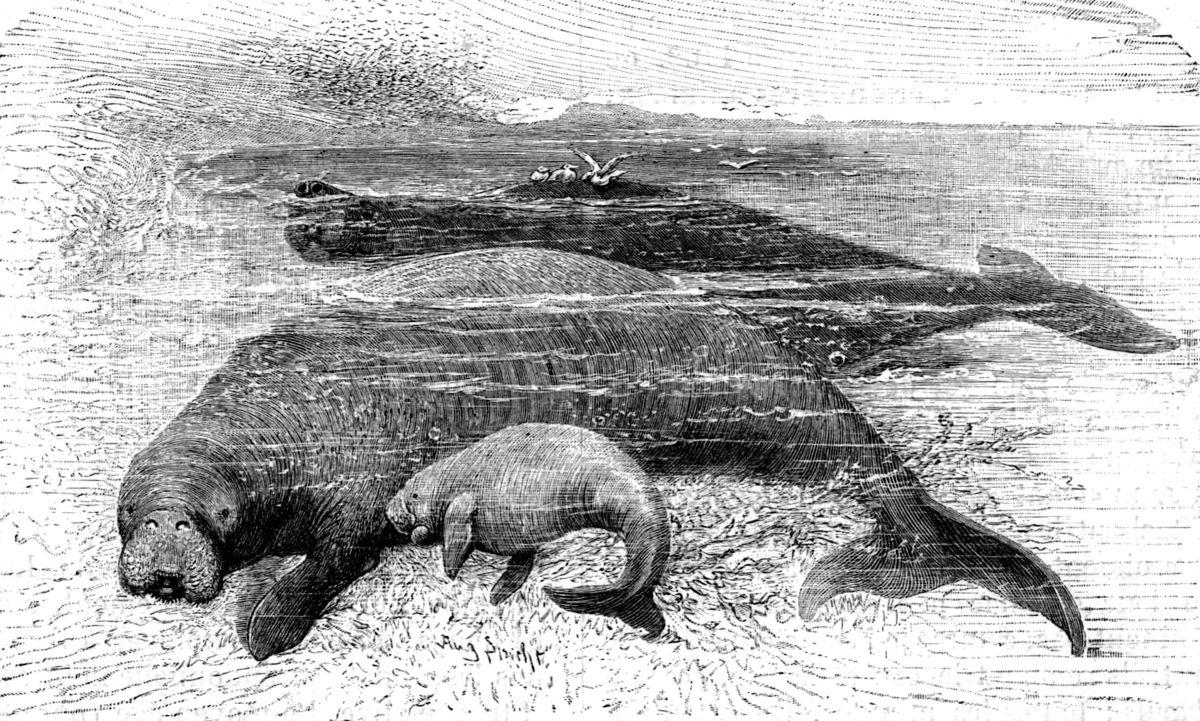
It is rare to find a story that mingles beauty and tragedy together so well. Iida Turpeinen, a Finnish author, takes readers on a 300-year trek to the coldest places on Earth to witness the hardships, triumphs, and tragedies of the human and animal species. “Beasts of the Sea” is a historical fiction novel centered around the discovery, study, and loss of the hydrodamalis gigas, or more commonly known as Steller’s sea cow.
The book begins with the German naturalist Georg Wilhelm Steller, who is part of the Great Northern Expedition led by Capt. Vitus Bering and commissioned by Russian Czar Peter the Great. The reader is aboard the St. Peter as it sails between Siberia and Alaska (which becomes known as the Bering Sea), and wrecks along the frigid uncharted land.
Scurvy, lack of food and water, and exposure mark the members of the expedition for untimely and unceremonious deaths, among them, Capt. Bering. The death of the entire expedition is providentially avoided when several members scour this unknown section of the Arctic Circle to discover its wildlife—among them otters, birds, and the multiton sea cow. It is here, during this exhausting effort to survive and, for Steller, to learn of this strange land and its animal life that the story begins.
A collision of animal innocence and scientific exploration takes place. The once-mythical sea cow has now been located. Hunters and collectors seek out the massive sirenian for its hide, blubber, and delicious meat. Over the decades, it is hunted to extinction.
Accepting a Startling Idea
The story’s setting isn’t solely in its locations and the periods of the 18th and 19th centuries. Turpeinen placed in the background of the story or, perhaps more appropriately, the foreground, the 18th- and 19th-century mindset that man-caused extinction is not only unthinkable, but is a patently ludicrous idea.This fact was accepted until hunters, collectors, and the scientific community realized that it was not just Steller’s sea cow that became impossible to find, but several other species, including the great auk and, luckily protected in time, the otter.

The story, however, does not stop with the sea cow’s extinction. That’s really just the beginning. Along with Bering and Steller, Turpeinen introduced the reader to a number of fascinating people, like Georges Cuvier, the French naturalist who established the concept of extinction as a fact; Johan Hampus Furuhjelm, the Finnish-Russian naval officer who became governor of what was Russian America; Alexander von Nordmann, a Finnish biologist; and Hilda Olson, the scientific illustrator hired by von Nordmann. All in their own ways, they became enamored with the extinct sirenian.
Along with these fascinating real-life characters is Furuhjelm’s sister, Constance, who suffers from epilepsy. Perceived as a “half-wit” and, rather correctly, incapable of taking care of herself, she finds a safe haven and a world of wonder among her brother’s vast collection of taxidermied animals.
Lost and Found
In many ways, the idea of the lost being found permeates the story. It is a consistent effort to find oneself in the faraway and desolate lands of the untamed frigid wilderness. Many of these characters find themselves among the dead and even the extinct. Indeed, it is the search for and incidental discovery of Steller’s sea cow that confers the mark of major accomplishment on the characters. By mere happenstance the long-sought Hydrodamalis gigas is discovered, though it is solely the sea cow’s skeletal frame.This skeletal frame—this singular set, as all others were left behind by hunters—became the prized possession of the Finnish scientific community and the scientific community in general. Its discovery proved the tragic fact of man-caused extinction, as the bones and Steller’s crude illustration show, was as close as the world would get to viewing the species. Steller’s sea cow, though lost to existence, was not lost to history. Indeed, it is this search and discovery that ties together Turpeinen’s tragic, yet lovely story.
Turpeinen has woven an incredible narrative, making “Beasts of the Sea” one of my favorite books to read this year. For good reason, it has become an international bestseller well before it was translated into English by award-winning translator, David Hackston. It’s worth reading for so many reasons, with warnings that must still be heeded and historical figures that deserve to be remembered. For readers of this review, considering the current cold weather, this work is a perfect selection for a winter setting.