To the Victor Go the Spoils
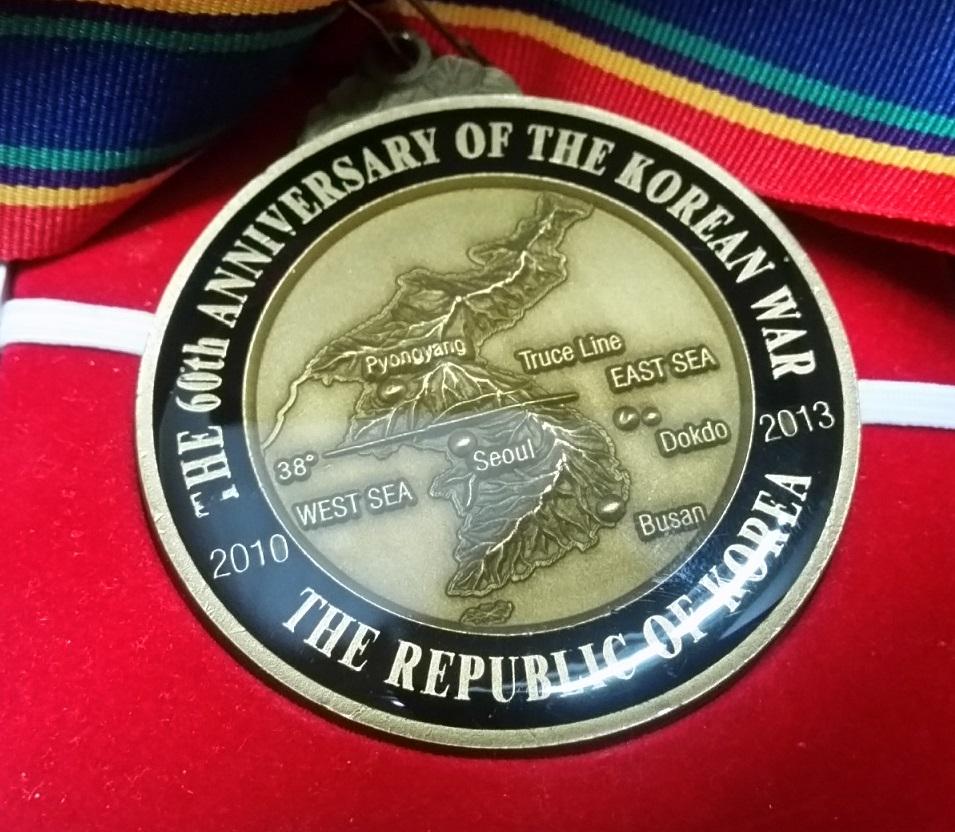
On the night of Aug. 10, 1945—a day after the Nagasaki bombing and five days before Japan surrendered—officers of the State-War-Navy Coordinating Committee made the hasty decision to split Korea along the 38th Parallel. The north would be occupied by the Soviets and the south by the Americans. The Red Army had been storming through Manchuria on their way to the peninsula. To the relief of the Americans, the Soviets agreed to the arrangement. Offering a preemptive arrangement now was far better than attempting to force the Russians out later.By the time the first Americans landed in Korea, the Russians had been there for about a month. About six weeks after their arrival, on Oct. 24, 1945, America and the Soviet Union became two of the 51 founding members of the United Nations. The primary objectives of the U.N. were to maintain international peace and avoid world war, that is, in the new nuclear age, avoid global annihilation.
Although history’s greatest military conflict had ended, the world was still a very dangerous place. Fascism had been defeated, though it still existed in places like Spain; but communism remained a notorious threat. The war had left two powers of polar opposite ideologies standing among the ruins: America and the Soviet Union. The ancient adage “to the victor go the spoils” had rarely been so visually obvious. The Soviet Union swallowed whole Eastern European regions, installing puppet governments throughout, while America sent 100,000 troops throughout Western Europe to stand guard against Soviet expansion.
The Unexpected Invasion
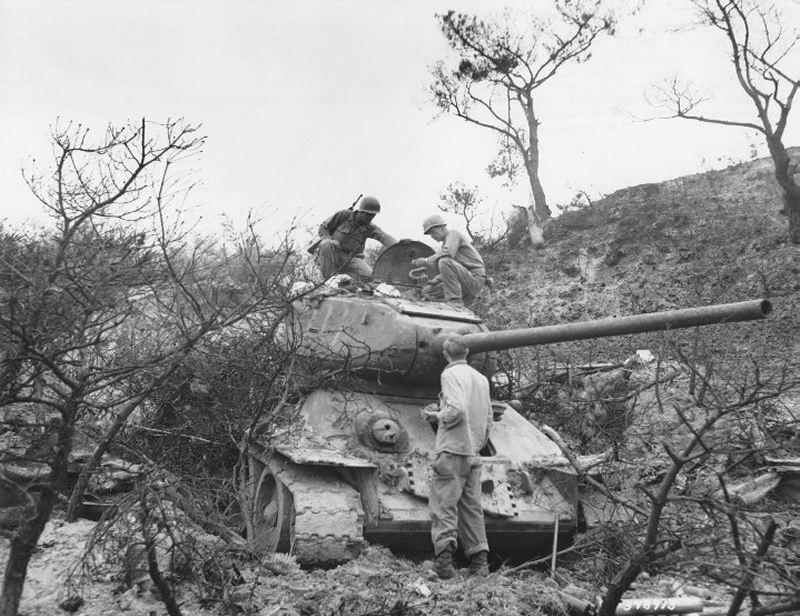
Seventy-five years ago, during the early Sunday morning hours of June 25, 1950, that collision began when the Soviet-backed Democratic People’s Republic of Korea (DPRK) led by Kim Il Sung invaded the American-backed Republic of Korea (ROK) and planned to take the entire peninsula in one fell swoop.
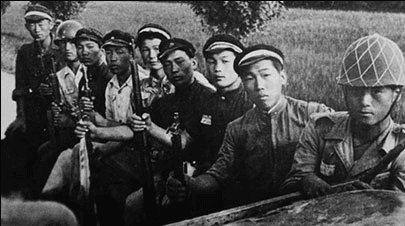
The idea that the Communist North would invade was practically unthinkable in American diplomatic circles, and most importantly among the military brass of Far East Command (FEC) stationed in Tokyo. It was certainly known that both sides craved unification. For this reason, the Americans provided the South Koreans only conventional weapons, rather than tanks and aircraft. The Americans’ attempt to restrain southern aggression also created a weak and vulnerable ROK.
The American-led UN
Realizing the demands went unheeded, the U.N. Security Council issued its Resolution 83 on June 27, recommending that “Members of the United Nations furnish such assistance to the Republic of Korea as may be necessary to repel the armed attack and to restore international peace and security in the area.” On July 7, the Council issued Resolution 84, recommending that “all Members providing military forces and other assistance pursuant to the aforesaid Security Council resolutions make such forces and other assistance available to a unified command under the United States of America.”The Americans had initially assumed the mere presence of U.S. troops would be enough to force the communists into a retreat. In early July, Task Force Smith, a cobbled together 540-member force from the 24th Infantry Division, were the first Americans to arrive. Outmanned and outgunned, they fared little better than the ROK troops. Upon reflection, Gen. Douglas MacArthur, who was commander in chief of both FEC and United Nations Command, considered the hubris behind sending such an initial response as “an arrogant display of strength.” The DPRK continued their push southeast in the hopes of pushing the ROK, Americans, and hurriedly arriving U.N. troops into the sea.
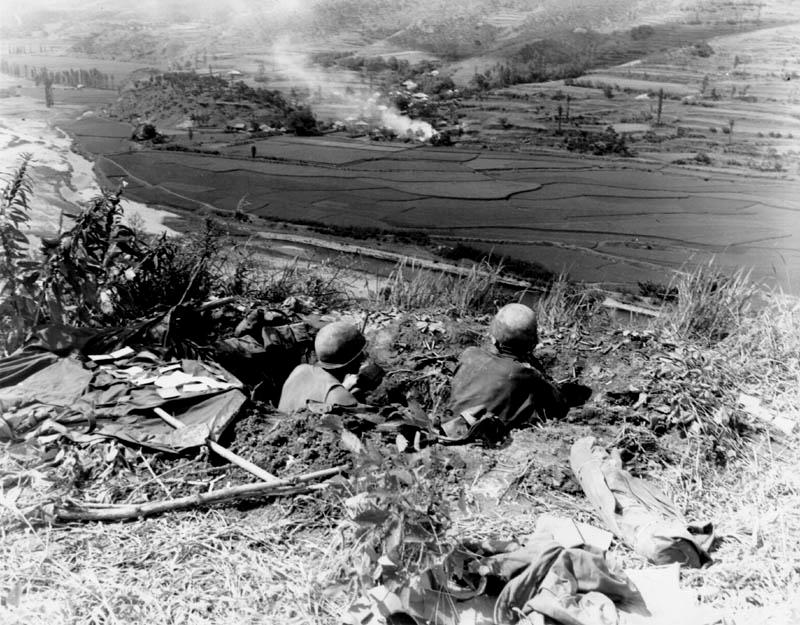
By August, the DPRK controlled all of the Korean Peninsula except for a small portion around the port of Pusan. As more and more U.N. troops, predominantly Americans, disembarked into Pusan, a foothold had been established. The six-week siege along the 140-mile Pusan Perimeter was bloody, but it provided MacArthur time to conduct his tactical masterstroke: Operation Chromite.
Worthy of Remembrance
It had been a close-run thing, but in a world of falling ideological dominoes, the Americans recommended pursuing the communists to the Yalu River, the natural border between North Korea and Manchuria. Hindsight is 20/20. The first U.N. military collaboration had been an unmitigated success. MacArthur’s illustrious career had another feather. The Americans had proven true to President Harry Truman’s new Containment Policy against communist expansion.Just as close as the North Koreans had been to complete victory, the American-led U.N. coalition was just as close by November 1950. In a sense, though, the Korean War is not about victory or defeat, as neither can claim either. Certainly, many mistakes were made, and whenever hubris becomes the order of the day, mistakes can only lead to tragedy. There were atrocities conducted on both sides, as the South Korean leadership hated communism as much as the North Koreans despised personal freedom. Truman and MacArthur’s feud became public, leading Truman to fire MacArthur, a move that ultimately put the nail in Truman’s political coffin.

The Korean War, so close on the heels of the devastating conflict of WWII, has long held the unfair title of The Forgotten War. For all the close calls, mistakes, political fallout, and inaugural U.N. involvement, what is most important today is the visual dichotomy between the communist North and the democratic South. The Korean War offers military and political commentators a plethora of material to dissect, and, in arguably every aspect, their arguments are valid.
But the most valid argument is that the fight was worth it. Seventy-five years later any South Korean will attest to that. A visit to the country provides ample visuals with its monuments and commemorations to the American and U.N. troops.
It is not simply that the South Koreans are a free people today. It is far more than that. They are not North Koreans. If anything, history has shown that it would have been better to be driven into the sea than to live under the globe’s harshest and most tyrannical regime. Wars are about what is saved and what is lost. To save an entire nation, even one that was haphazardly created at the dawn of the Cold War, is indeed an unmitigated success, worthy of, at the very least, being remembered.