Nikolai Rimsky-Korsakov was a man enchanted by the sea, in love with the sea, and inspired by the sea. While he was walking on the shores of Odessa one day, the sea spoke to him in a way that moved this soul to create. It spoke of the first seafarer in the Western consciousness—“the man of twists and turns”—the great Odysseus.
It awoke in Rimsky-Korsakov the idea to set a text from “The Odyssey” to music. Somehow, the blending of the streaming tides with the ancient words of the poet combined in just the right way, at just the right time, to give birth to a new work of art.
The origins of artistic inspiration and the workings of the artistic process are mysterious. But one thing we know: When one great artist encounters the work of another great artist, beautiful things happen. In this case, the Russian naval man and composer made vital contact with the work of the father of Western poetry through his experience of the ocean. The result was Rimsky-Korsakov’s composition “A Page From Homer, Op. 60.”
’A Page From Homer, Op. 60‘
Rimsky-Korsakov initially conceptualized the piece as a part of a much larger project. In 1901, he asked Vladimir Belsky to write the libretto (lyrics) for an opera about Nausicaa. Nausicaa appears in Book VI of Homer’s “Odyssey,” when Odysseus is shipwrecked on her island, where Nausicaa is a princess. The teenage girl is attracted to the tall, rugged stranger, and Nausicaa’s father offers her in marriage to the old war hero. But Odysseus has one thing on his mind: to get home to his wife, Penelope, after decades of absence due to the Trojan War.Belsky was absorbed in work on two other librettos at the time Rimsky-Korsakov approached him with the idea, however. So Rimsky-Korsakov began to work on his own on a “small sketch from the Odyssey,” which would, possibly, form a prelude to the opera. The idea of a full opera faded over time, but the sketch became a beautiful 12-minute stand-alone piece.

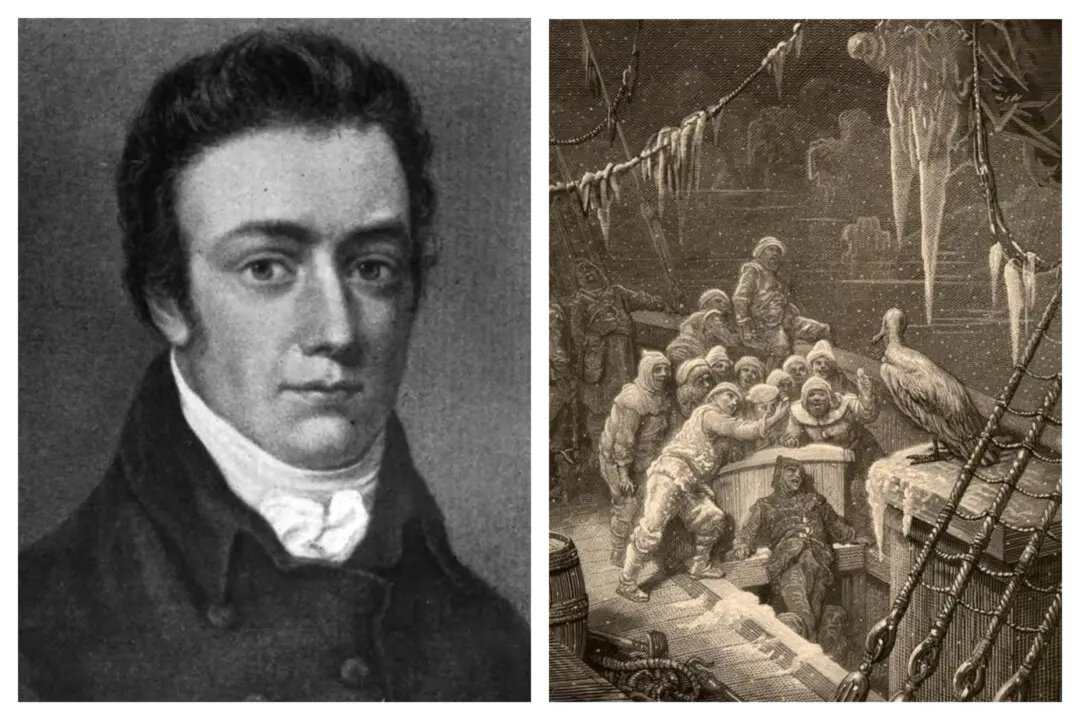
Nikolai Rimsky-Korsakov in 1897. Public Domain
It begins dramatically, with bombastic chords like the crashing of waves. This is quickly counterbalanced by soaring flights of notes that are both romantic and fantastical. The piece begins busily, with a heavy use of brass and dramatic swells—not unlike modern film scores, full of tension and excitement. As it develops, however, calming female vocal harmonies enter the soundscape, adding a layer of mystery and peace that speak of sun-drenched, paradisal Mediterranean isles.
Rimsky-Korsakov wasn’t the only composer to be inspired by a great work of literature, of course. Musical history teems with compositions that connect to the Western literary tradition. How classic literary works have produced musical adaptations and accompaniments is a testament to both the genius of composers and the undying power of literature.
Here, then, are three other such works—a mere sampling that will hopefully open the door to further literary and musical exploration.
‘Don Quixote: Fantastic Variations on a Theme of Knightly Character, Op. 35’
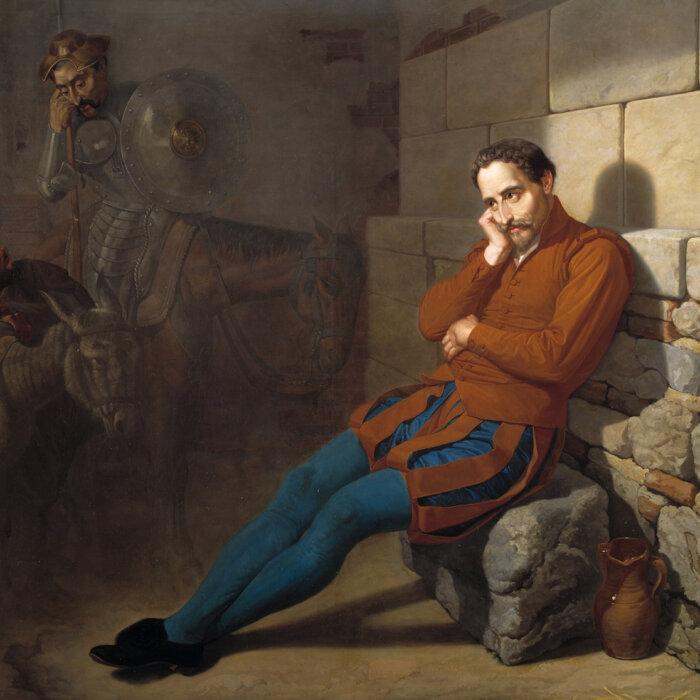
Another work of classical music centered around a heroic literary figure is Richard Strauss’s “Don Quixote: Fantastic Variations on a Theme of Knightly Character, Op. 35.” Miguel de Cervantes’s lonesome knight errant wandering through the Spanish plains in search of knightly quests long after the age of chivalry has died captured the imagination of the Western world when “The Ingenious Gentleman Don Quixote of La Mancha” first appeared in 1605. Almost 300 years later, it still held people enthralled, including the German composer Richard Strauss.In 1897, Strauss composed a “tone poem”—an orchestral piece of music inspired by and illustrating the contents of a poem or novel—based on “Don Quixote.” The episodic novel lent itself well to a musical interpretation, which included, according to Strauss, over 53 operative motifs or themes. As Marianne Williams Tobias noted for the Indianapolis Symphony Orchestra, the tone poem marvelously describes the story while also depicting the characters’ psychological transformations. Tobias cited music critic Ernest Newman, who said: “Nowhere outside the work of glorious old Bach is there such a combination of inexhaustible fertility of imagination.”

The windmills of Consuegra, Spain, made famous by Miguel de Cervantes in his novel "The Ingenious Nobleman Don Quixote of La Mancha." Michal Osmenda/CC 2.0
One example of this imaginative power is Strauss’s use of instrumentation. The solo cello (and sometimes the solo violin) thematically represents Don Quixote himself. The clarinet and tenor tuba embody his servant Sancho Panza, and the oboe expresses the lovely and elusive Dulcinea. The sounds of the cello, for instance, are often bold, flowing, and romantic—an excellent reflection of Don Quixote’s character in the novel.
Similar instrumental inventiveness occurs in Variation II, which is based on an episode in the novel in which Don Quixote mistakes a herd of sheep for an enemy army and attacks them. Strauss mimics the sound of bleating sheep by using dissonant flutter-tonguing in the brass, one of the earlier extended uses of the technique.
In 1921, when Strauss was asked which of his tone poems were his favorite, he included “Don Quixote” in the top three. “These that show me and my opinions most clearly: ‘Zarathustra, Quixote, and Domestica.’”
‘A Midsummer Night’s Dream Overture, Op. 21’
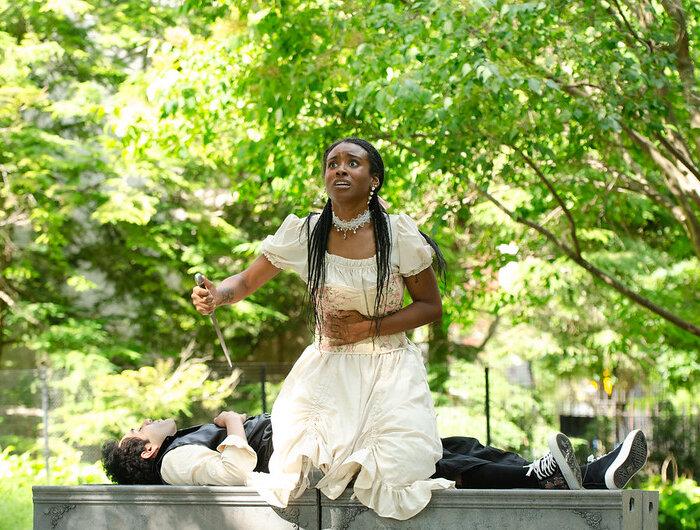
German composer Felix Mendelssohn was a musical prodigy in the same league as Mozart, beginning piano lessons at the age of 6 and giving his first concert at 9. At just 17, Mendelssohn wrote an overture to Shakespeare’s “A Midsummer Night’s Dream.” In the words of conductor Marin Alsop, Mendelssohn unleashed his creative powers on the piece to great effect, “completely capturing the magic and frivolity in the ethereal world Shakespeare created.”Shakespeare’s play about lovers lost in magical woods must have afforded the young composer wide avenues for artistic exploration and expression. The richly colored tapestry of the play shimmers with mirth, romance, magic, and profound reflections on human society, marriage, and nature, all dressed in Shakespeare’s exquisite poetry. Mendelssohn took full advantage of this.
The overture begins with four stately chords and the airy sounds of flute and strings that quickly start to dance with elfin mischievousness meant to evoke the scampering of fairy feet. Soon, the piece opens up into a full, joyful sound composed of the interplay between strings and horns. Tension builds as the overture progresses, but it doesn’t abandon the lightheartedness that reflects the play’s comic, positive ending. Throughout, Mendelssohn mixes themes for the court of Athens, the fairies, the lovers, and even Nick Bottom, the Weaver. Like Strauss, Mendelssohn uses clever instrumentation to mimic the sound of animals—in this case the donkey’s bray of enchanted Bottom, which is imitated by a “hee-haw” sound from the strings.
‘The Road Goes Ever On: Poems & Songs of Middle Earth’
The great fantasy writer J.R.R. Tolkien wrote dozens of songs for his literary works about the fantasy realm of Middle Earth, including “The Lord of the Rings” and “The Hobbit.” On the page, they’re simply sets of lyrics, of course, but after the publication and popularization of Tolkien’s works, some musicians took interest in those songs. One such musician was the British composer, singer, and entertainer Donald Swann, who formed half of the comedic duo Flanders and Swann.While collaborating with Tolkien himself, Swann set the ballads, traveling songs, and poems of Tolkien’s oeuvre to music in the British art-song tradition. He published these settings in “The Road Goes Ever On: Poems & Songs of Middle Earth,” which Tolkien approved. The author himself provided notes and commentary for the book. As Stewart Hendrickson explained in his recording of the songs, all but one are from “The Lord of the Rings.” One song is sung in Elvish, the language Tolkien invented.
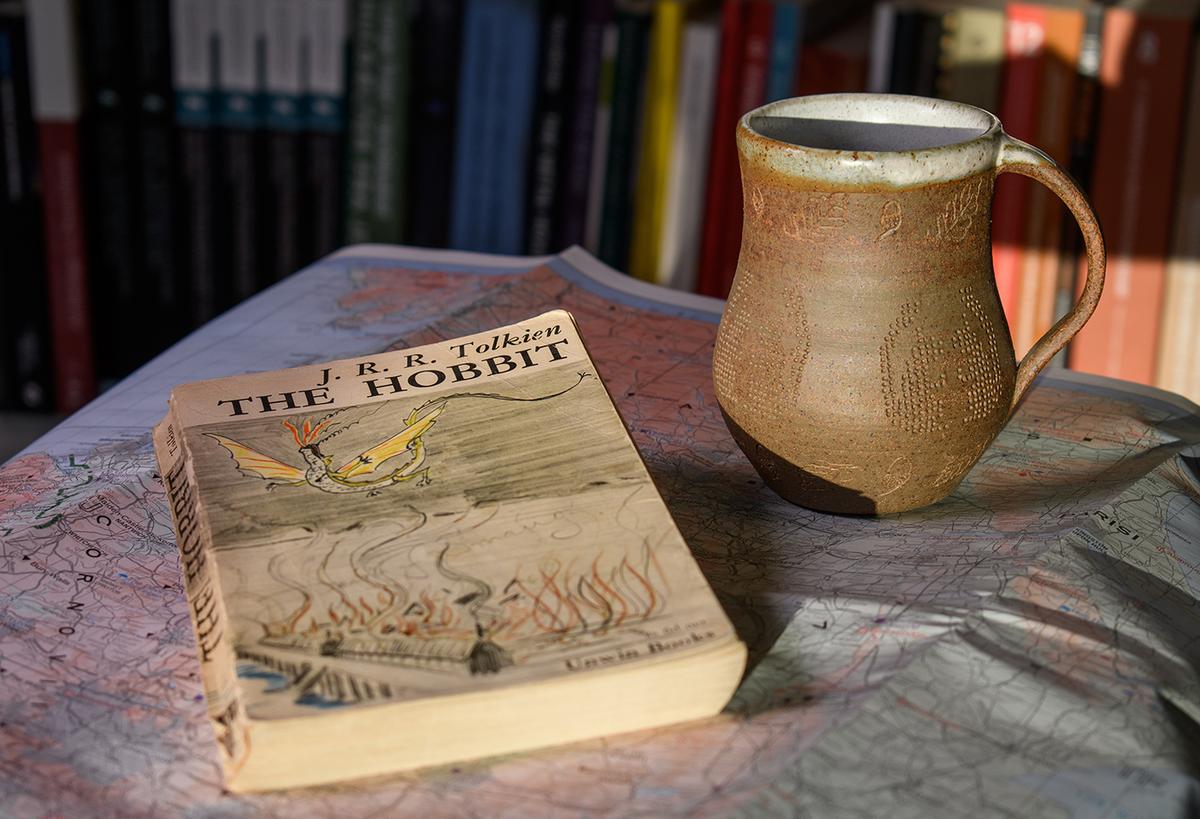
A vintage, paperback edition of "The Hobbit" with cover illustration by J.R.R. Tolkien, published on Sept. 21, 1937. Doodeez/Shutterstock
For those whose auditory sense of Middle Earth has been shaped by Howard Shore’s masterful soundtrack to the Peter Jackson film adaptations of the Tolkien books, the Swann renditions may seem a bit strange. For one thing, the Hendrickson recording uses piano, which isn’t an instrument belonging to Middle Earth. Still, the songs are both charming and moving. They bear a definite tie to what we know of medieval or even ancient music, which often depended on solo voice accompanied by sparse instrumentation. Certainly, the fact that the professor himself approved of these renditions lends them a degree of credibility.
From Homer’s ancient epics over 4,000 years ago to the modern epics of Tolkien, great literature continues to generate musical adaptations and interpretations. Both music and literature possess the uncanny and irreplaceable power of art: to create worlds, to allow us to inhabit new modes of being. The interaction between these two world-building art forms has been profoundly mutually enriching throughout the ages.
What arts and culture topics would you like us to cover? Please email ideas or feedback to [email protected].