
WARSAW, Poland—The sixth edition of the Cross-Cultural Music Festival in Warsaw, one of the biggest music festivals in all of Central and Eastern Europe, is presently underway.
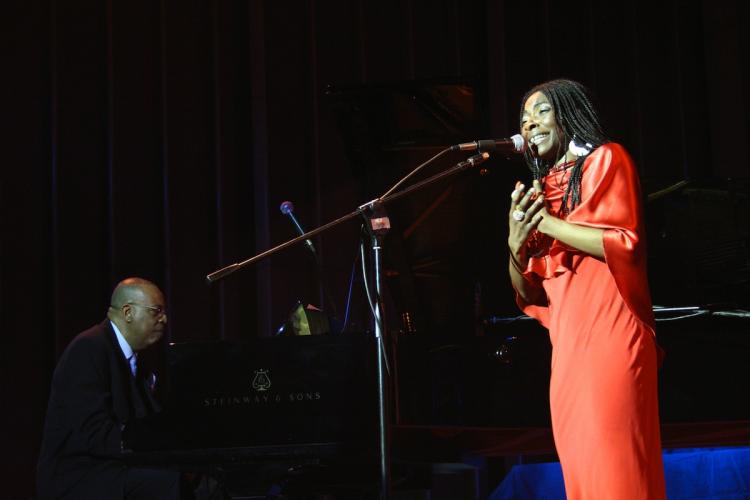
This year’s feast of multicultural music, which kicked-off on Sunday, Sept. 26, with Afro Spanish flamenco fusion sensation Concha Buika and multiple Grammy Award winner Ivan Lins from Brazil. The festival will continue for a full seven days of compelling performances in the heart of Poland’s capital. Also adding to the festival progression is a separate China-themed day, a first since the festival’s inception.
The Epoch Times caught up with the artistic director of the festival Marek Garztecki, in Warsaw to talk about the reasons behind this year’s overall focus on artists with Iberian roots; its special focus on ethnic music from China; and the vision behind the cross-cultural project as a whole, which has become wildly popular with Poles of all ages and backgrounds.
“We’re not just looking towards the future of global music, we are also trying to recreate elements of Poland’s past because with the exception of the second half of the 20th century, Poland’s tradition is of a multicultural and multinational country. We experienced a period of ethnic cleansing instigated first by Hitler and then by Stalin as a result of which Poland became practically a mono-nation—a nation that claimed to have one religion, one language, everything was just one. This was an aberration in Polish history,” said Marek Garztecki.
The project started as what can most aptly be described as an educational experiment funded by the Warsaw city council in 2005 in the wake of Poland’s joining the European Union in May of 2004, possibly as a way to expose the culturally rather insular Polish populace to the multiethnic variety prevalent within the European Union. It has since taken on a life of its own.
“For the past several editions there’s been more interest than we’ve had tickets, and we’ve unfortunately had to turn some people away,” said the artistic director.
Asked about the correlation between the festival and greater cultural awareness and openness of Polish society, he gave the example that people are now starting to distinguish between several types of Argentinean music, not to mention different types of music within South America. “There are several Polish DJs in clubs in Warsaw, each of whom specializes in playing a different genre of Brazilian music,” he added. “This was unheard of before. The festival is definitely having an impact.”
While the overall theme this year is on music with Iberian roots in honor of the 200th anniversary of the independence of Colombia and other South American countries, the festival will feature a special China-themed day.
“In my opinion elements of Chinese culture will attain global popularity. They have to. My analysis is that after China’s economic expansion, sooner or later a cultural expansion will follow. And we would like to think of ourselves as noticing this trend and responding to it very early on.”
The China-themed day will feature the Mongolian group Hanggai and the Xinjiang-born Kazakh vocalist, Mamer, as well as the classical Chinese music quartet Quinn Mei Jing Yue, whose members play traditional Chinese instruments.
“There’s not a single instrument in this group which is recognizably European. Different shapes, different ways of playing, sometimes even different tuning.”
This year’s edition of the Cross-Culture Festival will gather more world music stars than any other such event in Poland or any neighboring country. “Our ambition is to make Cross-Culture the most important world music event in Europe” concluded Garztecki.
This year’s feast of multicultural music, which kicked-off on Sunday, Sept. 26, with Afro Spanish flamenco fusion sensation Concha Buika and multiple Grammy Award winner Ivan Lins from Brazil. The festival will continue for a full seven days of compelling performances in the heart of Poland’s capital. Also adding to the festival progression is a separate China-themed day, a first since the festival’s inception.
The Epoch Times caught up with the artistic director of the festival Marek Garztecki, in Warsaw to talk about the reasons behind this year’s overall focus on artists with Iberian roots; its special focus on ethnic music from China; and the vision behind the cross-cultural project as a whole, which has become wildly popular with Poles of all ages and backgrounds.
“We’re not just looking towards the future of global music, we are also trying to recreate elements of Poland’s past because with the exception of the second half of the 20th century, Poland’s tradition is of a multicultural and multinational country. We experienced a period of ethnic cleansing instigated first by Hitler and then by Stalin as a result of which Poland became practically a mono-nation—a nation that claimed to have one religion, one language, everything was just one. This was an aberration in Polish history,” said Marek Garztecki.
The project started as what can most aptly be described as an educational experiment funded by the Warsaw city council in 2005 in the wake of Poland’s joining the European Union in May of 2004, possibly as a way to expose the culturally rather insular Polish populace to the multiethnic variety prevalent within the European Union. It has since taken on a life of its own.
“For the past several editions there’s been more interest than we’ve had tickets, and we’ve unfortunately had to turn some people away,” said the artistic director.
Asked about the correlation between the festival and greater cultural awareness and openness of Polish society, he gave the example that people are now starting to distinguish between several types of Argentinean music, not to mention different types of music within South America. “There are several Polish DJs in clubs in Warsaw, each of whom specializes in playing a different genre of Brazilian music,” he added. “This was unheard of before. The festival is definitely having an impact.”
While the overall theme this year is on music with Iberian roots in honor of the 200th anniversary of the independence of Colombia and other South American countries, the festival will feature a special China-themed day.
“In my opinion elements of Chinese culture will attain global popularity. They have to. My analysis is that after China’s economic expansion, sooner or later a cultural expansion will follow. And we would like to think of ourselves as noticing this trend and responding to it very early on.”
The China-themed day will feature the Mongolian group Hanggai and the Xinjiang-born Kazakh vocalist, Mamer, as well as the classical Chinese music quartet Quinn Mei Jing Yue, whose members play traditional Chinese instruments.
“There’s not a single instrument in this group which is recognizably European. Different shapes, different ways of playing, sometimes even different tuning.”
This year’s edition of the Cross-Culture Festival will gather more world music stars than any other such event in Poland or any neighboring country. “Our ambition is to make Cross-Culture the most important world music event in Europe” concluded Garztecki.