The Top Shelf: ‘Paddington Bear’

September 14, 2010 Updated: October 1, 2015

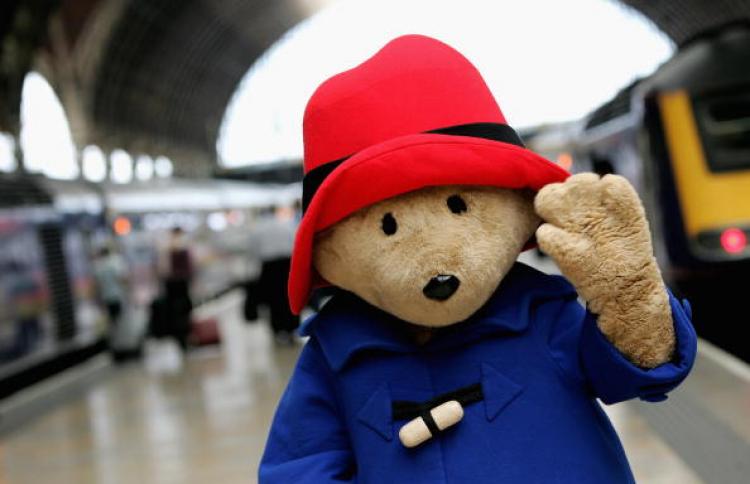
Paddington Bear arrives at Paddington Station on his way to the children's literature event at Buckingham Palace in London, England. (Gareth Cattermole/Getty Images)
Although "Paddington Bear" is a well-established commercial entity, most of the children in my daughter’s class hadn’t heard of him at the time that he was a beloved favorite in our home—this suggested to me that some American readers might need to be introduced to him.

Originally from the darkest Peru, Paddington Bear came to live with the Brown family in London and has been a constant source of amusement and endearment ever since, both to the Browns and to the readers of his escapades. And, given that he was created in the late 50s by Michael Bond who has written a dozen Paddington books, the young bear has had a long life.

Paddington has had a life full of adventures. You see, Paddington is well-intentioned (if ever a bear was) and he knows right from wrong—and so he’s inclined to try and help whenever he can.

But never was anyone less suited to helping. Being rather inexperienced in the human world, always at the mercy of his demanding stomach, being very short (he is the size of a large teddy bear rather than an actual bear), and having paws rather than hands, he is always at a severe disadvantage.

In fact, each story follows him from one comical mishap to another.

Perhaps my favorite story is Paddington and ‘Do It Yourself.’ Planning to build a magazine rack to surprise Mr. Brown, Paddington is invited into the kitchen of his neighbor Mr. Curry in order to use it for a workspace. The skinflint Mr. Curry hopes to get the finished magazine rack for himself and leaves his house in Paddington’s care while he runs errands.

As Paddington works with a cumbersome sheet of plywood on the top of Mr. Curry’s kitchen table, and as he begins to saw it, he finds the sawing very difficult after the first few passes. When he completes the cut, he is anguished to see that not only the plywood, but the table itself is also cut in two.

Now Paddington’s ingenuity comes into play. He glues the table back together and it’s almost as good as new. It would be even better if one leg were sawed off a bit to make the table steadier. But when cutting off the leg seems to make another leg too high, Paddington proceeds to try to even things out—several times.

If the readers did not dislike Mr. Curry so much, these kinds of episodes wouldn’t be half as funny.

Paddington, then, combines a child’s good intentions with a bear’s level of skill and knowledge.

Initially written for an English audience, the Paddington stories use language a bit more formally than young American readers of today are likely to be used to. But the complicated episodes are also very clearly drawn and so the result is well worth the prose.

Paddington Bear is sure to have your family in stitches. The books also make the lasting impression, at least to parents whose walls have been decorated with crayons, that innocence and good intentions make all things “bearable.”