According to the newest leaks, however, China will use the European approach to take credit risk out of the market.
Another week, another effort by the Chinese authorities to boost the economy. This time the People’s Bank of China (PBOC) lowered its benchmark interest rate by 0.25 percent to 5.10 percent.

The signs are increasing China will soon engage in its own form of quantitative easing, in what could be seen as a sign of panic.

James Nolt’s sense tells him that the likely form of quantitative easing in China is about more than economics, but rather a struggle of power and control.

Reports on Tuesday tell us the program will copy one of the European Central Bank’s initiatives, rather than the Fed’s classic stimulus.

After sending mixed signals to the market over recent weeks, sometimes stimulating, sometimes impeding markets, China might go all in and officially launch quantitative easing.

Can the U.S. hold everyone else above water? That is the question investors are asking as Wall Street heads into 2015.

The U.S.’s lights are once again shining most brightly after the Bank of Japan gave markets a big Halloween treat—or will that prove to be a trick?

For stock investors, there was no shortage of drama in October.

The U.S. economy powered its way to a respectable growth rate of 3.5 percent from July through September, outpacing most of the developed world and on track to extend the momentum through the end of the year and beyond.

The Federal Open Market Committee (FOMC) ended its quantitative easing (QE) program and upgraded its outlook on the US economy.

Major U.S. stock indexes slipped in afternoon trading Wednesday as investors waited for word from the Federal Reserve and mulled over a mixed batch of corporate earnings results.

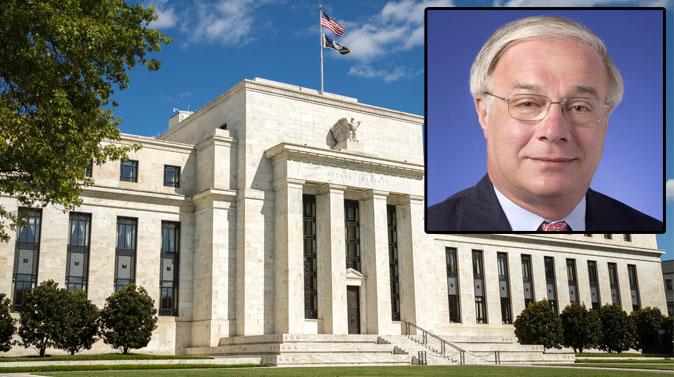
Dr. David Wyss believes the Fed is “hitting it as hard as they can,” with QE as the U.S. economic recovery moves at half-speed.
Peter Schiff is a noted contrarian. He believes the U.S. is in a worse position than growth-challenged Europe since quantitative easing did not work and is akin to “trying to put out a fire with gasoline.” Schiff also believes the U.S. has worse problems than Japan.

A common argument for dumping the Euro is that it is overvalued, and that the European Central Bank is unwilling to correct this so-called “problem.”
President Barack Obama said on Sunday that he accepted Lawrence Summers’ decision to withdraw from consideration for the role of Chairman of the Federal Reserve.

According to the newest leaks, however, China will use the European approach to take credit risk out of the market.
Another week, another effort by the Chinese authorities to boost the economy. This time the People’s Bank of China (PBOC) lowered its benchmark interest rate by 0.25 percent to 5.10 percent.
The signs are increasing China will soon engage in its own form of quantitative easing, in what could be seen as a sign of panic.
James Nolt’s sense tells him that the likely form of quantitative easing in China is about more than economics, but rather a struggle of power and control.
Reports on Tuesday tell us the program will copy one of the European Central Bank’s initiatives, rather than the Fed’s classic stimulus.
After sending mixed signals to the market over recent weeks, sometimes stimulating, sometimes impeding markets, China might go all in and officially launch quantitative easing.
Can the U.S. hold everyone else above water? That is the question investors are asking as Wall Street heads into 2015.
The U.S.’s lights are once again shining most brightly after the Bank of Japan gave markets a big Halloween treat—or will that prove to be a trick?
For stock investors, there was no shortage of drama in October.
The U.S. economy powered its way to a respectable growth rate of 3.5 percent from July through September, outpacing most of the developed world and on track to extend the momentum through the end of the year and beyond.
The Federal Open Market Committee (FOMC) ended its quantitative easing (QE) program and upgraded its outlook on the US economy.
Major U.S. stock indexes slipped in afternoon trading Wednesday as investors waited for word from the Federal Reserve and mulled over a mixed batch of corporate earnings results.
Dr. David Wyss believes the Fed is “hitting it as hard as they can,” with QE as the U.S. economic recovery moves at half-speed.
Peter Schiff is a noted contrarian. He believes the U.S. is in a worse position than growth-challenged Europe since quantitative easing did not work and is akin to “trying to put out a fire with gasoline.” Schiff also believes the U.S. has worse problems than Japan.
A common argument for dumping the Euro is that it is overvalued, and that the European Central Bank is unwilling to correct this so-called “problem.”
President Barack Obama said on Sunday that he accepted Lawrence Summers’ decision to withdraw from consideration for the role of Chairman of the Federal Reserve.