The BoC’s primary goal is to return inflation to 2 percent but it also has to support maximum sustainable employment
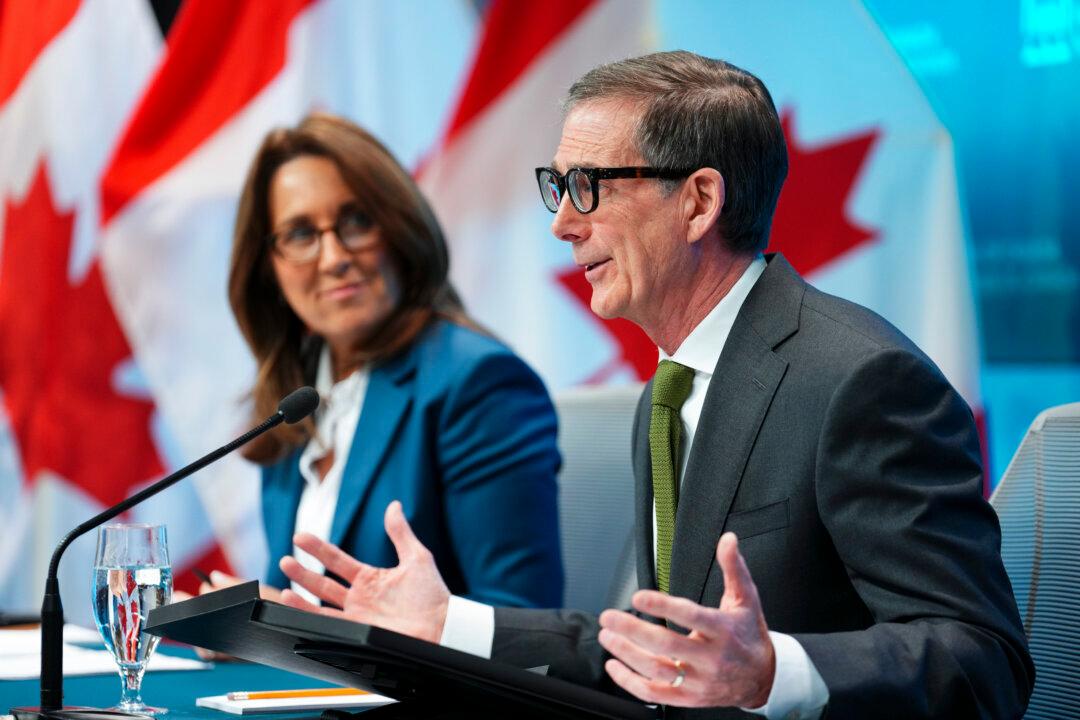
The Bank of Canada held its policy rate at 5 percent on March 6, and said it remains concerned about the outlook for inflation.

Productivity and business investment long neglected in Canada, says economic analyst

How to ensure financial privacy remains a major obstacle for CBDCs

Justification made by Canadian public-sector pension plans last May that China offers diversification in their portfolios is proving costly

The near-term challenges of mass EV adoption inevitably begin with price, but a recent cold snap has re-emphasized battery and charging snags.

In the largest land transfer in Canadian history, Ottawa granted Nunavut control of its own land, water, and resources in a process known as ‘devolution.’

Global macro strategist notes that skyrocketing population growth necessitates higher interest rates.
Wind power generation in Alberta—with hundreds of turbines across 45 wind farms that cost billions—was producing just 0.8 percent of its capacity.