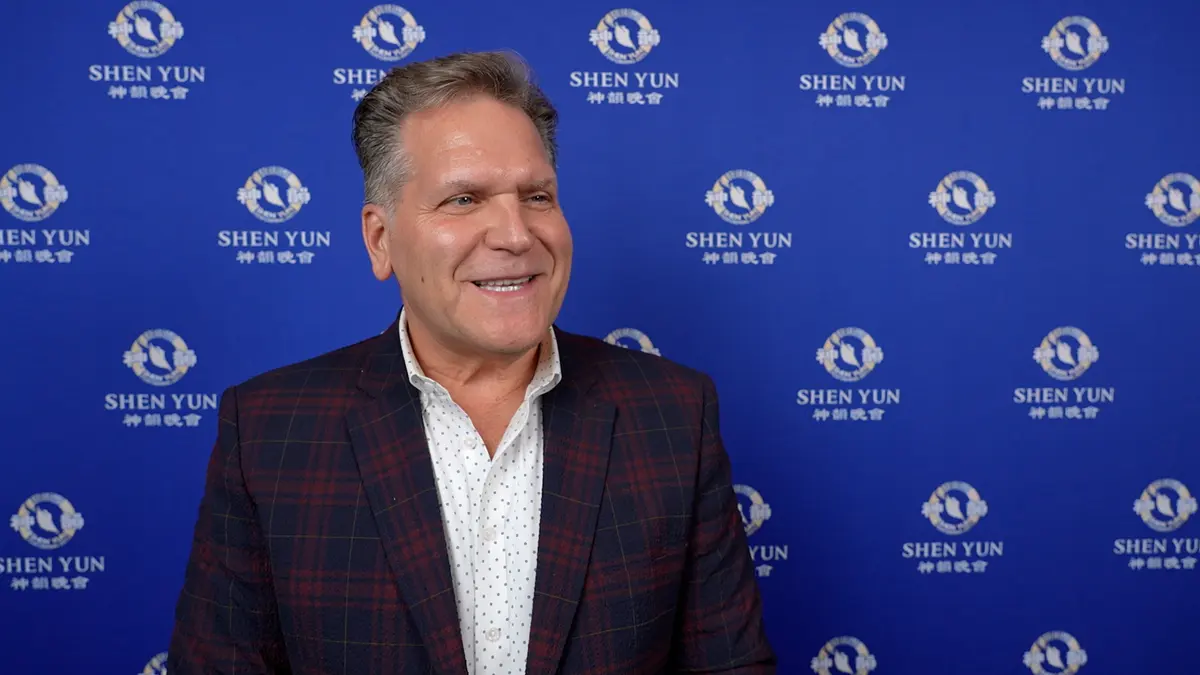
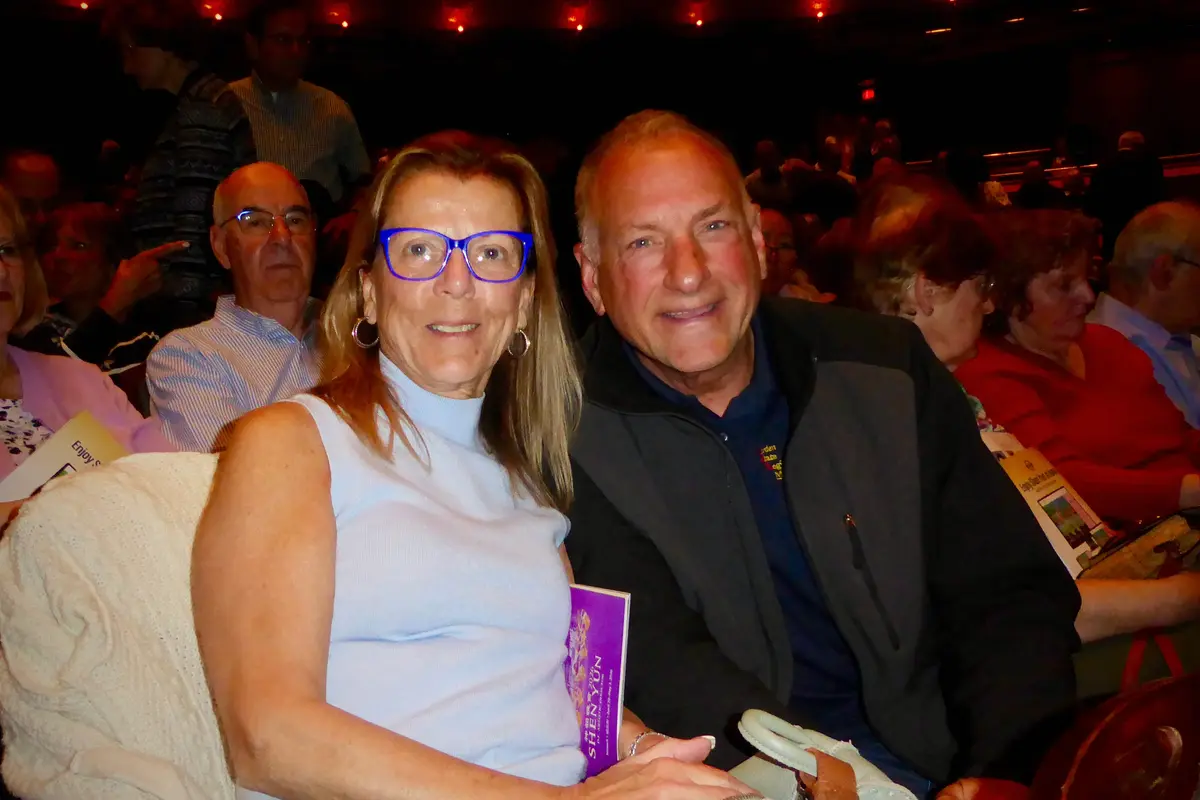
“I think the coordination of the elements of the show are unbelievable. The background and how it interacts with live action back and forth, it’s just incredible,” Mr. Donner said.
“The dances are intricate, they’re interesting, the music is great, and just captivates you throughout. What really amazes me is that one, where the old man turns to the young man right before my eyes. That I can’t figure out.”
“The gymnastic elements—the jumping and the backflips and the forward flips—I recognize how difficult that is and how they repeatedly do it.”
Much of the classical Chinese dance seen in China today incorporates military and modern influences. Only at Shen Yun can you find it performed in its purest form—the way it was originally passed down through the generations.
Mr. Donner also appreciated the artists’ depiction of heaven and the divine. He noticed “some great similarities” between the spiritual practices of the East and West.
For Ms. Varga, one of the most memorable pieces was a story-based dance highlighting the ongoing persecution of people of faith in China.
“I’m just so upset that … so many people aren’t even aware of what’s going on. I’m trying to spread the word about what’s going on in China. I think [the persecution] is horrible because [its traditional culture] is beautiful … the dynasties and the tradition and the women, everything was so beautiful,” she expressed.
Though Shen Yun has received a warm welcome from audiences around the world, due to the artists’ dedication to bring back traditional culture and present the truth of events under communist rule in present-day China, it is currently forbidden by the regime from performing there.
“We are both morally disgusted by what the Chinese communist government does to its people,” Mr. Donner added. Most people don’t know about what’s going on in China. Shen Yun “is an entry for them to learn.”