
SAN FRANCISCO—Is art education only beneficial for the few who look to careers as artists or for those who have extra time to pursue aesthetic interests? Not at all, according to Sandra Ruppert, the director of Arts Education Partnership (AEP), who spoke at the organization’s recent national forum in San Francisco.
The forum, Transforming Urban School Systems Through the Arts, invited participants to discuss the multiple benefits that art programs bring to students and schools.
Ruppert’s motivation to promote art education comes from her career as an anthropologist. “I’ve always been interested in different cultures and the way people live their lives,” she said.

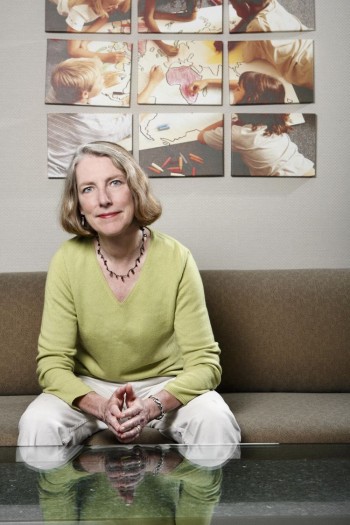
Ruppert studied the art in different cultures, and then after raising her children, she focused more on the area of education. She became interested in policies that promote a good education for young people, and through that she moved into arts education.
“So now, as executive director of AEP, I feel that I’m at the perfect place in my life, at the intersection of the three things that make my life complete and are fundamental to society: art, education, and culture.”
Promoting Arts Education
Ruppert said there has been an increasing recognition of how critically important it is that all children have exposure to the arts. “We’re not all the way there yet, but there’s a deeper understanding.”
One reason for the change is that AEP brings other stakeholders to the table, like business people who say that they need people who are creative. The next iPod or the Google will come from creativity, which the arts nurture.
AEP provides research that documents the effects of art education, for example, what happens in the brain when you listen to a piece of music, what kinds of synapses are being created.
“The research supports what we always believed in our hearts—that the arts are good in and of themselves, but also they make us more successful in everything we do,” Ruppert said.
Personal Experience
Ruppert reflected on how she was educated: “I went through the public schools … [in] the late 50s all the way through the 60s. When I went to school in Los Angeles, arts were integral to my education. As someone said this morning, ‘We didn’t call it arts education; it was just school.’”
“I had theater, I had dance. I went to see ‘Madame Butterfly’ when I was in third grade. I learned to play instruments. It was just fundamental to who I was and how I grew up—that kind of exposure,” she said.

Ruppert said that, according to the information AEP has gathered, in the past, every elementary teacher had to take courses in playing the piano, and every classroom had a piano. Now, most teachers’ training has maybe, at most, one course in the arts. So even if they wanted to integrate the arts as part of their teaching strategies, they don’t have the essential tools and the confidence.
That’s why the AEP offers training for teachers “to use the arts as another arrow in your quiver,” Ruppert said.
Ruppert doesn’t suggest that every child grows up to be an artist, although some will take that path, but she suggests that every child be creative and be able to think as an artist.
What happens if a culture loses its creativity? She experienced that firsthand during a 1977 trip to communist China under Mao’s rule.
She went with her husband to a factory and was told they would meet artists. She said she was sure they were recognized, and they were obviously very talented artists, but they were all painting the same thing. They would not use their imaginations to create new art.
Art Education’s Benefits
Reflecting on the idea of what the arts add to a person’s life, Ruppert noted: “I think one of the things that the arts do that is so evident is perseverance. Reading my own research on what are successful leaders, one key element is perseverance in face of failure—to keep going.”
Ruppert sees perseverance as part of the definition of creativity: “You create new by failing. The arts teach you that—to stay with something, make it better. That’s what I mean about ‘thinking like an artist.’”
The arts also teach us to be more empathetic, she said. The arts help us cross cultural divides. They give us a way to communicate, which is also very much needed in the business world, as much of business is based on communication and relationships.
Another trait, although Ruppert agreed it might be overrated, is that the arts aid academic achievement. They help students see things in different ways, to think critically, to solve problems. Her son is an architect. He looks at things differently, yet he doesn’t know he is thinking as an artist, she said.
Learn more about Arts Education Partnership: www.aep-arts.org


