



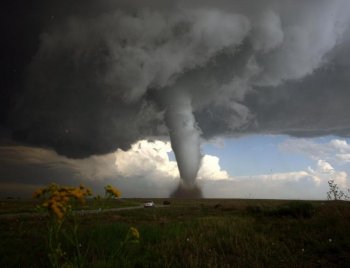
Vacationers are increasingly trading in their beach towels for the excitement of seeing a tornado up close and personal, as the new niche tourism market of storm-chasing grows in popularity, according to a study by researchers at the University of Missouri.
“With the help of movies like ‘Twister,’ storm-chasing has become an international phenomenon,” says assistant professor Carla Barbieri, co-author of the study.
“While more than half of the surveyed travellers lived in North America, 11 percent came from Australia and nearly a third travelled from Europe to get a close encounter with a tornado.”
But rather than looking for mere risk, the study found that these “tornado tourists” are seeking a unique and unconventional opportunity to experience nature’s raw power—something veteran storm-chaser Ron Gravelle can attest to.
Owner of Storm Chasing Tours, Kitchener, Ont.-based Gravelle is the only person in Canada who organizes trips to famous Tornado Alley in the United States, the core of which runs through Oklahoma, Kansas, and Nebraska.
“With the help of movies like ‘Twister,’ storm-chasing has become an international phenomenon,” says assistant professor Carla Barbieri, co-author of the study.
“While more than half of the surveyed travellers lived in North America, 11 percent came from Australia and nearly a third travelled from Europe to get a close encounter with a tornado.”
But rather than looking for mere risk, the study found that these “tornado tourists” are seeking a unique and unconventional opportunity to experience nature’s raw power—something veteran storm-chaser Ron Gravelle can attest to.
Owner of Storm Chasing Tours, Kitchener, Ont.-based Gravelle is the only person in Canada who organizes trips to famous Tornado Alley in the United States, the core of which runs through Oklahoma, Kansas, and Nebraska.


