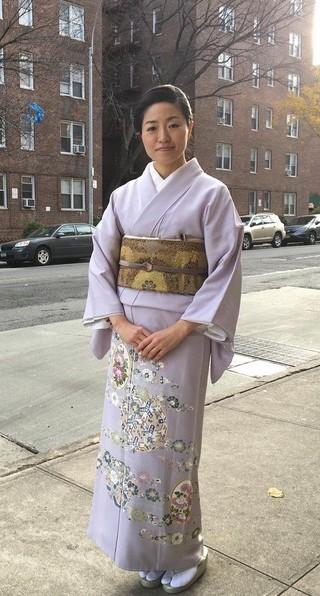
NEW YORK—It’s said that Zen monk Yuzensai Miyazaki created Kaga-Yuzen, the traditional hand dyeing method used to create the intricate floral scenes found on kimonos. The art is sometimes whimsical at first glance, but it is known for its focus on natural beauty, immense attention to detail, and strict adherence to procedure.
The first step is the design. Master artisans create elaborate scenes with nature motifs, rendering them in great detail and sketching them onto paper.
Step 2 is cutting white silk into kimono sections. Then the fabric is laid over the sketches on a glass table, and a light is shone underneath. The sketch is transferred onto the fabric using a brush and crushed dayflower juice—which will later wash out when it comes in contact with water.
Next, a type of dye-resistant glue paste is applied to the edges of the lines to help keep the edges of the design sharp.
[gallery size=“large” ids=“2189700,2189696,2189698,2189699,2189701”]
The whole underside of the fabric then gets coated in a soybean broth or diluted glue mixture and dried. This washes away the lines drawn in dayflower juice, and leaves the glue paste.
Now it’s time for coloring. Traditional Kaga-Yuzen uses five colors, and the coloring is done in a gradated way. The fabric is steamed afterward so the colors really steep in.
Then the fabric is washed. Traditionally, finished fabrics were washed in rivers, but today this is done in man-made watercourses.
The final step is to complete the kimono, fine-tuning the colors if necessary and pressing the garment.